When setting up a new molded fiber factory or expanding an existing production line, investors often ask, “Which is the best pulp molding machine?” or “How many tons can this equipment produce daily?” However, evaluating equipment solely on theoretical machine parameters without defining the specific product first is a common pitfall that can lead to inefficient production.
As a specialist in turnkey pulp molding solutions, HANSON emphasizes a core methodology: The product dictates the process, and the process determines the tooling and equipment. Only after confirming product dimensions, weight, surface quality, dimensional accuracy, and automation requirements can you accurately configure the appropriate wet press or dry press production line.
Why You Should Start with the Product, Not the Machine
A single pulp molding machine cannot perfectly manufacture every type of molded fiber product on the market. Different applications have distinctly different manufacturing priorities:
-
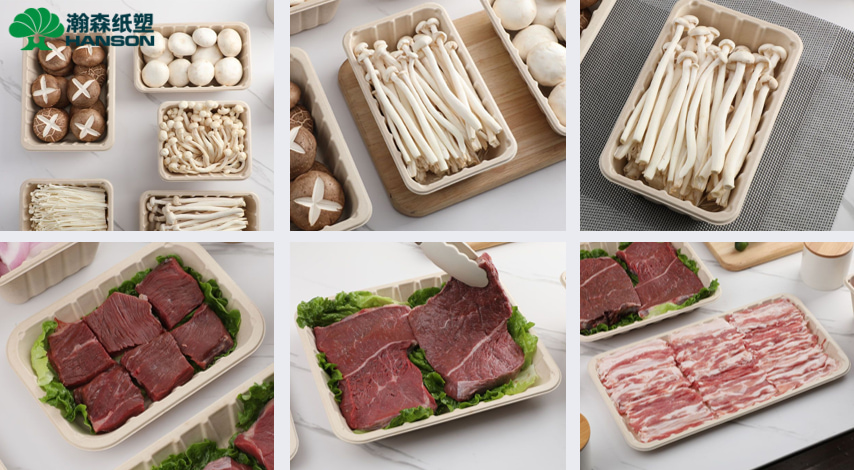
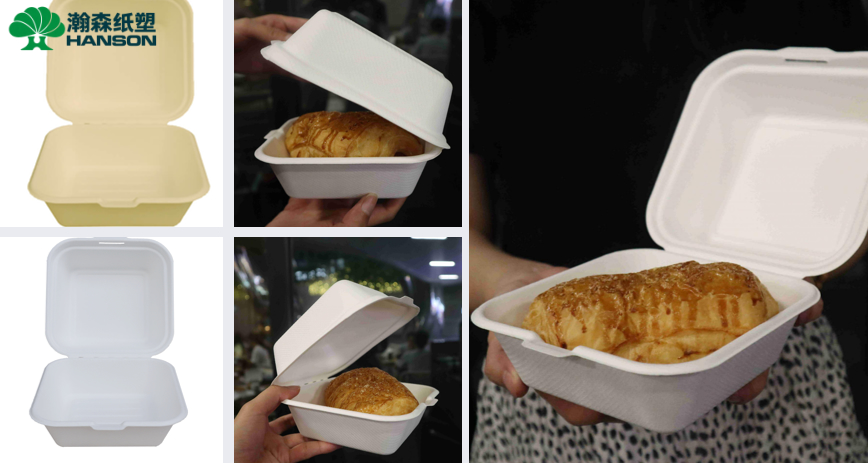
Molded Fiber Foodservice Packaging: Products like plates, food trays, and clamshells generally prioritize high daily production capacity, energy consumption per ton, and stable mass production with automated post-processing.
-
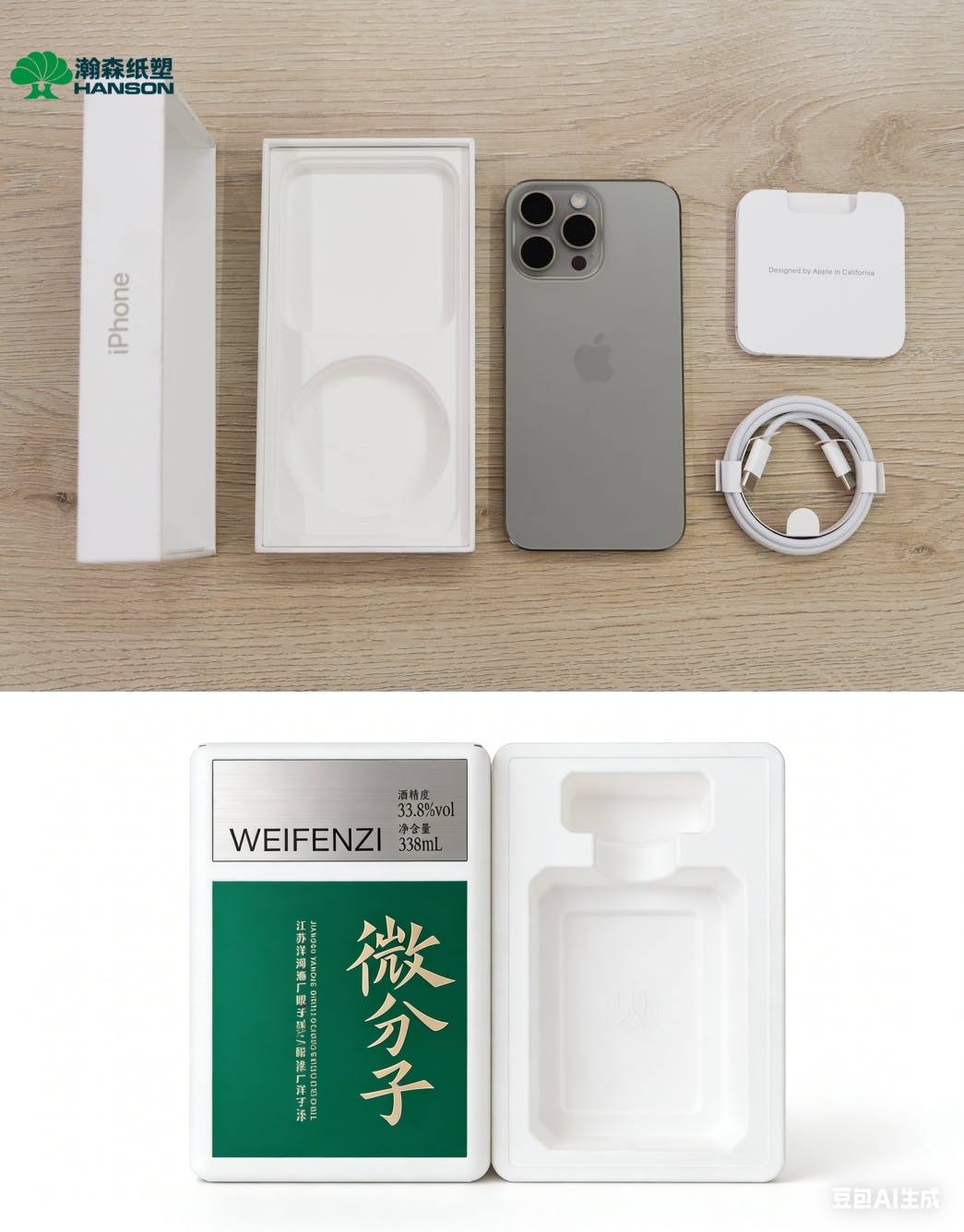
Premium Industrial Molded Fiber Packaging: High-end inserts for consumer electronics, smart wearables, and premium liquor packaging demand superior surface smoothness, precise dimensional stability, and strict production consistency. For these products, process control and tooling precision are far more critical than raw output speed.
-
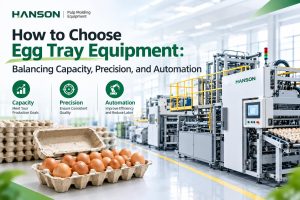
Protective Molded Fiber Packaging: Products such as egg trays, cup carriers, and heavy-duty industrial buffers focus on structural protection and cost-efficiency over fine surface detailing.

Selecting a machine based on a specific product category ensures that you configure a production line tailored for optimal yield and performance, avoiding compromises in quality or automation.
Matching Molded Fiber Products to the Right Process and Equipment
Once the product specifications are clear, the next step is determining the manufacturing process—such as wet press, dry press, or semi-dry press—and selecting the appropriate machinery. HANSON has developed a comprehensive equipment matrix designed for specific applications.
1. Tableware: Balancing Capacity and Energy Efficiency
Foodservice packaging is typically produced using the wet press pulp molding process, where the wet preform enters the hot press mold while still retaining moisture, completing both drying and precision shaping within the mold.
-
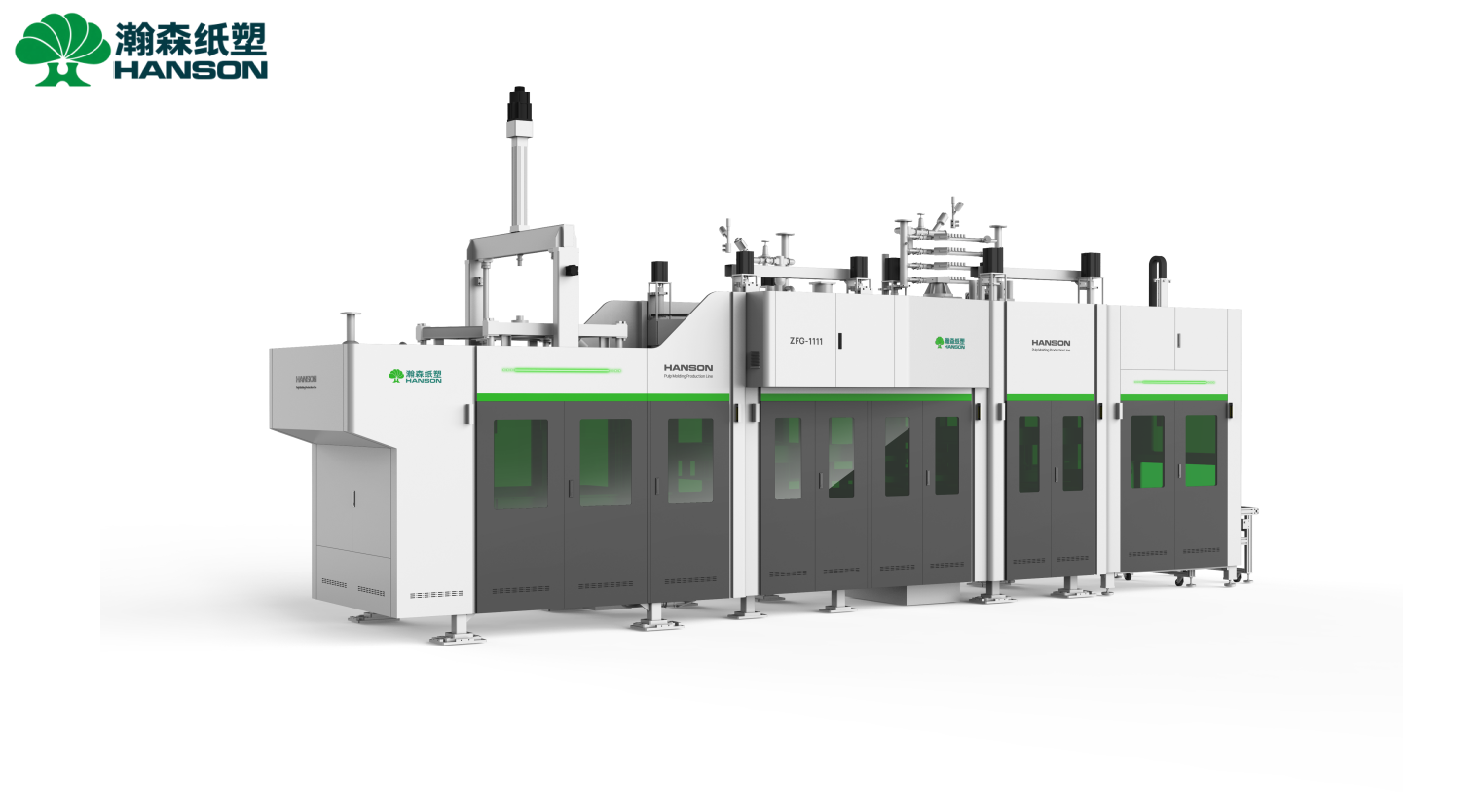
The HANSON Solution: For large-scale tableware production, HANSON provides the ZFG-1111 wet press pulp molding tableware machine, which integrates forming, hot pressing, trimming, and stacking in a single unit. Under appropriate production conditions, its daily output can exceed 1.8 tons. For high-precision control, the ZBG-1111 full-servo pulp molding tableware machine utilizes one forming station and two hot-press stations to ensure highly efficient and consistent mass production.

2. Premium Industrial Packaging: Focusing on Surface and Precision
For smartphone packaging and premium consumer goods, the molded fiber inserts must accommodate complex geometries, fine ribs, and tight draft angles.
-
The HANSON Solution: The ZAP-9585 and ZAD series are engineered for premium industrial molded fiber packaging. Featuring integrated forming and hot pressing along with dynamic pulp replenishment capabilities, these machines maintain the strict dimensional tolerances and exceptional surface quality demanded by top-tier consumer brands.

3. Molded Fiber Cup Lids: Continuous Automation
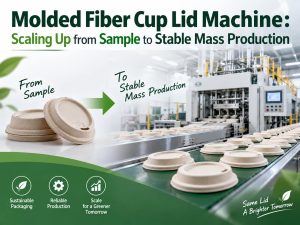
Cup lids are small in size but demand rigorous functional precision, particularly regarding lid-to-cup fit and edge smoothness. In high-volume production, post-processing can quickly become a bottleneck.
-
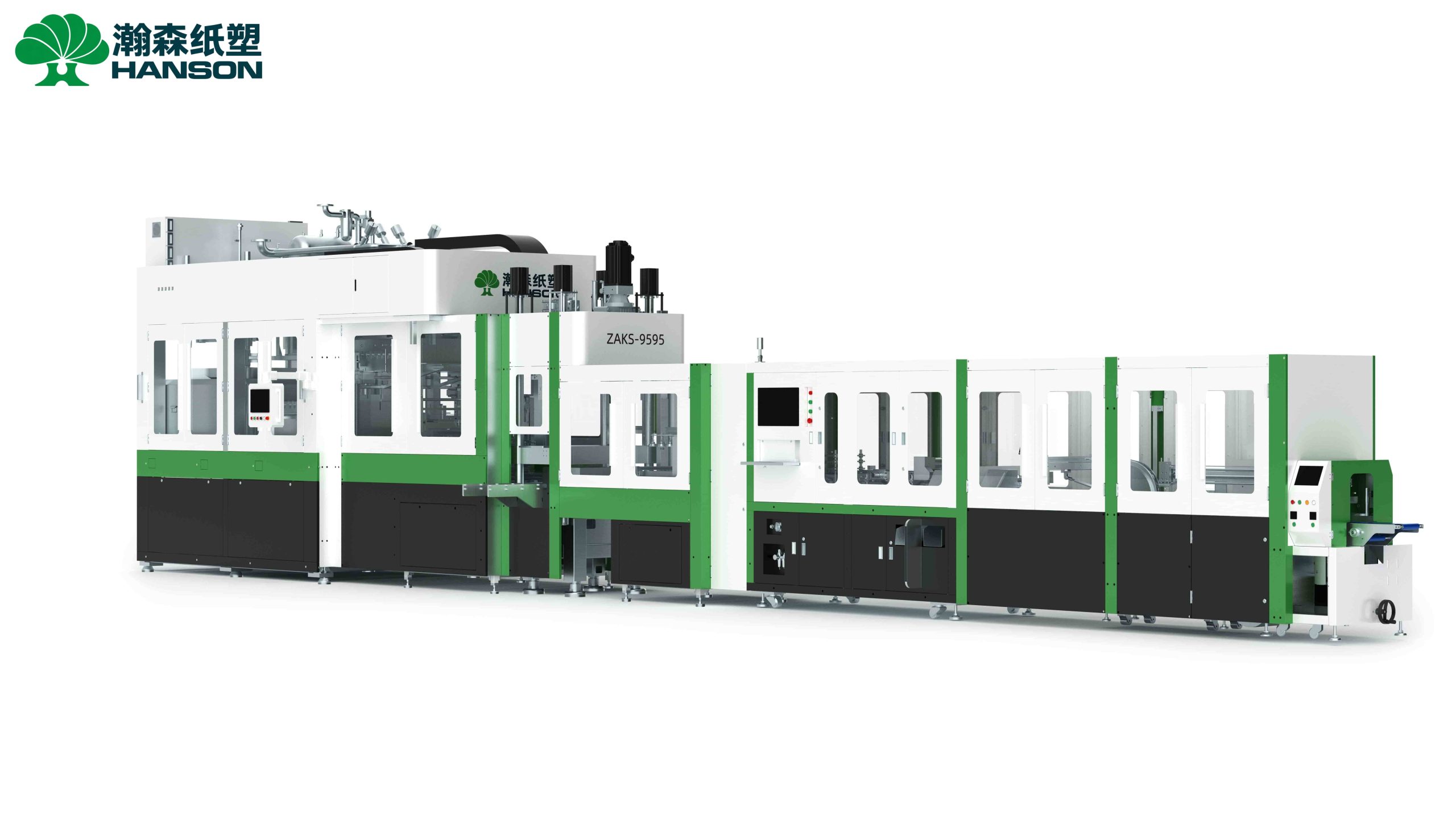
The HANSON Solution: The ZAKS-9595 molded fiber cup lid machine integrates forming, hot pressing, servo-driven punch cutting, machine vision inspection, and automatic packaging. Under appropriate conditions, it is capable of producing approximately 100,000–120,000 cup lids per 24 hours in a highly automated continuous stream.
4. Product Development: Validate Before Scaling
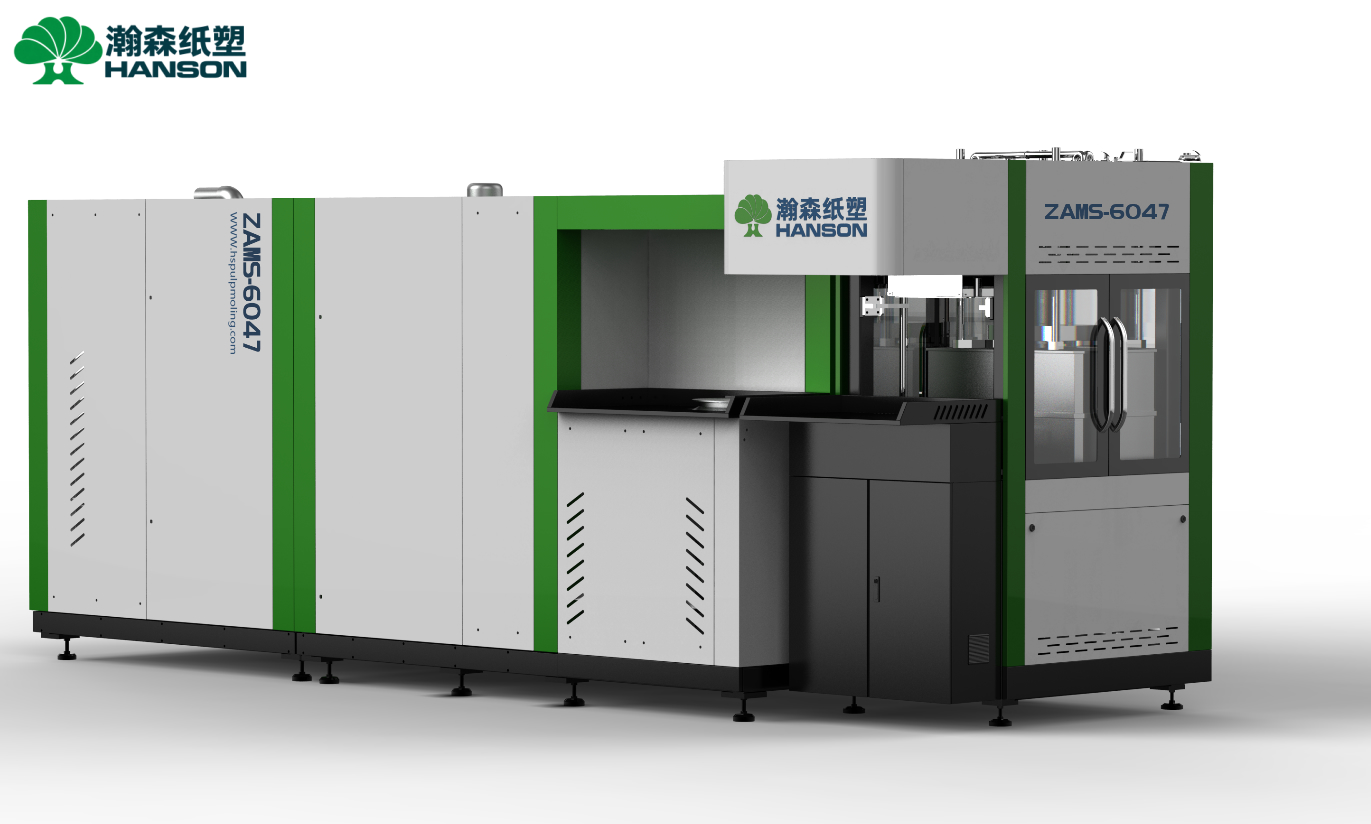
For companies transitioning from plastic packaging to molded fiber or testing new biomass materials, jumping directly into large-scale equipment procurement carries significant risk. HANSON provides the ZAMS-6047 pulp molding prototyping machine, allowing manufacturers to validate material formulations, product designs, and process parameters before committing to a commercial-scale production line.
Beyond the Forming Machine: Tooling, Pulping, and Automation
When evaluating pulp molding equipment, components like tooling and pulping systems must not be treated as simple accessories.
-
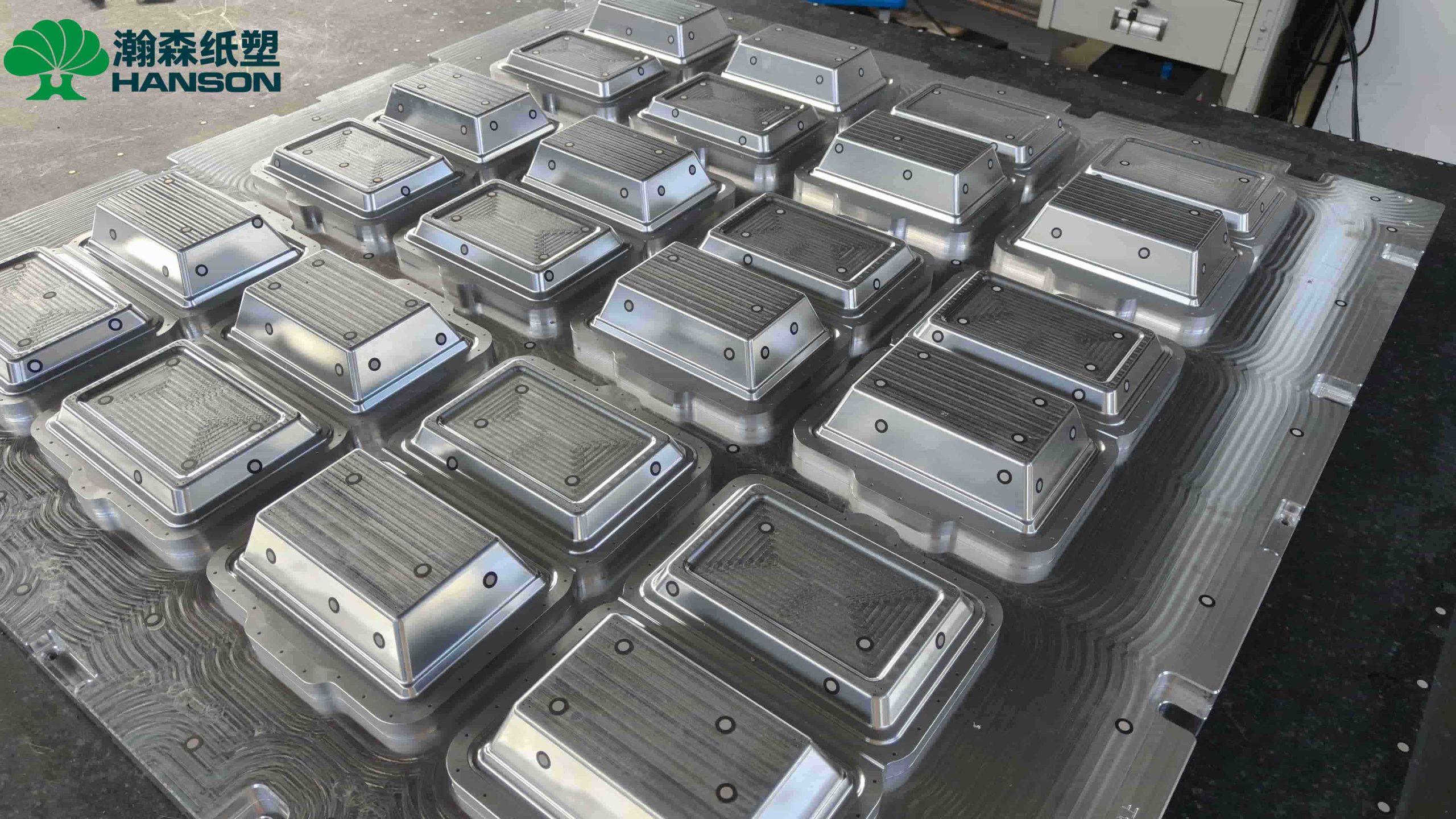
The Critical Role of Molded Fiber Tooling: Molds directly influence the forming, dewatering, transferring, and hot pressing stages. A well-designed forming tool improves drainage efficiency, which reduces the wet preform moisture content. This, in turn, decreases the energy load during the hot press stage and speeds up the overall cycle time.
-
Turnkey Plant Synergy: A forming machine is only as fast as its supporting systems. If the intelligent pulping system fails to provide a stable slurry consistency, or if post-processing automation lags, the entire factory’s actual output will suffer.
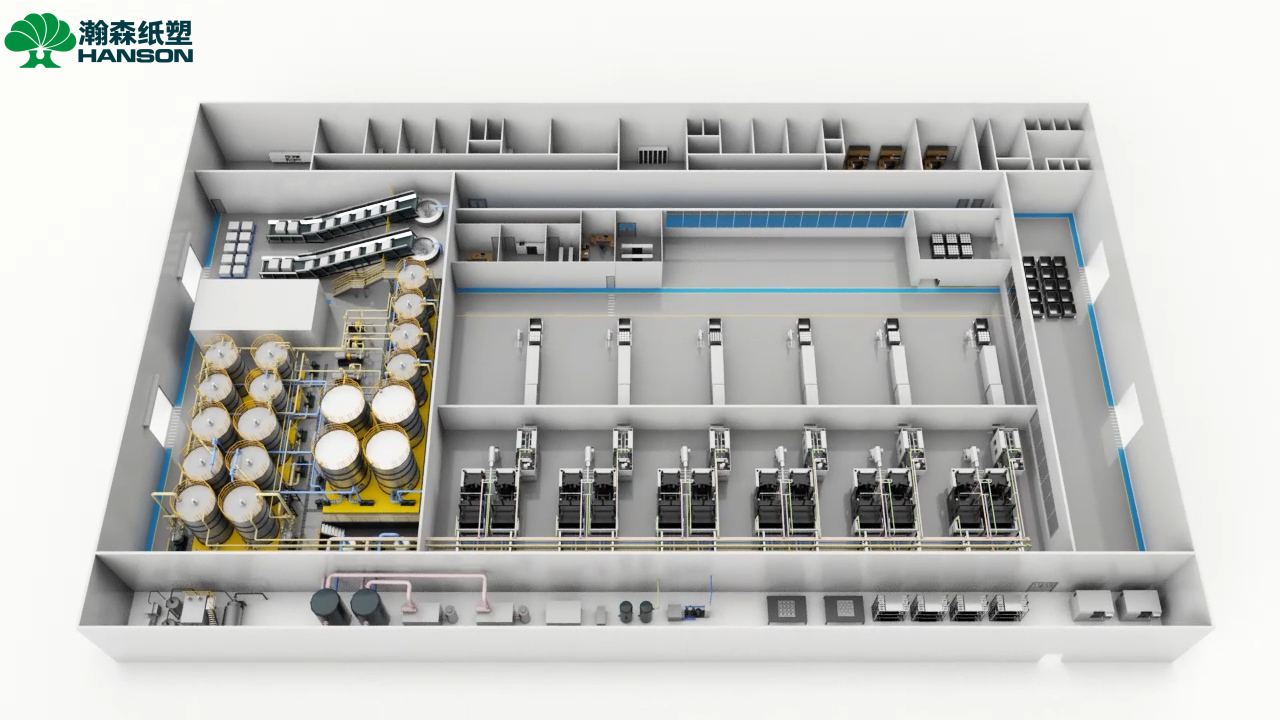
This is the foundation of HANSON’s 6+1 turnkey service model. By integrating plant planning, pulping systems, forming equipment, tooling, post-processing automation, and production ramp-up support, HANSON ensures that product concepts translate smoothly into stable commercial production.
FAQ
1. How much does a pulp molding machine cost? There is no fixed price for pulp molding equipment because costs vary significantly based on the equipment specifications, automation level, selected process (wet press vs. dry press), and the product application. Before requesting a quote, we recommend confirming your product type, target daily capacity, and whether you require integrated tooling, pulping systems, or full turnkey plant planning.
2. Can one machine produce all types of molded fiber products? It is generally not recommended to use one machine for everything. Tableware, premium industrial packaging, cup lids, and basic protective packaging have drastically different requirements for precision, tooling, and automation. Using dedicated equipment for specific product lines ensures higher efficiency, better quality, and smoother automation.
3. Why does the same machine have different capacities when producing different products? Actual production capacity depends on the product weight, dimensions, number of mold cavities, and the required hot pressing time. A change in product weight or structural complexity directly impacts the dewatering load and the cycle time. Therefore, capacity must always be calculated based on the specific combination of product, tooling, and equipment parameters.
Conclusion
Selecting the right pulp molding equipment is fundamentally an engineering challenge rooted in the final product. By mapping out the appropriate manufacturing process, tooling designs, and automation layouts based on exact product requirements, investors can mitigate risks and establish a highly efficient, stable turnkey pulp molding plant.
If you already have a product sample, 3D drawing, product dimensions or target daily capacity, HANSON can help evaluate the molding process, tooling and equipment configuration for your project.
WhatsApp: +86 15920604830
Email: linchuangcheng@hspulpmolding.com