When investing in a new pulp molding plant or expanding an existing production line, many manufacturers make the mistake of jumping straight into comparing equipment prices and theoretical cycle times. However, molded fiber manufacturing is a deeply integrated system.
The performance of your equipment depends entirely on the material, tooling, dewatering efficiency, and post-processing automation. As a turnkey specialist in pulp molding, Hanson Pulp Molding advises that a systematic equipment selection process should follow these essential steps.
Step 1: Define the Product and Capacity Requirements
Equipment selection must be reverse-engineered from the final product. A machine designed for deep-draw bowls operates differently from one optimized for precision smartphone inserts.
Before looking at machine specifications, clarify the following:
-
Product Dimensions and Complexity: Does the product have intricate details, complex hinges, or deep cavities?
-
Unit Weight: Heavier products require more slurry per cycle, increasing the dewatering and hot pressing load, which directly impacts actual production capacity.
-
Target Daily Output: Actual output is not simply the theoretical cycle time multiplied by operating hours. It is influenced by the number of mold cavities, yield rate, mold changeover frequency, and overall equipment effectiveness (OEE).
Step 2: Prototyping and Process Validation
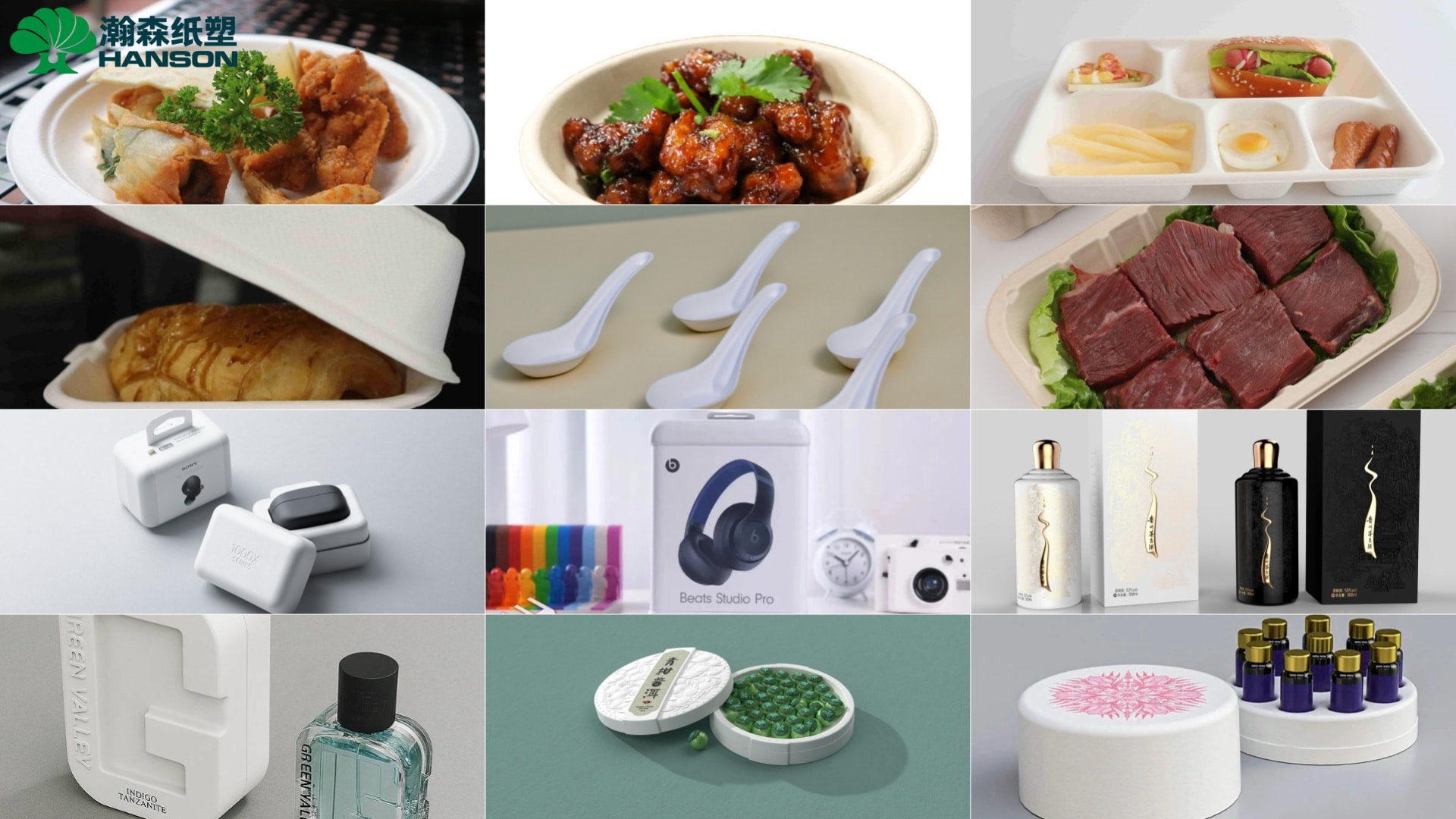
If you are developing a new packaging structure, testing alternative fibers (like bamboo or bagasse), or transitioning from plastic packaging to molded fiber, moving straight to mass production equipment carries significant risk.
The safest route is to validate the product and process first. Hanson Pulp Molding integrates product development into its turnkey service system. By utilizing prototyping machines like the Hanson Pulp Molding ZAMS-6047, manufacturers can run small-batch tests to verify:
-
Whether the product geometry allows for efficient forming and demolding;
-
The stability of the pulp formulation and process parameters;
-
Tooling design, ensuring the required surface finish and structural strength can be achieved.
Step 3: Determine the Core Manufacturing Process
The specific process route dictates the configuration and energy structure of your entire production line.
-
Wet Press Process: Wet preforms enter a hot press mold while still retaining significant moisture. Dewatering and drying are completed under heat and pressure within the mold. This results in a smooth, dense surface and excellent dimensional accuracy, making it ideal for premium industrial molded fiber packaging and high-end foodservice items.
-
Dry Press / Semi-Dry Press Process: Products are formed and then dried in an independent system, such as a drying tunnel. This is typically used for products where extreme surface smoothness is less critical, but cushioning and low unit costs are paramount, such as egg trays, cup carriers, and protective industrial packaging.
Step 4: Match the Specific Equipment Matrix
Once the product and process are confirmed, you can match them with specialized equipment. A “one-size-fits-all” approach rarely yields the best OEE or product quality. Hanson Pulp Molding configures specific machine series based on application:
-
Tableware Production: Requires high capacity and continuous automation. The Hanson Pulp Molding ZFG-1111 integrates forming, hot pressing, trimming, and stacking in-machine. Under appropriate production conditions, a single machine can achieve a daily capacity of over 1.8 tons. For enhanced process control, full-servo models like the ZBG-1111 are available.
-
Premium Industrial Packaging: Prioritizes dimensional stability, surface quality, and consistency over sheer speed. The Hanson Pulp Molding ZAP-9585 features dynamic pulp replenishment to handle complex geometries and ensure uniform forming.
-
Molded Fiber Cup Lids: Cup lids demand extremely tight tolerances and high-speed post-processing. The Hanson Pulp Molding ZAKS-9595 automated production line integrates forming, hot pressing, servo-driven punch cutting, machine vision inspection, and packaging, delivering up to approximately 100,000–120,000 cup lids per 24 hours under appropriate production conditions.
Step 5: Align Tooling, Pulping, and Automation (Turnkey Planning)
Even the best forming machine will fail to hit target capacities if the front-end pulping or back-end automation creates a bottleneck.
-
Molded Fiber Tooling: Molds are not mere attachments; the mesh design and drainage structure directly dictate the forming cycle, moisture content, and final yield.
-
Intelligent Pulping Systems: The pulp preparation system must provide absolute consistency in pulp concentration to prevent weight fluctuations and product defects.
-
Post-Processing Automation: For high-volume items, manual trimming or visual inspection will cripple the line’s output. Automation must be planned concurrently with the forming equipment.
FAQ
1. How much can one pulp molding machine produce in a day? Actual daily production capacity cannot be determined by cycle time alone. It is a combined result of the unit weight, number of mold cavities, forming time, hot pressing time, and the equipment’s effective running time. Capacity must always be evaluated based on the specific product and tooling design.
2. Can I use the same machine to produce different molded fiber products? Technically, yes, but frequent changes may not be economically viable. Changing products involves more than just swapping molds; it often requires adjusting the pulp formulation, forming vacuum, hot press temperature, and post-processing setup. Machines are most efficient when dedicated to specific product families.
3. Why do molds affect the actual capacity of the equipment? Tooling dictates how many products can be made per cycle (cavities) and how efficiently water is removed during forming and pressing. Different molds will yield different dewatering rates, directly altering the required cycle time and the overall daily output of the machine.
Conclusion
Choosing the right pulp molding equipment is a comprehensive engineering task. It spans product definition, process validation, machine matching, and turnkey system integration. By establishing a clear manufacturing logic before purchasing, companies can avoid costly bottlenecks and ensure their investment translates into stable, scalable commercial production.
CTA
If you already have a product sample, 3D drawing, product dimensions, or target daily capacity, Hanson Pulp Molding can help evaluate the molding process, tooling, and equipment configuration for your project.
WhatsApp: +86 15920604830
Email: linchuangcheng@hspulpmolding.com