When investing in a molded fiber project, many enterprises fall into a common trap: they select a pulp molding machine first, and only later try to figure out what exact products the equipment can manufacture.
For highly standardized packaging, this approach might occasionally work. However, for companies transitioning from plastic packaging to molded fiber, or those developing entirely new packaging structures, this reverse engineering often leads to a disconnect between equipment specifications and actual commercial production requirements. A highly efficient production line is not determined by the forming machine alone; it is the result of seamless coordination between the pulping system, tooling, hot pressing process, post-processing, and plant utilities.
Before finalizing the configuration of a pulp molding machine, buyers must evaluate the project from the perspective of the final product and confirm several core conditions.
1. Product Attributes and the Right Process Route (Wet Press vs. Dry Press)
The first step in equipment selection is clarifying the product type, unit weight, dimensions, surface quality, and dimensional accuracy requirements. These physical attributes directly dictate whether the project requires a wet press or a dry press (or semi-dry press) manufacturing route.
-
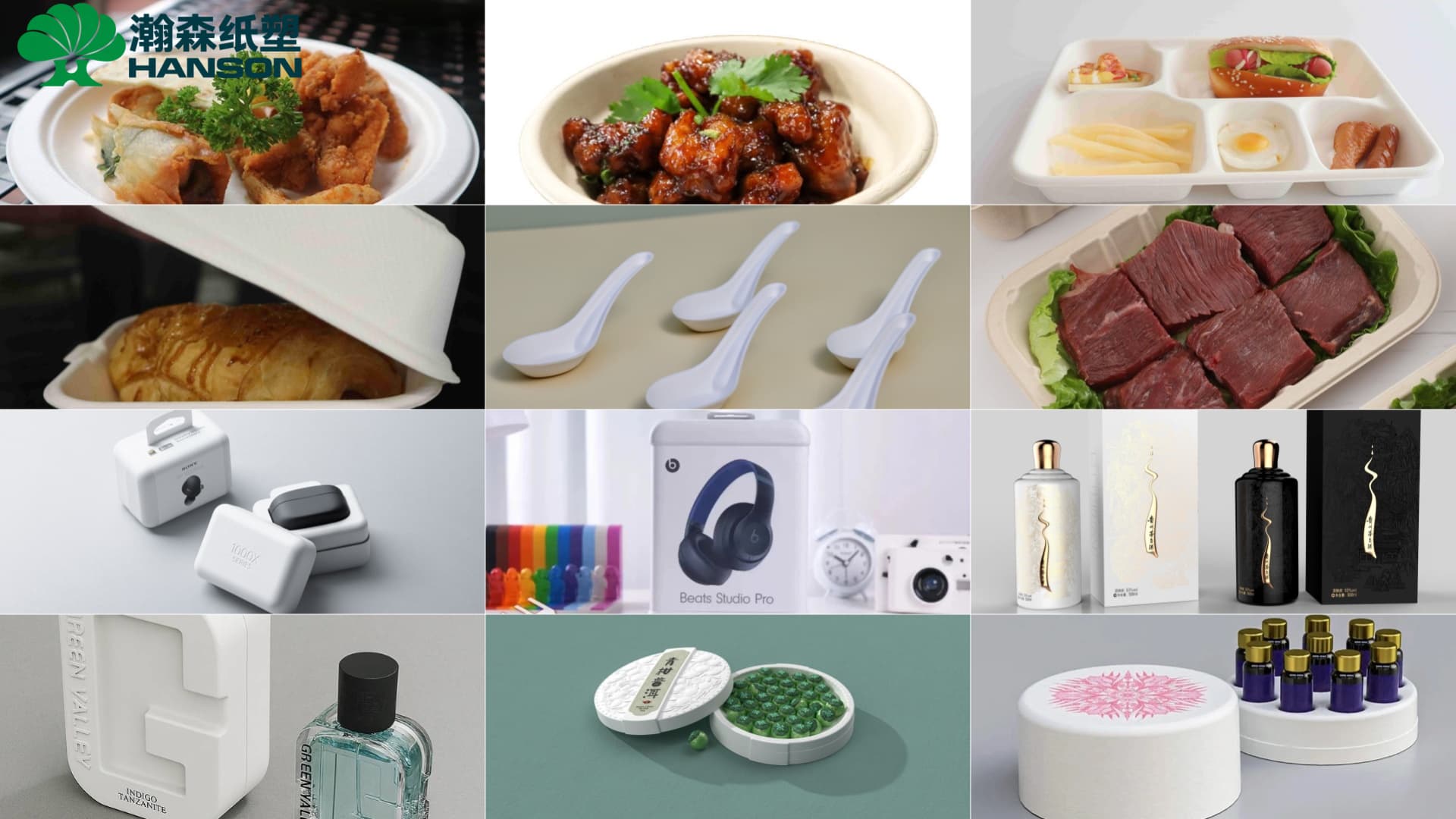
Premium Quality and Precision (Wet Press): If the target products are smartphone inserts, consumer electronics packaging, or high-end molded fiber tableware (such as plates and clamshells), the market demands smooth surfaces, crisp structural details, and tight dimensional tolerances. These products typically require a wet press pulp molding machine. In this process, the wet preform enters a heated mold where pressing, shaping, and drying are completed simultaneously. Equipment like the Hanson Pulp Molding ZFG-1111 tableware machine and ZAP-9585 industrial packaging machine are designed specifically for these high-precision applications.
-
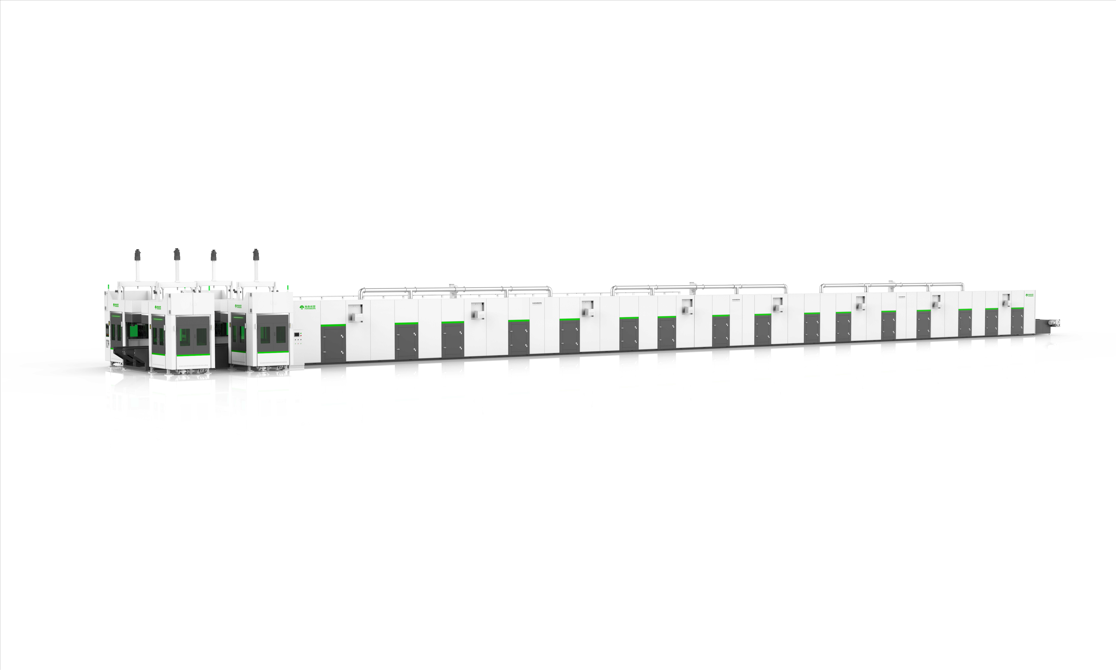
Protection and Cost-Efficiency (Dry Press/Semi-Dry Press): For products like egg trays, 4-cup carriers, or heavy-duty protective industrial packaging, the primary focus is shock absorption and load-bearing capacity rather than a perfectly smooth surface. These items are typically produced using an automatic dry-press pulp molding production line. After forming, a cold-pressing station may be utilized for pre-dewatering before the products are sent through an independent tunnel dryer, ensuring a balance between structural strength and energy efficiency.
2. Prototyping and Process Validation for New Products
If the project involves a novel packaging design without an existing market reference, or if new plant fibers and chemical additives are being introduced, jumping straight into large-scale production equipment carries significant risks.
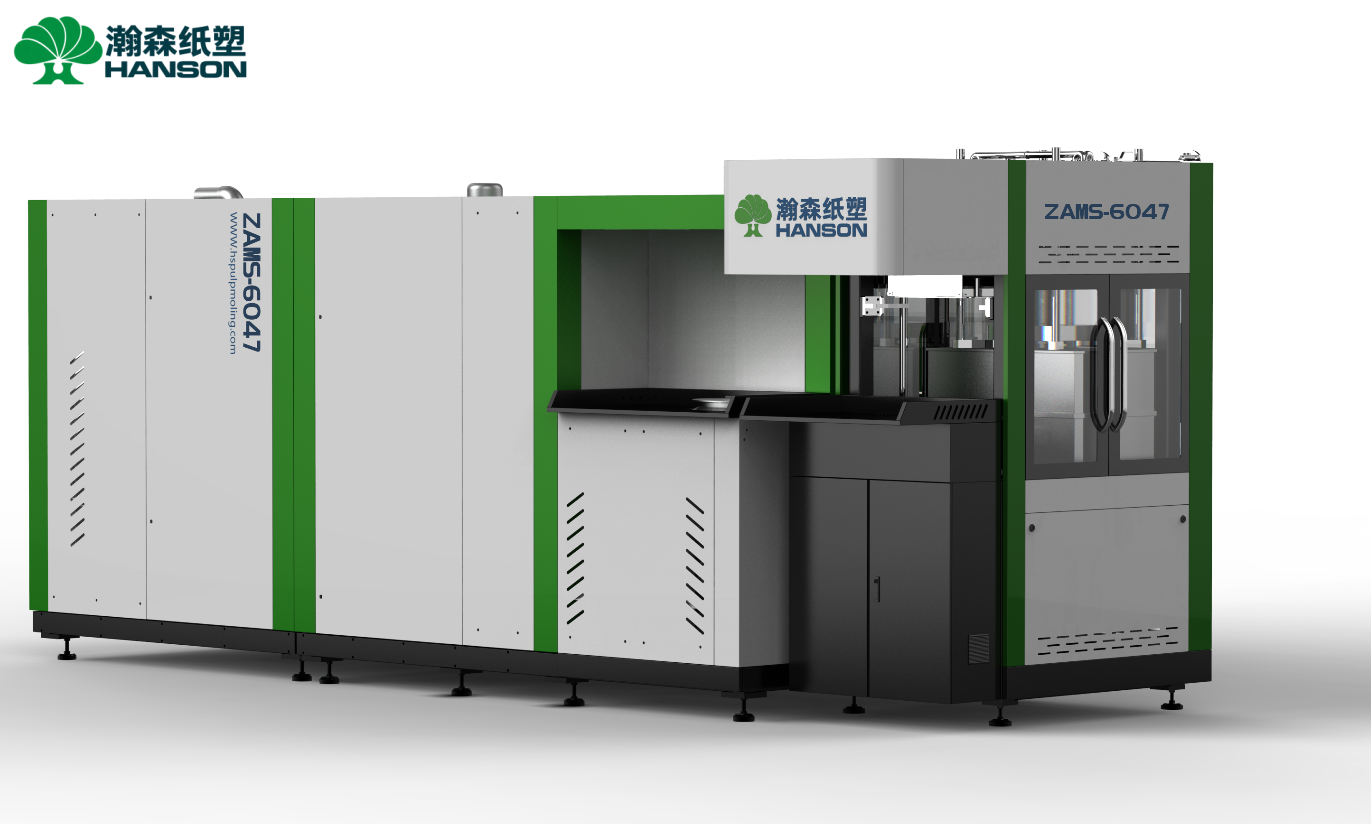
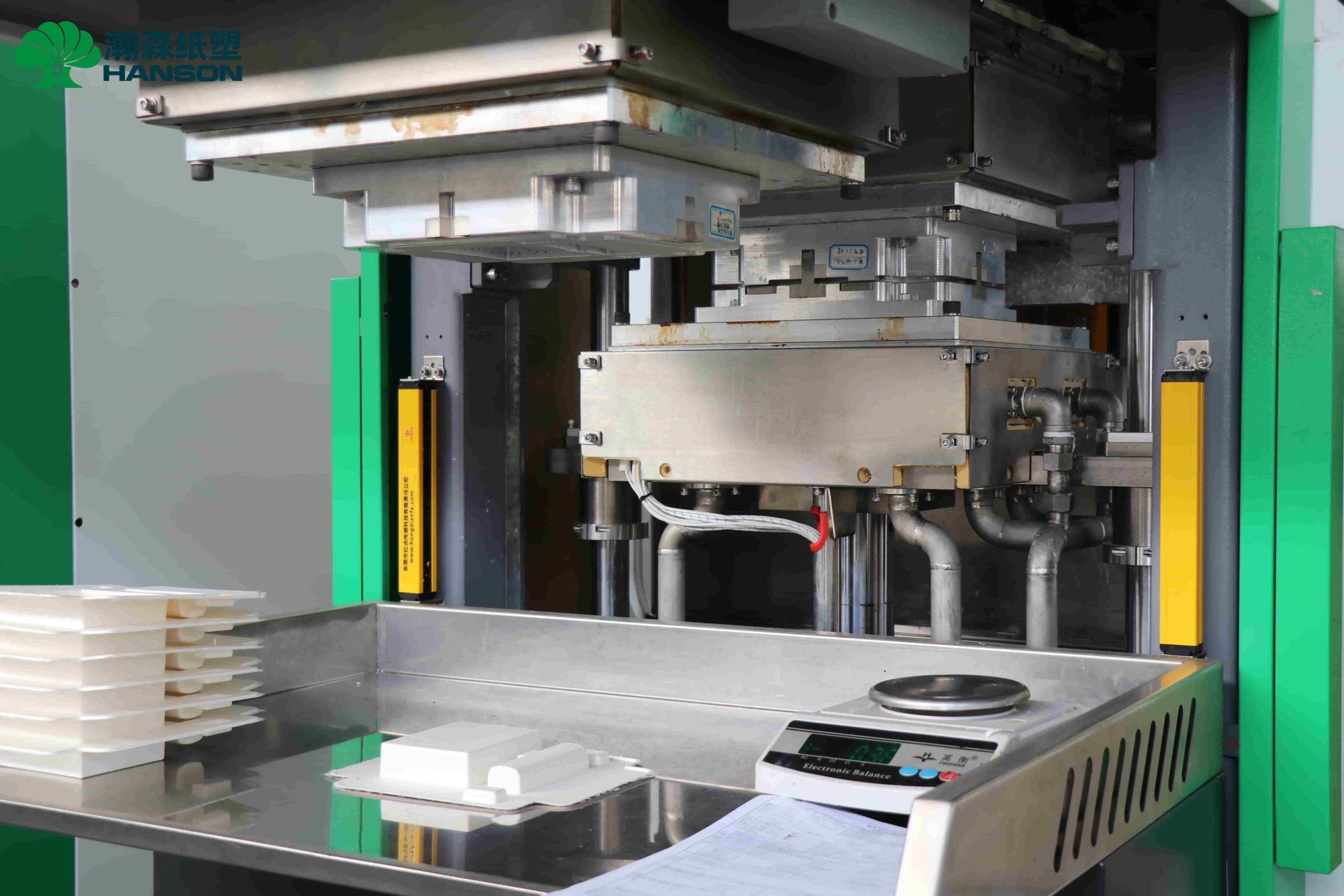
Before mass production, it is essential to verify whether the product geometry is suitable for vacuum forming, if the draft angles allow for smooth demolding, how much the fiber will shrink, and whether the tooling drainage design is effective. As a specialist in turnkey pulp molding solutions, Hanson Pulp Molding strongly advises conducting product and process validation using a prototyping machine, such as the ZAMS-6047. By establishing the correct slurry consistency, forming time, and hot-pressing parameters during the prototyping phase, the data can be reliably scaled to commercial equipment, significantly reducing trial-and-error costs and shortening the time-to-market.
3. Matching Theoretical Capacity with Actual Tooling Realities
A frequent question during procurement is, “How many pieces can this machine produce in a day?” However, the theoretical cycle time of a pulp molding machine does not equate to its actual daily production capacity.
-
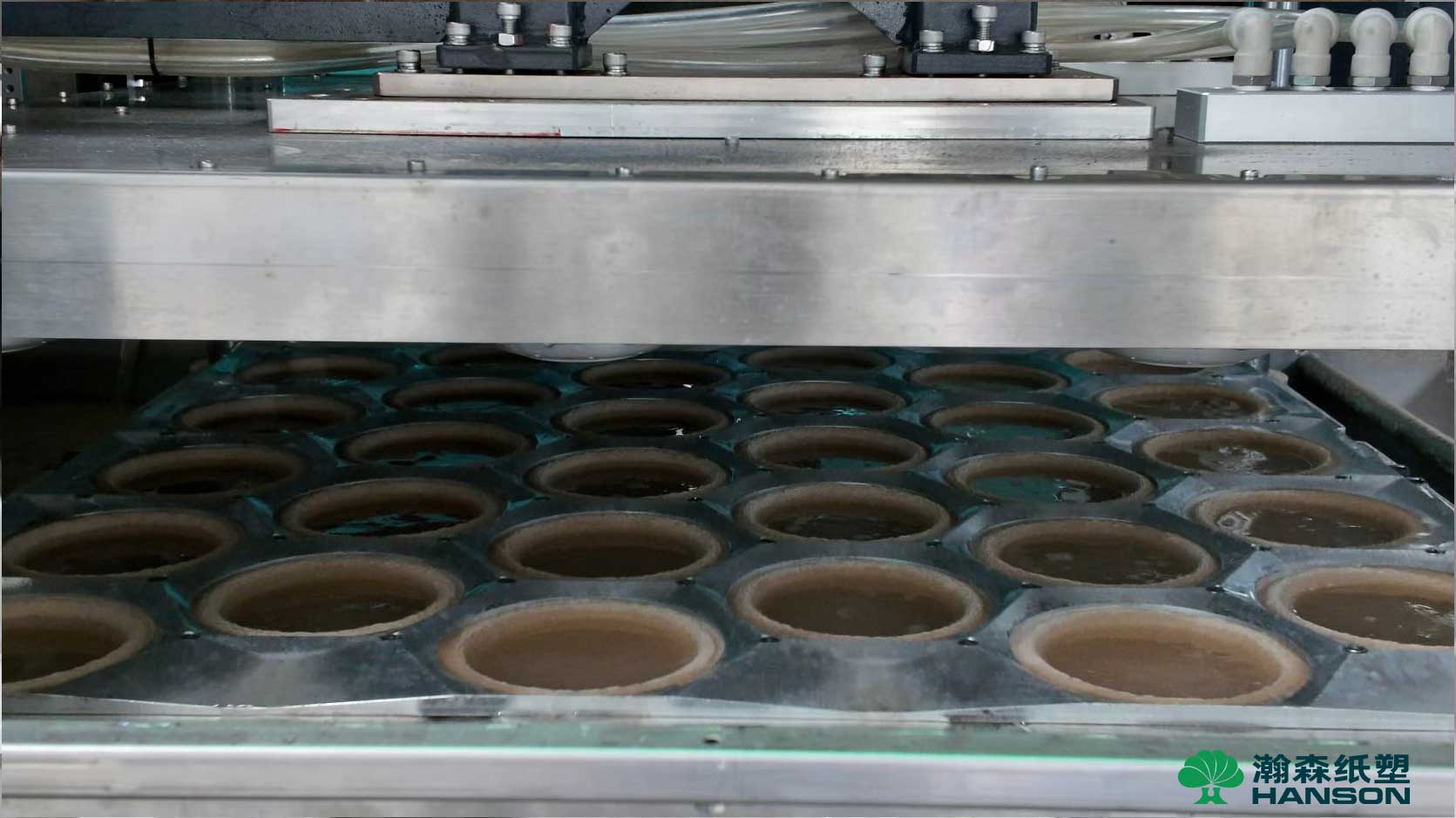
Product Weight and Cavity Layout: A heavier product requires more fiber to be drawn and more water to be extracted per cycle, naturally extending both forming and hot-pressing times. Furthermore, the number of mold cavities must be carefully matched with the mold platen size, slurry flow dynamics, and vacuum capacity. Blindly increasing cavity counts can lead to uneven wall thickness or incomplete drying.
-
Realistic Capacity Metrics: Production capacity must be tethered to specific product parameters. For example, under appropriate production conditions, the Hanson Pulp Molding ZFG-1111 machine can achieve a daily capacity of over 1.8 tons for certain tableware products. Conversely, a Hanson dry-press line producing a 40g 4-cup carrier has an estimated output of around 18 tons per 23 hours. These figures illustrate that equipment output is highly variable depending on the specific tooling and product constraints.
4. Post-Processing Automation Integration
Even if a forming machine operates at peak speed, if the post-processing stages become a bottleneck, the overall plant output will suffer. The required level of automation must be determined well in advance.
-
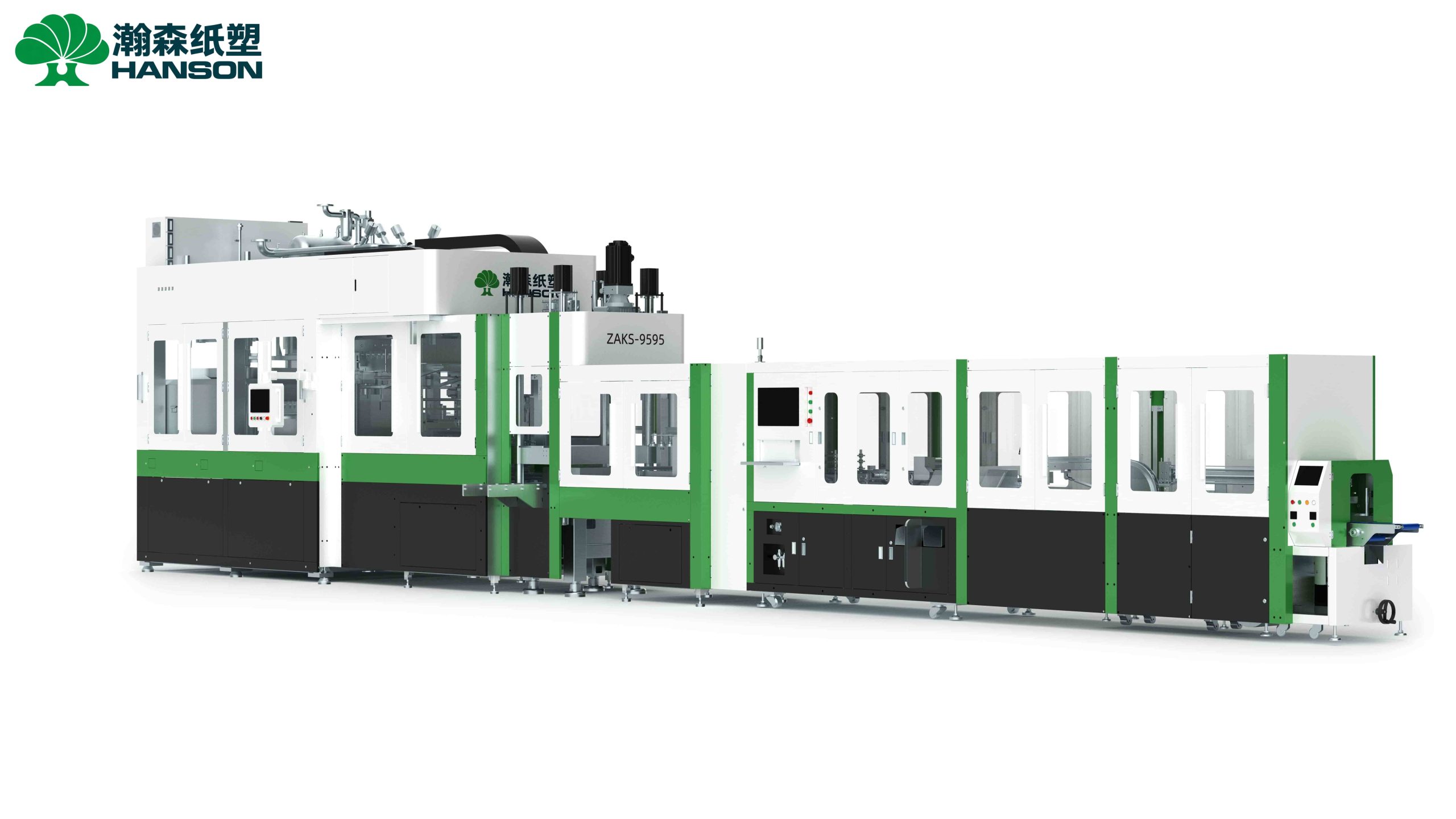
High-Volume Precision Items: Molded fiber cup lids demand not only precise forming but also accurate trimming and rigorous defect inspection. The Hanson ZAKS-9595 molded fiber cup lid machine integrates forming, hot pressing, servo die-cutting, machine vision inspection, and packaging into a continuous line, capable of producing approximately 100,000–120,000 cup lids per 24 hours under stable conditions.
-
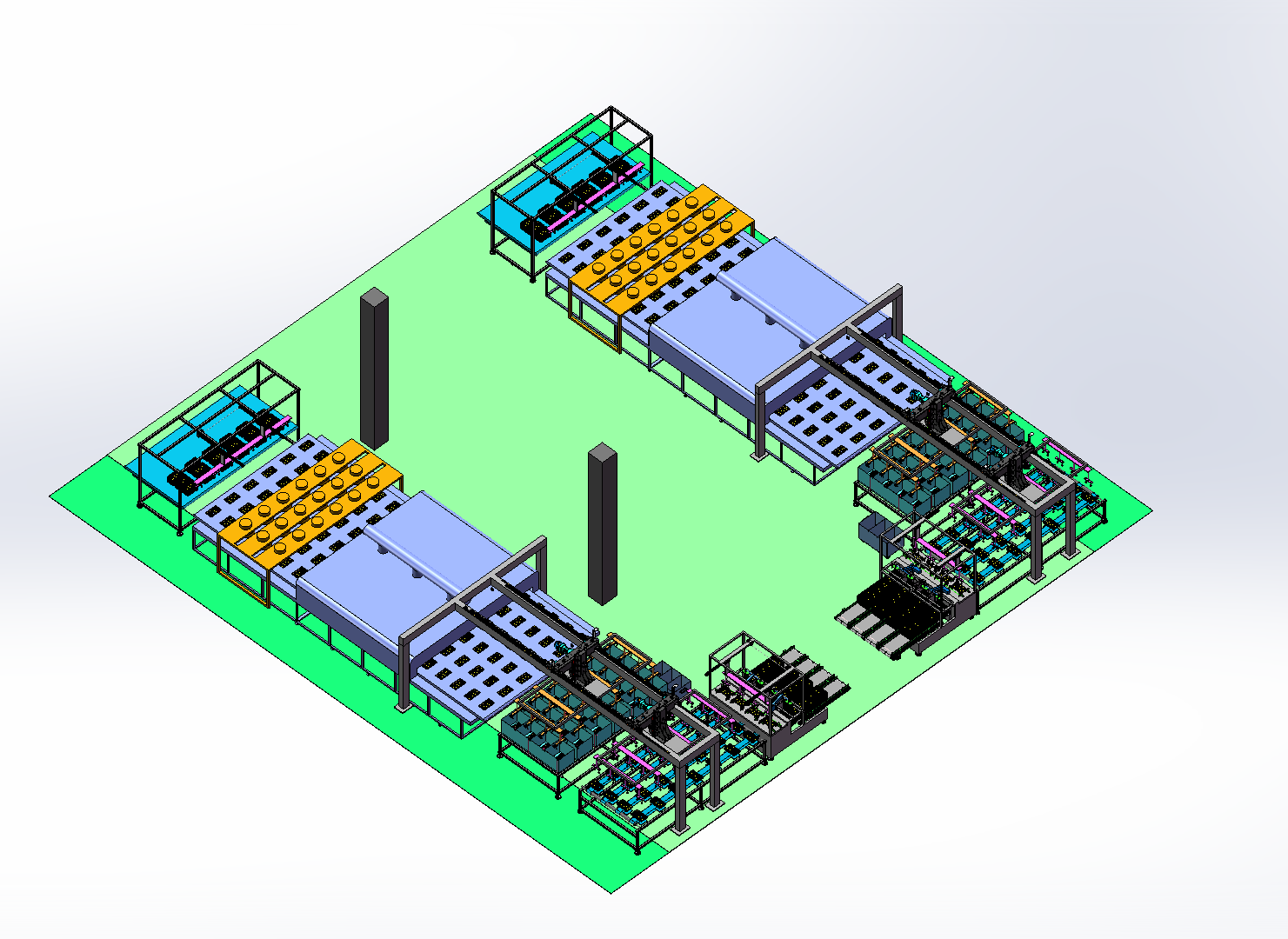
Surface Treatment Automation: If the products require water resistance, oil resistance, or enhanced aesthetics, coating or lamination must be factored into the plant layout. For example, integrating the Hanson HXT-24 automatic rotary spray coating line or an automatic lamination machine ensures that forming, surface treatment, drying, and stacking flow seamlessly without manual interruption.
FAQ
Does the theoretical cycle time of a pulp molding machine equal the actual daily capacity? No. Actual daily output is influenced by the product weight, dimensions, number of mold cavities, forming time, hot pressing duration, equipment uptime, and yield rate. Capacity must always be calculated based on the specific combination of product, tooling, and process.
What equipment should be purchased first when developing a new molded fiber product? It is not recommended to purchase large-scale commercial machines immediately. Projects should start with product definition, material testing, and structural design, followed by the use of a prototyping machine (like the Hanson ZAMS-6047) for process validation. Once the process is proven, you can safely configure the mass production equipment.
Can cup carriers and cup lids be produced on the same pulp molding machine? No, they serve different functions and require different technologies. Cup lids require extreme dimensional stability and precise trimming, typically produced on high-precision automated wet-press equipment like the Hanson ZAKS-9595. Drink carriers (cup carriers) are designed for load-bearing and protection, making them suited for automatic dry-press production lines.
Conclusion
Configuring a pulp molding machine is fundamentally about designing a tailored manufacturing system for a specific product. From the initial prototyping and process route selection to tooling design and post-processing automation, every step impacts the final yield and output. As a turnkey specialist, Hanson Pulp Molding engages from the product development stage, seamlessly integrating molds, processes, and equipment to ensure that innovative concepts successfully transition into stable, commercial mass production.
If you already have a product sample, 3D drawing, product dimensions, or target daily capacity, Hanson Pulp Molding can help evaluate the molding process, tooling, and equipment configuration for your project.
WhatsApp: +86 15920604830
Email: linchuangcheng@hspulpmolding.com