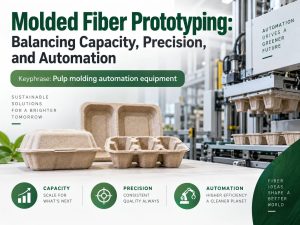
When investors plan to establish a new molded fiber factory or execute a massive capacity expansion, they often fall into a common operational trap: prioritizing the purchase of pulp molding equipment based solely on theoretical machine speed and price, and only attempting to figure out the pulp formulation, molded fiber tooling, and process parameters after the machines have arrived.
In reality, for a complete turnkey pulp molding plant, the equipment is simply the mechanical carrier of a specific manufacturing process. The correct plant planning methodology must start from the end product, working backward to define the required material, process route, and tooling, before finalizing the forming machines and factory automation setup.
The “Machine-First” Trap in Pulp Molding Projects
Procuring hardware without a solidified process strategy often leads to severe production bottlenecks, high energy waste, and unstable product quality.
-
Confusing Cycle Time with Actual Output: A common mistake is equating the forming machine’s theoretical cycle time with actual daily production capacity. True output is heavily influenced by the product’s weight, the number of cavities on the mold, dewatering efficiency, and hot pressing time. If the mold’s drainage design is poor, the subsequent thermal load increases, drastically slowing down the actual daily capacity regardless of the machine’s mechanical speed.
-
Ignoring the Pulping System’s Role: The pulping system transforms raw plant fibers into a stable slurry optimized for vacuum forming. If the pulping capacity is mismatched with the forming line, or if the pulp consistency fluctuates, the forming equipment will suffer from high defect rates and significant downtime.
-
Overlooking Post-Processing Bottlenecks: As forming speeds increase, secondary processes such as trimming, visual inspection, and packaging can quickly become the factory’s new bottlenecks if not properly automated.
Case Studies: Why Process Must Dictate the Equipment Setup
In large-scale turnkey projects executed by Hanson Pulp Molding, integrating process planning prior to machine installation has proven essential for commercial success.
The First Dry and Wet Press Mixed Molded Fiber Plant In a major project valued at approximately 80 million RMB (Sichuan Jinzhu / Wuliangye Project), the production requirements were highly complex. As the turnkey partner for the industry’s first dry and wet press mixed plant, Hanson Pulp Molding did not merely supply standard machines. The team conducted extensive process adaptation for bamboo pulp and integrated both dry-press and wet-press lines within the same facility. By unifying the pulping system planning, electrical control architectures, and tooling systems early on, the plant successfully achieved stable output by November 30, 2025. Purchasing standalone machines without this overarching process synergy would have resulted in utility conflicts and material scheduling failures.
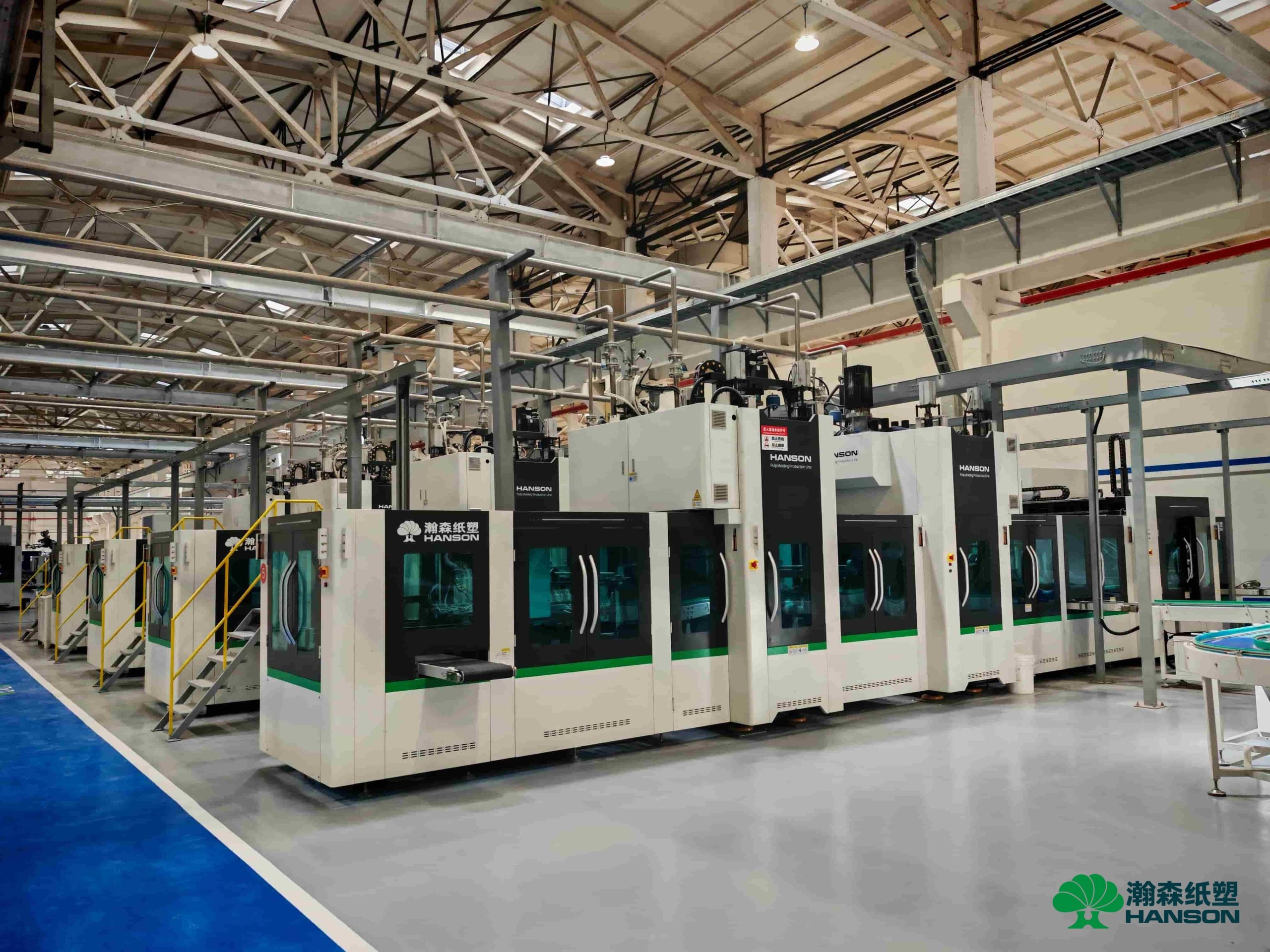
From Bamboo Fiber to Mass Production The Hunan Linggao project represents the first chemi-mechanical pulp project of its kind, encompassing 120,000 tons of bamboo pulp and targeting 35,000 tons of molded fiber tableware. For a project linking upstream raw materials directly to end-user packaging, standard equipment parameters were insufficient. Hanson Pulp Molding provided a comprehensive solution that covered plant planning, the pulping system, forming equipment, tooling adaptation, and vital production ramp-up support. This case highlights that a true industrial layout requires process validation before mass production equipment is deployed.
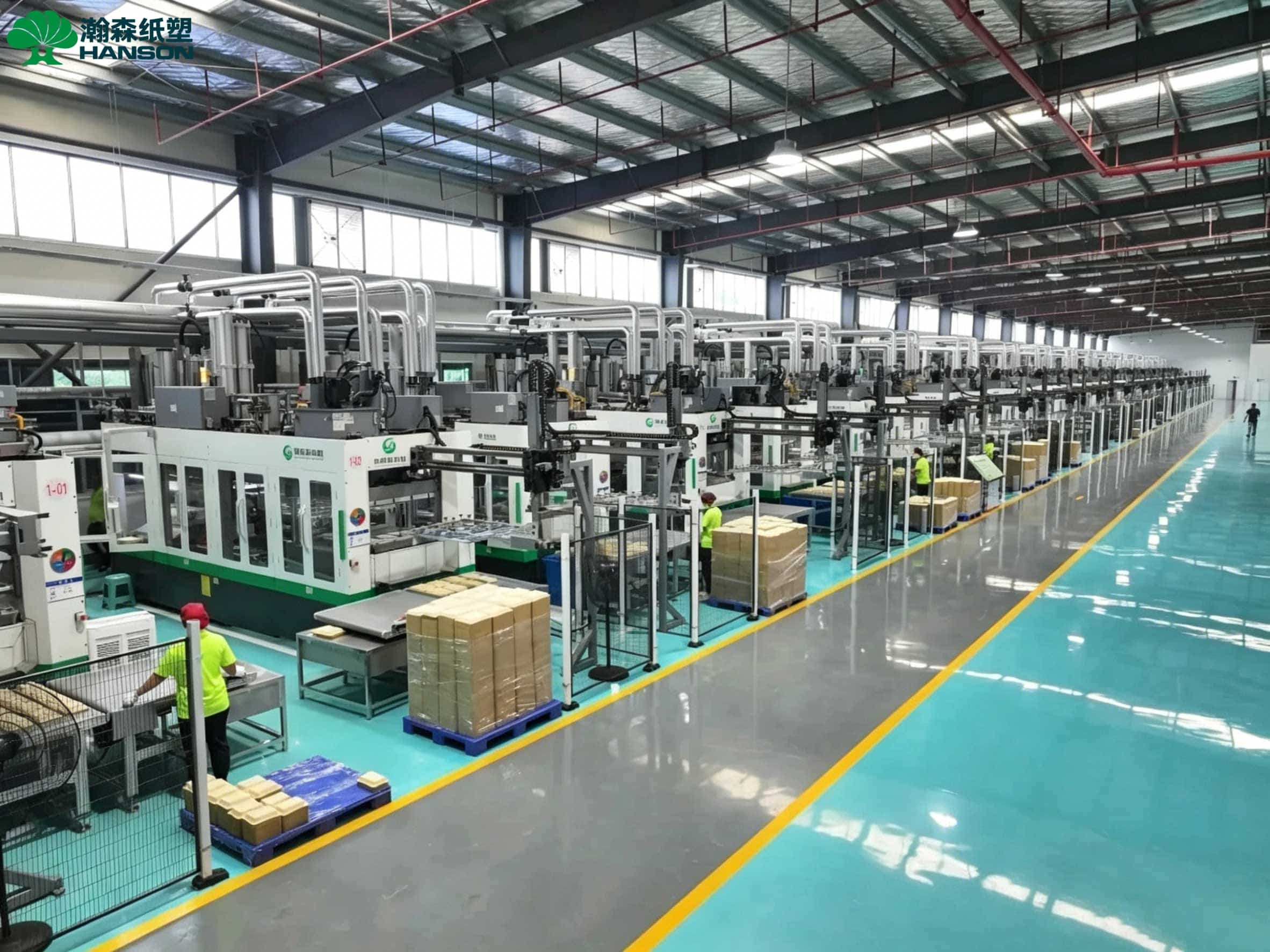
Hanson Pulp Molding’s 6+1 Turnkey Approach
As a specialist in turnkey pulp molding solutions, Hanson Pulp Molding approaches every project with a “6+1” service model: Product Development (+1), followed by Plant Planning, Intelligent Pulping Systems, Forming Equipment, Mold Manufacturing, Post-Processing Automation, and Production Ramp-Up Support.
Equipment selection is strictly based on product characteristics:
-
Tableware Production: For high-volume items like plates and clamshells, equipment like the ZFG-1111 or the full-servo ZBG-1111 is utilized to optimize energy consumption and mass production stability.
-
Premium Industrial Packaging: Products such as smartphone inserts require exceptional surface quality and dimensional accuracy. The ZAP-9585 machine integrates forming and hot pressing to maintain strict manufacturing tolerances.
-
Cup Lid Automation: High-volume, small-format products demand continuous operation. The ZAKS-9595 molded fiber cup lid machine integrates forming, hot pressing, servo-driven punch cutting, machine vision inspection, and automatic packaging.
-
Dry Press Protective Packaging: For cup carriers and egg cartons, an automatic dry-press pulp molding production line is configured with cold pressing (pre-dewatering) and tunnel drying systems to manage moisture content effectively before final pressing.
FAQ
How is the daily capacity of a pulp molding machine calculated? Theoretical cycle times do not equal actual output. Daily production capacity must be evaluated based on the specific product weight, the number of mold cavities, forming and hot pressing times, and the equipment’s overall operating efficiency.
What is the difference between wet press and dry press molded fiber? The primary difference lies in how and when moisture is removed. In the wet press process, the wet preform enters a heated mold where it is pressed and dried simultaneously, resulting in a smoother surface ideal for premium packaging and tableware. The dry press process typically utilizes an independent tunnel dryer to remove moisture before any final pressing, which is highly efficient for protective packaging like egg trays and cup carriers.
Can one pulp molding machine produce any type of product? While machines can change molds, different products (e.g., tableware vs. premium industrial packaging vs. egg trays) have drastically different requirements for surface finish, dimensional accuracy, thermal load, and automation. Hanson Pulp Molding recommends configuring specific equipment tailored to the target product’s process requirements to ensure optimal efficiency and quality.
Conclusion
Successful large-scale molded fiber manufacturing is never achieved by simply buying high-parameter machines. It is a systematic engineering effort that demands the seamless integration of pulping, tooling, forming, dewatering, and automation. By defining the product and process first—and working backward to select the appropriate equipment and utilities—investors can significantly reduce risks and guarantee stable commercial production.
If you are planning a new pulp molding plant, you can share your target products, required capacity, plant conditions, and automation requirements. Hanson Pulp Molding can evaluate the project from product development and plant planning to pulping, forming equipment, tooling, post-processing, and production ramp-up.
WhatsApp: +86 15920604830
Email: linchuangcheng@hspulpmolding.com