When launching a new molded fiber packaging project—whether transitioning from plastic packaging or introducing a novel plant-based fiber formula—the initial step should not be purchasing a high-volume production line. Many businesses enter the market without finalized product structures, materials, or tooling designs. Establishing a prototyping line for process validation and small-batch trial production is a critical step in mitigating investment risks.
However, selecting equipment for a prototyping line using the same criteria applied to large-scale pulp molding automation equipment often leads to strategic errors. A prototyping machine’s core mission is validation. Therefore, investors must approach the balance of capacity, precision, and automation with a completely different mindset.
Balancing the Core Variables in Molded Fiber R&D
1. Precision and Process Flexibility: The Absolute Priority
Prototyping helps verify whether a product can be successfully formed, if the structural design is logical, and if the chosen material achieves the required surface finish, thickness, and strength. Because of this, a molded fiber prototyping machine must deliver exceptional process control accuracy and the ability to adapt to multiple variables.
During product development, engineers frequently test various pulp formulations, such as wood pulp, bamboo pulp, bagasse, or specialized additives like nanocellulose. Different fibers vary significantly in length, strength, dewatering efficiency, and forming behavior. The prototyping equipment must precisely manage vacuum levels, forming times, hot-pressing temperatures, and pressure. High process precision ensures that the parameters established during the R&D phase will provide a reliable baseline for commercial mass production.

2. Automation: Testing for Scalability
In large-scale pulp molding automation equipment, a high degree of automation is implemented to reduce labor and maintain continuous production. In a prototyping line, however, the value of automation lies primarily in “mass production feasibility testing”.
New products must go through forming and hot pressing, but they often require secondary processing automation such as trimming, vision inspection, or spray coating. If the prototyping phase relies entirely on manual handling, it is impossible to assess how the wet preform will behave during automated transfer or how the product will align in an automated trimming station. A prototyping line should simulate the automated steps of commercial production to expose any structural design flaws that might hinder high-speed manufacturing.
3. Capacity: A Secondary Consideration for Small-Batch Validation
For commercial tableware projects, metrics like daily output and energy consumption are critical. But the core value of a prototyping machine is not high-volume output; it is designed to help clients verify the product and process before determining the mass production setup.
Over-emphasizing capacity in a prototyping line drives up initial investment and reduces flexibility. Large molds and complex machine architectures make switching between different product formulas and tooling designs time-consuming and expensive. A prototyping line only needs to produce small batches—ranging from dozens to a few hundred pieces—to validate the commercial viability of a material and mold combination.
How Hanson Pulp Molding Empowers Product Development
Transitioning from material research and prototyping to stable commercial production requires a comprehensive engineering approach. As a turnkey specialist in pulp molding, Hanson Pulp Molding integrates product development into the very beginning of its “6+1” turnkey service model.
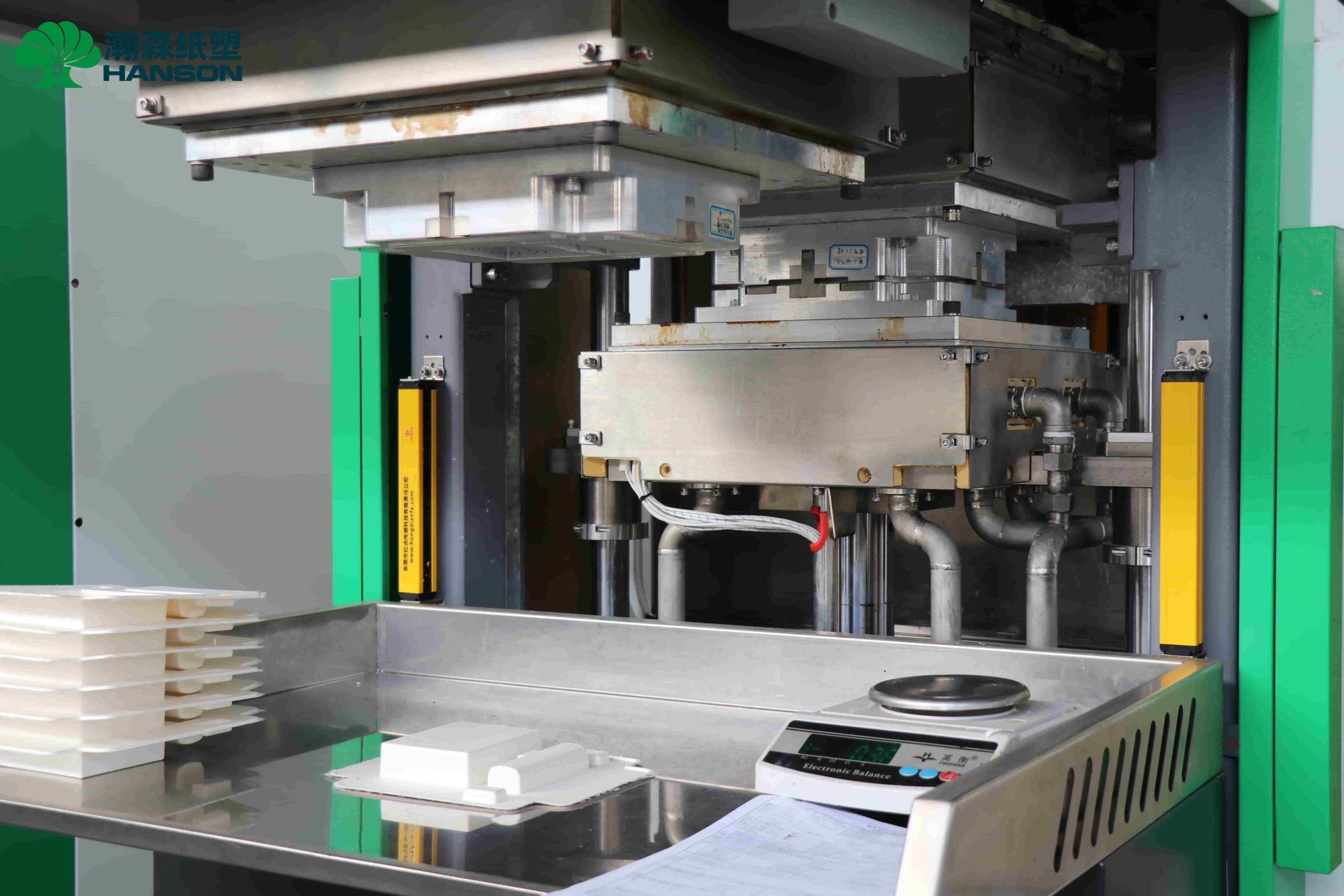
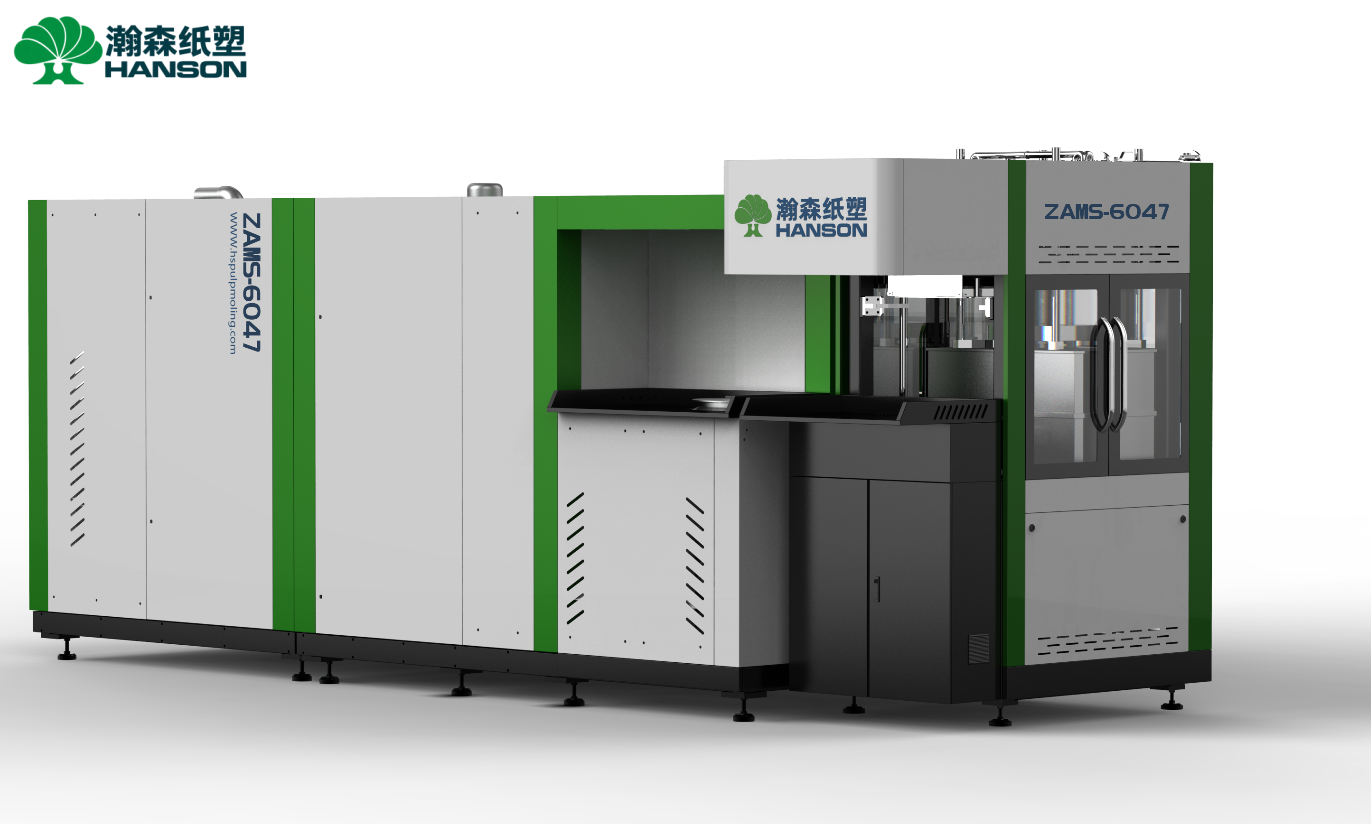
The Hanson Pulp Molding ZAMS-6047 prototyping machine is specifically designed for new product development, material testing, formula validation, and pre-production small-batch trials. Major packaging manufacturers and material science companies consistently follow this “verify first, scale later” methodology.
-
For specialized additive testing, Hanson Pulp Molding provided a customized prototyping platform for Solenis to iteratively test different slurry systems and barrier coating formulations.
-
When Shengquan required a unique diamond-shaped bowl with no ready-made equipment available on the market, Hanson Pulp Molding engaged in custom R&D and provided approximately seven months of on-site production ramp-up support via contract manufacturing. Large-scale equipment was only deployed after the process was fully validated.
For new materials, innovative structures, or projects where the design is not yet finalized, using a prototyping machine first reduces the technical risks associated with jumping straight into commercial-scale manufacturing.
FAQ
1. Why is a prototyping machine necessary before mass production? Prototyping verifies whether a product can be formed correctly, if the material properties are suitable, and if the mold design allows for efficient dewatering and hot pressing. Verifying these factors in small batches is much safer and more cost-effective than discovering design flaws on a commercial production line.
2. Can I use the same machine for prototyping and commercial production? It is generally not recommended. Prototyping equipment is optimized for flexibility, allowing for frequent mold changes and parameter adjustments to test different formulations. Commercial equipment focuses on stability, unit energy efficiency, and high-volume continuous output.
3. If I have a 3D product design, can I directly order mass production equipment? This approach is risky. A 3D drawing only details the structural concept; it does not confirm if the product can be easily released from the mold, if the draft angles are sufficient for molded fiber, or if shrinkage will affect dimensional accuracy. The most reliable method is to conduct process validation through prototyping before configuring the commercial equipment.
Conclusion
When building a prototyping line for molded fiber product development, prioritizing precision and process flexibility over sheer capacity is essential. Accurate material and mold validation in the R&D stage lays the foundation for consistent product quality. Once the process parameters are locked in, businesses can confidently transition to high-speed pulp molding automation equipment tailored for mass production.
If you already have a product concept, 3D drawing, new material formulation, or require small-batch trial runs, Hanson Pulp Molding can evaluate the tooling, process, and equipment configuration based on your target product. Validating your design first ensures a smoother transition to full-scale manufacturing.
WhatsApp: +86 15920604830
Email: linchuangcheng@hspulpmolding.com