
Fully Servo Pulp Molding Machine Technology: Motion Control, Precision, and Production Consistency
A fully servo pulp molding machine replaces the hydraulic or pneumatic actuators on forming and pressing with servo-driven axes, so force, position and speed are set independently and repeated from one cycle to the next. The practical result is not a faster machine but a repeatable one: the hundredth part is pressed the way the first part was, without an operator adjusting a valve.
The distinction matters because most quality complaints in molded fiber come from variation rather than from a bad setting. A line that is set correctly at the start of a shift and drifts by the end produces rejects that nobody can explain, and the explanation is usually mechanical: a valve that responds slowly, a seal that has warmed up, a pressure that depends on what else in the plant is running.
What Makes a Fully Servo Pulp Molding Machine Different
The difference is where the motion comes from. A conventional press uses a hydraulic power pack running continuously and valves to meter flow to each cylinder; a servo axis uses a motor and drive that delivers exactly the motion the program asks for, and consumes power in proportion to the work done.
Servo control also makes the press programmable in a way a valve cannot. Closing can be fast until contact, slow through the last few millimetres, then held at a set force for a set time, all in one cycle without a mechanical stop or a pressure switch. On molded fiber that sequence matters because the wet part must not be shocked at contact and must be held long enough for the surface to set.
| Drive type | How the motion is set | Typical behaviour over a shift | Where it fits |
| Manual or pneumatic | Valve or regulator adjusted by hand | Drifts with temperature and supply pressure | Low volume, simple parts, tight capital |
| Hydraulic with valve control | Pressure and flow valves, mechanical stops | Stable when warm, sensitive to oil temperature | High force, established designs |
| Servo electric cylinder | Position, speed and force from the program | Holds settings; self-monitoring for deviation | Forming axes, precise and repeatable strokes |
| Servo hydraulic | Pump output controlled by a servo drive | High force with lower idle loss | Pressing and trimming at high tonnage |
Reading the table by column rather than by row explains why the term fully servo is used loosely in the market. A machine can be servo on the forming axis and valve-controlled on the press, which is a different proposition from servo on both.
Servo Forming: Force, Position and Speed Set Separately
On a conventional forming station, the depth the mold reaches into the slurry and the speed of that movement are set mechanically, and changing either takes a tool adjustment. On a servo forming axis they are parameters, which means the same mold can run a light draw and a deep draw without being re-shimmed.
The value appears during product changes. A plant that runs four products a week spends a share of each changeover adjusting mechanical stops, and every adjustment is a chance to introduce a difference that nobody records. With a programmable axis, the recipe for each product is recalled and the changeover becomes a selection.
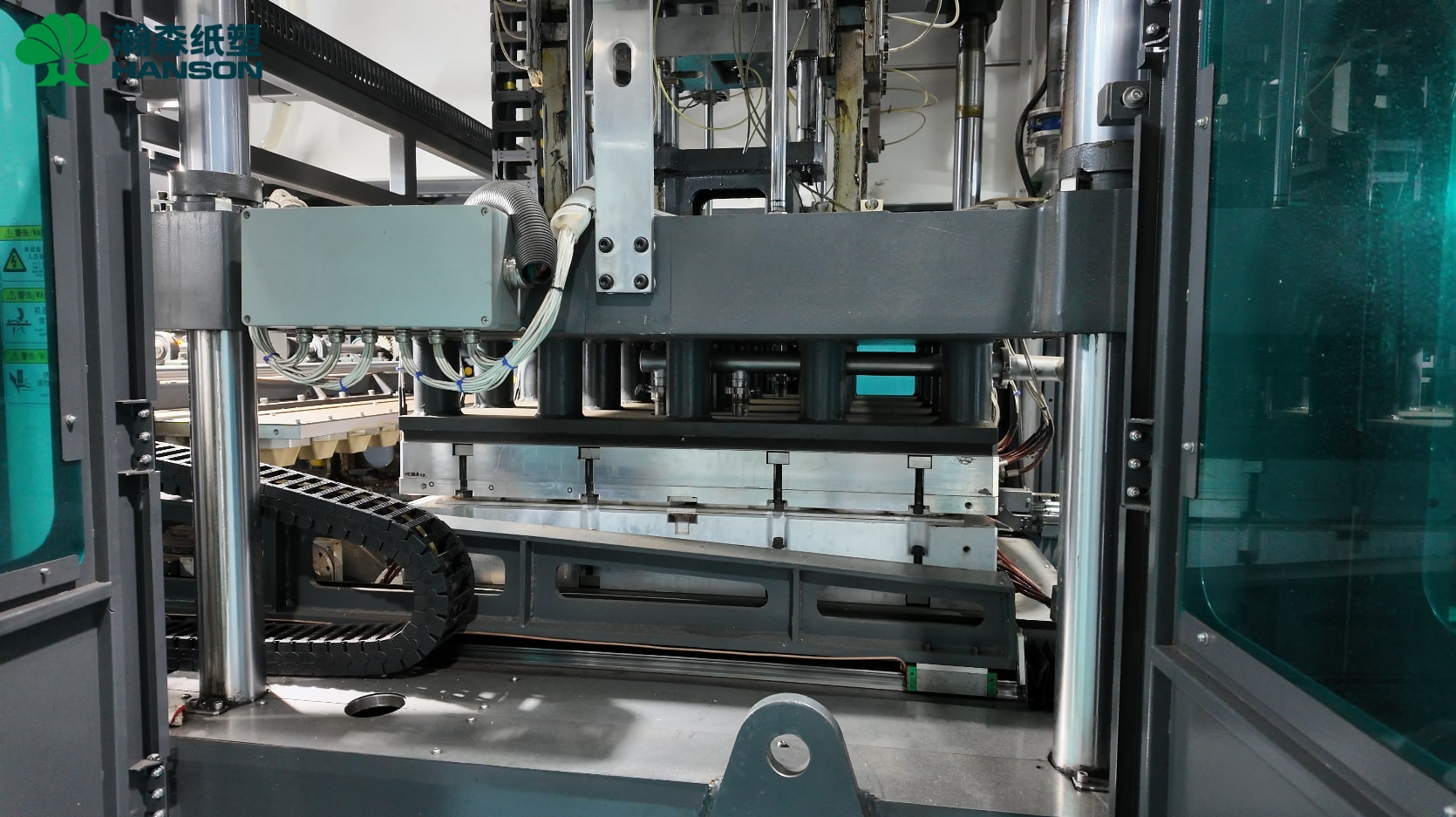
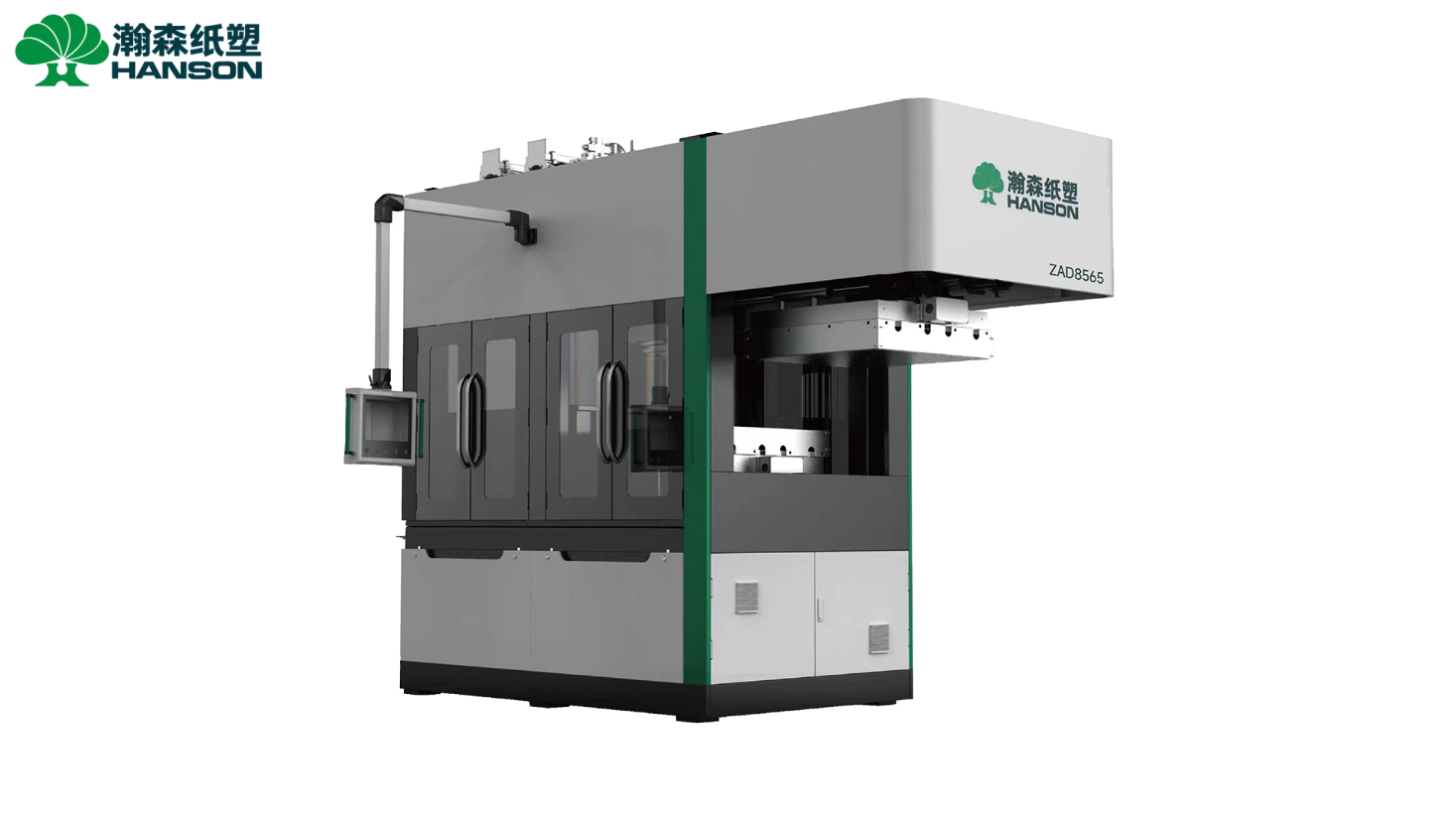
The ZAD-8565 packaging former uses a 3 t servo electric cylinder for forming and a 20 t servo hydraulic press for hot pressing, which is a common split: an electric axis where position precision matters, a servo hydraulic axis where force and dwell dominate. Combining the two in one machine gives each station the characteristic it needs rather than forcing one technology across the line.
Repeatability Compared with Hydraulic and Pneumatic Presses
Repeatability is the property that pays for servo control, and it is measured rather than claimed. Two numbers describe it: the spread in position at the end of the stroke, and the spread in force during the dwell. A valve-controlled press typically varies more in both as oil temperature rises through a shift.
The consequence on product is direct. Position spread changes the density at the rim, which changes how a plate stacks or how a container nests. Force spread changes compression, which changes thickness and, on a deep part, whether the wall holds through drying.
A practical test during acceptance is to press a run of parts with the same mold and weigh each one. A servo axis that is holding its program shows a narrow weight distribution; a drifting press shows a pattern that follows the clock. This single test says more about the machine than a demonstration at one setting.
Where Consistency Comes From in a Servo Cycle
Consistency in a servo cycle comes from three places: the motion profile, the feedback loop, and the fact that the profile is stored rather than remembered. Each of the three removes a source of variation that exists on a manual machine.
The motion profile removes contact shock. A wet part that is closed on quickly loses fiber at the screen edge, and the defect appears as a thin rim on one side. A programmed profile that decelerates before contact removes that failure mode without changing the tool.
The feedback loop removes the effect of mechanical wear. As seals and guides wear, a valve-controlled press delivers less force for the same setting, and the operator compensates by feel. A servo axis measures what it achieved and corrects within the cycle, which means the compensation is done by the control rather than by a person who may be on a different shift tomorrow.
Storage removes the shift-to-shift reset. When a product recipe is stored with its pressing force, dwell and forming depth, a changeover recreates the last accepted settings instead of approximating them. That is the mechanism by which a plant holds quality across a shift change, and it is the reason the settings record matters as much as the hardware.
Energy and Heat: What Changes on the Shop Floor
A hydraulic power pack runs whether or not a cylinder is moving, so a valve-controlled press draws power during dwell and between cycles. A servo axis draws in proportion to the work it does, and a servo hydraulic pump reduces output when the circuit is holding pressure.
The change is visible on the electricity meter and audible in the hall. Plants that replace a continuously running pack with servo drives usually notice the noise reduction first, because the pump is no longer running at full speed while the press is idle.
Heat is the second effect. Hydraulic oil carries away energy that a servo system does not put in, so oil temperature and cooling demand fall. On a line where the press sits near the forming area, that reduction changes the working environment as well as the utility load, and it reduces the moisture the press environment adds to parts waiting in trays.
Maintenance Profile of Servo Axes
Servo axes change what maintenance looks like rather than removing it. Four items define the routine.
- Mechanical wear— belts, screws and guides still wear, and the control can report following error before a part is affected.
- Absolute position checks— platen parallelism and mold register should be verified at fixed intervals, not after a quality complaint.
- Drive and motor cooling— cabinet filters and heat sinks need cleaning on a schedule, because a hot drive faults before it fails.
- Software and parameter backup— a copy of the recipes and drive parameters, held outside the machine, is the cheapest insurance on the line.
The trade compared with hydraulics is straightforward. Servo systems remove oil, filters, accumulators and valve overhaul, and they add electronics, parameters and the need for a technician who can read a drive diagnostic. A plant without that capability will find a servo line harder to own than a hydraulic one, even though it fails less often.
When Servo Control Is Not the Right Investment
Servo control pays where variation is expensive: thin parts, tight stacking, food-contact tableware, and products where a rejected part costs more than the electricity saved. It pays less where the product is forgiving and the plant runs one simple item on a stable setting.
- Simple, thick products— a heavy protective block tolerates a wider force band, so the repeatability gain does not show up in the reject rate.
- Very low volume— a machine that runs a few days a month carries the cost of electronics without the benefit of accumulated cycles.
- No maintenance capability— without someone who can read a drive fault, the diagnostic advantage is wasted.
- Unstable utilities— servo drives are less tolerant of voltage variation than a simple motor, so supply quality has to be checked first.
The honest version of the argument is that servo is a quality investment with an energy side benefit, not an energy investment with a quality side benefit. A buyer who justifies it on power savings alone usually finds the payback longer than expected.
How Hanson Applies Servo Technology
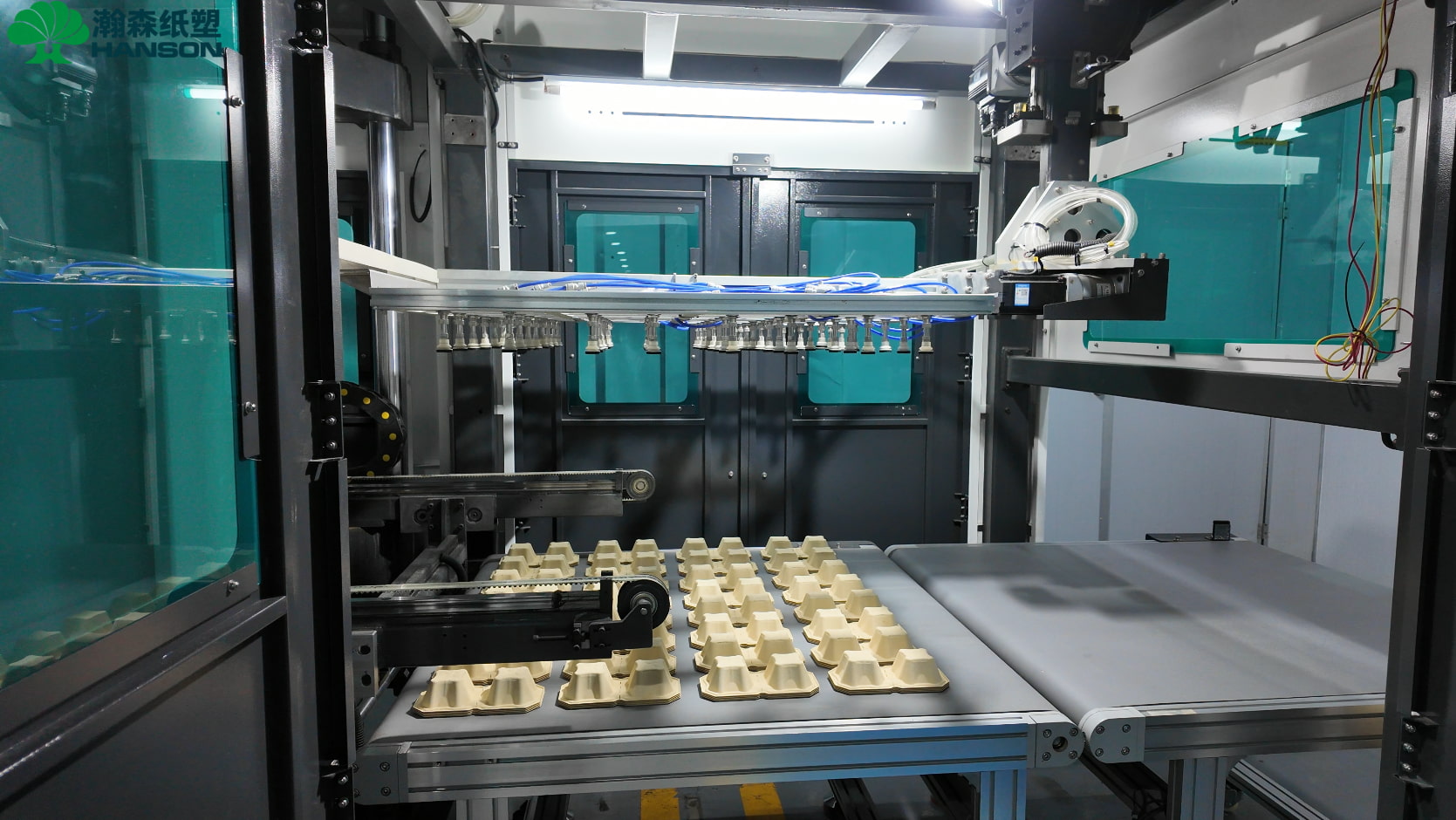
We apply servo control where it changes the part rather than across the whole machine by default. Forming axes are servo electric where position precision decides the draw; pressing is servo hydraulic where force and dwell decide density; transfer is servo where the part is thin enough that handling damage shows.
That logic produces different configurations for different products. The ZAP-9585 packaging former runs 10 t forming and 40 t pressing on a 950 × 850 mm platen for deeper industrial parts, and the ZAKS-9595 cup lid production line adds vision-guided handling at 0.5 mm accuracy with a 50 t trimming station for cup lids and similar parts, where handling and trim position both affect the seal. On tableware, the ZBG-1111 premium line uses a six-axis robot with 2700 mm reach and 300 kg payload to move parts without touching the rim.
Founded in 2022, we build in a 50,000 m² plant in Dongguan, Guangdong, China with more than 200 employees and about 50 in research and development, producing roughly 150 machines a year with CE certification on the relevant series and 50 patents across forming, pressing and tooling. Ten service points cover 23 export markets, minimum order is one machine and typical lead time is about 60 days, with commissioning support up to six months on site where a new product family is involved.
Because molds are designed and machined in house, the motion profile and the cavity are developed together, which is where a servo machine delivers more than a hydraulic one with the same tool. Our company profile sets out the plant and the certification scope, and the service program covers installation through ramp-up.
If you are weighing a fully servo pulp molding machine against a hydraulic alternative, send the part, the tolerance that matters and the shift pattern. We will return the configuration we would propose, the axes that are servo and the ones that are not, and the measurements we would take at acceptance so the decision rests on parts rather than on a specification sheet. Contact our engineering team to start the comparison.