
For many investors entering the molded fiber foodservice packaging industry, approving a perfect product sample is a moment of triumph. It is easy to assume that the next step—mass production—is simply a matter of buying pulp molding tableware equipment and feeding it with pulp.
However, transferring a successful prototype to a factory floor running 24 hours a day introduces entirely new engineering challenges. Product deformation, inconsistent yields, high energy consumption, and post-processing bottlenecks can quickly derail a project’s profitability.
Moving from a prototype to producing tons of qualified molded fiber plates and bowls daily requires a systematic approach. To achieve stable mass production, buyers must understand the critical relationship between tooling, the wet-press process, equipment capacity, and post-processing automation.
The Gap Between a Perfect Sample and Mass Production
In the R&D and sampling phase, engineers can manually intervene, extend heating times, or ignore energy consumption to produce a flawless sample. In commercial mass production, cycle times are strictly compressed, and equipment must run continuously.
If a mold’s drainage design is inefficient, the wet preform will retain too much moisture. This excess water must then be evaporated during the hot-pressing stage, which extends cycle times, increases energy consumption, and reduces the actual daily output. Therefore, achieving mass production starts with designing products and molds optimized for scale.
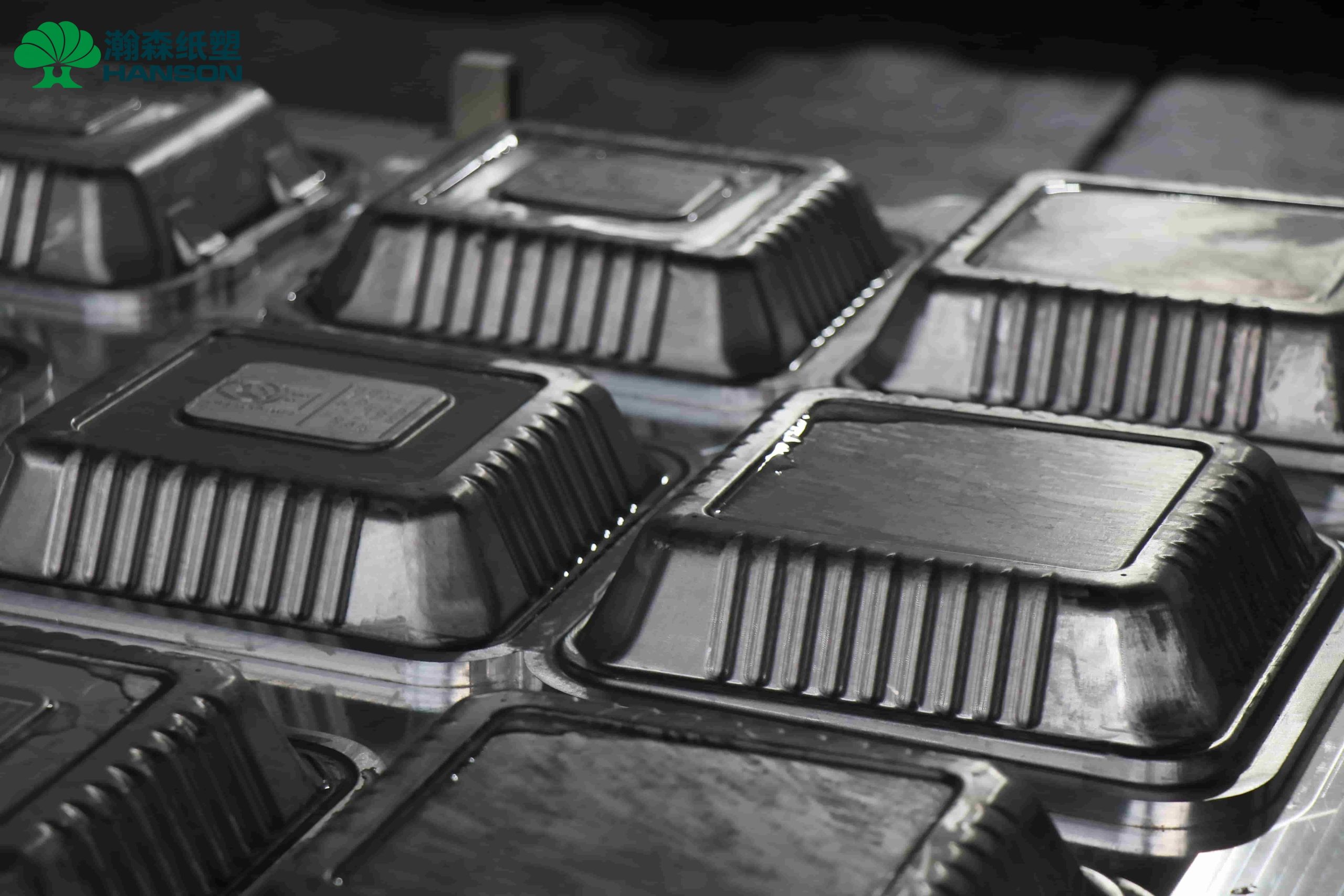
Step 1: Molded Fiber Tooling and Product Design
Molded fiber tooling does more than just shape the product. It actively dictates fiber absorption, vacuum dewatering efficiency, and wet preform transfer.
-
Dewatering Efficiency: The mesh and internal drainage channels of the forming tool determine how quickly water is removed. Effective pre-dewatering reduces the thermal load on the hot-press mold.
-
Draft Angles and Demolding: Takeaway clamshells or deep bowls require specific draft angles. Incorrect structural design can lead to warping or tearing when the wet preform is transferred between stations.
-
Cavity Layout: While increasing the number of cavities on a mold can theoretically increase the output per cycle, it must perfectly match the machine’s effective pressing area and vacuum capacity to ensure uniform product density and finish across all cavities.
Step 2: Choosing the Right Wet-Press Pulp Molding Tableware Equipment
Once the product geometry and mold strategy are defined, it is time to evaluate the pulp molding tableware equipment. Buyers should avoid relying solely on “theoretical cycle time” when calculating capacity. Actual daily output is determined by product weight, mold cavities, hot-pressing time, and the machine’s effective operating rate.
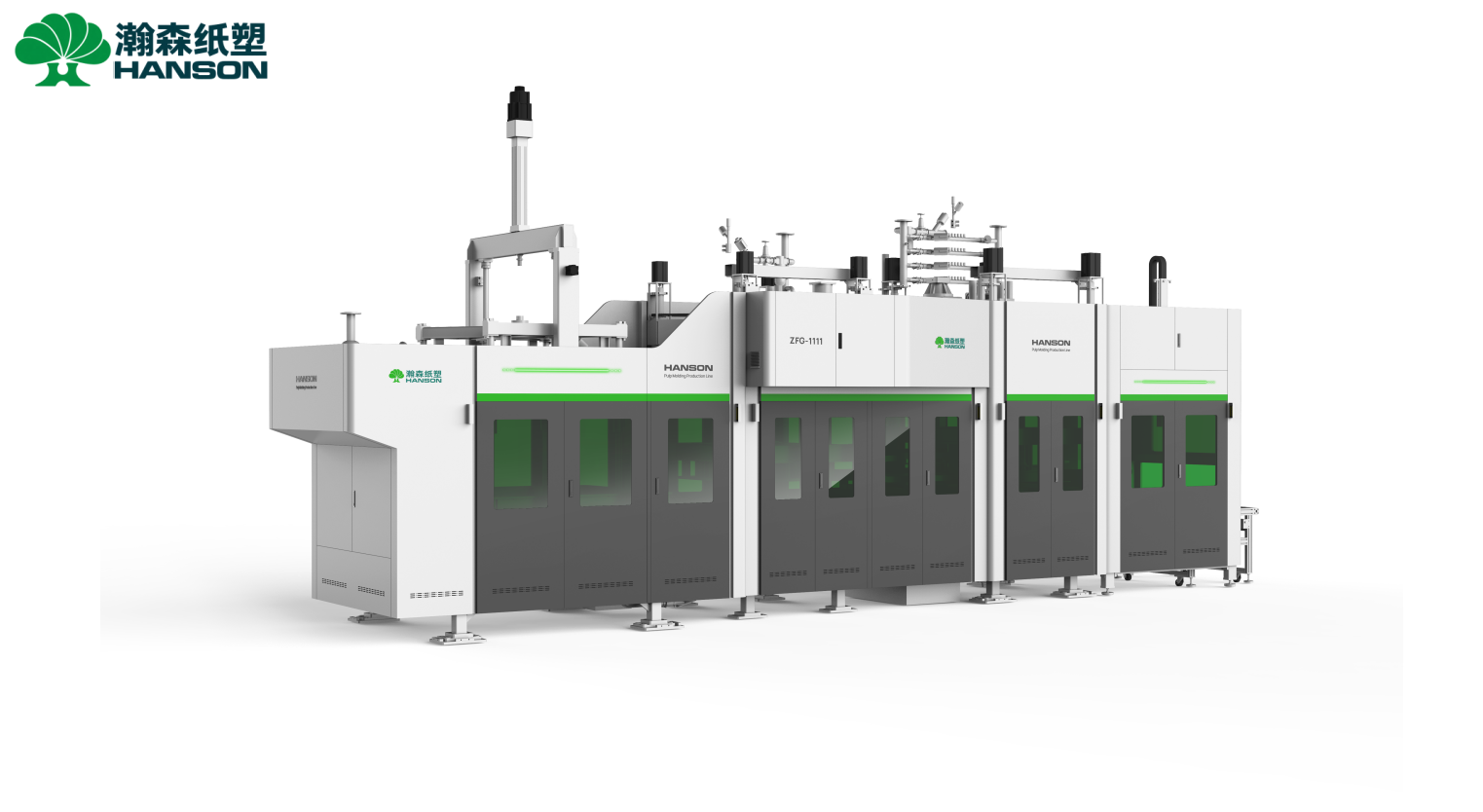
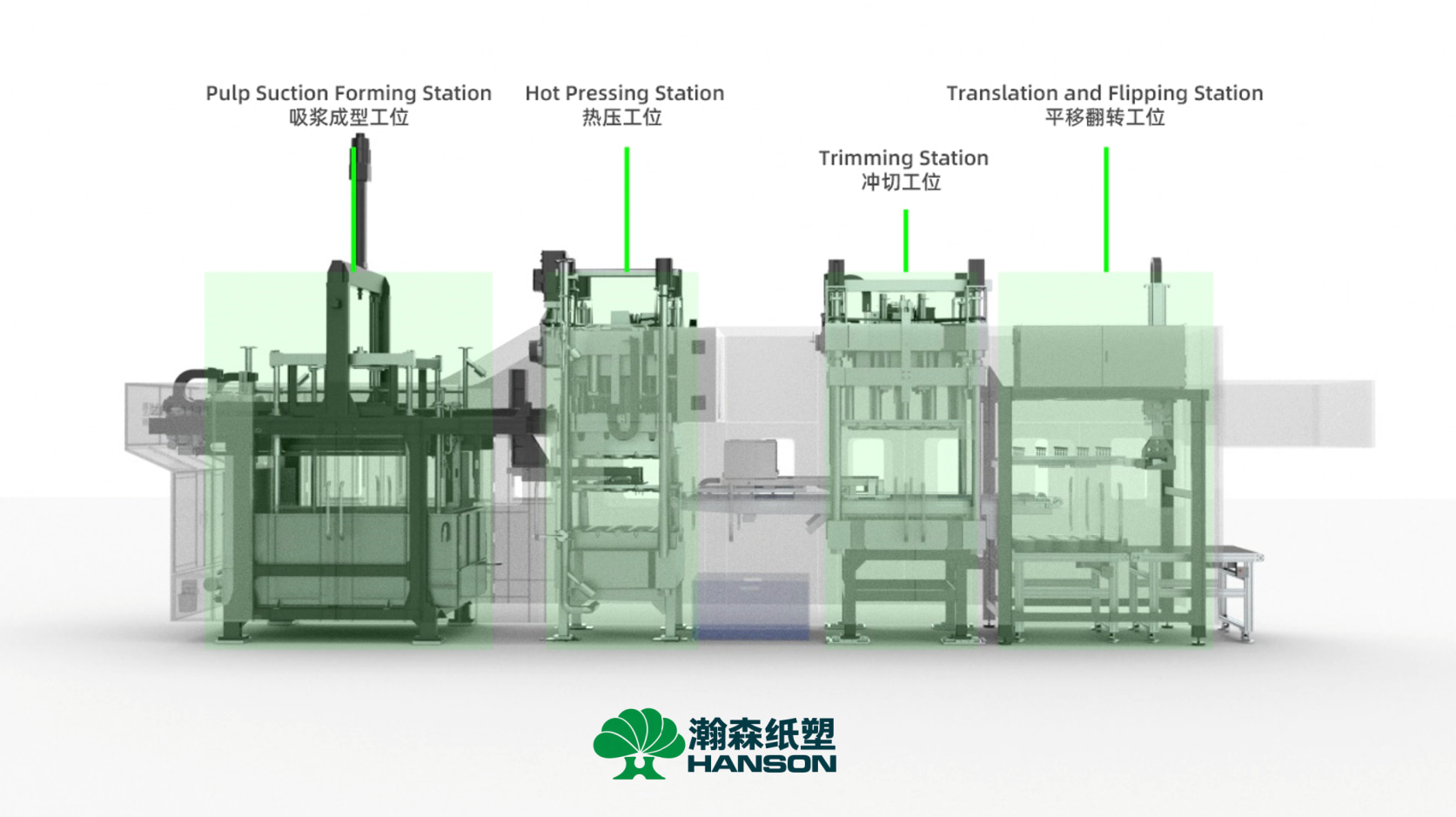
For high-volume tableware production, Hanson Pulp Molding offers equipment designed specifically for mass manufacturing. For example, the ZFG-1111 is designed to integrate forming, hot-pressing, trimming, and stacking within the machine system.
-
Consistent Output: Under appropriate production conditions, the ZFG-1111 can achieve a single-machine daily capacity of over 1.8 tons.
-
Energy Control: By optimizing the mechanical structure and process parameters, the equipment can achieve an electricity consumption of less than 1,800 kWh per ton of product, depending on the specific product and operational setup.
For projects demanding even tighter process control, configurations like the ZBG-1111 full-servo pulp molding tableware machine utilize a “one forming station + two hot-press stations” design, providing exceptional stability for high-speed, continuous production.
Step 3: Integrating Trimming and Post-Processing Automation
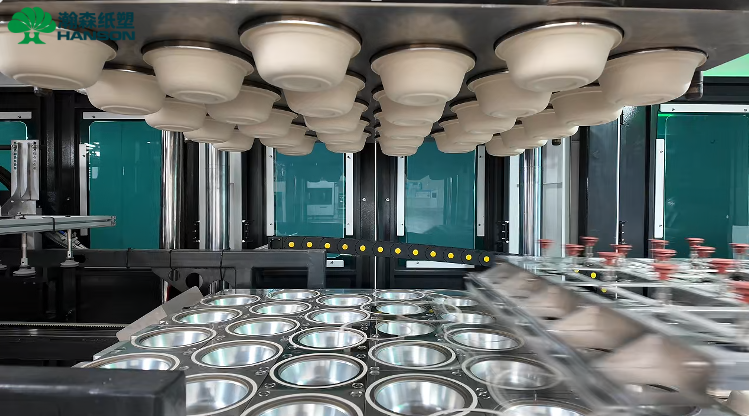
A production line is only as fast as its slowest bottleneck. If the primary forming machine operates rapidly but the subsequent trimming and stacking rely on manual labor, the factory floor will soon face a backlog of semi-finished goods, forcing the main equipment to slow down.
In modern mass production, off-line trimming is inefficient. Integrating automatic trimming (punch cutting) and automatic stacking ensures high dimensional accuracy for every batch. This consistency is essential not only for the quality of the final tableware but also for ensuring smooth operation in downstream automatic packaging systems.
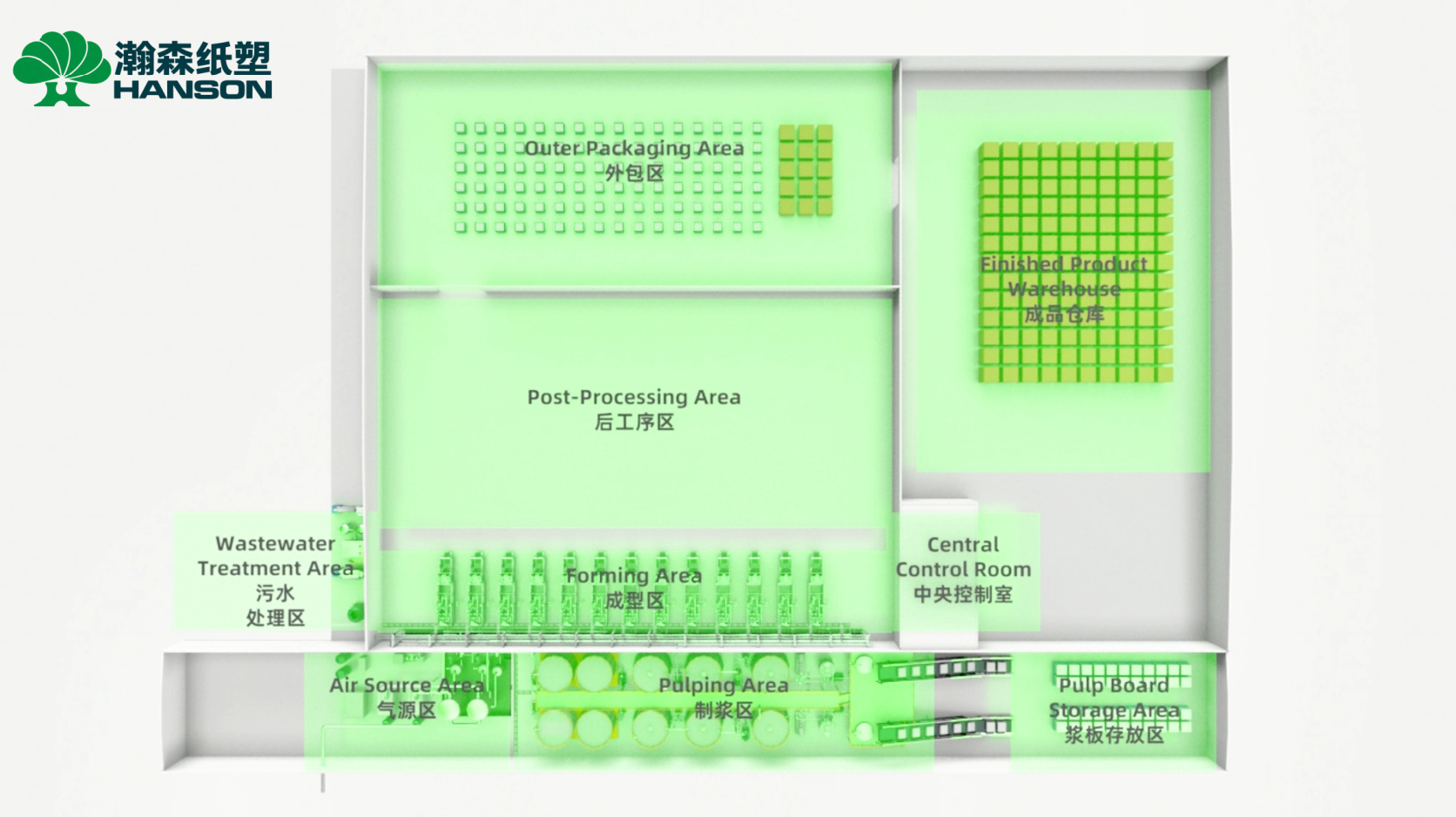
Step 4: Turnkey Plant Planning for Stable Yields
Even the most advanced pulp molding machine cannot operate efficiently without a stable pulp supply. The pulping system must deliver a consistent slurry concentration and freeness; otherwise, the forming equipment will produce plates with varying thicknesses and weights.
Furthermore, utilities such as the vacuum system, compressed air, and heat sources must be designed to support the entire plant’s targeted capacity. As a turnkey specialist in pulp molding solutions, Hanson Pulp Molding approaches projects holistically. From product development and intelligent pulping systems to forming equipment and production ramp-up, integrating these systems ensures that the factory runs as a unified, profitable manufacturing ecosystem.
FAQ
How many products can a pulp molding tableware machine produce in a day? There is no fixed number that applies to all products. The actual daily capacity depends on the product’s weight, dimensions, the number of mold cavities, hot-pressing time, and the effective operating time of the equipment. Theoretical cycle times must be evaluated alongside these specific production variables.
Can I produce different products just by changing the mold? While changing the mold is required, it is rarely the only adjustment needed. Different products vary in weight, thickness, and structure. After a mold change, operators typically need to adjust the pulp formulation, vacuum levels, and hot-press temperature and pressure settings to maintain high yield rates.
How can a molded fiber factory reduce energy consumption? Energy reduction should not be measured just by the machine’s installed power. Improving the dewatering efficiency during the forming stage (reducing the wet preform moisture content) significantly lowers the thermal energy required for evaporation. Additionally, optimizing the plant’s pulping and vacuum system layouts plays a major role in reducing overall energy consumption per ton.
Conclusion
Scaling molded fiber tableware from a single prototype to commercial mass production is an engineering challenge that requires tight coordination between tooling, process parameters, equipment, and automation. When selecting pulp molding tableware equipment, buyers should look beyond basic parameter sheets. By aligning the machine configuration with the specific requirements of the product and establishing a comprehensive turnkey plant design, investors can build a highly efficient and profitable manufacturing operation.
If you already have a product sample, 3D drawing, product dimensions, or a target daily capacity, these details can be used to evaluate the most suitable molding process, tooling, and equipment configuration for your project. Hanson Pulp Molding can guide you from product development through to stable commercial production.
WhatsApp: +86 15920604830 Email: linchuangcheng@hspulpmolding.com