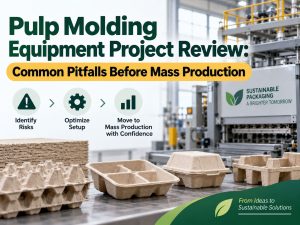
When investing in a new wet press molded fiber foodservice packaging plant, one of the most common questions from investors is how many products a single machine can output per day. However, the final production capacity of a pulp molding project is never determined by a single machine alone. Instead, it is the result of a highly coordinated manufacturing system that includes pulping capacity, forming cycle time, hot pressing, tooling, post-processing automation, and energy supply.
This article explores why capacity planning for pulp molding tableware equipment must take a holistic approach, supported by lessons learned from real-world large-scale plant projects.
Why Theoretical Cycle Time Does Not Equal Actual Plant Capacity
It is a common misconception to calculate daily capacity simply by multiplying the number of products per cycle by the theoretical number of cycles per day. In reality, the actual daily output is influenced by a myriad of variables: product weight, dimensions, the number of mold cavities, forming time, hot pressing time, equipment uptime, mold changes, and final product yield rates.
Even if the forming machine operates at exceptionally high speeds, overall plant capacity will be restricted if the post-processing stages—such as trimming and packaging—cannot keep up, or if the pulping system lacks sufficient supply. Therefore, theoretical machine capacity does not directly translate into actual, stable commercial production.
Three Core Elements of Capacity Planning for Tableware Production Lines
To achieve stable and efficient mass production in a molded fiber tableware project, capacity planning must be aligned across three critical dimensions:
1. Matching the Pulping System to Forming Demand
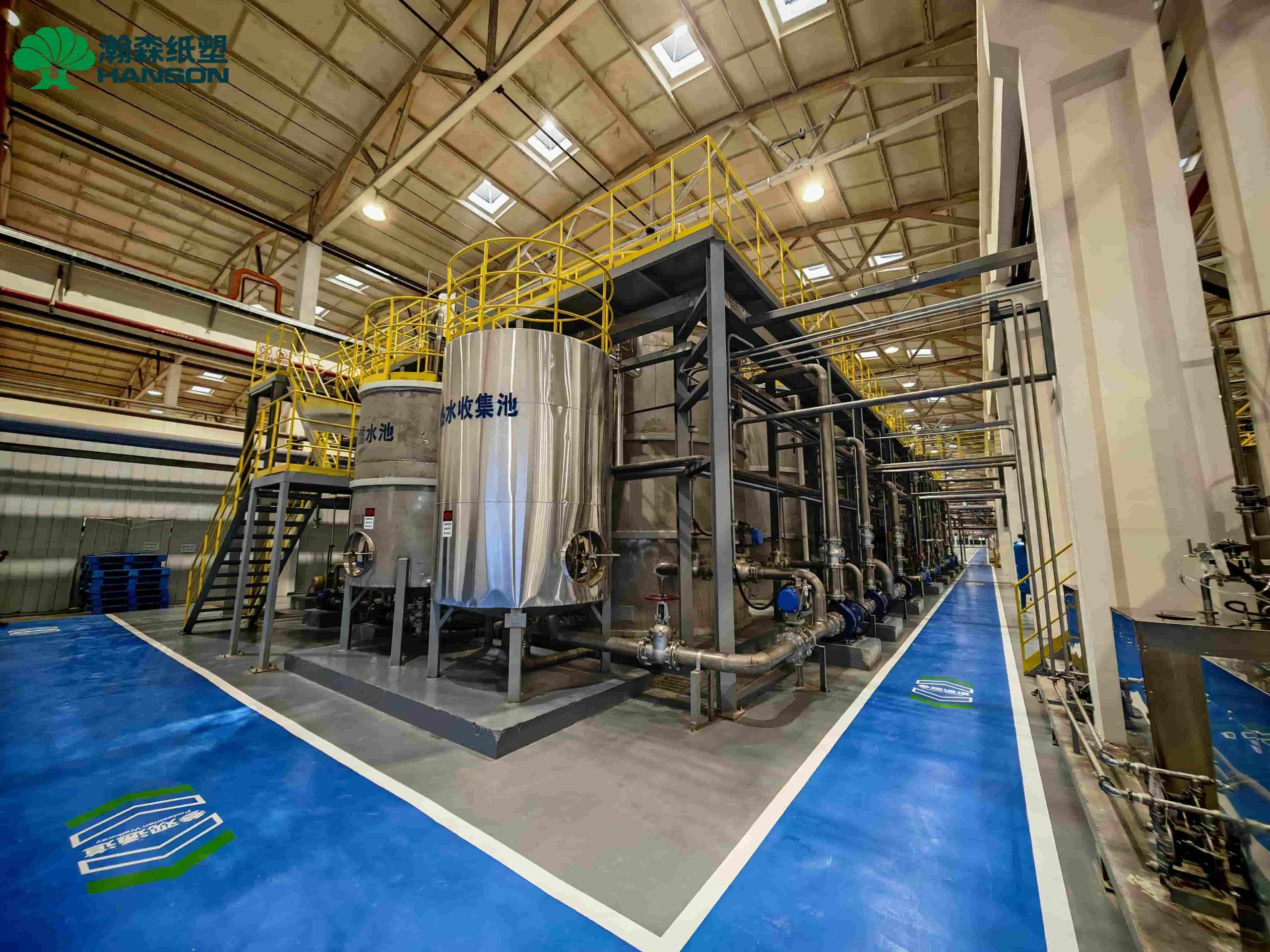
The pulping system processes raw plant fibers into a stable pulp slurry suitable for forming. For large-scale tableware projects running multiple forming machines simultaneously, it is critical to accurately calculate the total pulp demand, peak consumption, storage capacity, and slurry consistency. If the pulping capacity does not match the forming equipment, the machines will experience downtime waiting for slurry, which directly reduces equipment utilization and actual factory output.
2. Synergy Between Tooling, Forming, and Hot Pressing
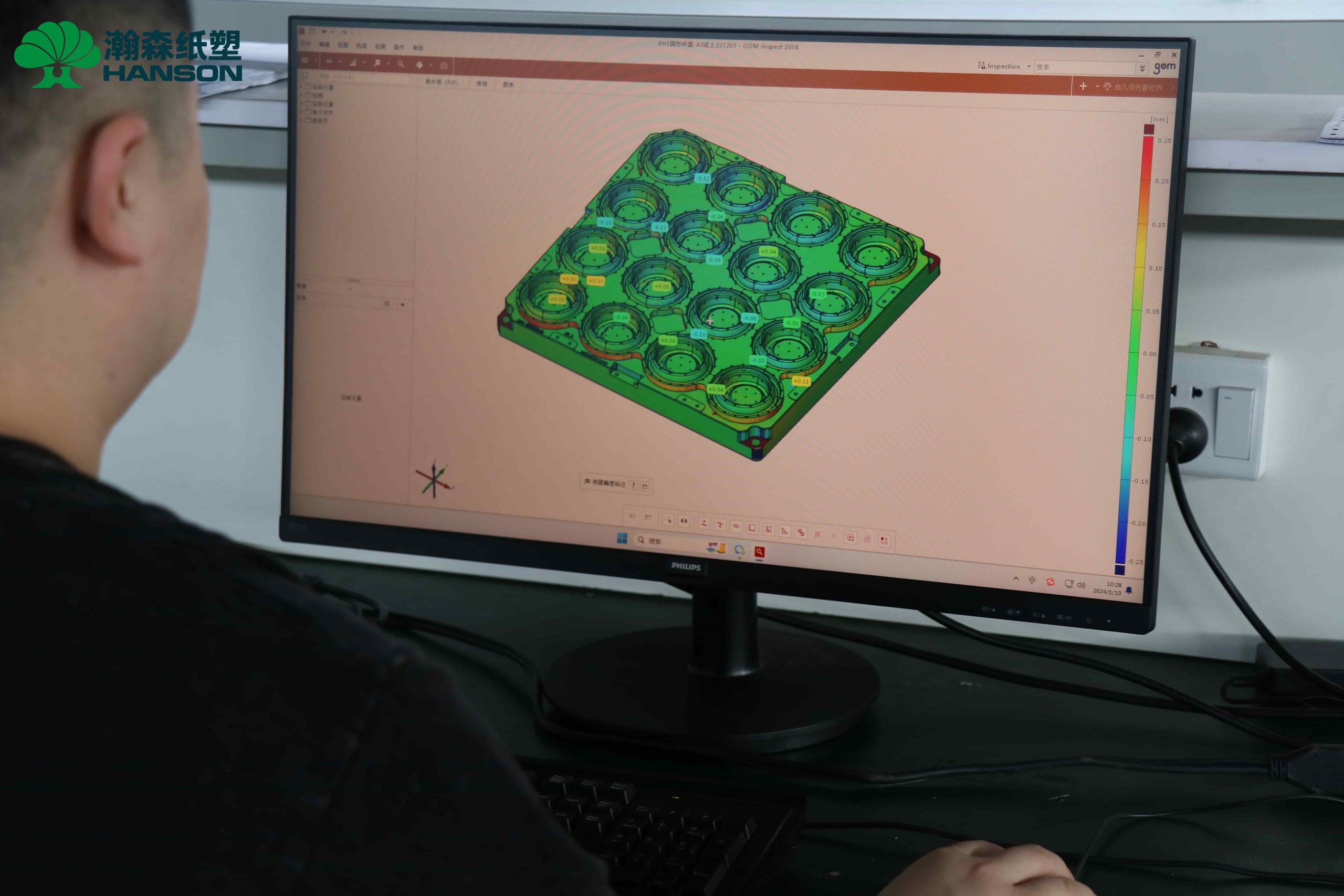
Molds not only determine the product’s shape but also significantly affect drainage efficiency, forming uniformity, hot pressing results, and wet preform transfer. For wet press tableware production, dewatering and hot pressing are the key stages that dictate the overall production cycle. Hanson Pulp Molding advocates for a collaborative design approach covering the equipment, process, and tooling, all based on the final product requirements.
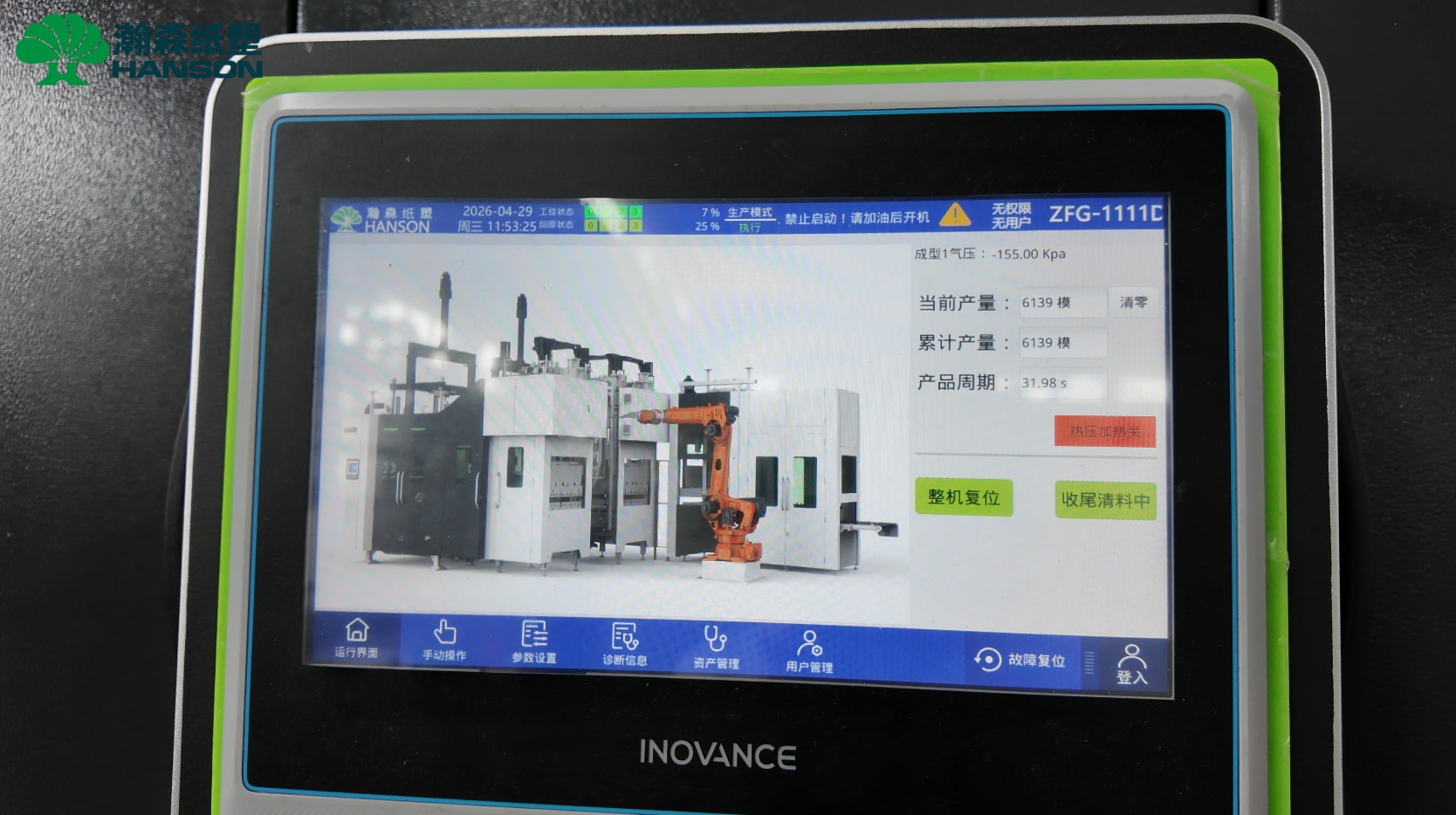
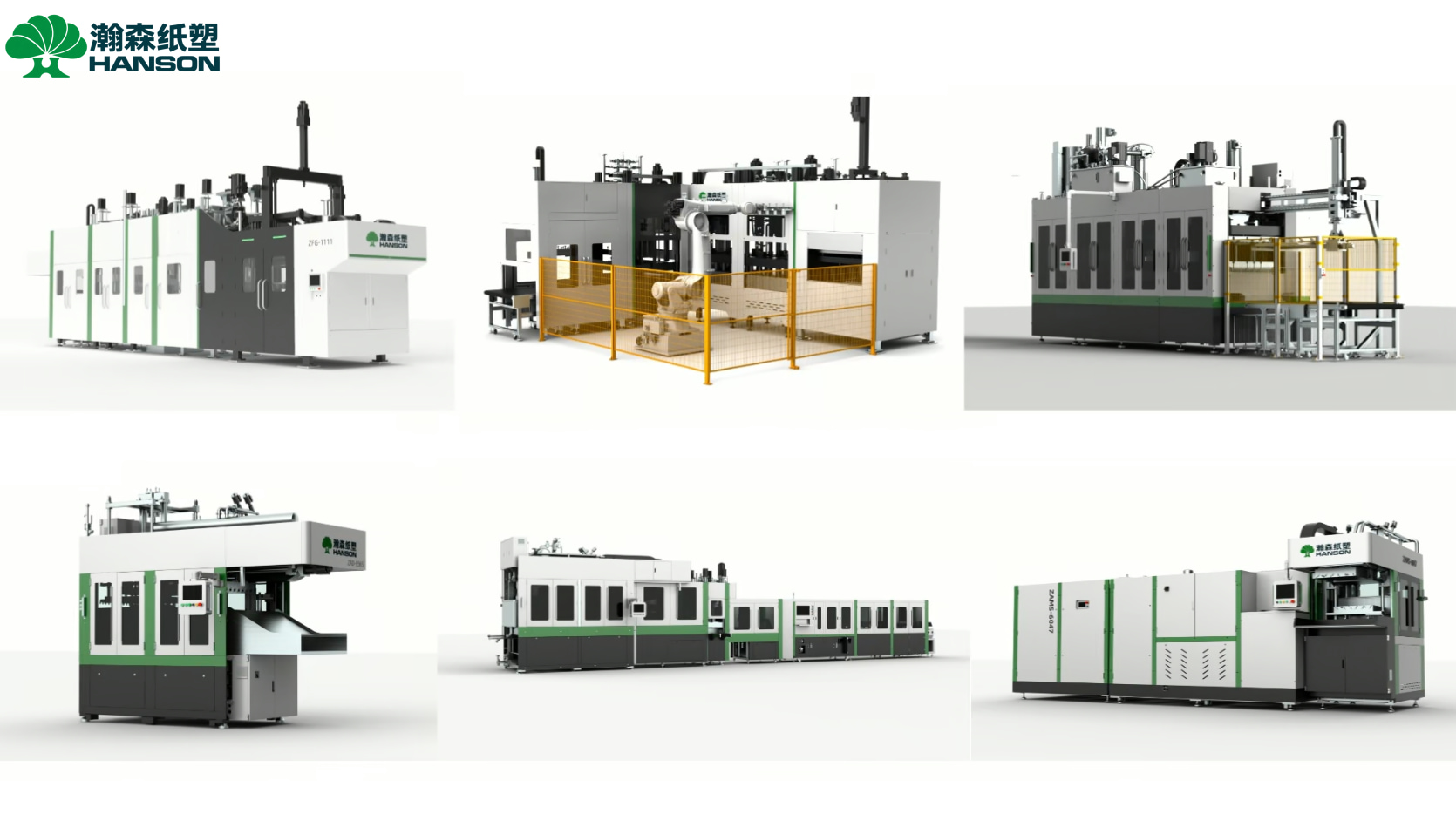
When configuring equipment, automation needs and capacity targets should guide the selection. For instance, the Hanson Pulp Molding ZFG-1111 pulp molding tableware machine integrates forming, hot pressing, trimming, and stacking within the machine itself. Under appropriate production conditions, its single-machine daily capacity can reach over 1.8 tons. Alternatively, for projects requiring full-servo control, the Hanson Pulp Molding ZBG-1111 full-servo pulp molding tableware machine features a configuration with one forming station and two hot-press stations, optimized for mass production of wet press tableware.
3. Preventing Post-Processing Bottlenecks
After the molded fiber products are formed and dried, they often require secondary processing such as trimming, stacking, inspection, and packaging. If the forming capacity is remarkably high but post-processing stages rely heavily on slow manual labor, products will accumulate and disrupt the workflow. Therefore, trimming, stacking, and subsequent packaging automation must be planned upfront during the plant design phase to ensure continuous production and reduce reliance on manual labor.
Project Case Study: Planning Capacity for a Large-Scale Tableware Plant
In practical turnkey plant construction, scaling up production cannot be achieved simply by dividing the target capacity by the theoretical output of a single machine.
Consider the Guangxi Qiaowang project, which boasts an annual capacity of 40,000 tons for pulp molding tableware and industrial packaging. As a key partner in this massive expansion project, Hanson Pulp Molding provided 32 core production machines.
This large-scale case highlights a crucial lesson for investors: achieving stable commercial production requires working backwards from the target total capacity to determine the necessary number of machines, mold configurations, pulping capacity, and overall plant utilities. Only by systematically aligning plant layout, utilities (such as water, electricity, and air), and production line configurations can dozens of machines operate efficiently together to meet the designed annual capacity target.
FAQ
1. How much can a pulp molding machine produce in a day? Actual daily output is influenced by product weight, dimensions, the number of cavities, forming time, hot pressing time, actual operating time, and post-processing capabilities. For example, under appropriate production conditions, the Hanson Pulp Molding ZFG-1111 machine can achieve a daily capacity of over 1.8 tons. Capacity must always be evaluated based on the specific product, mold, and equipment configuration.
2. Why does the daily output vary for different products on the same machine? Different products vary significantly in weight, size, mold cavity count, forming difficulty, and dewatering requirements. When the same machine produces different products, both the daily piece count and the daily tonnage capacity will change.
3. Does a shorter cycle time always mean higher capacity? Not necessarily. Theoretical cycle time is just one factor affecting overall capacity. Other critical factors include the number of products per cycle, single piece weight, product yield, effective uptime, and downtime for mold changes.
4. Is it necessary to buy a new pulping system when purchasing pulp molding equipment? Not always. If a facility already has an adequate pulping system with sufficient capacity and suitable slurry conditions for the new products, the existing system can be evaluated for continued use. However, for new turnkey plants or significant capacity expansions, planning a matching pulping system is essential to prevent production bottlenecks.
Conclusion
Capacity planning for a pulp molding tableware project involves much more than purchasing a few forming machines. From raw fiber processing to final product packaging, pulping, forming, tooling, hot pressing, and post-processing form an inseparable manufacturing system. Professional buyers should establish a standard of “system synergy” to ensure all production stages match in capability, which is the only reliable path to achieving efficient and stable commercial production.
CTA
If you are planning a new wet press pulp molding tableware plant or expanding your existing capacity, you can share your target products, required capacity, plant conditions, and automation requirements. As a specialist in turnkey pulp molding solutions, Hanson Pulp Molding can evaluate your project comprehensively—from product development and plant planning to pulping systems, forming equipment, tooling, post-processing automation, and production ramp-up support.
WhatsApp: +86 15920604830
Email: linchuangcheng@hspulpmolding.com