When packaging manufacturers plan to invest in an industrial molded fiber packaging machine for items like smartphone inserts, cosmetic trays, or consumer electronics packaging, they often encounter a wide range of price quotations. Why is there such a massive gap in pricing for equipment that ostensibly performs the same basic function?
The answer lies in the fundamental difference between standard protective packaging and premium packaging. While heavy-duty protective molded fiber focuses on shock absorption and high-volume, low-cost production, premium inserts demand pristine surface smoothness, tight dimensional tolerances, and zero-defect consistency. Achieving these standards requires entirely different equipment configurations, advanced process controls, and specialized tooling.
What Drives the Price Difference in Molded Fiber Packaging Machines?
1. Precision and Surface Quality via the Wet Press Process
Premium packaging relies heavily on the wet press (or thermoformed fiber) process. In this process, the wet preform is transferred directly into a heated press tool where it is simultaneously dried and shaped under high pressure. This eliminates the need for an independent drying oven and results in a highly dense, smooth, and aesthetically pleasing surface. Lower-priced machines often struggle with uniform heat distribution and precise pressure control during this hot pressing stage. Subpar configuration can lead to warped products, inconsistent wall thickness, and poor edge finishes—fatal flaws for high-end consumer electronics packaging.
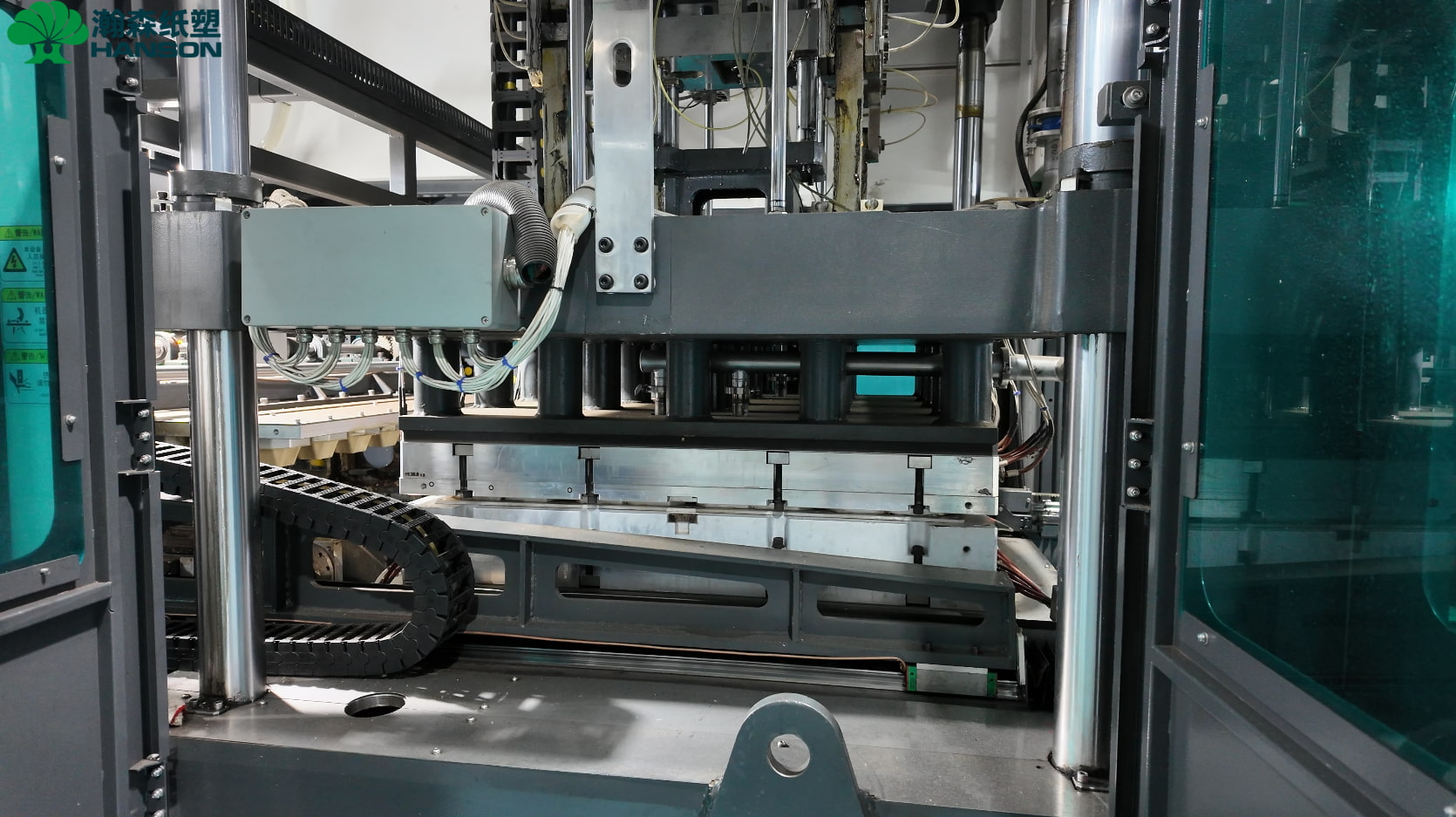
2. Advanced Process Control: Dynamic Pulp Replenishment
For intricate packaging structures—such as those with deep cavities, sharp angles, and precise locking tabs—achieving a uniform fiber distribution is highly challenging. The ZAP-9585 industrial molded fiber packaging machine, developed by Hanson Pulp Molding, incorporates dynamic pulp replenishment. This sophisticated feature optimizes pulp distribution based on the slurry conditions during the forming process, drastically improving structural consistency across every batch. Such high-end process controls significantly influence the equipment’s value and overall output quality.

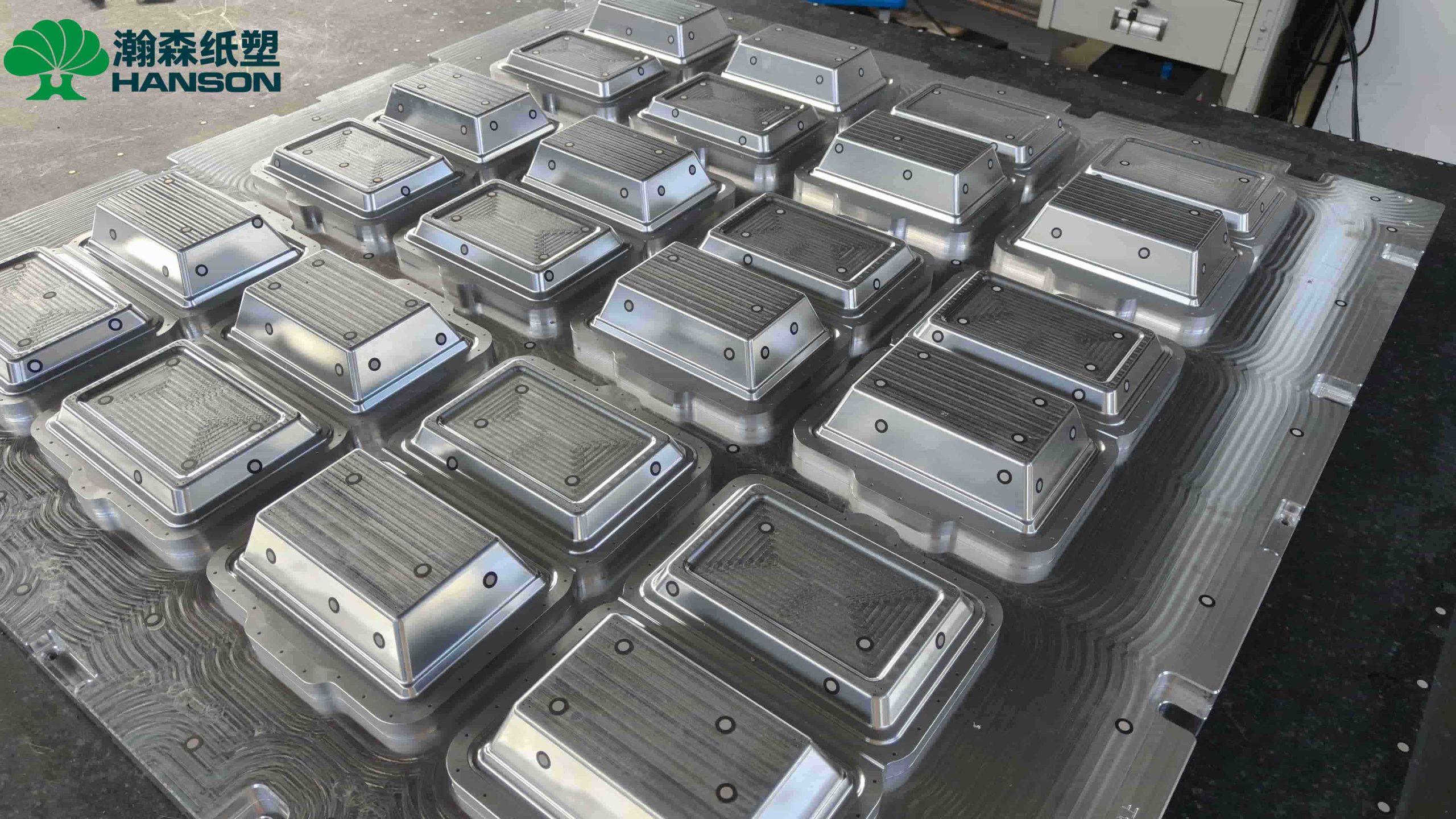
3. The Critical Role of Molded Fiber Tooling
Molds do much more than simply shape the product. Molded fiber tooling design dictates vacuum efficiency, drainage speed, and how smoothly the wet preform transfers between stations. A machine paired with poorly engineered molds will suffer from reduced daily production capacity and frequent downtime, regardless of its theoretical cycle time. High-end machine providers integrate advanced tooling manufacturing into the equipment configuration, ensuring that the machine and mold work in perfect synergy.
How Hanson Pulp Molding Addresses High-End Packaging Needs
As a turnkey specialist in pulp molding, Hanson Pulp Molding integrates equipment, tooling, and process engineering into a cohesive system. The ZAP-9585 model integrates forming and hot pressing, specifically engineered for premium industrial molded fiber packaging. For clients with even more rigorous dimensional and aesthetic demands, the ZAD series offers tailored performance capabilities.
The actual production capability of these systems is proven in commercial environments. For instance, in the Xibao project, maintaining strict dimensional tolerances and exceptional surface flatness for international market delivery was the primary challenge. Hanson Pulp Molding successfully met these high standards through its premium machine configurations. Similarly, Gaoyi has made eight repeat purchases of Hanson Pulp Molding equipment during its capacity expansion, demonstrating the long-term reliability of these machines in stable mass production.

Why Prototyping Matters Before Mass Production
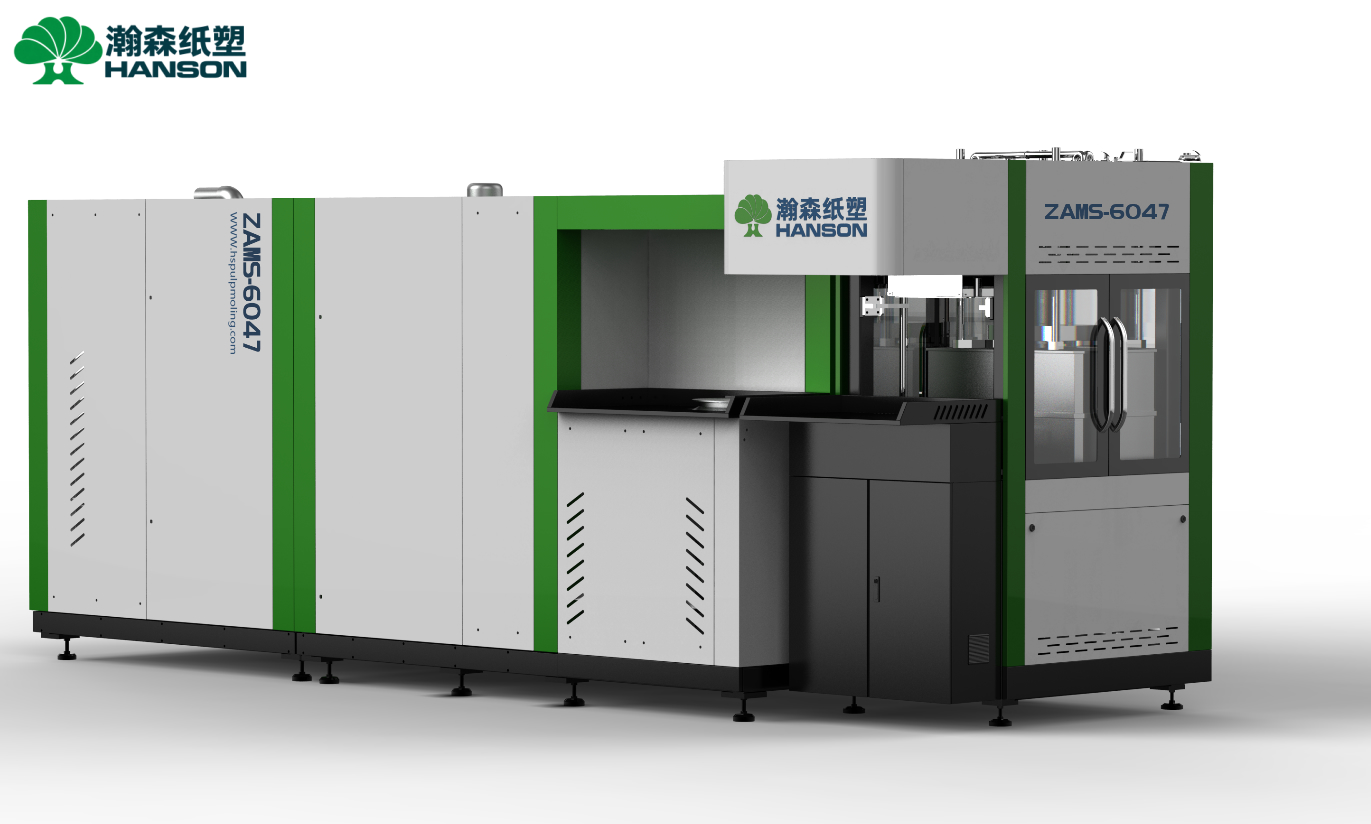
If you are developing a completely new structural packaging design or testing alternative fibers, jumping straight into large-scale machine procurement poses significant risks. Hanson Pulp Molding recommends utilizing the ZAMS-6047 pulp molding prototyping machine first. This step allows manufacturers to validate the material, refine the tooling design, and optimize the process parameters before committing to a full-scale production line.
FAQ
What is the main difference between wet press and dry press molded fiber? The core difference lies in how moisture is removed and the product is shaped. In the wet press process, the wet preform enters a heated mold for simultaneous drying and precision shaping, yielding a smooth, detailed surface ideal for premium packaging. Dry press (or transfer molded) processes typically rely on independent drying ovens and are generally favored for standard protective cushioning.
Can a single machine produce inserts for different electronic devices? Yes, theoretically, by changing the molded fiber tooling. However, different products require varying slurry concentrations, forming times, and hot pressing parameters. The economic feasibility of sharing one machine across multiple complex products must be evaluated based on changeover times and production volumes.
Conclusion
The price gap in premium industrial molded fiber packaging machines reflects the stark difference in engineering, process control, and tooling synergy. For applications where surface quality and dimensional accuracy are non-negotiable, investing in an integrated, high-precision system like those provided by Hanson Pulp Molding ultimately ensures stable yields and protects the end brand’s image.
If you already have a product sample, 3D drawing, product dimensions, or target daily capacity for your premium inserts, Hanson Pulp Molding can help evaluate the molding process, tooling, and equipment configuration for your project.
WhatsApp: +86 15920604830
Email: linchuangcheng@hspulpmolding.com