When investors plan to produce molded fiber foodservice packaging—such as bagasse plates, bowls, and clamshell containers—the most common misstep is selecting a pulp molding tableware machine based solely on its theoretical cycle time or standalone price.
Pulp molding is a highly integrated manufacturing process where raw materials, pulping, molds, and forming equipment must work together seamlessly. As a specialist in turnkey pulp molding solutions, Hanson Pulp Molding advises that equipment configuration should always start from the actual product requirements rather than isolated machine specs. To build an efficient tableware plant, you should evaluate equipment based on the following critical parameters.
1. Actual Daily Output vs. Theoretical Cycle Time
For molded fiber foodservice packaging, stable and high-volume mass production is the primary goal. Theoretical machine cycle time does not directly equal actual factory output.
The true daily capacity of a pulp molding tableware machine is governed by the individual product’s weight, dimensions, the number of mold cavities, required hot-pressing time, and the equipment’s overall operating efficiency. For example, producing a deep, heavy compartment tray versus a lightweight plate on the same machine will require different dewatering and hot-pressing times, significantly altering the daily output in both pieces and tonnage.
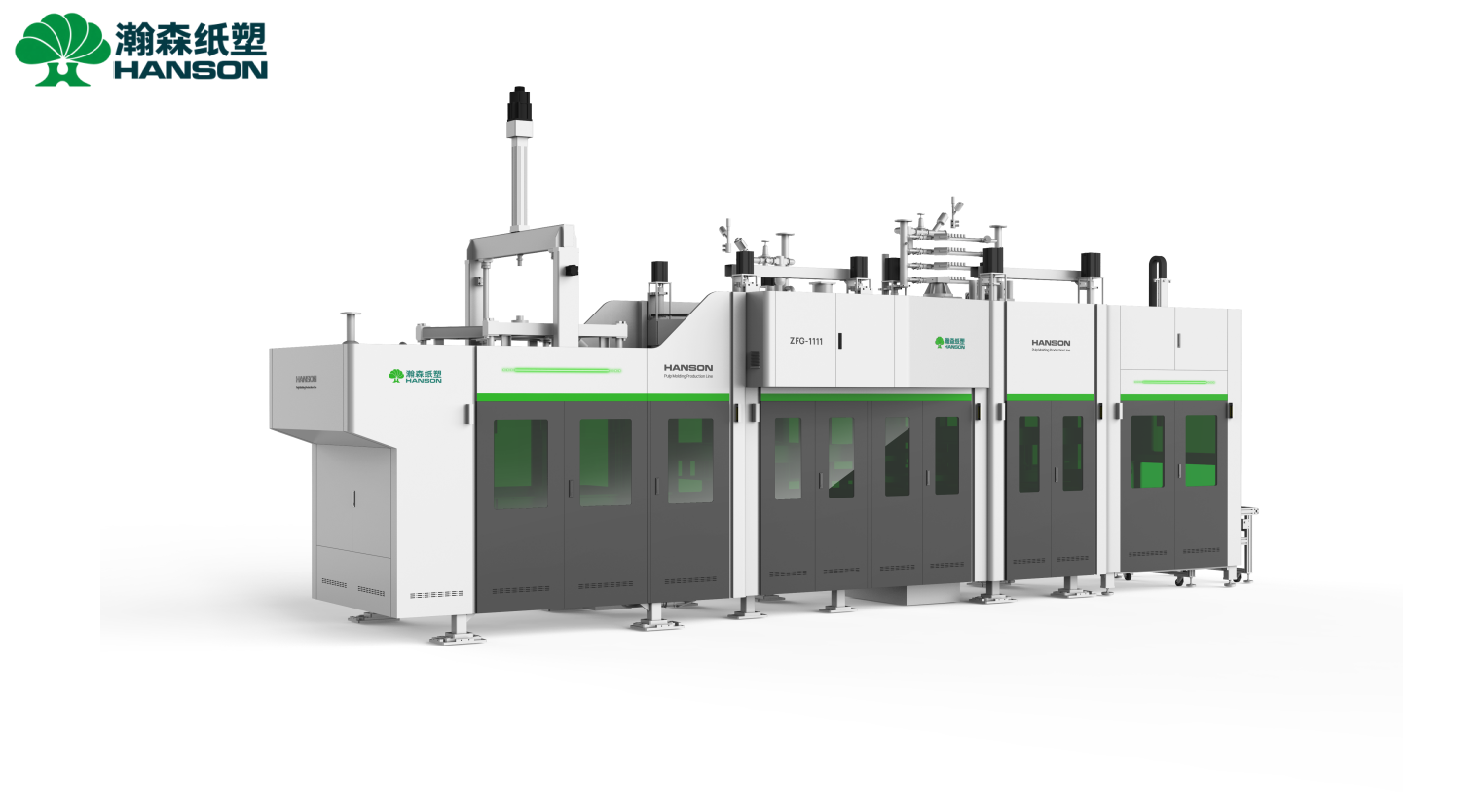
To meet high-capacity demands, the Hanson Pulp Molding ZFG-1111 wet press machine is optimized for tableware mass production. Under appropriate product and production conditions, the ZFG-1111 can achieve a single-machine daily capacity of over 1.8 tons, and approximately 2 tons per day under specific conditions, providing a reliable foundation for large-scale order fulfillment.
2. Energy Consumption and Wet Preform Moisture Content
Electricity and thermal energy constitute a major portion of a pulp molding plant’s long-term operational costs. When evaluating energy efficiency, buyers must look at the actual electricity consumption per ton of qualified product, not just the machine’s installed power.
In the wet press process, the wet preform is transferred directly into a hot press mold for simultaneous dewatering and drying. If the forming tool (mold) and vacuum system fail to remove sufficient water, the remaining moisture must be evaporated using thermal energy during hot pressing. This not only extends the cycle time but also drives up the energy bill. Under relevant production conditions, Hanson Pulp Molding equipment can control the wet preform moisture content to below 60% and achieve an electricity consumption of less than 1,800 kWh per ton for tableware, significantly optimizing the factory’s energy footprint.
3. Post-Processing Automation and Line Integration
A fast forming machine is ineffective if the post-processing stages become a bottleneck. If trimming, stacking, and packaging rely heavily on manual labor or lack the speed to keep up with forming, products will pile up, limiting the entire plant’s actual output.
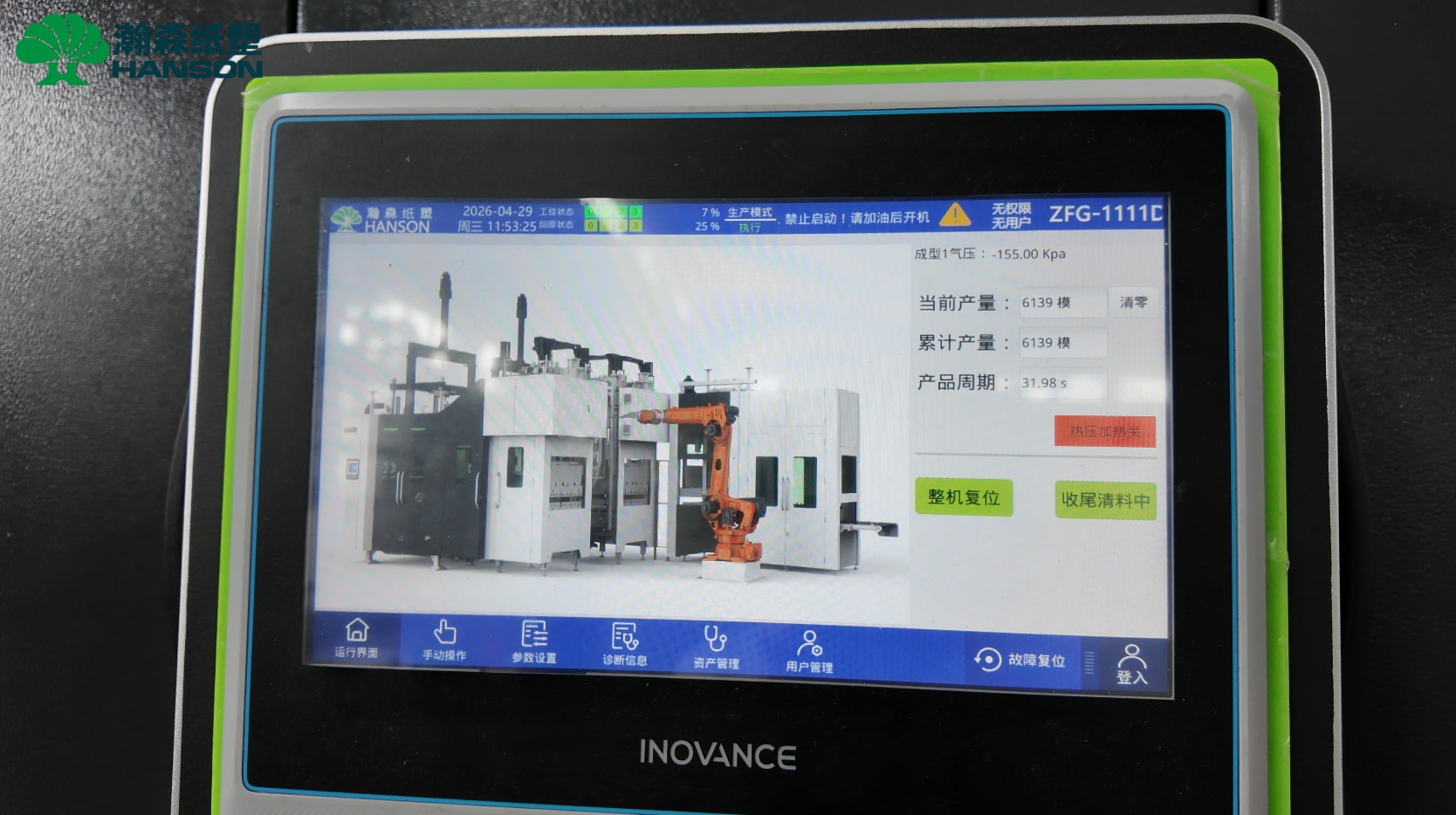
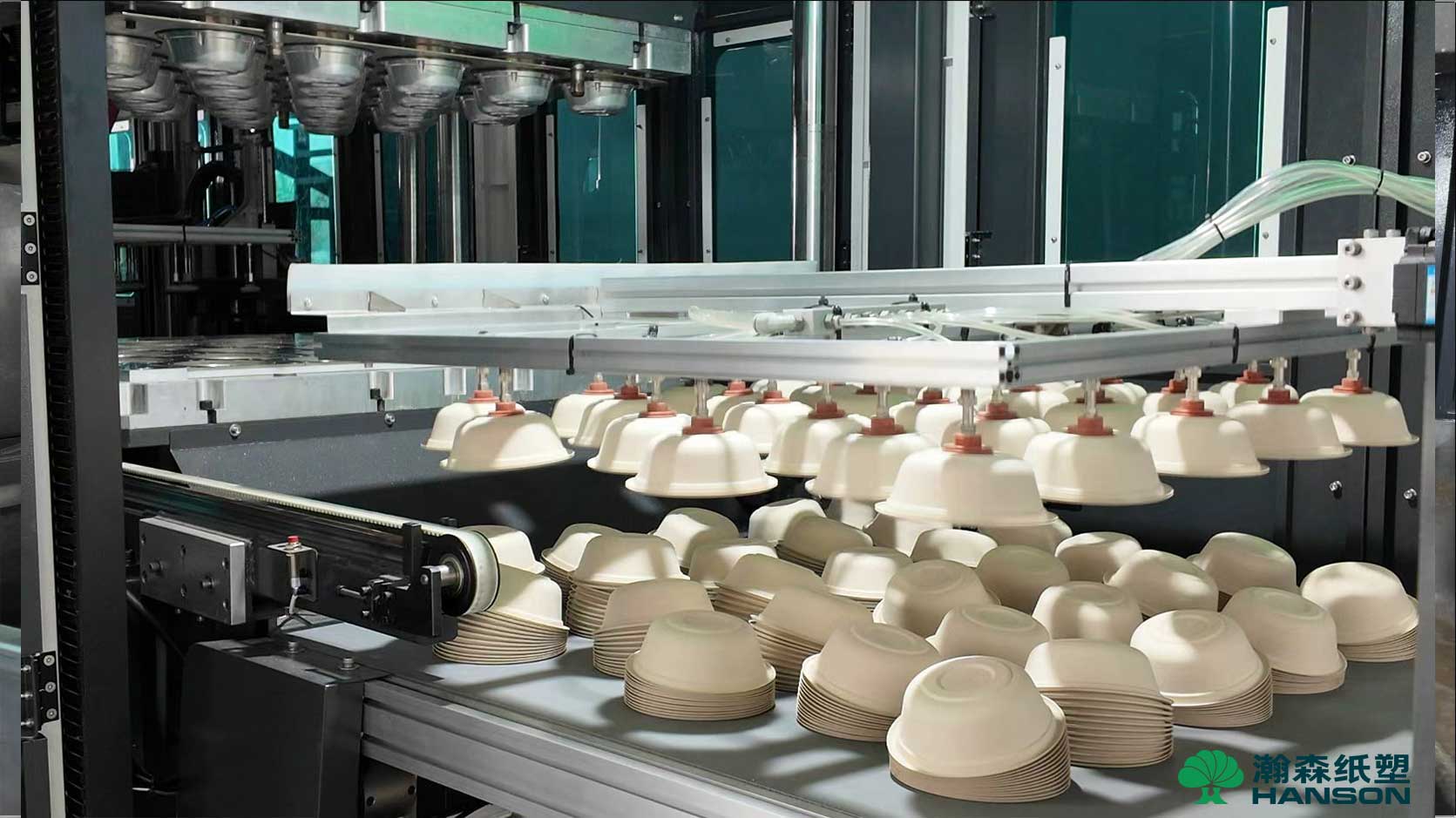
For high-volume tableware production, continuous automation is vital. The Hanson Pulp Molding ZFG-1111 integrates forming, hot pressing, trimming, and stacking within the machine. This automated workflow minimizes manual handling, reduces the risk of product deformation, and ensures consistent production rhythm.
4. Drive Structure: Balancing Precision and Investment
Different factory setups require different structural configurations based on investment budgets and process demands.
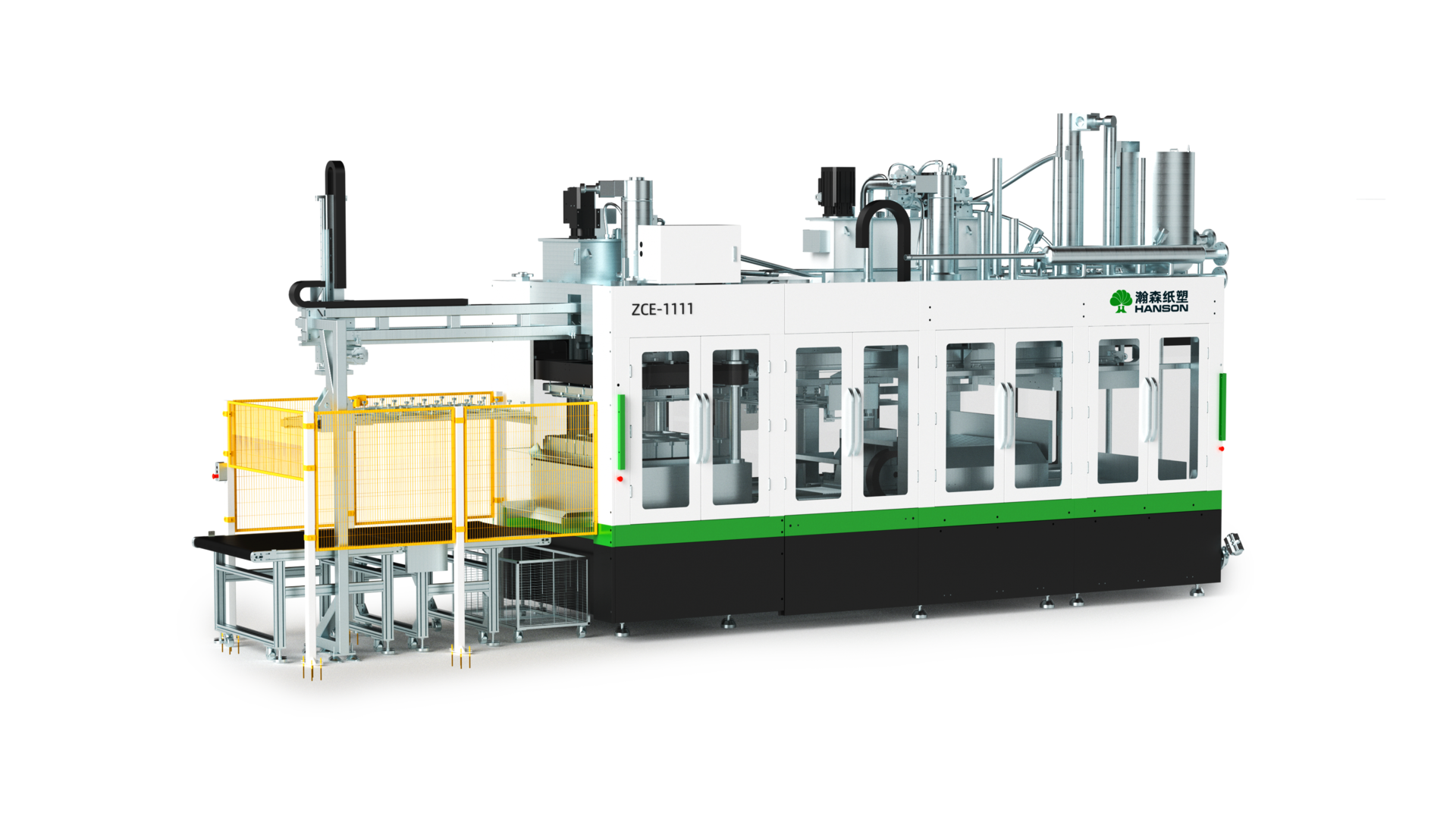
- For cost control and mature processing: The Hanson Pulp Molding ZCE-1111 utilizes metered pulp feeding, mold-to-mold transfer, and pneumatic-hydraulic boosting. It is designed to meet standard mass production requirements while keeping the initial equipment investment cost relatively low.
- For high precision and advanced control: The Hanson Pulp Molding ZBG-1111 features a full-servo drive system and a configuration with one forming station and two hot-press stations. This setup is highly suitable for projects that demand rigorous process control and exceptional operational precision for wet-press tableware.
FAQ
Can the same pulp molding tableware machine produce both plates and clamshell containers? It is possible, but it cannot be universally guaranteed. Compatibility depends on mold area, product depth, hot pressing conditions, and equipment specifications. Switching products often requires not only new molds but also adjustments to the pulp slurry, vacuum levels, and hot-pressing temperatures.
How does molded fiber tooling affect actual capacity? Tooling directly influences drainage efficiency, wet preform quality, hot-pressing effectiveness, and demolding speed. Even if two machines have identical basic parameters, differences in mold design, mesh configuration, and cavity layout will lead to variations in actual daily output and yield rates.
Do I need to buy a new pulping system when adding a new forming machine? If you already have a pulping system with sufficient capacity and appropriate furnish formulation, it can be evaluated during the plant planning stage for continued use. However, if the pulping capacity is insufficient, the forming machine will experience downtime waiting for slurry, lowering the entire line’s efficiency.
Starting a successful molded fiber factory means shifting your focus from standalone equipment parameters to a holistic manufacturing approach. Product weight, tooling design, energy metrics, and automation all dictate your plant’s profitability.
If you already have a product sample, 3D drawing, product dimensions, or a target daily capacity, Hanson Pulp Molding can evaluate the optimal process, tooling, and pulp molding tableware machine configuration for your project.
WhatsApp: +86 15920604830
Email: linchuangcheng@hspulpmolding.com