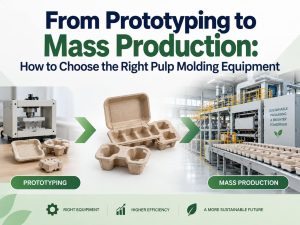
When evaluating a pulp molding production line, relying solely on theoretical machine parameters or focusing exclusively on the forming equipment is insufficient to determine the line’s actual manufacturing capability. Pulp molding is a highly integrated process involving pulp preparation, forming, dewatering, hot pressing, and post-processing. A bottleneck in any single stage can restrict the output of the entire plant.
To ensure that the capital investment translates into stable and efficient commercial production, buyers conducting on-site inspections must adopt a holistic view. Evaluating the synergy between the upstream and downstream systems, tooling capabilities, and overall plant planning is essential.
1. Post-Processing Automation and Production Consistency
The actual output capacity of a complete production line is inherently dictated by its slowest segment. If a plant features high-speed forming equipment but relies heavily on manual labor for trimming, stacking, inspection, and packaging, the post-processing stage quickly becomes a severe bottleneck.
Manual intervention not only increases long-term labor costs but also leads to fluctuations in product quality and dimensional accuracy. Furthermore, frequent manual adjustments during product changeovers can significantly extend downtime.
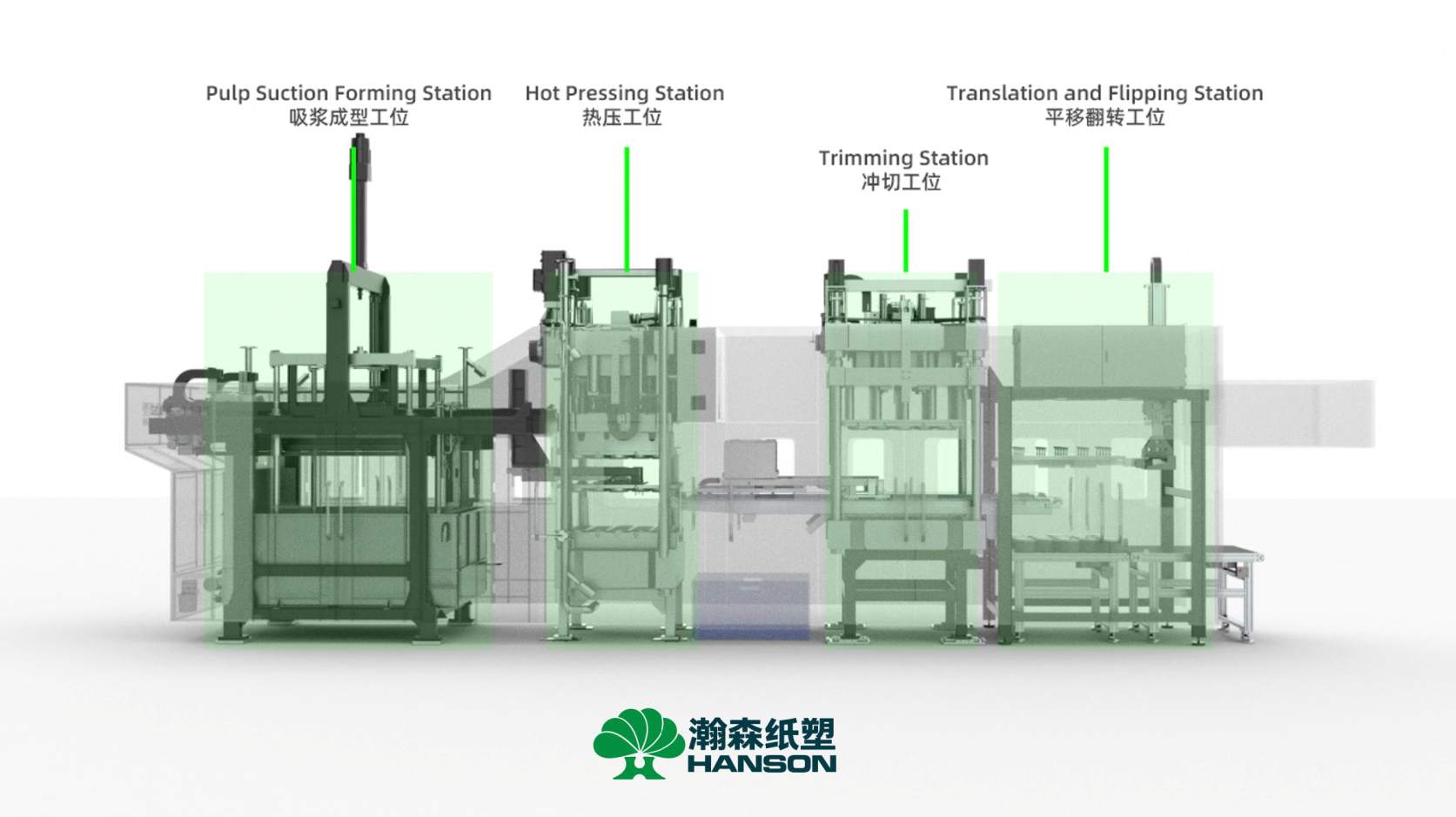
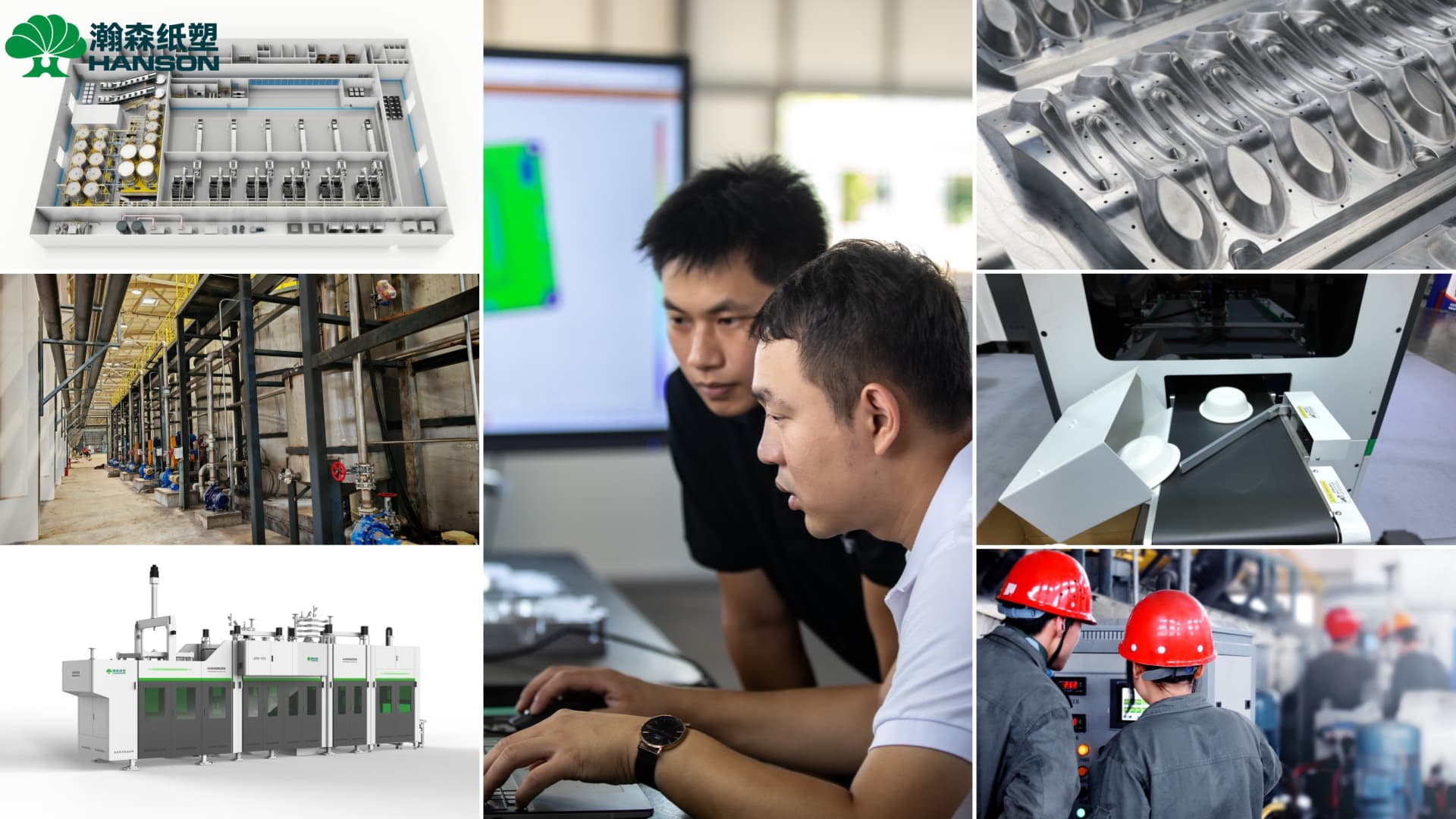
Hanson Pulp Molding views post-processing automation as a critical component in balancing the production line. For example, the Hanson Pulp Molding ZAKS-9595 molded fiber cup lid machine integrates forming, hot pressing, servo-driven punch cutting, machine vision inspection, and automatic packaging into a continuous workflow. This high level of automation resolves cycle time restrictions, minimizes manual intervention during changeovers, and utilizes vision inspection to guarantee the strict dimensional consistency required for cup lids.
2. Synergy Between Pulping and Forming Equipment
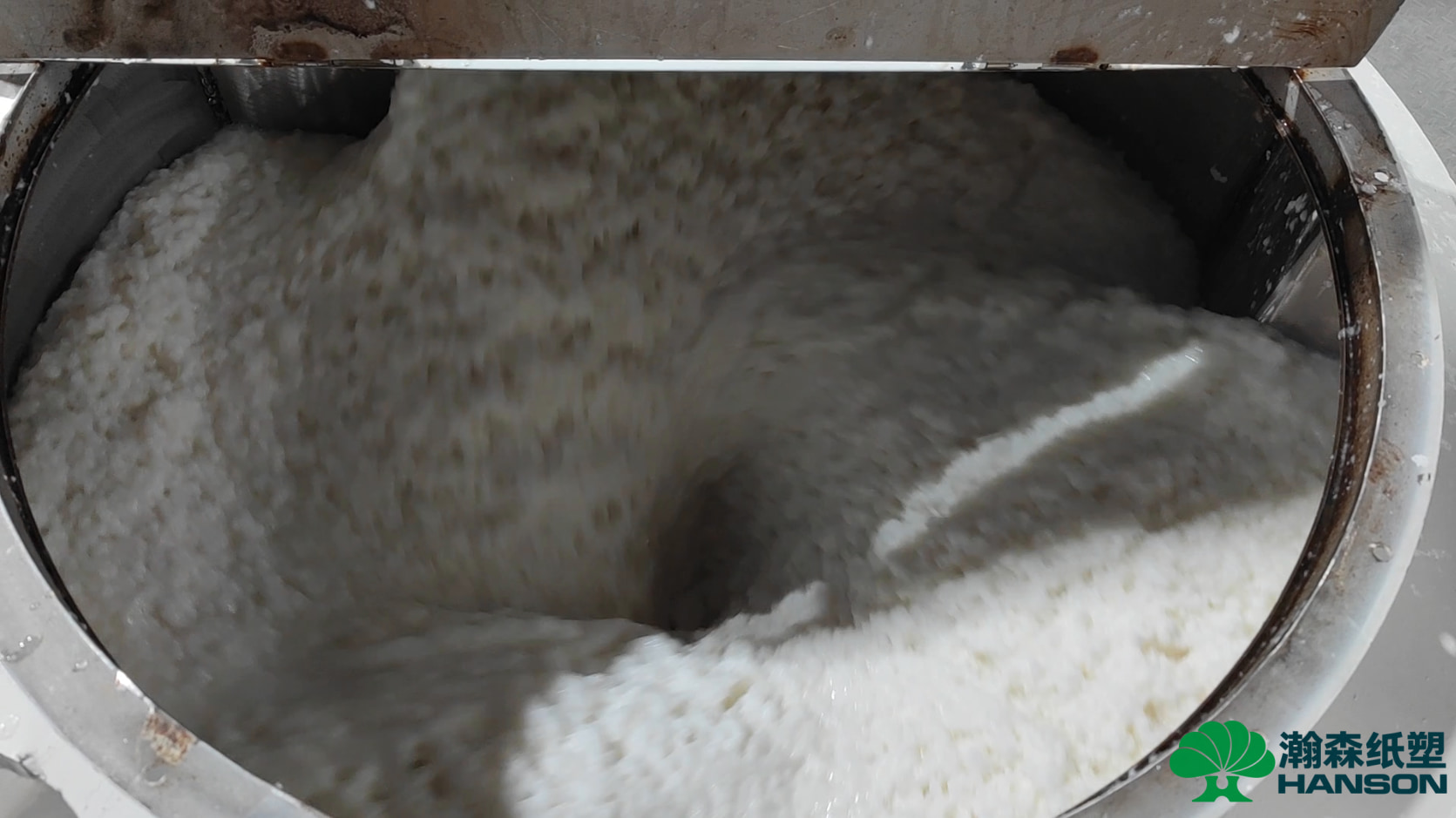
Even the most advanced forming equipment requires a stable and consistent supply of pulp slurry. Pulp preparation is not simply mixing fiber with water; it requires precise control over furnish blending, refining, and consistency (concentration).
During an inspection, it is crucial to verify that the peak capacity of the pulping system can support the continuous operation of all forming machines. Inadequate pulping capacity forces the forming line to halt and wait, driving down equipment utilization rates. Conversely, fluctuations in pulp consistency will directly cause variations in product weight and wall thickness. Through systematic plant planning, Hanson Pulp Molding configures intelligent pulping systems tailored to specific fibers (such as bagasse, bamboo, or wood pulp), ensuring that slurry flow and consistency perfectly match the operational cycle of the forming equipment.
3. Tooling and Mold Capabilities
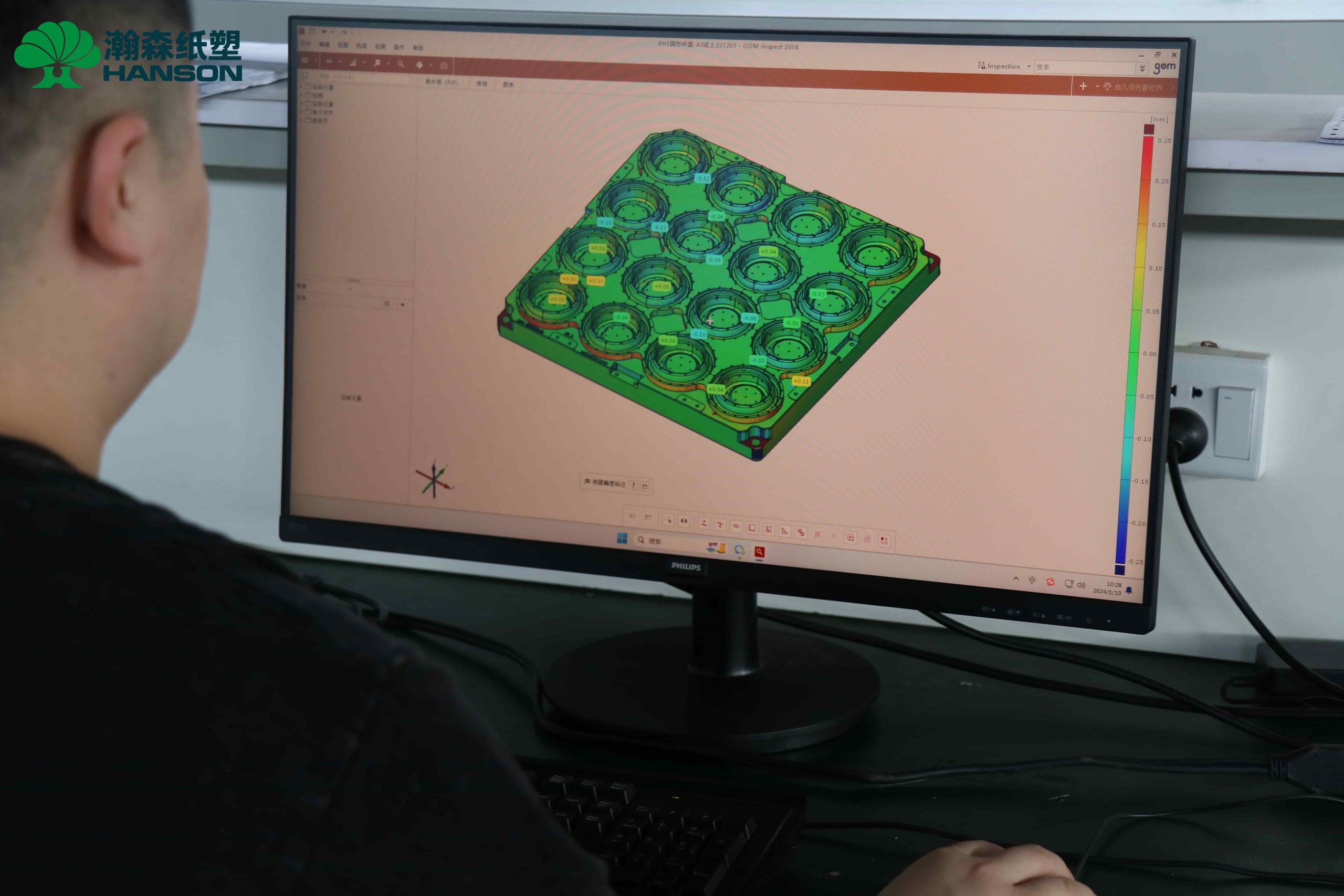
Molded fiber tooling goes far beyond being a basic consumable; it is a decisive factor in determining product quality, dimensional accuracy, and actual production efficiency.
The structural design of the forming mold directly impacts drainage efficiency, the moisture content of the wet preform, and the stability of mold-to-mold transfer. When comparing two forming machines with identical theoretical cycle times, differences in mold design can result in vastly different daily outputs. Hanson Pulp Molding approaches mold manufacturing collaboratively, aligning mold design with equipment parameters and the thermoforming process to maximize dewatering rates and maintain structural integrity during hot pressing.
4. Process Route Appropriateness
A single production line cannot efficiently manufacture every type of pulp molding product. The chosen process route must align with the target product’s functional and aesthetic requirements.
-
Wet Press (Thermoformed Fiber): The wet preform is transferred directly into hot press molds, where it undergoes pressing and drying simultaneously. This process yields a dense, smooth finish with high dimensional accuracy, making it ideal for premium consumer electronics packaging, cosmetic inserts, and high-quality foodservice packaging.
-
Dry Press: This traditional process relies on independent drying systems. It produces thicker walls with a more natural fiber texture, prioritizing structural protection and cost-efficiency for products like egg trays, cup carriers, and heavy-duty protective packaging.
Buyers must verify that the equipment supplier can accurately match the production technology (wet press, dry press, or semi-dry press) to their specific product portfolio.
5. Turnkey Plant Planning and Ramp-Up Support
Equipment delivery is merely one phase of establishing a manufacturing facility. Moving from installation to stable commercial production requires mold fine-tuning, process optimization, operator training, and yield rate improvement.
As a specialist in turnkey pulp molding solutions, Hanson Pulp Molding operates on a “6+1” turnkey service system. This framework spans product development, plant planning, intelligent pulping systems, forming equipment, tooling, and post-processing automation. For turnkey projects, Hanson Pulp Molding provides on-site production ramp-up support and comprehensive personnel training to bridge the operational gaps often encountered by newly established facilities.
FAQ
How is the actual daily capacity of a pulp molding production line calculated? Theoretical cycle time alone does not determine actual output. True daily capacity is influenced by product weight, the number of mold cavities, forming and dewatering times, hot pressing duration, mold changeover frequencies, post-processing speeds, and overall equipment uptime.
Can a single production line manufacture multiple different products? While changing molds allows for product variation, different products possess unique dimensions, weights, and structural complexities. A product changeover often requires recalibrating the pulp slurry furnish, forming vacuum times, hot press temperatures, and post-processing systems. Therefore, “capable of changing molds” does not always mean it is economically viable to frequently switch between vastly different product lines.
Why does the moisture content of the wet preform impact energy consumption? Any residual water in the wet preform must be evaporated during the hot pressing or drying phases. Higher dewatering efficiency at the forming mold stage reduces the thermal load required later in the process, which is critical for optimizing the overall energy consumption of the production line.
Conclusion
Conducting a thorough on-site inspection of a pulp molding production line requires shifting focus from isolated machine speeds to the synergy of the entire manufacturing system. Validating the stability of the pulping process, the dewatering efficiency of the tooling, the continuity of post-processing automation, and the supplier’s overall turnkey integration capabilities are the most critical steps to ensuring that the investment results in a highly efficient, automated, and stable commercial production facility.
CTA
If you are planning a new pulp molding plant, you can share your target products, required capacity, plant conditions and automation requirements. Hanson Pulp Molding can evaluate the project from product development and plant planning to pulping, forming equipment, tooling, post-processing and production ramp-up.
WhatsApp: +86 15920604830
Email: linchuangcheng@hspulpmolding.com