When molded pulp products are used for fresh meat trays, ready-to-eat meals, heavy-grease takeout, or applications requiring an extended shelf life, standard in-mold sizing additives often fall short. The inherently porous nature of molded fiber means that achieving strict water, oil, and gas barrier requirements necessitates advanced post-processing.
For products demanding a robust physical barrier, lamination is one of the most reliable solutions. Understanding how to correctly configure a Pulp Molding Laminating Machine line is essential for achieving both the required product functionality and high production efficiency.
Why Choose Lamination for High Barrier Needs?
While internal sizing offers basic liquid resistance and coating processes can improve surface properties, they may not suffice for demanding environments. When packaging must withstand prolonged exposure to hot liquids and grease, or requires oxygen-barrier properties (using materials like EVOH) to preserve food freshness, applying a continuous, dense polymer film is highly effective.
Through a thermo-pressing process, a Pulp Molding Laminating Machine bonds the film directly to the molded fiber substrate, providing superior barrier performance while also enhancing the product’s visual appeal and structural integrity.
How to Configure an Automatic Pulp Molding Laminating Line
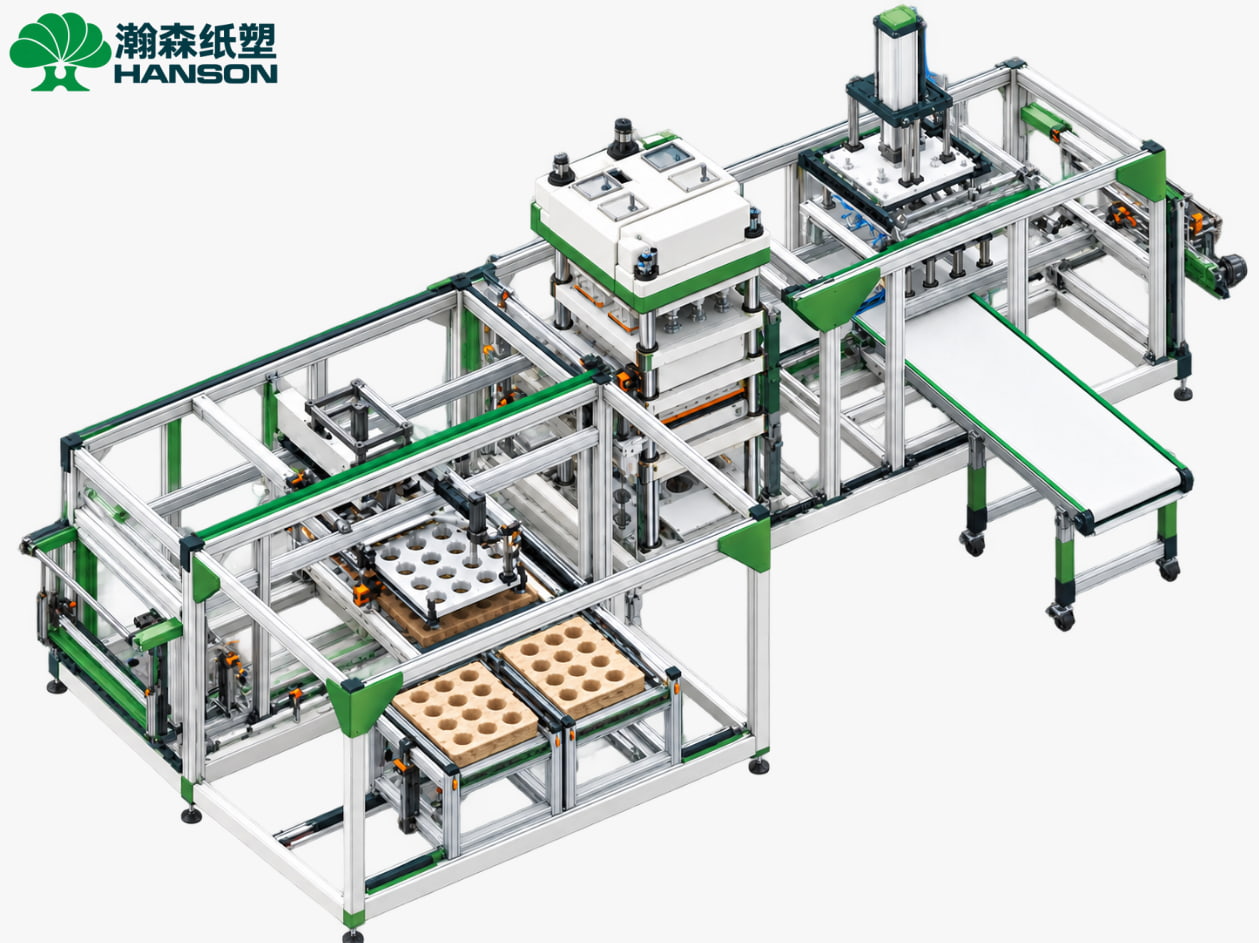
To meet industrial production demands, post-processing should minimize manual handling. A modern, fully automatic molded pulp laminating line integrates several steps into a seamless workflow:
-
Film Unwinding: The system automatically feeds the film with controlled tension, ensuring smooth delivery to the lamination station.
-
Lamination: Using electric heating, the servo-driven platen applies heat and pressure to securely bond the film to the molded fiber base.
-
Trimming: Following lamination, the product immediately transfers to the trimming station. This “one lamination, one trimming” configuration ensures that excess film and rough edges are cleanly removed without workflow interruption.
-
Product Stacking: The finished, trimmed products are automatically collected and stacked, ready for final packaging.
Key Considerations When Selecting Lamination Equipment
Choosing the right equipment involves more than just looking at cycle times. To ensure stable operation and high-quality film adhesion without wrinkling or delamination, several machine characteristics must be evaluated:
-
Motion Structure: The heated platens should operate with a direct vertical up-and-down motion, without lateral movement. This reduces structural complexity, minimizes mechanical wear, and helps maintain stable operation over time.
-
Pressure Uniformity: Equipment utilizing a servo linkage structure ensures that pressure is distributed evenly across the platen. This is critical for maintaining platen flatness and parallelism, which directly impacts the quality of the film seal.
-
Coordinated Servo Control: Both the lamination and trimming stations should be servo-driven to ensure precise and coordinated movements. For instance, Hanson Pulp Molding equipment features an 80-ton servo-driven trimming force and a 15 s/mold lamination cycle, ensuring the entire line operates smoothly and efficiently.
-
Size and Depth Capacity: The machine must accommodate your specific product dimensions. With a mold platen size of 1100 × 1100 mm and the ability to process products up to 80 mm in height, Hanson Pulp Molding machines can handle a wide variety of deep-cavity containers and large industrial packaging.
Film Compatibility
A versatile laminating machine should handle various barrier materials. Thanks to flexible PLC and HMI control systems, parameters like temperature and pressure can be easily adjusted to accommodate PE, PET, PLA, PBAT, PP, and EVOH films. It is important to note that the ultimate environmental profile (e.g., biodegradability or recyclability) depends entirely on the specific film material and product structure chosen.
Capacity Note: While the lamination cycle may be 15 seconds per mold, the actual daily production capacity is product-dependent. It relies on the specific product dimensions and the number of cavities per mold.
If you are evaluating lamination for a molded pulp product, send Hanson Pulp Molding your product photos, dimensions, film requirements, and target performance. Our team can help evaluate the process and recommend a suitable equipment configuration for your production line.