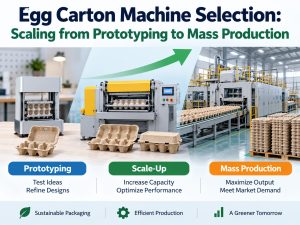
When planning a new molded fiber project, many investors ask a seemingly practical question: “Can I buy just one pulp molding machine, swap the molds, and use it to produce food plates today, smartphone packaging inserts tomorrow, and egg trays the day after?”
In theory, the core principle of pulp molding is the same: vacuum-forming plant fibers over a porous mold. However, from the perspective of stable mass production, yield rate, and commercial return on investment, it is extremely difficult for a single machine to do all products well. Different products have vastly different requirements for surface quality, dimensional accuracy, automation, and capacity. Attempting to use a single “universal” machine for everything often means compromising on both efficiency and quality.
Different Products Require Different Processes: Wet Press vs. Dry Press
The final application and quality requirements of your product dictate the necessary manufacturing process.
-
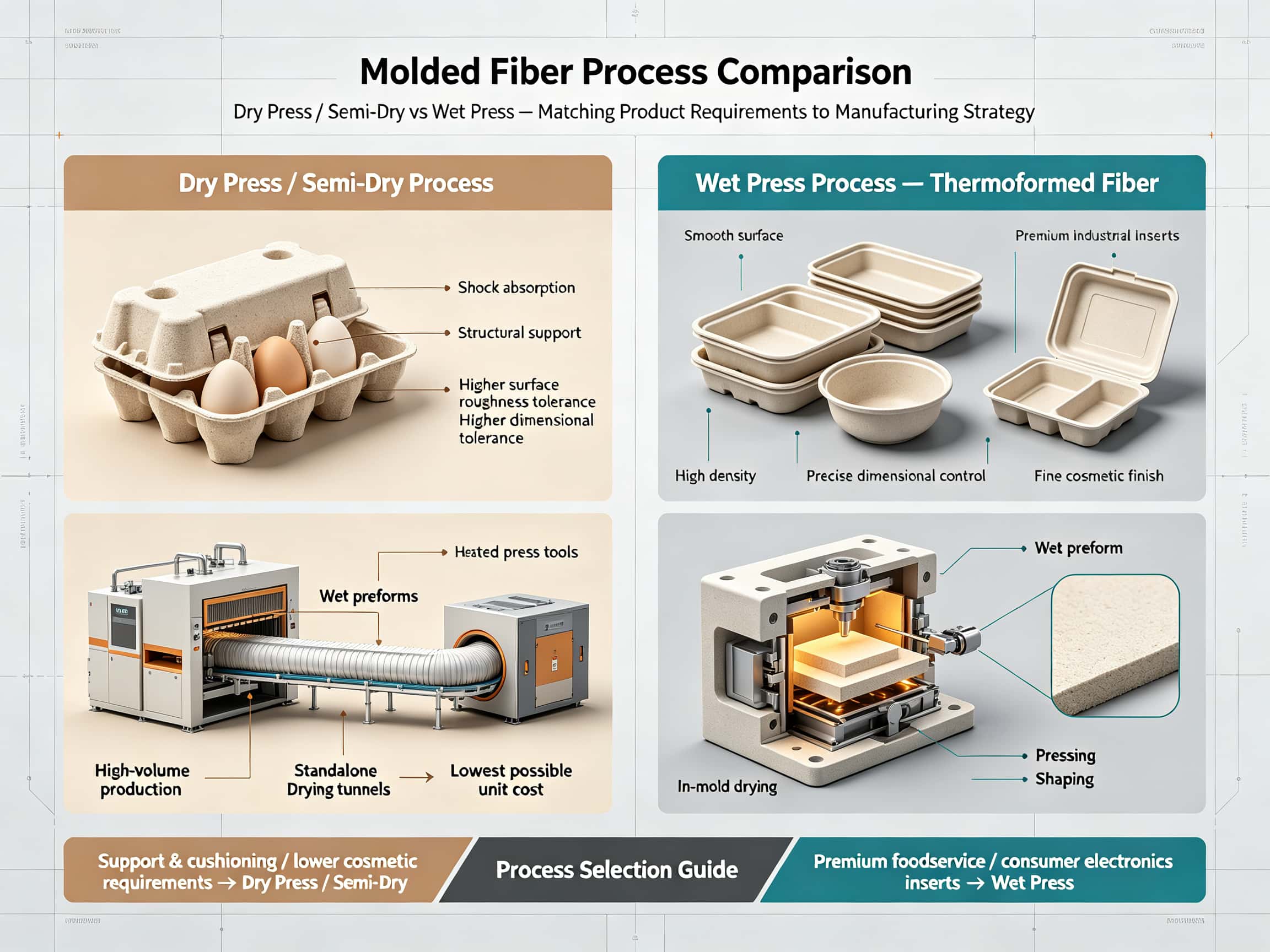
Dry Press / Semi-Dry Process: Products like egg trays, cup carriers, and heavy-duty protective industrial packaging are primarily designed for shock absorption and support. They have a higher tolerance for surface roughness. These products typically utilize a dry press or transfer molded process, where wet preforms are dried in standalone ovens or drying tunnels. The focus here is on high-volume production and extremely low unit costs.
-
Wet Press Process (Thermoformed Fiber): Premium foodservice packaging (like compartment trays and bowls) and premium industrial molded fiber packaging (like consumer electronics inserts) require smooth surfaces, high density, and precise dimensional control. The wet press process achieves this by transferring the wet preform directly into heated press tools, completing the drying and pressing simultaneously within the mold.
If you try to manufacture low-margin egg trays on a high-precision wet press machine, the equipment depreciation costs and longer in-mold drying times will destroy your profit margins. As a specialist in turnkey pulp molding solutions, Hanson Pulp Molding always helps clients define their product goals first before reverse-engineering the necessary process route.
Production Priorities: High Capacity vs. Precision Control
Even within the wet press category, different product types face entirely different manufacturing bottlenecks.
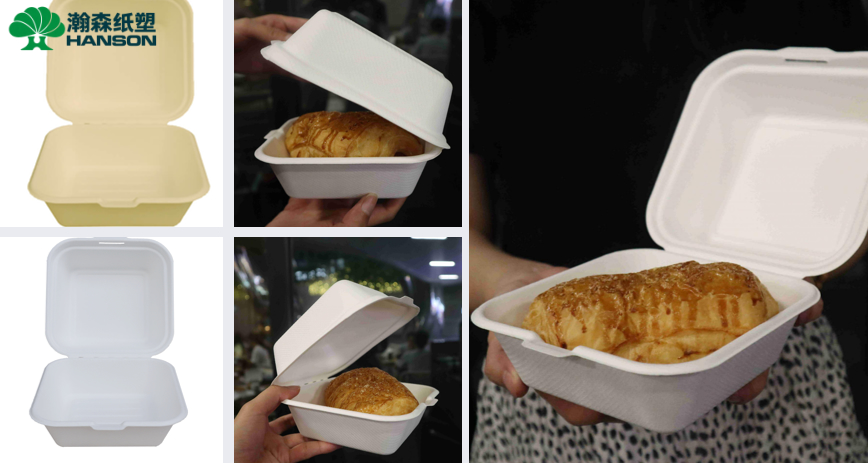
Foodservice Packaging: Maximizing Capacity and Energy Efficiency
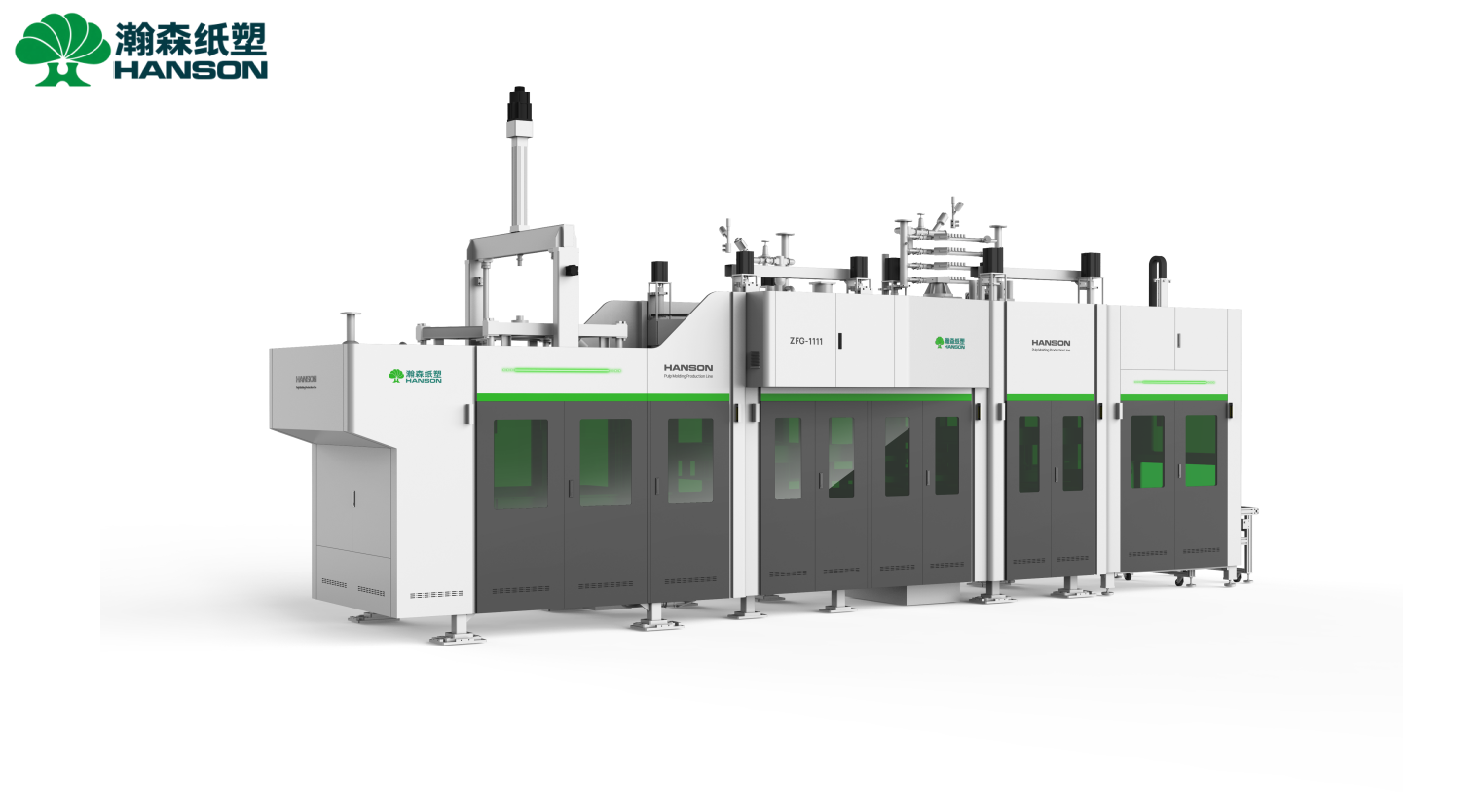
Tableware products are fast-moving consumer goods. The profitability of a tableware project depends on maximizing daily capacity and minimizing energy consumption per ton of product. Forming and hot-pressing efficiency are critical. For example, the Hanson Pulp Molding ZFG-1111 tableware machine integrates forming, hot pressing, trimming, and stacking. Under appropriate production conditions, its daily capacity can reach over 1.8 tons, making it ideal for large-scale operations.
Premium Industrial Packaging: Surface Quality and Consistency
In contrast, smartphone inserts and cosmetics packaging focus heavily on surface smoothness, strict draft angles, and precise fitment with outer boxes. This requires dynamic process control and exceptional mold accuracy. Using a high-speed tableware machine to produce complex 3C packaging often leads to uneven thickness or warped details. The Hanson Pulp Molding ZAP-9585 industrial molded fiber packaging machine incorporates technologies like dynamic pulp replenishment specifically designed to handle the complex structural demands of premium inserts.


Cup Lids: High Volume Demands Continuous Automation
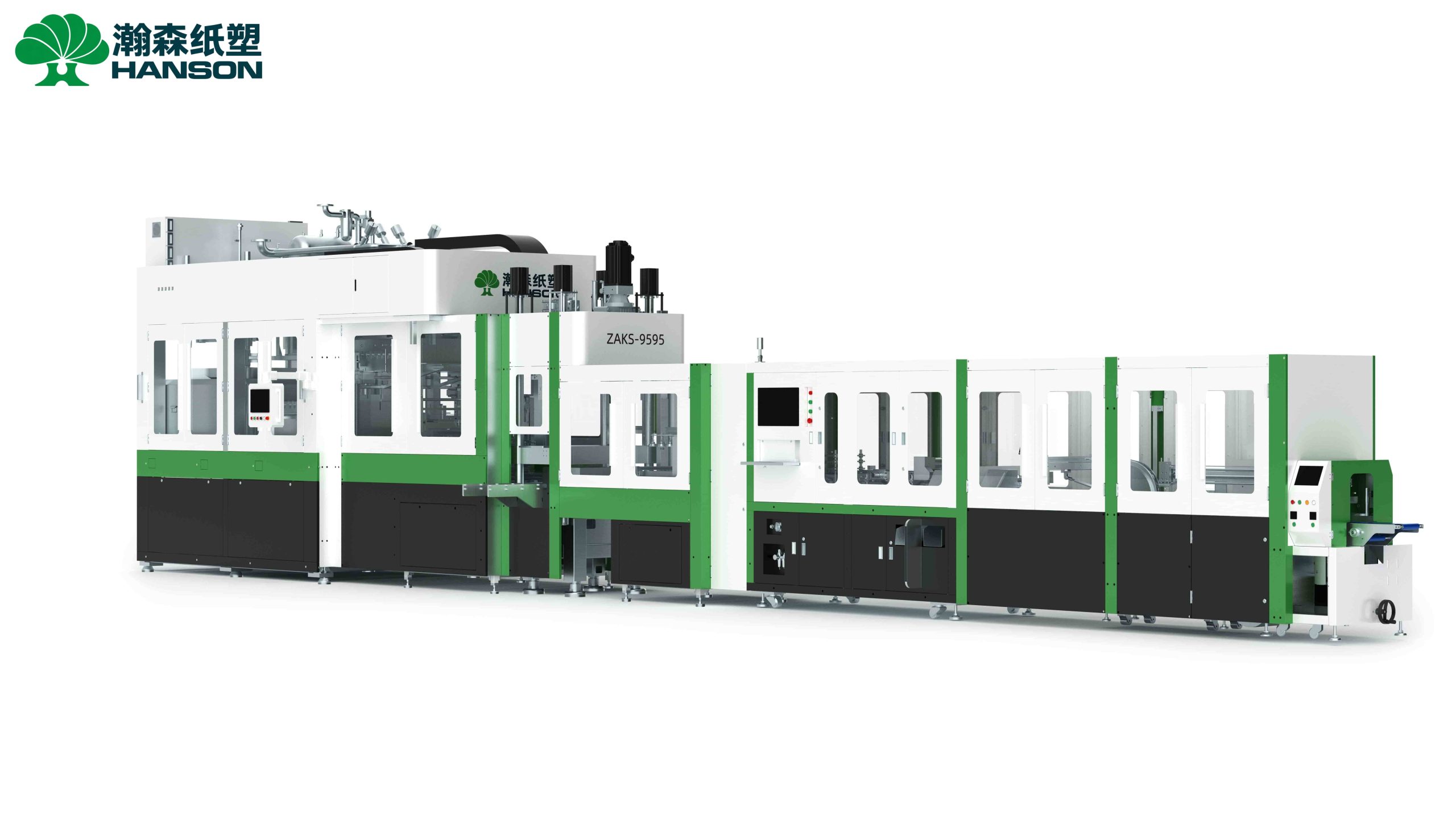
Molded fiber cup lids may be small, but they require flawless edge finishing, tight lip seals, and daily production volumes in the hundreds of thousands. Relying on manual trimming and visual inspection for such volumes creates massive bottlenecks. The Hanson Pulp Molding ZAKS-9595 is purpose-built for lids, integrating forming, hot pressing, servo-driven punch cutting, machine vision inspection, and automatic packaging into one continuous line, achieving up to 100,000–120,000 pcs/day (24H).

Tooling and Thermal Loads: “Interchangeable Molds” Does Not Mean “Universal”
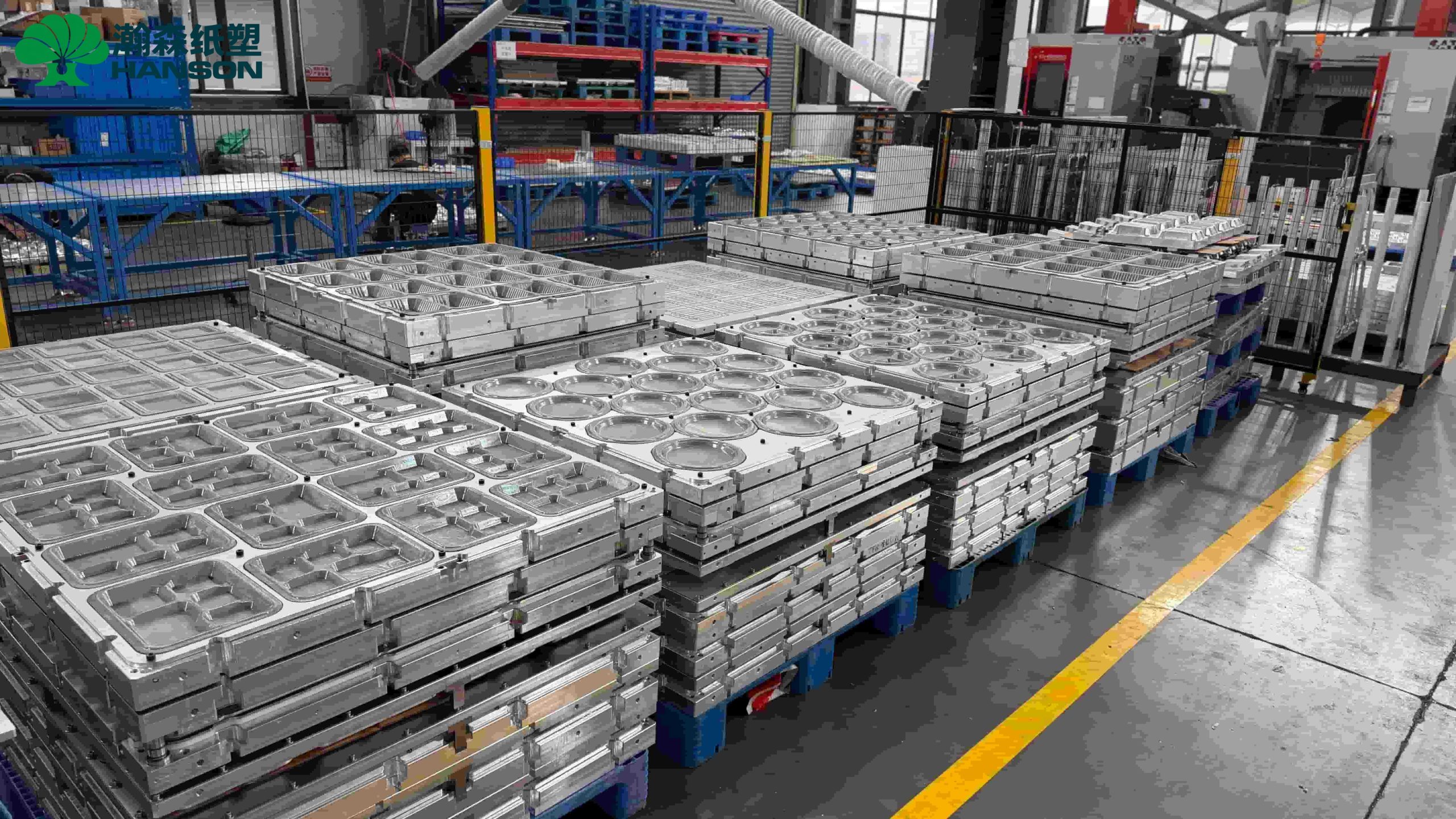
A common misconception is that changing the mold is all it takes to change the product. In reality, molded fiber tooling is not just an attachment; it directly manages drainage, fiber retention, and heat transfer.
The physical dimensions, depth, and weight of a product determine the volume of slurry required, the vacuum dewatering time, and the thermal load needed for evaporation. Manufacturing a 15-gram shallow plate versus a 40-gram deep clamshell container demands entirely different drainage designs and heat inputs. Frequently switching between drastically different products on the same machine forces the equipment to run outside its optimal parameters, resulting in long setup times and inconsistent yield rates.
Conclusion
A single pulp molding machine cannot excel at everything because there is no universal mechanical configuration that perfectly balances the lowest energy consumption, the highest precision, the fastest cycle time, and the strongest cushioning.
The most professional approach to molded fiber manufacturing is to use specialized equipment. By working from the product backward—Product -> Material -> Process -> Tooling -> Equipment—you can ensure that your pulping system, forming equipment, and post-processing automation are all aligned for optimal commercial production.
FAQ
1. Can I use the same machine for both tableware and electronics packaging? While technically possible on some wet press machines, it is generally not recommended if the quality and structural requirements differ significantly. Tableware prioritizes high output and energy efficiency, whereas electronics inserts require precise dimensional stability and specialized press control. Dedicated lines for each category ensure better yield rates and production consistency.
2. Why does my actual daily capacity change when I switch molds? Theoretical capacity (cycle time) is only one factor. The actual daily output is heavily influenced by the product’s weight, the number of mold cavities, the required dewatering time, and the hot-pressing duration. A heavier or deeper product takes longer to dry in the mold, which extends the cycle time and changes the overall daily capacity.
3. Should I buy a mass-production machine for a completely new, untested product design? No. For innovative structures or new fiber materials, it is safer to start with product development and prototyping. Using a prototyping machine like the Hanson Pulp Molding ZAMS-6047 allows you to validate the material, process, and tooling design first. Once the process is proven stable, you can confidently configure the large-scale production line, minimizing investment risks.
CTA
If you already have a product sample, 3D drawing, product dimensions, or target daily capacity, comparing theoretical machine speeds is not enough. Hanson Pulp Molding can help evaluate the molding process, tooling, equipment configuration, and complete plant layout based on your specific target product to ensure stable commercial production.
WhatsApp: +86 15920604830
Email: linchuangcheng@hspulpmolding.com