When molded pulp products require enhanced waterproof, oil-proof, or high-barrier properties, standard in-pulp sizing is often insufficient for demanding applications like holding hot oil or long-term liquid storage. In these scenarios, post-processing surface treatments such as coating and lamination become necessary. How should manufacturers evaluate and choose between these two processes?
Coating: Maintaining the Natural Fiber Texture
The coating process involves spraying a liquid barrier layer onto the surface of the molded pulp product. This method adapts well to complex product geometries and largely preserves the natural tactile feel of the paper fiber. However, the uniformity of the barrier relies heavily on the precision of the spraying equipment. If the product requires absolute liquid retention or exceptional temperature resistance, coating may have functional limitations.
Lamination: Providing an Absolute Barrier Layer
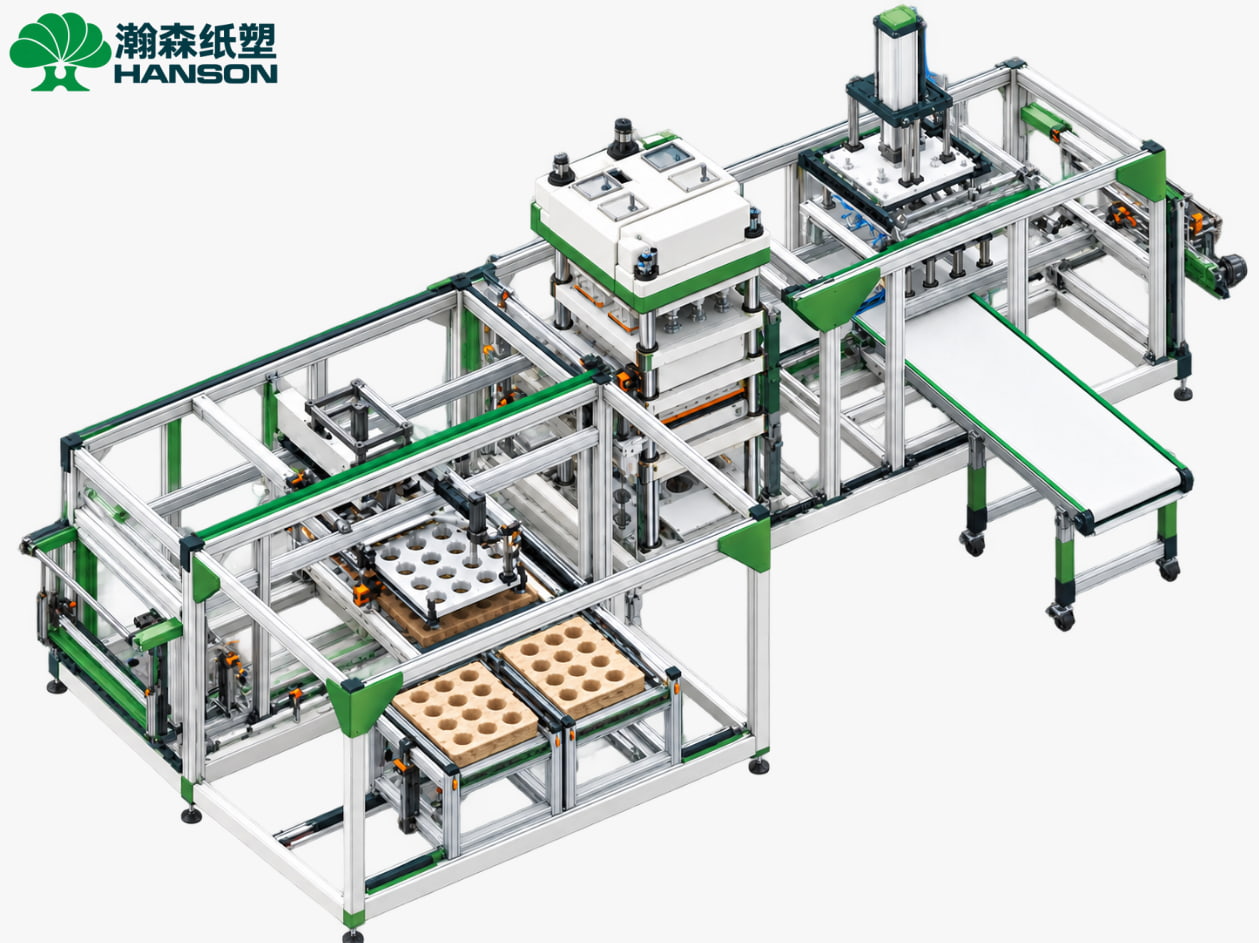
For applications that demand strict barrier performance or require the product to be heat-sealable, utilizing an Automatic Pulp Molding Laminating Line is usually the preferred choice. Through a thermo-pressing composite process, a film is bonded directly to the molded fiber substrate. The equipment is versatile and compatible with various films, including PE, PET, PLA, PBAT, PP, and EVOH. Lamination not only delivers superior waterproof and oil-proof capabilities but can also provide enhanced tear resistance and specific aesthetic finishes.
Selecting a Pulp Molding Laminating Machine When evaluating lamination equipment, automation integration and motion stability are key factors. The system operates with a PLC + HMI control system, and the continuous process integrates film unwinding, lamination, trimming, and product stacking.
Hanson Pulp Molding provides advanced lamination solutions designed for continuous, efficient production. The equipment features a mold platen size of 1100 × 1100 mm and accommodates a maximum product height of 80 mm. Servo-controlled motion in both the lamination and trimming stations helps maintain stable and precise operation. The servo linkage mechanism ensures that the pressure is evenly distributed, which is critical for maintaining platen parallelism. With a lamination cycle of 15 s/mold (actual capacity is product-dependent) and an 80-ton trimming force, the combined lamination and trimming configuration minimizes intermediate waiting time and improves overall line efficiency.
If you are evaluating lamination for a molded pulp product, send Hanson Pulp Molding your product photos, dimensions, film requirements, and target performance. Our team can help evaluate the process and suitable equipment configuration.