
When investing in post-processing equipment for molded fiber packaging, calculating the exact return on investment is critical. A common question buyers ask when evaluating a pulp molding laminating machine is: “What is the exact daily output?”
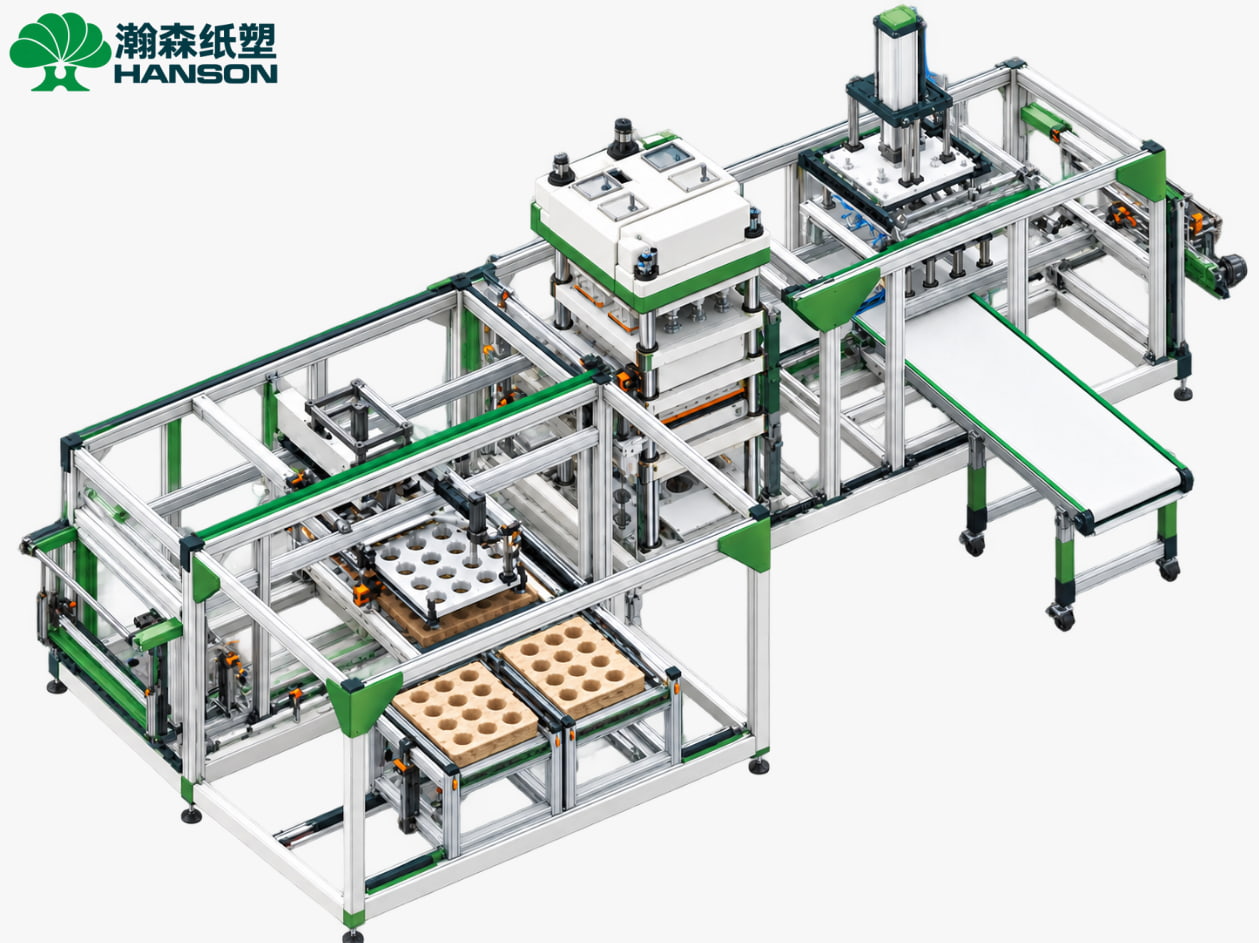
However, stating a fixed daily production volume without evaluating the actual product is inaccurate. Capacity is highly product-dependent. When evaluating equipment, it is a common mistake to solely focus on the machine’s cycle time (e.g., “seconds per mold”) while ignoring other crucial factors that dictate real-world throughput.
The Capacity Formula
The true capacity of an automatic pulp molding laminating line is determined by a simple formula:
Actual Output = Lamination Cycle Time × Number of Cavities per Mold.
If you only look at the lamination cycle (for example, 15 s/mold) without considering how many products fit into one mold, you cannot determine the actual capacity.
Key Specifications That Determine Real Capacity
To accurately calculate production volume, buyers must evaluate the following equipment specifications:
1. Mold Platen Size The platen size dictates the maximum number of cavities per mold. Hanson Pulp Molding’s equipment features a large mold platen size of 1100 × 1100 mm. A larger platen area allows for more products to be laminated simultaneously. Even if two machines have the exact same cycle time, the one with the larger platen will yield a significantly higher total output. Additionally, the maximum product height (which is up to 80 mm for our line) must be considered to ensure proper clearance and optimal mold layout.
2. Stable Lamination Cycle Fast mechanical movements must be balanced with consistent lamination quality. The 15 s/mold lamination cycle on Hanson Pulp Molding equipment is achieved through a servo-driven lamination station. The servo-driven linkage structure helps apply pressure evenly, which is highly beneficial for maintaining the flatness and parallelism of the platen. This ensures stable operation and a high yield rate during continuous production.
3. Automation and Trimming Integration True capacity is measured by finished, ready-to-pack products. A high-speed lamination station is only effective if the downstream processes can keep up. Our line integrates film unwinding, lamination, trimming, and product stacking into one continuous automated process. Supported by a servo-driven trimming station delivering 80 tons of trimming force, the system eliminates the need for manual transfer and improves overall line efficiency.
Evaluate Your Product
If you are evaluating lamination for a molded pulp product, send Hanson Pulp Molding your product photos, dimensions, film requirements and target performance. Our team can help evaluate the process, calculate the accurate capacity based on your specific mold layout, and configure the suitable equipment.