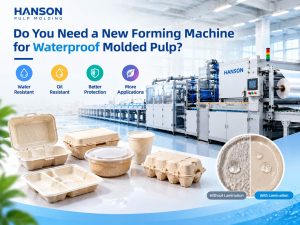
When a molded fiber packaging manufacturer receives new orders requiring enhanced water, oil, or oxygen barrier properties, modifying the pulp formulation during forming is not always sufficient to meet stringent end-use requirements. This often raises a critical operational question: Should you modify your existing forming line, or simply add a pulp molding laminating machine to your post-processing stage?
Can Your Existing Equipment Still Be Used? The short answer is yes. The shift in product requirements—such as the need to apply PE, PET, PLA, PBAT, PP, or EVOH films for better barrier performance—primarily affects the surface of the product. Your existing pulping and forming machines will continue to operate as usual to produce the base molded fiber carrier. Lamination acts as a distinct post-treatment, meaning there is no need to replace your main forming machinery to develop these new high-barrier products.
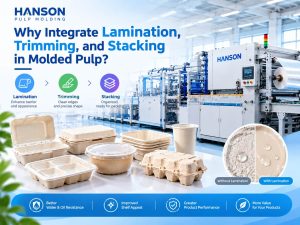
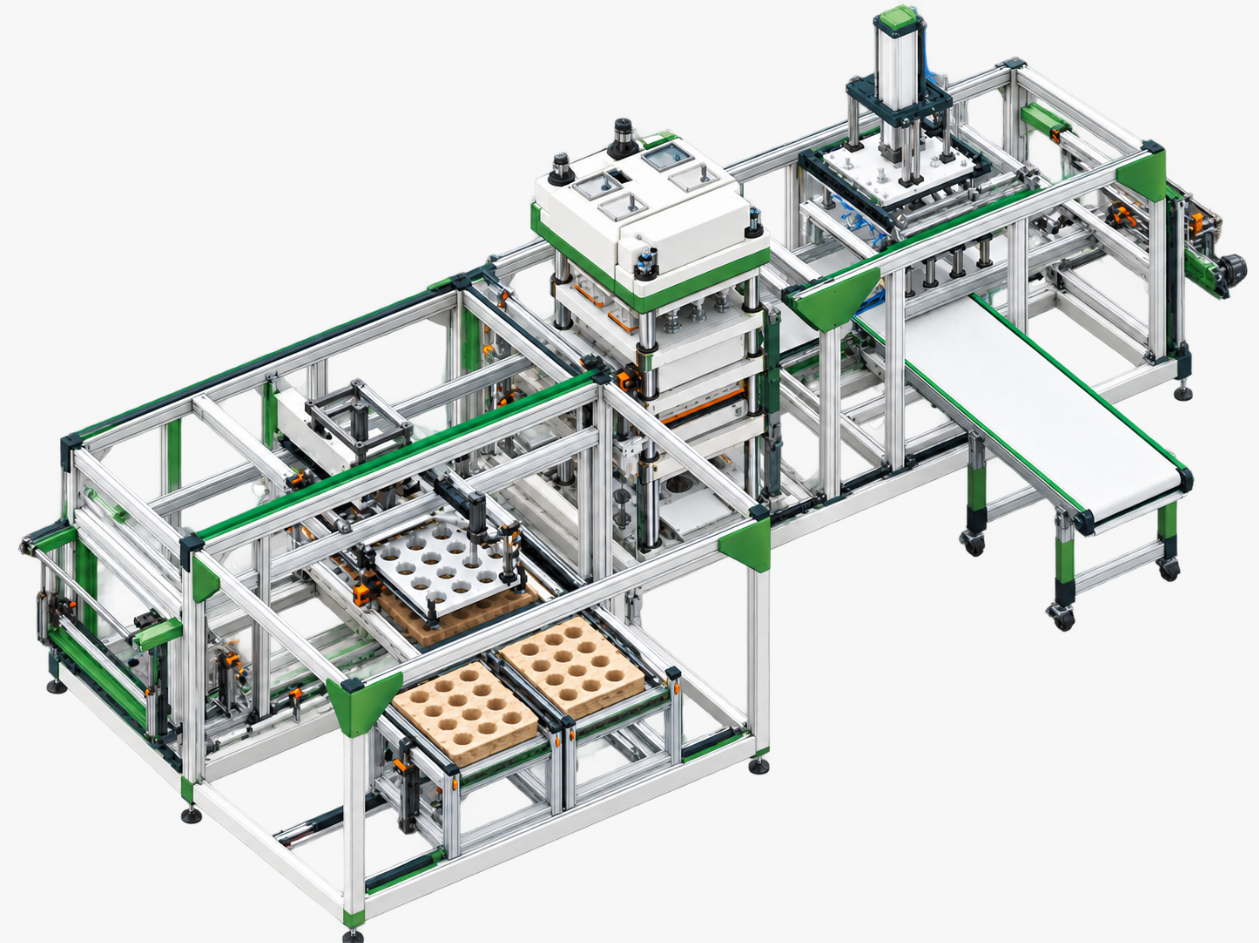
How Do Existing Processes Connect with Lamination? A common concern when adding new processes is the disruption of existing line rhythms or the fear of needing excessive manual labor for product transfer. Modern equipment handles this through continuous automation. Instead of purchasing a whole new forming line, you integrate an automated lamination system. The typical process flow—Film unwinding → Lamination → Trimming → Product stacking—is integrated into a single continuous sequence. By combining lamination and trimming (one lamination station followed directly by a trimming station), the line reduces intermediate waiting times and manual handling, ensuring your post-processing matches the output of your existing formers.
Key Specifications for Selecting a Pulp Molding Laminating Machine When adding lamination to an existing line, evaluating the equipment against your specific product parameters is essential:
-
Mold Platen Size: A substantial platen size, such as 1100 × 1100 mm, dictates how many products can be laminated per cycle, directly affecting how well the machine keeps up with your forming capacity.
-
Motion and Structural Stability: Quality lamination requires uniform pressure and excellent platen parallelism. Servo-driven stations combined with a vertical up-and-down motion structure (eliminating complex lateral movements) help maintain stable, precise operations and apply uniform pressure across the entire platen.
-
Cycle Efficiency: A lamination cycle of 15 seconds per mold offers an efficient baseline. However, actual capacity is always product-dependent—influenced by film type, layout, and product shape—and cannot be calculated purely by the dry cycle time.
-
Product Limitations: Ensure the machine can accommodate your product depths. The standard maximum product height supported is typically around 80 mm, combined with an 80-ton trimming force to handle tough fibers and films cleanly.
If you are evaluating lamination for your current molded pulp products, send Hanson Pulp Molding your product photos, dimensions, film requirements, and target barrier performance. Our team can help evaluate the process compatibility and recommend a suitable equipment configuration for your existing production line.