When a pulp molding manufacturer receives a new order requiring strict waterproof, oil-proof, or barrier properties, a common concern arises: “Can my existing equipment handle this, or do I need to invest in new forming machines?”
In most cases, your existing forming machines are still perfectly usable. The forming process primarily dictates the physical shape and structure of the product. The barrier properties—such as resistance to water, oil, and gas—are largely determined by the material formulation and the post-processing techniques applied after the product is formed.
Evaluating the Process: Why Post-Processing is Key
To achieve high barrier performance in molded fiber packaging, manufacturers typically consider a few approaches:
-
In-Pulp Additives: Adding sizing agents during pulp preparation. While effective for basic resistance, finding reliable, PFAS-free alternatives for absolute oil resistance can be challenging and costly.
-
Spray Coating: Applying a liquid barrier coating to the formed product surface.
-
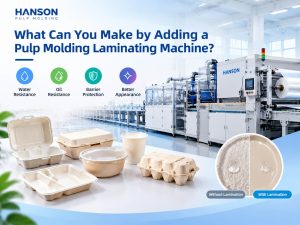
Film Lamination: Applying a thin polymer film to the surface of the molded pulp substrate through a heat-pressing process, creating an absolute physical barrier.
If the new product requires exceptional barrier performance or a specific surface finish, lamination is a highly suitable option to evaluate. In this scenario, you do not need a new forming machine; instead, you need to seamlessly integrate a pulp molding laminating machine into your post-processing workflow.
How to Choose a Pulp Molding Laminating Machine for an Existing Line
When adding lamination to an established production line, the new equipment must align with your current output capabilities and product dimensions. Here are the critical factors to review:
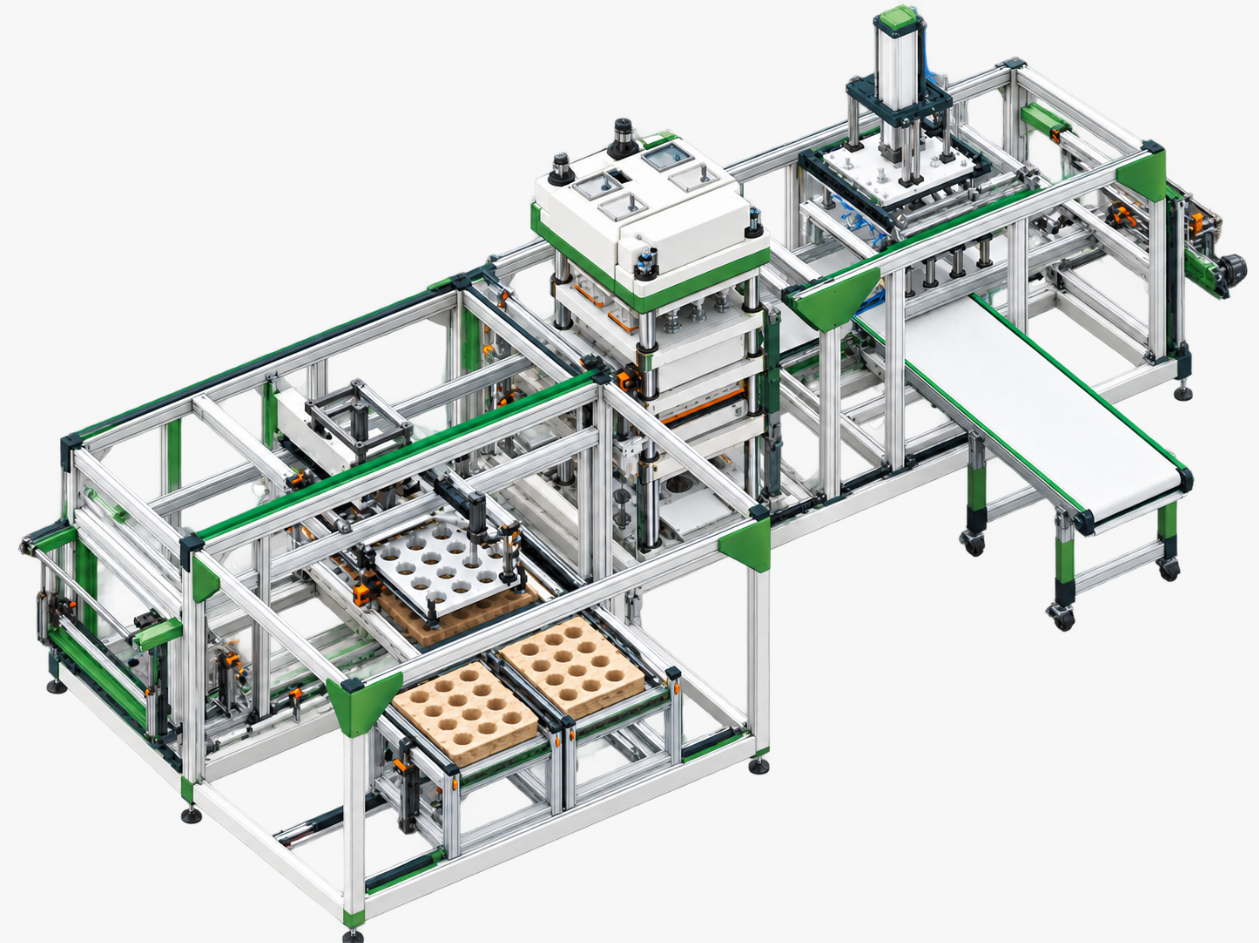
1. Mold Platen Size and Product Compatibility The laminating equipment must comfortably accommodate the products coming off your forming line. For instance, the Hanson Pulp Molding Automatic Pulp Molding Laminating Line features a mold platen size of 1100 × 1100 mm and can process products with a maximum height of 80 mm. This covers a wide range of standard molded pulp tableware and industrial packaging.
2. Flexible Film Compatibility Different orders require different barrier materials based on end-use environments and regulatory requirements. A versatile machine should not be restricted to one film type. The Hanson Pulp Molding equipment is confirmed to be compatible with various films, including PE, PET, PLA, PBAT, PP, and EVOH. (Note: The final environmental and functional performance depends heavily on the specific film material and product structure chosen).
3. Automation and Process Integration Adding a new process should not mean drastically increasing manual labor. Modern equipment is designed to streamline operations. The Hanson Pulp Molding line integrates film unwinding, lamination, trimming (with an 80-ton trimming force), and product stacking. The servo-driven lamination and trimming stations, combined with a servo-linkage structure for strictly vertical up-and-down motion, help maintain uniform pressure distribution and mold platen parallelism. This coordinated automation minimizes manual transfer and improves overall line efficiency.
4. Production Capacity Considerations While evaluating equipment, it is important to understand that capacity is product-dependent. Although a machine may feature a lamination cycle of 15 s/mold, the actual daily output relies on the mold layout, product size, and specific film characteristics.
If you are evaluating lamination for a molded pulp product, send Hanson Pulp Molding your product photos, dimensions, film requirements, and target performance. Our team can help evaluate the process and recommend a suitable equipment configuration to upgrade your existing production line.