In the global packaging market, end users are continuously raising their performance expectations for pulp molding (molded fiber) products. Beyond basic protection and sustainability benefits, modern packaging solutions are often required to overcome demanding challenges such as moisture resistance, oil resistance, and gas barrier performance.
For existing pulp molding manufacturers, investing in a completely new forming machine to meet these emerging requirements can involve significant capital expenditure. A more efficient and cost-effective strategy is to keep the existing front-end forming equipment unchanged and upgrade product performance during the post-processing stage by integrating an advanced Pulp Molding Laminating Machine.
Why Choose Post-Processing Lamination?
Improving barrier performance through pulp formulation modification (such as adding chemical additives) has certain physical limitations. Lamination, however, uses thermal pressing to bond functional films (such as PE, PET, and more sustainable materials including PLA, PBAT, and EVOH) with the molded pulp substrate.
This physical barrier layer provides reliable leakage protection, allowing conventional molded fiber products to be used directly for fresh food trays, high-barrier industrial packaging, and premium consumer product inserts.
Key Considerations When Integrating a Pulp Molding Laminating Machine into an Existing Production Line
When selecting lamination equipment for an existing production line, overseas buyers and engineers should focus on the compatibility between the equipment and existing product specifications, as well as the overall level of production automation.
Based on the technical information from “Laminating Machine Equipment Introduction V10_2026.01.15(1).doc”, Hanson Pulp Molding’s fully automatic laminating line is designed around these key factors:
- Size and specification compatibility:
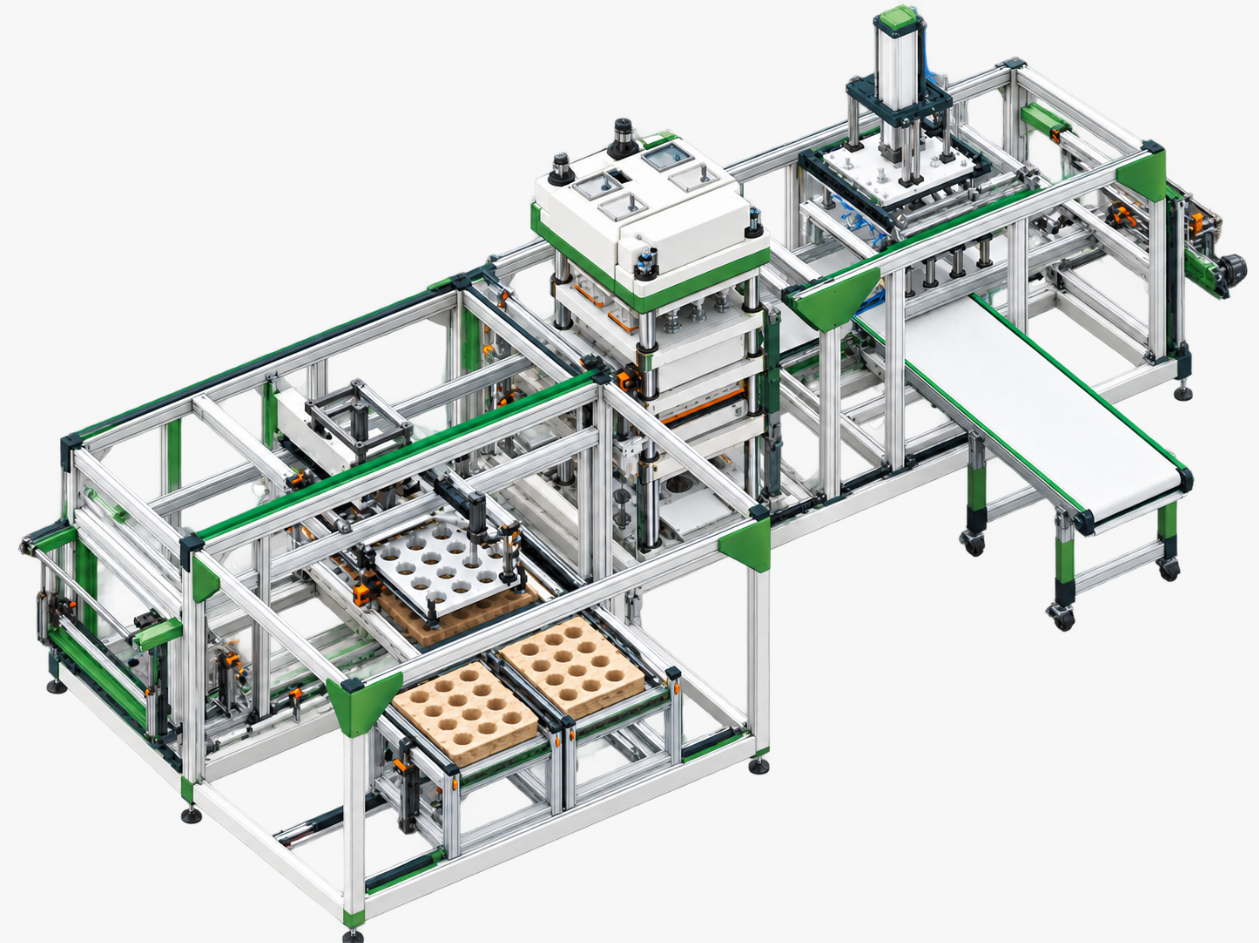
The equipment features a mold platen size of 1100 × 1100 mm. This large-format design allows manufacturers to process multiple products or larger products within a single mold, significantly improving production capacity. In addition, the machine supports a maximum product height of 80 mm, covering the depth requirements of most food containers and trays available on the market. - Fully automatic workflow:
To reduce dependence on manual labor, the production line integrates four core processes: film unwinding, lamination, die cutting, and finished product stacking. Automated material transfer ensures continuous and stable production. - Precise process control:
Both the lamination station and die-cutting station are driven by servo motors. The servo control system, combined with electric heating technology, ensures accurate mold movement and uniform pressure distribution during the thermal pressing process. This is essential for maintaining mold parallelism and achieving consistent lamination quality. - Die cutting and cycle time:
The die-cutting station provides 80T cutting pressure, ensuring clean and precise product edges. Under standard operating conditions, the basic lamination cycle time is 15 seconds per mold (actual output depends on the final product structure and mold layout).
By integrating an efficient pulp molding laminating machine into existing facilities, manufacturers can achieve product line upgrades within a shorter implementation cycle.
If you are evaluating lamination for a molded pulp product, send Hanson Pulp Molding your product photos, dimensions, film requirements, and target performance specifications. Our engineering team can help evaluate process feasibility and recommend the most suitable equipment configuration for your existing facility.