When molded fiber products need to meet rigorous standards for waterproof, oil-proof, high-barrier, or specific surface performances, the molding process alone may not be sufficient. As molded pulp expands into premium food service packaging, ready-to-eat meal containers, and demanding industrial applications, manufacturers are increasingly adding post-processing steps like lamination and coating to their production lines.
The Driving Force Behind Post-Processing
Traditional pulp molding relies on internal additives to provide basic water and oil resistance. However, when packaging encounters high-temperature oils, extended moisture exposure, or requires strict oxygen barriers to extend food shelf life, raw molded fiber has physical limitations.
To overcome this, manufacturers evaluate two main post-processing options:
-
Coating: Applying a specialized polymer coating to the surface provides good liquid repellency while maintaining the lightweight feel of the fiber. It is ideal for moderate barrier requirements.
-
Lamination: Thermal lamination bonds a dense film directly to the molded pulp surface. This provides an absolute physical barrier, enables easy top-sealing for food containers, and reinforces the structural integrity of the product.
Upgrading with a Pulp Molding Laminating Machine
When lamination is the chosen process, selecting the right equipment is critical for maintaining overall line efficiency and minimizing manual labor. Modern solutions focus on automating the entire post-processing workflow.
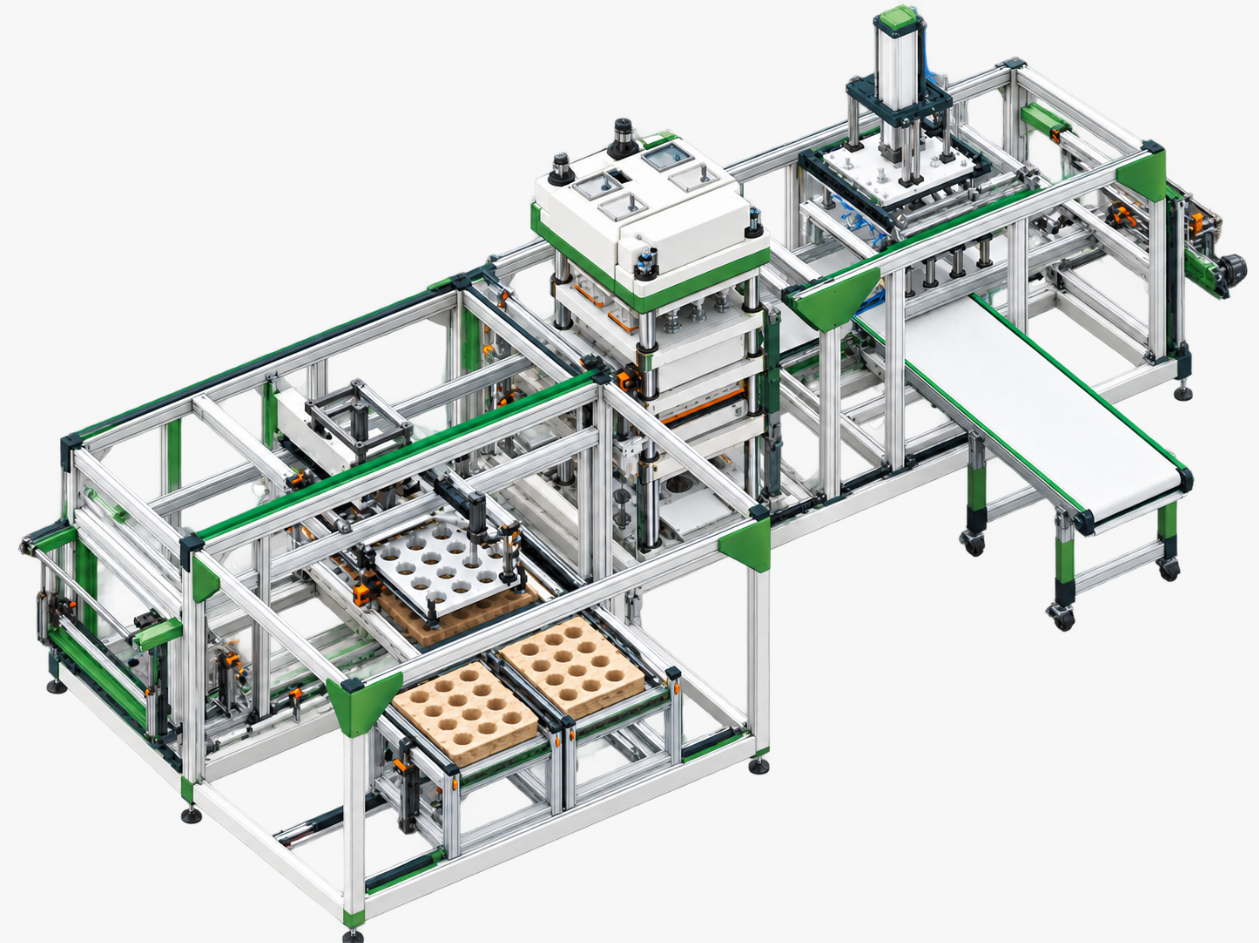
The Automatic Pulp Molding Laminating Line developed by Hanson Pulp Molding effectively integrates the typical post-processing workflow. The line automatically handles film unwinding, lamination, trimming, and product stacking in a continuous sequence.
When evaluating a molded pulp laminating machine, consider the following confirmed specifications and capabilities:
-
Platen Size and Compatibility: The machine features a large mold platen size of 1100 × 1100 mm, ensuring compatibility with a wide range of product layouts.
-
Efficiency and Control: Driven by servo-controlled motion for stable and precise operation, the lamination cycle operates at 15 s/mold (actual production capacity is product-dependent).
-
Trimming and Product Dimensions: To streamline the transition from lamination to finished goods, the servo-driven trimming station delivers 80 tons of trimming force. The equipment can process products with a maximum height of up to 80 mm.
-
Film Versatility: Depending on sustainability goals and barrier needs, the machine is compatible with a wide array of films, including PE, PET, PLA, PBAT, PP, and EVOH.
If you are evaluating lamination for a molded pulp product, send Hanson Pulp Molding your product photos, dimensions, film requirements, and target performance. Our team can help evaluate the process and suitable equipment configuration.