When stepping into the molded fiber protective packaging market, egg cartons (often referred to as egg boxes) are a high-volume, high-demand product. However, there is a significant structural difference between a standard egg tray and an egg carton. While basic egg trays prioritize simple cushioning and low cost, egg cartons require integrated lids, hinges, closure locks, and smoother surfaces for potential labeling.
Because of these functional requirements, purchasing an egg carton machine based solely on theoretical cycle times or upfront costs can lead to bottlenecks in production and poor product quality. Proper equipment configuration must be reverse-engineered from the specific product you intend to manufacture.
Step 1: Define Your Egg Carton Specifications
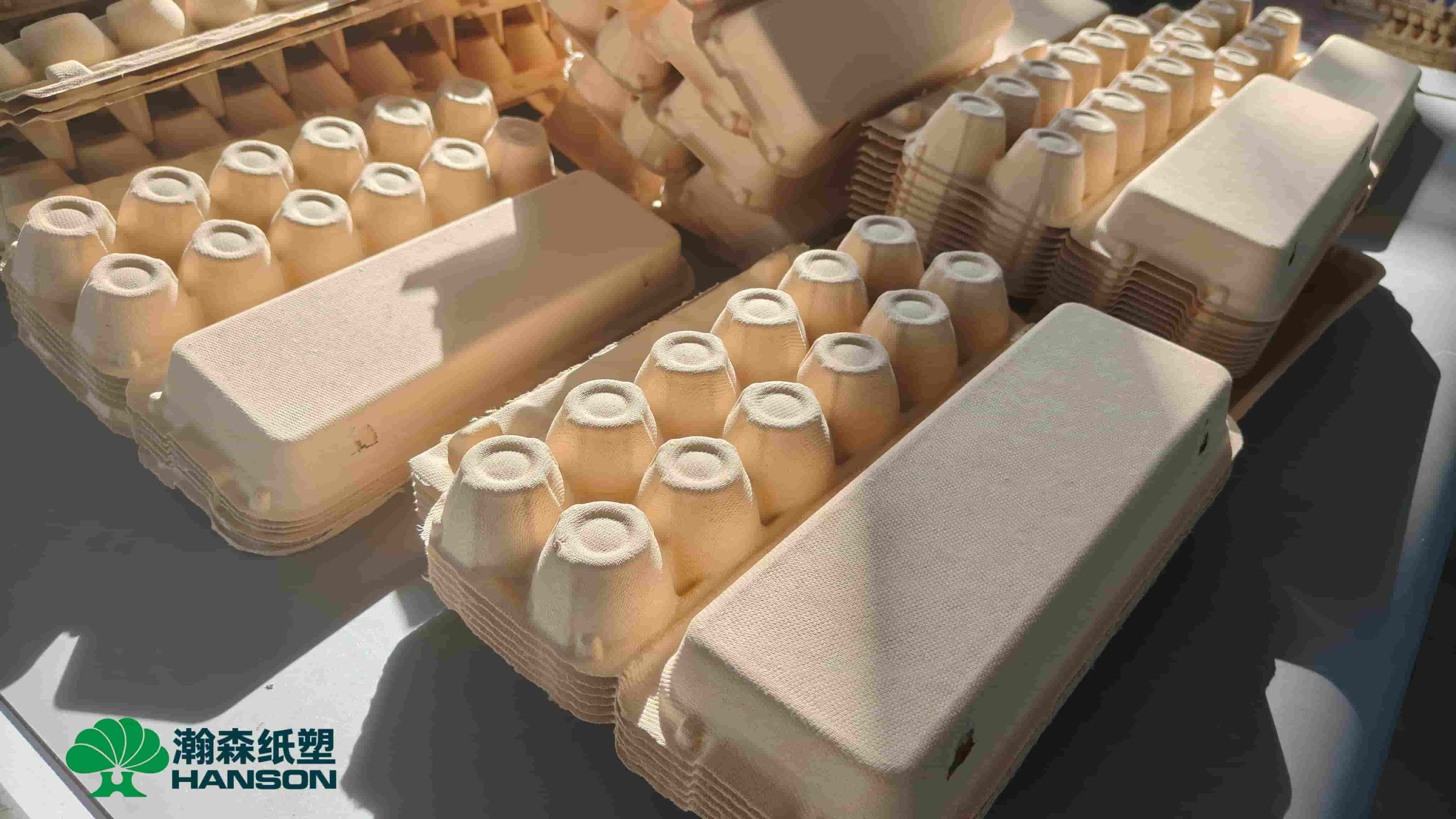
The actual production capacity and efficiency of a pulp molding line are dictated by the physical attributes of the molded fiber product. Before comparing machine models, you must define the following:
-
Product Dimensions and Weight: The weight of a single egg carton determines how much fiber is consumed and how much water must be removed during the forming cycle. This directly affects the load on your drying system and the required hot-pressing time.
-
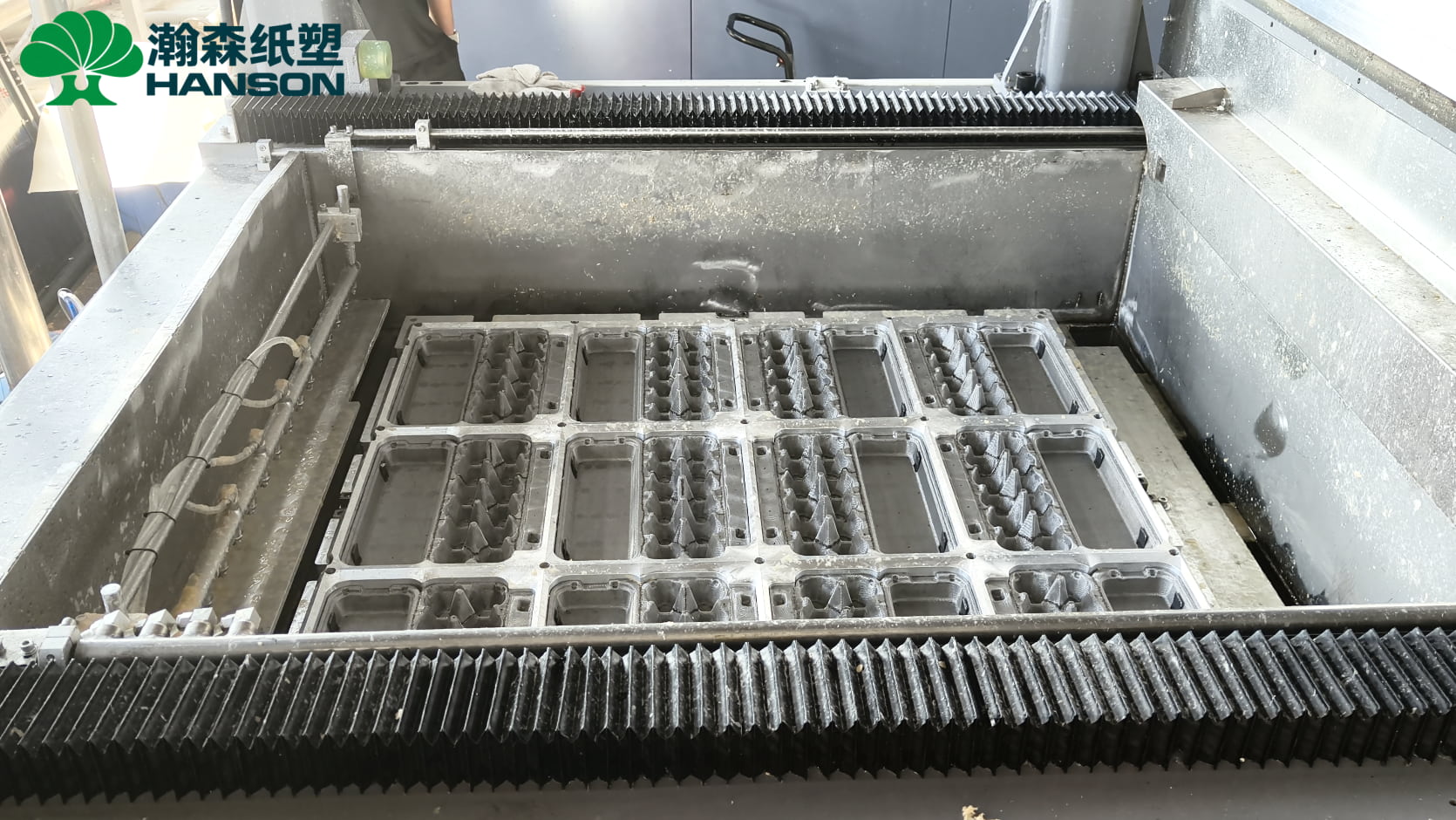
Mold Cavity Optimization: More cavities mean more cartons produced per cycle, but this requires a larger forming area and stronger vacuum dewatering capabilities. The number of cavities must be perfectly balanced with the machine’s payload and drying capacity.
-
Structural Complexity: Features like hinges and locking clasps demand higher mold precision and more uniform fiber distribution compared to flat trays.
Step 2: Core Configurations for a Modern Egg Carton Production Line
Egg cartons are typically manufactured using the dry-press or semi-dry press process. To ensure stable commercial production, a highly automated dry-press pulp molding line must synchronize four critical stages:
1. Forming and Pre-Dewatering (Cold Pressing)
In a traditional dry-press route, wet preforms are transferred directly into the dryer after forming. However, high moisture content entering the drying tunnel leads to excessive energy consumption and increases the risk of product warping. Modern solutions, such as the Automatic Dry-Press Pulp Molding Production Line from Hanson Pulp Molding, introduce a servo-driven “cold pressing” (pre-dewatering) station between forming and drying. This step squeezes out additional moisture, which significantly reduces the thermal load in the dryer, minimizes product deformation, and extends mold maintenance cycles—ultimately boosting the overall equipment effectiveness (OEE).
2. Efficient Tunnel Drying
Once pre-dewatered, the cartons enter a multi-layer drying system. Because the cold-pressing station has already removed a substantial amount of water, the dryer can operate more efficiently, utilizing natural gas or thermal oil to evaporate the remaining moisture while maintaining high throughput.
3. Hot Pressing for Structural Integrity
Drying can cause natural shrinkage in molded fiber. For egg cartons, where the lid and base must lock together perfectly, post-drying hot pressing is often necessary. Servo-driven hot-press stations apply precise heat and pressure, finalizing the shape, ensuring a smooth surface finish, and locking in the dimensional stability of the hinges and clasps.
4. Automatic Stacking and Post-Processing
If your forming and drying speeds are high, but your end-of-line packaging is manual, post-processing will quickly become the bottleneck of your factory. Using robotic transfer arms for automated stacking ensures that the continuous production flow is not interrupted.
Hanson Pulp Molding’s Turnkey Dry-Press Production Line
As a specialist in turnkey pulp molding solutions, Hanson Pulp Molding approaches egg carton manufacturing not just as supplying a machine, but as integrating a complete production system.
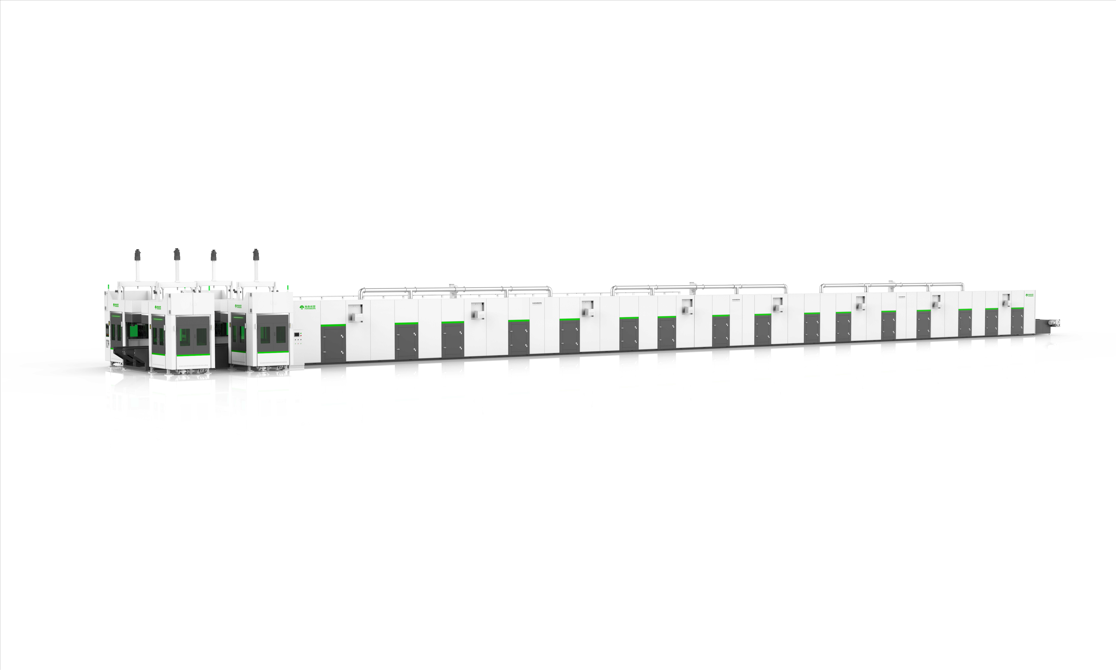
The Automatic Dry-Press Pulp Molding Production Line integrates the entire workflow: forming → cold pressing (pre-dewatering) → drying → hot pressing → automatic stacking. Driven entirely by servo motors for maximum precision and equipped with truss manipulators for seamless transfer, this line is engineered to strike the optimal balance between high-capacity output and premium product quality for egg cartons, cup carriers, and other protective industrial packaging.
FAQ
How many egg cartons can one machine produce per day? Actual production capacity cannot be determined by the machine alone. It depends heavily on the carton’s weight, the number of mold cavities, forming and hot-pressing times, drying efficiency, and overall plant uptime. Changing the product size or weight on the same machine will result in different daily output figures.
Can I use the exact same equipment for both egg trays and egg cartons? While both use similar dry-press processes, egg cartons have lids and locking mechanisms that require much higher dimensional accuracy. Therefore, egg carton lines typically need dedicated hot-pressing stations and more precise servo-driven mold controls to ensure the lids close properly, whereas basic egg trays might only require simple forming and drying.
Why add a cold pressing (pre-dewatering) station to a dry-press line? Removing water through heat (evaporation) is much more energy-intensive than removing it mechanically. By adding a cold pressing station before the dryer, the moisture content of the wet preform is significantly reduced. This not only saves drying energy but also helps prevent the product from warping during the high-temperature drying phase.
Conclusion
Building a successful molded fiber egg carton plant requires looking beyond the price tag of a standalone forming machine. The true capability of your facility lies in how well your pulping system, pre-dewatering, drying, hot pressing, and automation work together. By starting with a clear definition of your product requirements, you can configure a turnkey production line that delivers consistent quality and optimized energy consumption at scale.
Evaluate Your Egg Carton Project
If you already have a product sample, 3D drawing, product dimensions, or target daily capacity, Hanson Pulp Molding can evaluate the process route, mold configuration, and required dry-press equipment setup for your project.
WhatsApp: +86 15920604830
Email: linchuangcheng@hspulpmolding.com