In the previous part of our inspection guide, we explored how to evaluate raw material handling, pulping systems, and basic forming mechanisms. However, when you step into a factory to evaluate an operating pulp molding production line, relying solely on theoretical machine specifications is not enough.
To ensure a strong return on investment, investors must assess how the line performs under continuous commercial stress. The true value of a pulp molding production line is determined by its actual production beat, labor dependency, quality consistency, and operational flexibility during product changeovers.
Evaluating Actual Production Beat vs. Post-Processing Bottlenecks
Many buyers mistakenly calculate their factory’s daily output by simply dividing 24 hours by the forming machine’s theoretical cycle time. In commercial production, capacity is a holistic system result.
During an on-site inspection, focus on the variables that dictate the actual production beat:
-
Process Synchronization: Observe if there is a lag between forming, wet preform transfer, hot pressing, and final drying. If the forming tool operates rapidly but the hot press cannot keep up due to high moisture content, the entire line’s capacity will drop.
-
Dewatering Efficiency of Tooling: The design of the forming mold and its mesh directly affects how much water is removed via vacuum. Lower moisture content in the wet preform means less thermal energy and time required during the hot pressing stage.
-
Effective Uptime: Analyze the frequency of minor stoppages for mold cleaning, mesh maintenance, or transfer errors.
Labor Costs and Post-Processing Automation
A common pitfall in molded fiber manufacturing is establishing an automated forming front-end, only to rely on a massive manual workforce for trimming, inspection, and packaging at the back-end.
To evaluate true operational efficiency, scrutinize the post-processing automation level:
-
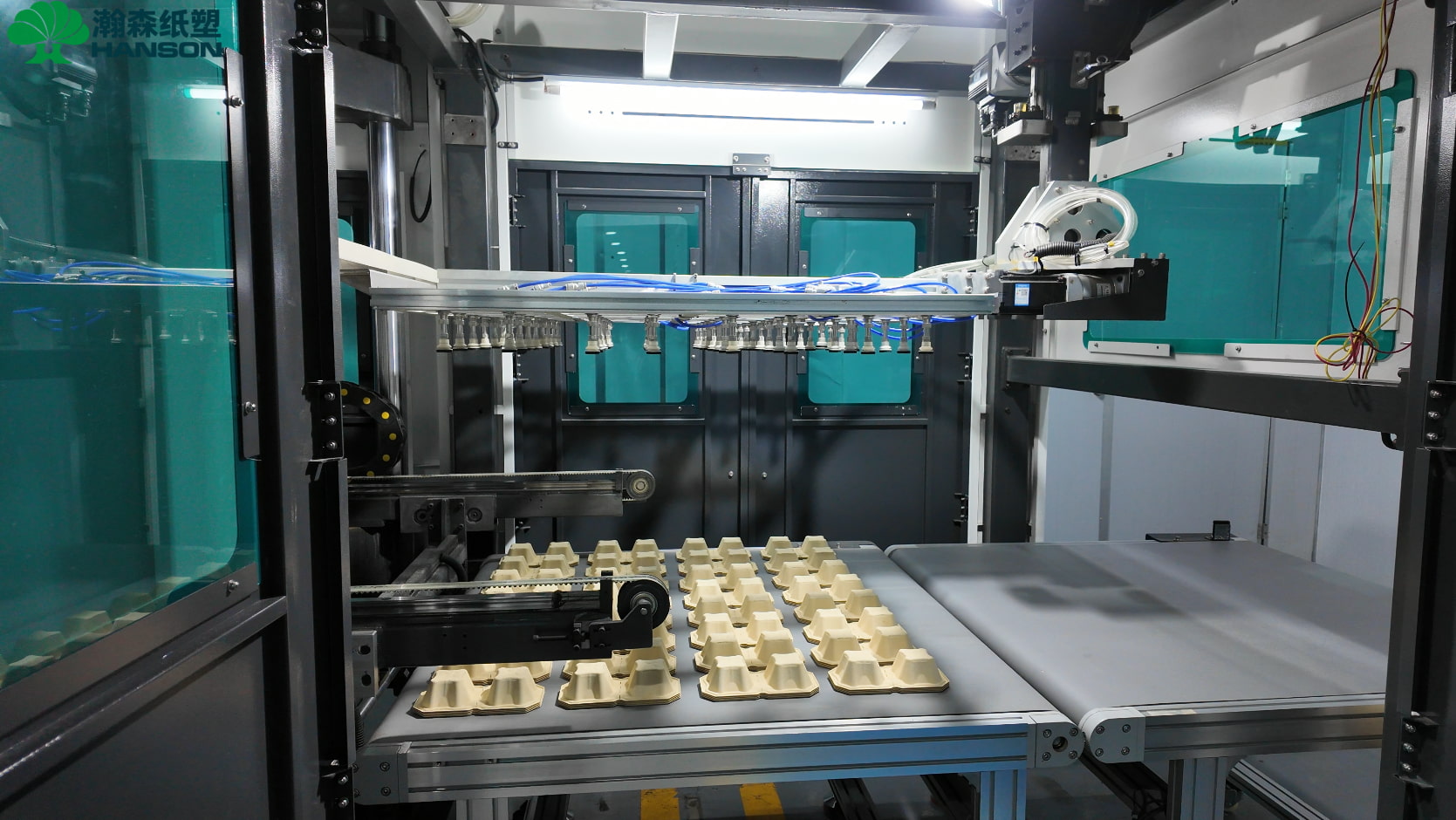
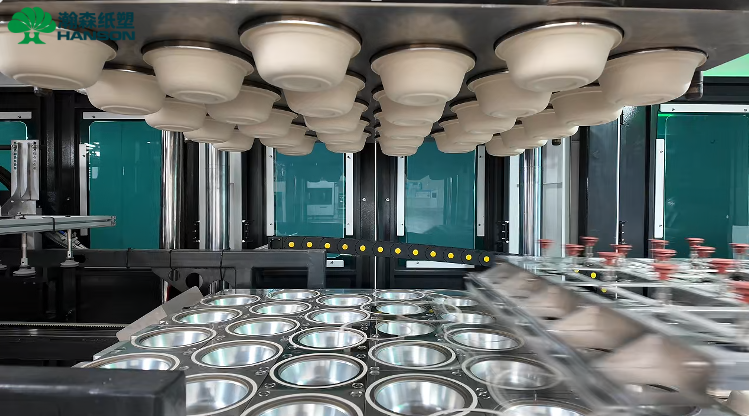
Automated Trimming and Stacking: Manual edge trimming slows down the production beat and increases variable labor costs. Verify if the line integrates automated punching and stacking mechanisms directly after hot pressing.
-
Advanced Secondary Processing: For products requiring specific surface performances, check the integration of automated coating or lamination modules.
-
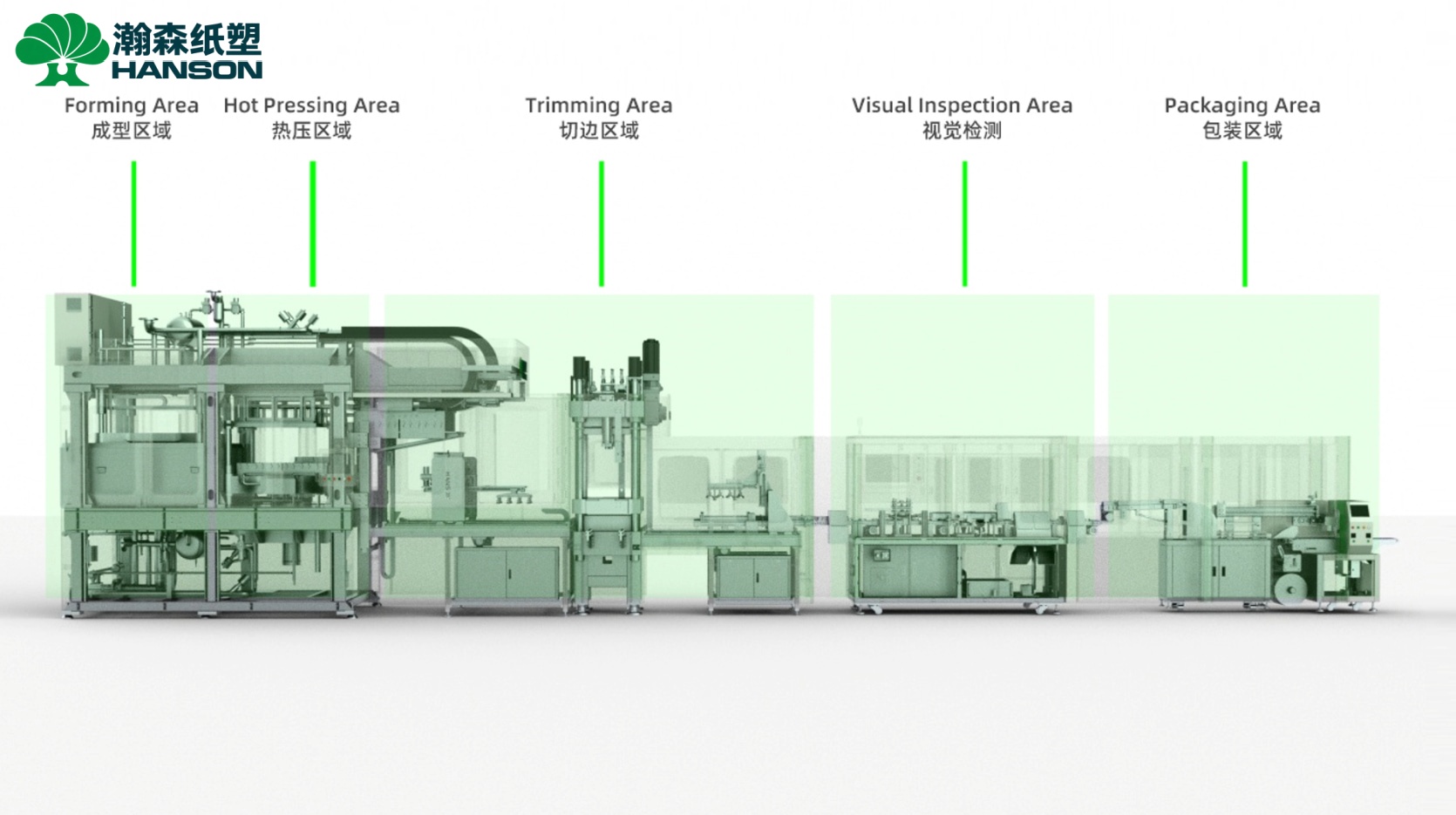
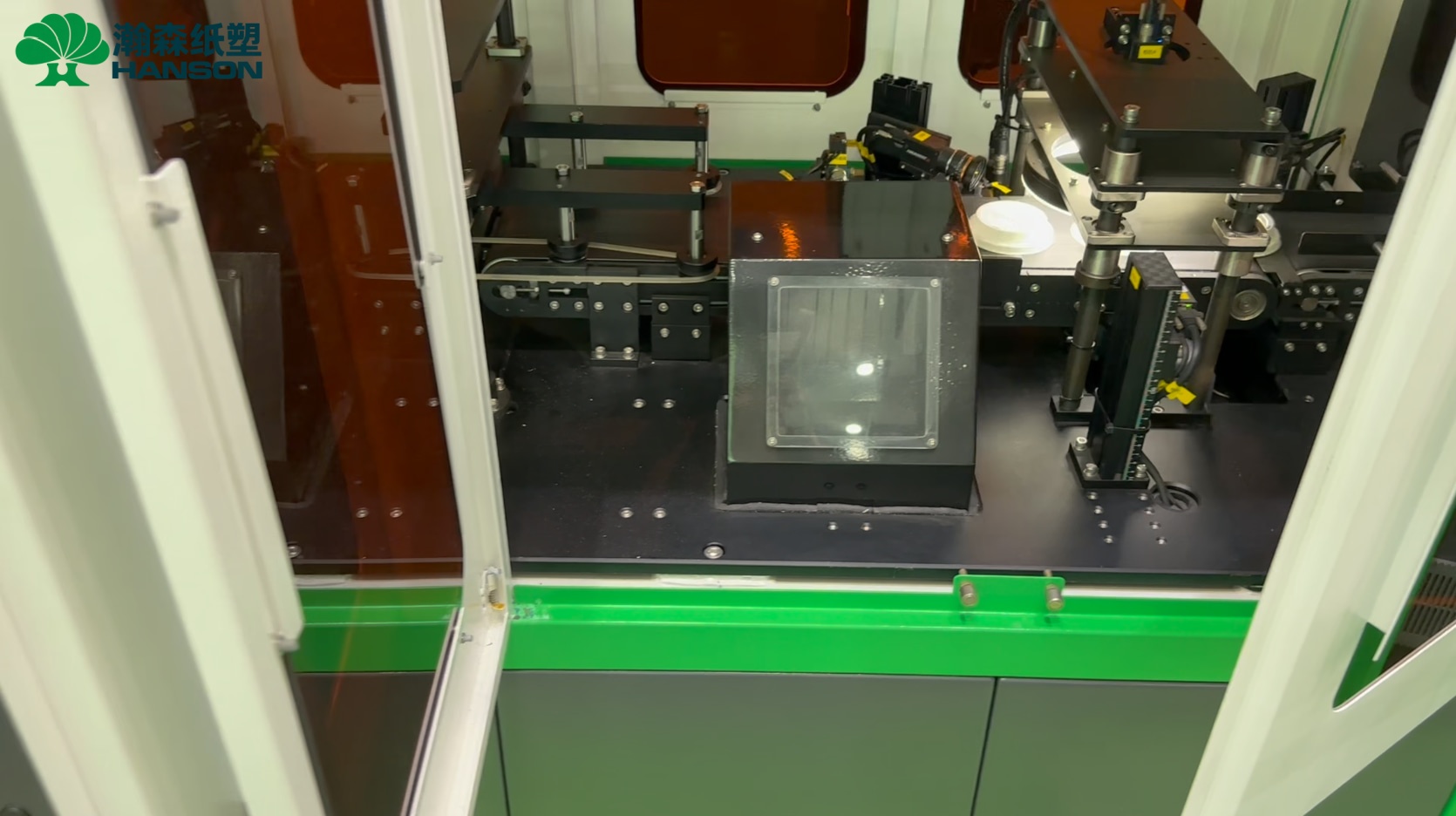
The Turnkey Synergy by Hanson Pulp Molding: As a specialist in turnkey pulp molding solutions, Hanson Pulp Molding approaches post-processing automation as an integral part of the production line. By implementing coordinated automated trimming, visual inspection (for precision products like cup lids), and auto-stacking, Hanson minimizes human intervention, eliminating back-end bottlenecks and ensuring the line runs at its intended speed.
Product Quality Consistency and Yield
Producing a high-quality sample is relatively simple; maintaining that exact standard across a run of 100,000 units is the real test of a pulp molding production line.
When inspecting a running line, randomly sample products from different cavities and consecutive batches to verify:
-
Dimensional Accuracy: This is particularly critical for premium industrial molded fiber packaging and food containers with interlocking closures. Observe if the hot press tooling maintains consistent pressure and temperature distribution.
-
Surface Quality: Look for signs of fiber shedding, uneven edges, or localized wet spots that indicate inconsistent drying or pressing.
-
Machine Vision Integration: Manual inspection is prone to fatigue. Advanced lines incorporate machine vision inspection systems to automatically scan for edge defects and surface irregularities, ensuring only qualified products proceed to the packaging stage.
Changeover Flexibility and Tooling
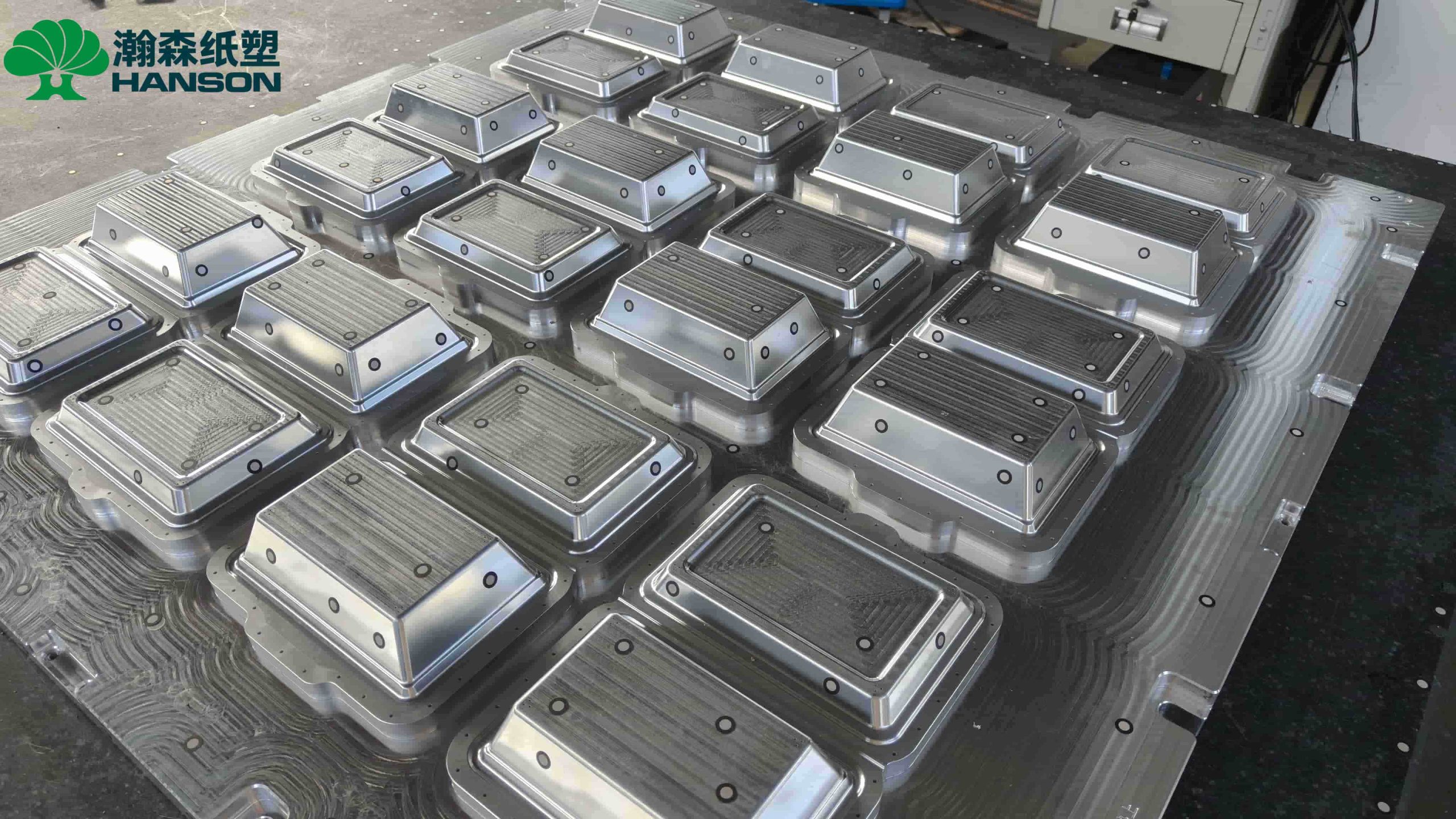
In today’s packaging market, smaller batch sizes and diverse product portfolios are becoming the norm. A production line’s ability to swiftly change over between different products minimizes expensive downtime.
-
Mold Replacement Speed: Ask the operator how long it takes to safely remove the previous molds, install the new set (including forming, transfer, and press tools), and successfully produce the first qualified piece.
-
Recipe Management: Verify if the PLC control system can instantly recall historical process parameters—such as pulp consistency, vacuum duration, and hot pressing temperatures—for specific products, reducing reliance on operator guesswork.
Conclusion
Purchasing a pulp molding production line goes far beyond selecting a forming machine. The actual production beat sets your capacity limit, quality consistency safeguards your margins, and post-processing automation alongside swift mold changeovers dictates your ongoing operational costs. A thorough on-site verification of these interconnected factors is the only way to accurately project the commercial viability of a molded fiber project.
FAQ
Q: Why doesn’t a fast cycle time guarantee high daily output? A: Theoretical cycle time only measures the isolated movement of the forming mechanism. Actual daily output is influenced by product weight, number of mold cavities, hot pressing duration, post-processing speed, and effective uptime (accounting for mold cleaning and changeovers). The slowest process dictates the entire line’s output.
Q: Does post-processing automation always mean higher ROI? A: Automation should match your commercial model. For high-volume, standard items (like tableware) or precision items (like cup lids and premium inserts), incorporating automated trimming, visual inspection, and stacking significantly reduces long-term labor costs and maintains strict quality consistency, ultimately boosting ROI.
Q: Does changing products on a production line only involve swapping the molds? A: No. Alongside changing the forming, transfer, and hot press tooling, operators must also adjust process parameters including pulp consistency, vacuum time, pressing temperature, and pressure. Often, it also requires changing trimming dies and end-of-line handling fixtures.
CTA
If you are planning to invest in a new pulp molding plant or upgrade existing production lines, please prepare your target product types, required daily capacity, plant conditions, and automation preferences. Hanson Pulp Molding can evaluate your project comprehensively—from tooling and process validation to equipment configuration and post-processing automation.
WhatsApp: +86 15920604830 Email: linchuangcheng@hspulpmolding.com