
When investing in a turnkey pulp molding plant or expanding existing lines, buyers often focus primarily on one specification: the theoretical cycle time of the forming machine. While a fast forming machine is important, many factory operators discover that their actual daily output during mass production falls significantly short of these theoretical calculations.
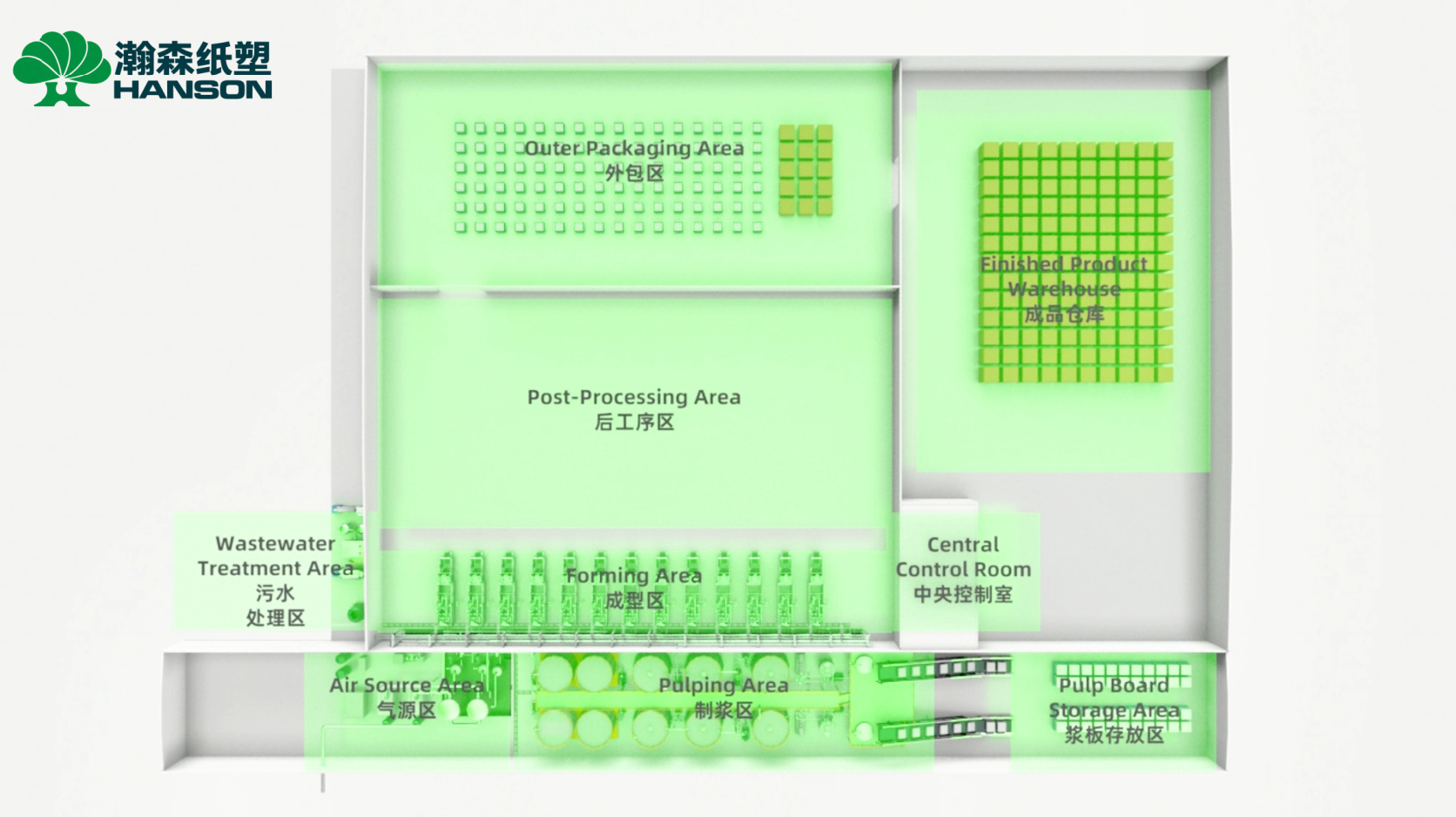
The final capacity of a pulp molding project is not determined by a single machine alone. It is a system-wide result affected jointly by pulping, forming, mold design, hot pressing, post-processing, energy management, and equipment availability. To truly improve the mass production efficiency of pulp molding equipment, buyers must look beyond the main machine and evaluate the entire production line.
Why Cycle Time Does Not Equal Actual Production Capacity
Theoretical capacity is usually calculated by multiplying the number of mold cavities by the cycles per hour. However, stable commercial production involves much more.
If your pulping system cannot supply pulp consistently, the forming machine must wait. If poor mold drainage leaves the wet preform with too much water, hot pressing takes longer, consuming more energy and slowing the entire process. If trimming and stacking rely on slow manual labor, finished products will bottleneck at the end of the line. Therefore, improving efficiency requires optimizing the integration between equipment, tooling, and processes.
Key Stages to Optimize in a Pulp Molding Production Line
1. Mold Drainage and Wet Preform Moisture Content
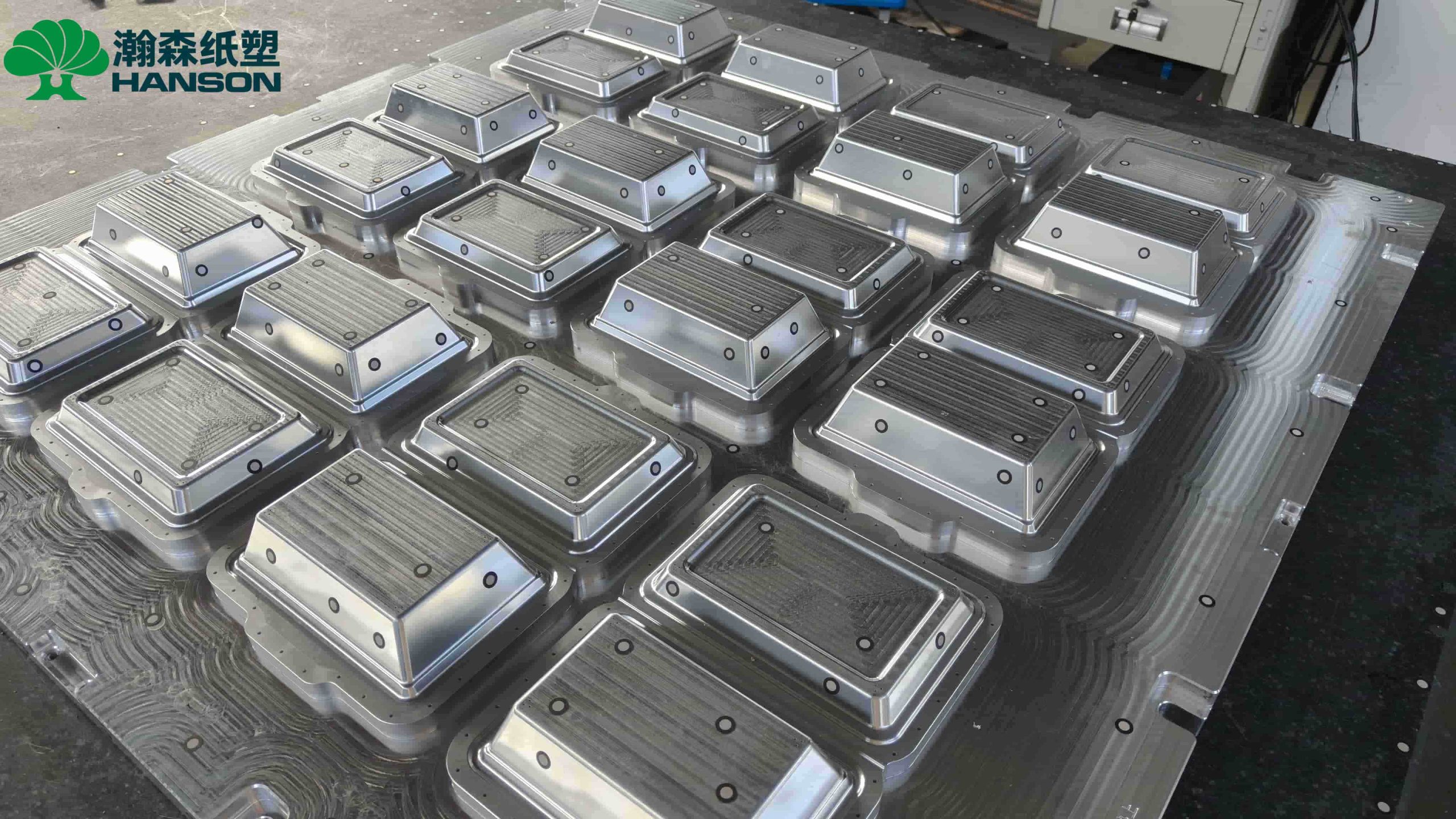
Pulp molding is fundamentally about removing water from plant fibers. The tooling (molds) does not just shape the product; it dictates the initial vacuum dewatering efficiency.
By optimizing the forming mold’s mesh and drainage structure, you can lower the moisture content of the wet preform before it enters the hot-press mold. Less water in the wet preform means less thermal energy is required to evaporate it, which directly reduces hot pressing time and lowers energy consumption. Hanson Pulp Molding focuses on the synergy between equipment, tooling, and process parameters to achieve highly efficient moisture reduction right from the forming stage.
2. Intelligent Pulping System Stability
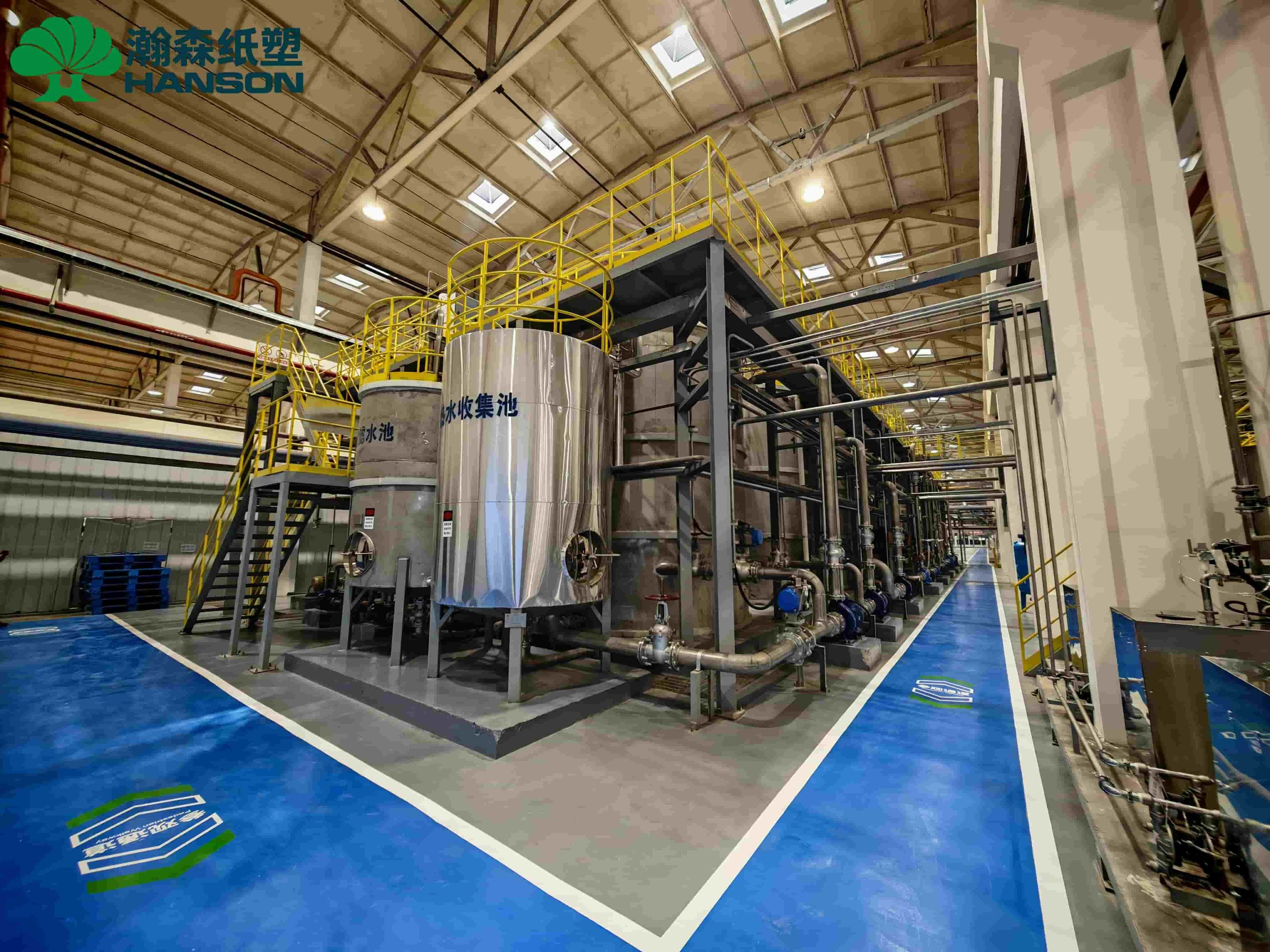
The fastest pulp molding equipment will underperform if the pulp slurry is inconsistent. Fluctuations in pulp consistency or blending ratios lead to variations in product weight, thickness, and forming times.
During plant planning, the pulping capacity must be matched to the peak demand of the forming equipment. An intelligent pulping system ensures that precise concentrations are continuously delivered, preventing unnecessary downtime and reducing scrap rates caused by poor material stability.
3. Hot Pressing and Energy Optimization
In wet-press manufacturing, hot pressing uses heat, pressure, and time to dry and shape the product. Blindly raising temperatures to speed up production often causes product deformation or uneven drying, leading to higher scrap rates.
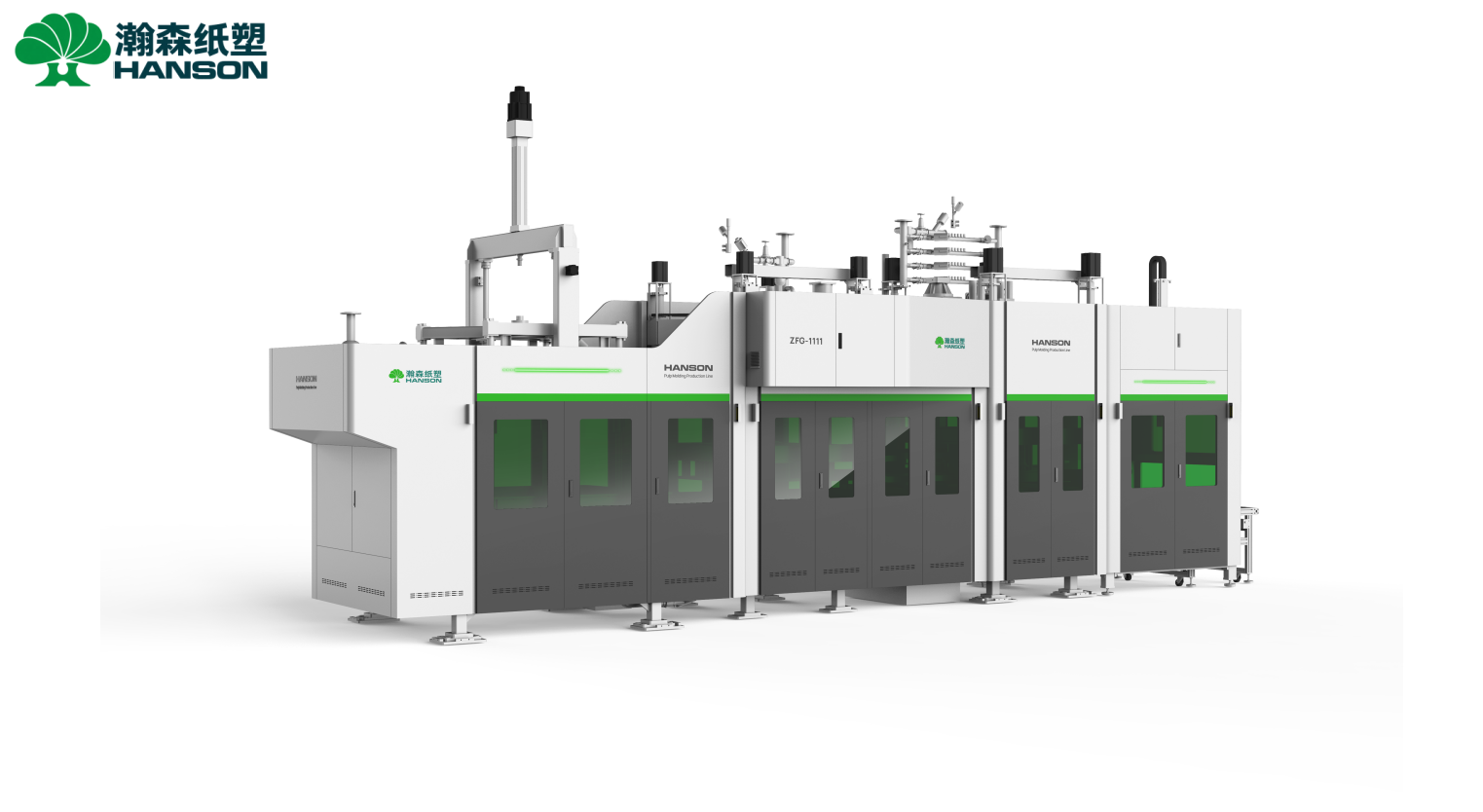
When selecting equipment, evaluating the actual electrical energy consumption per ton of product is crucial. For example, under appropriate production conditions, the Hanson Pulp Molding ZFG-1111 tableware machine can achieve a daily output of over 1.8 tons with an electricity consumption of less than 1,800 kWh per ton. This balance ensures that high output does not come at the expense of excessive energy costs.
4. Post-Processing Automation
Once molded fiber products are formed and dried, they often require trimming, visual inspection, and stacking. For high-volume, small-item production like molded fiber cup lids, post-processing can quickly become the bottleneck.
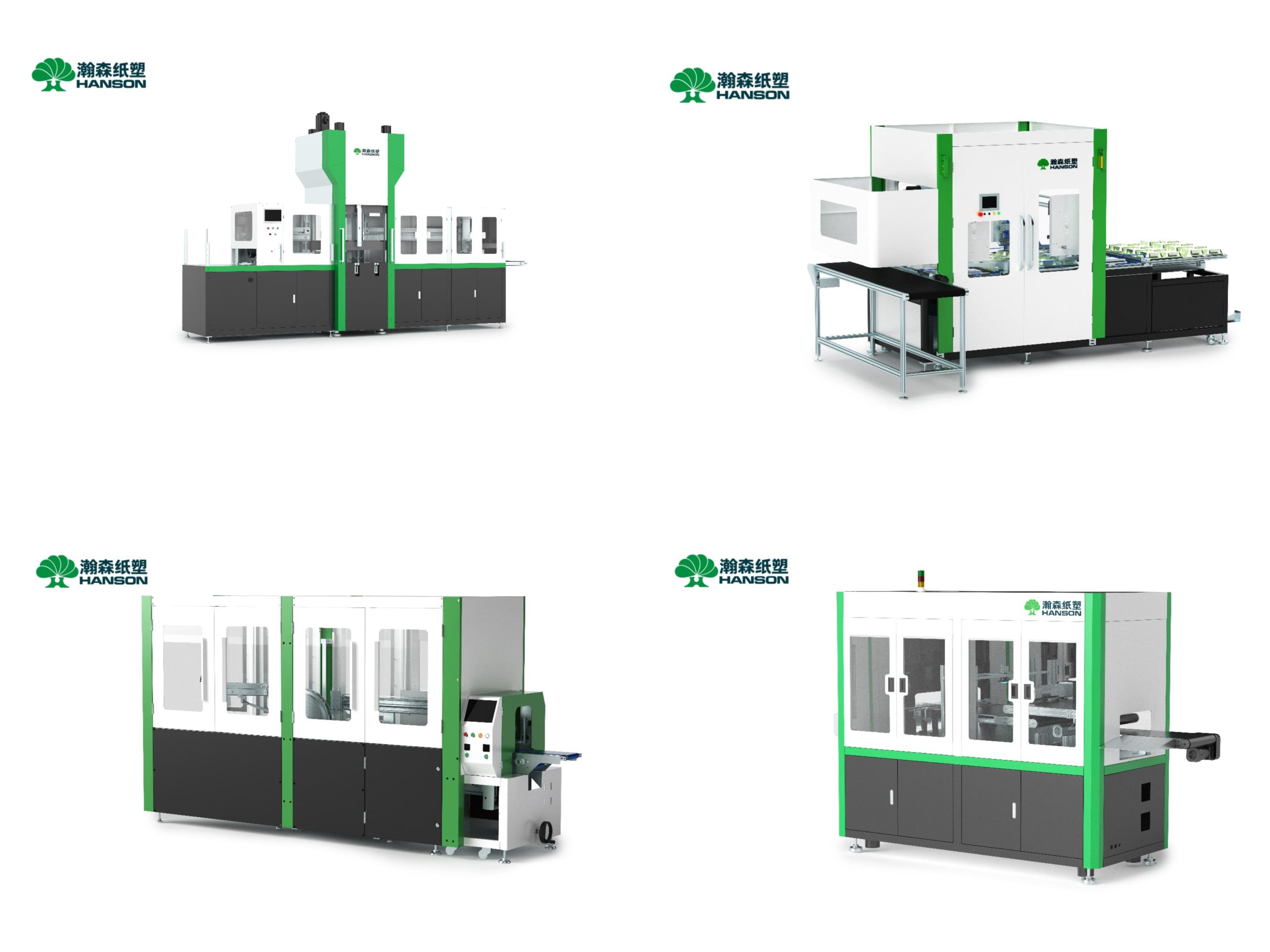
Modern pulp molding equipment must integrate seamless post-processing automation. The Hanson Pulp Molding ZAKS-9595 cup lid machine, for instance, integrates forming, hot pressing, servo-driven punch cutting, machine vision inspection, and packaging, achieving up to 100,000–120,000 pcs/day (24H) while minimizing manual labor.
Evaluating Equipment Based on the Specific Product Line
A single type of machine cannot efficiently produce all molded fiber products. Equipment configuration should be evaluated based on the specific product line:
-
Molded Fiber Tableware: Requires equipment optimized for high-tonnage output, rapid in-machine trimming, automatic stacking, and low unit energy consumption.
-
Premium Industrial Packaging: For products like consumer electronics inserts, cycle time takes a back seat to surface quality, dimensional accuracy, dynamic pulp replenishment, and precise process control.
-
Dry-Press Protective Packaging: Products like egg cartons and cup carriers benefit from pre-dewatering (cold pressing) and independent tunnel drying, where energy routing dictates the line’s actual throughput.
Conclusion
Maximizing the mass production efficiency of pulp molding equipment is not about buying the fastest standalone machine. It is about aligning product requirements with the right tooling, pulping, hot pressing, and post-processing automation. By treating the molded fiber production line as an integrated system, manufacturers can eliminate bottlenecks, reduce energy consumption, and maintain a stable, high-yield operation.
FAQ
1. How much can one pulp molding machine produce per day? There is no fixed answer. The actual daily output depends on the single product weight, product size, number of mold cavities, forming and hot pressing times, and the equipment’s effective operating rate.
2. Does increasing the number of mold cavities guarantee higher output? While more cavities allow for more pieces per cycle, the total number of cavities is limited by the product size, mold area, drainage capacity, and equipment load. If too many cavities compromise dewatering or prolong hot pressing, overall efficiency and yield may drop.
3. Why does wet preform moisture content affect energy consumption? The more moisture remaining in the wet preform, the more thermal energy is required during the hot pressing or drying stage to evaporate it. Improving dewatering during the forming or cold-pressing phase significantly reduces the heat load, lowering energy consumption per ton of product.
If you already have a product sample, 3D drawing, product dimensions, or a target daily capacity, Hanson Pulp Molding can help evaluate the molding process, tooling, and equipment configuration to maximize your production efficiency.
WhatsApp: +86 15920604830
Email: linchuangcheng@hspulpmolding.com