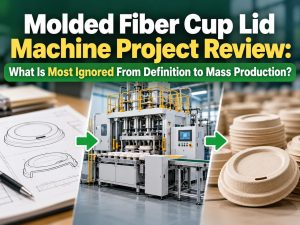
As the global packaging industry transitions away from single-use plastics, the demand for molded fiber cup lids has surged. However, many investors entering the market make a critical mistake: they rush to buy a molded fiber cup lid machine based purely on theoretical production speed, without first properly defining the product or validating it through prototyping.
Unlike standard tableware plates or industrial protective packaging, cup lids are highly precise functional items. They require excellent dimensional stability, a tight snap-fit, and a perfectly smooth edge. Skipping product development and tooling validation can lead to high defect rates and frequent mold modifications during mass production. For a successful turnkey pulp molding project, validating the product before scaling up equipment is the most effective way to minimize investment risk.
Why Molded Fiber Cup Lids Require Strict Product Definition
In pulp molding manufacturing, the equipment configuration should always be dictated by the product, not the other way around. Before selecting a machine, you must confirm several crucial parameters during the product definition phase:
-
Snap-Fit and Sealing Structure: The lid must lock securely onto the cup to prevent liquid from spilling. This requires extremely precise draft angles and undercut designs in the tooling.
-
Material and Shrinkage: Different fiber materials (such as bagasse or wood pulp) exhibit different shrinkage rates after hot pressing and drying. This directly affects the final dimensional tolerance of the lid.
-
Trimming Requirements: The edge of the cup lid must be completely free of burrs or rough fibers to ensure a pleasant drinking experience, requiring highly precise trimming processes.
If you invest in a large-scale molded fiber cup lid machine without testing these parameters under actual thermoforming conditions, you may find that the lids suffer from severe deformation or fail to fit the cups properly.

The Role of Prototyping in Cup Lid Manufacturing
Prototyping is a critical step that allows you to verify both the product structure and the manufacturing process before committing to a full production line. For molded fiber cup lids, prototyping helps answer several key questions:
-
Tooling Validation: Does the mold’s drainage structure ensure an even distribution of pulp? Is the tooling accurate enough to create consistent wall thickness without warping?
-
Process Development: What is the optimal pulp consistency, forming time, and hot-pressing temperature needed to achieve a dense, smooth, and rigid lid?
-
Post-Processing Feasibility: Prototyping helps establish the baseline for the servo-punching and vision inspection parameters that will be required during continuous mass production.
Key Factors in Choosing a Molded Fiber Cup Lid Machine
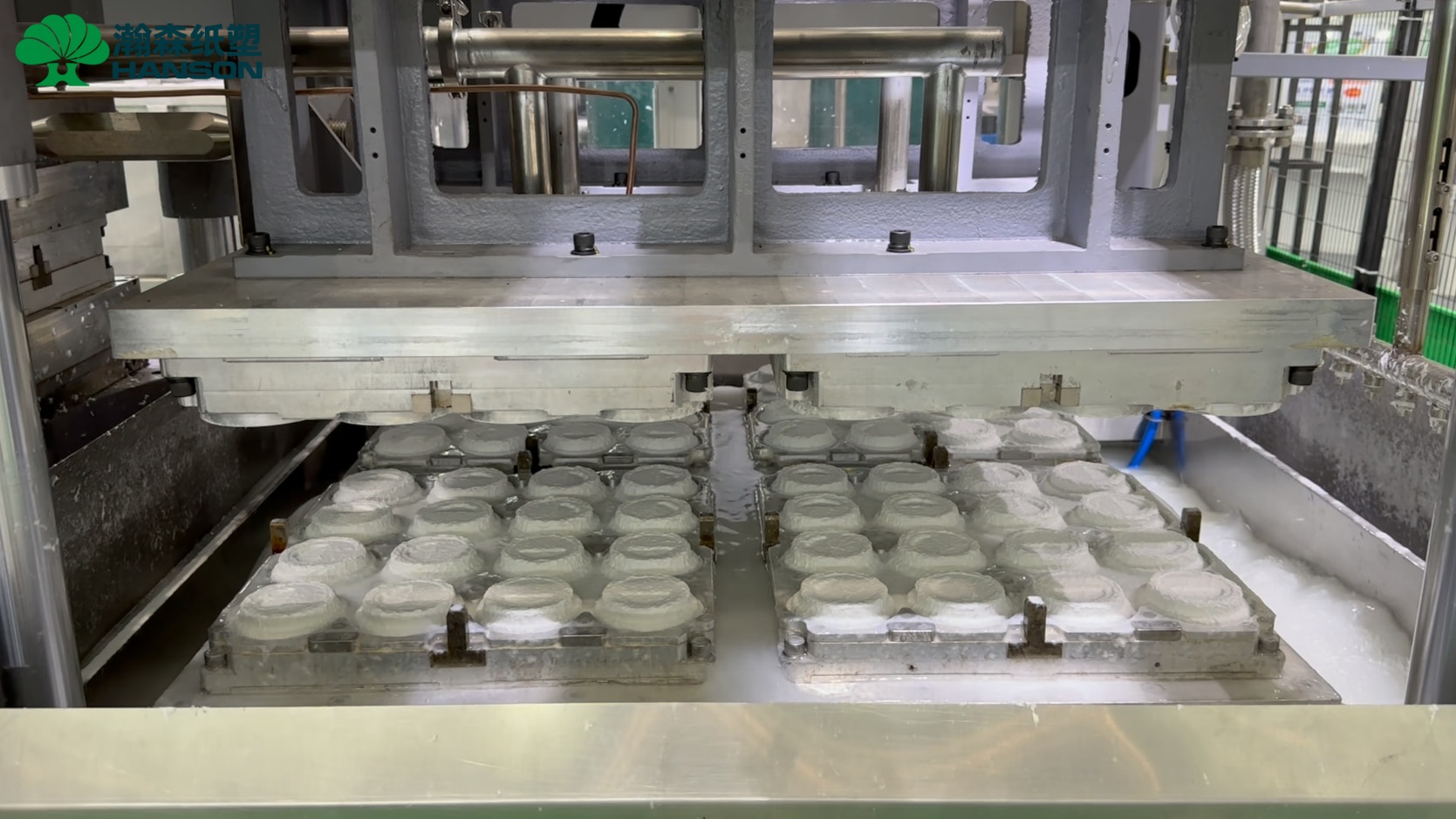
Once the product and process have been validated, the focus shifts to equipment selection. Because cup lids are produced in massive quantities, the real bottleneck is rarely the forming stage—it is the post-processing. If trimming and quality inspection rely heavily on manual labor, the overall plant capacity will be severely restricted.
As a specialist in turnkey pulp molding solutions, Hanson Pulp Molding recommends a highly integrated automated approach. The Hanson Pulp Molding ZAKS-9595 molded fiber cup lid machine is designed specifically to handle these demanding requirements:
-
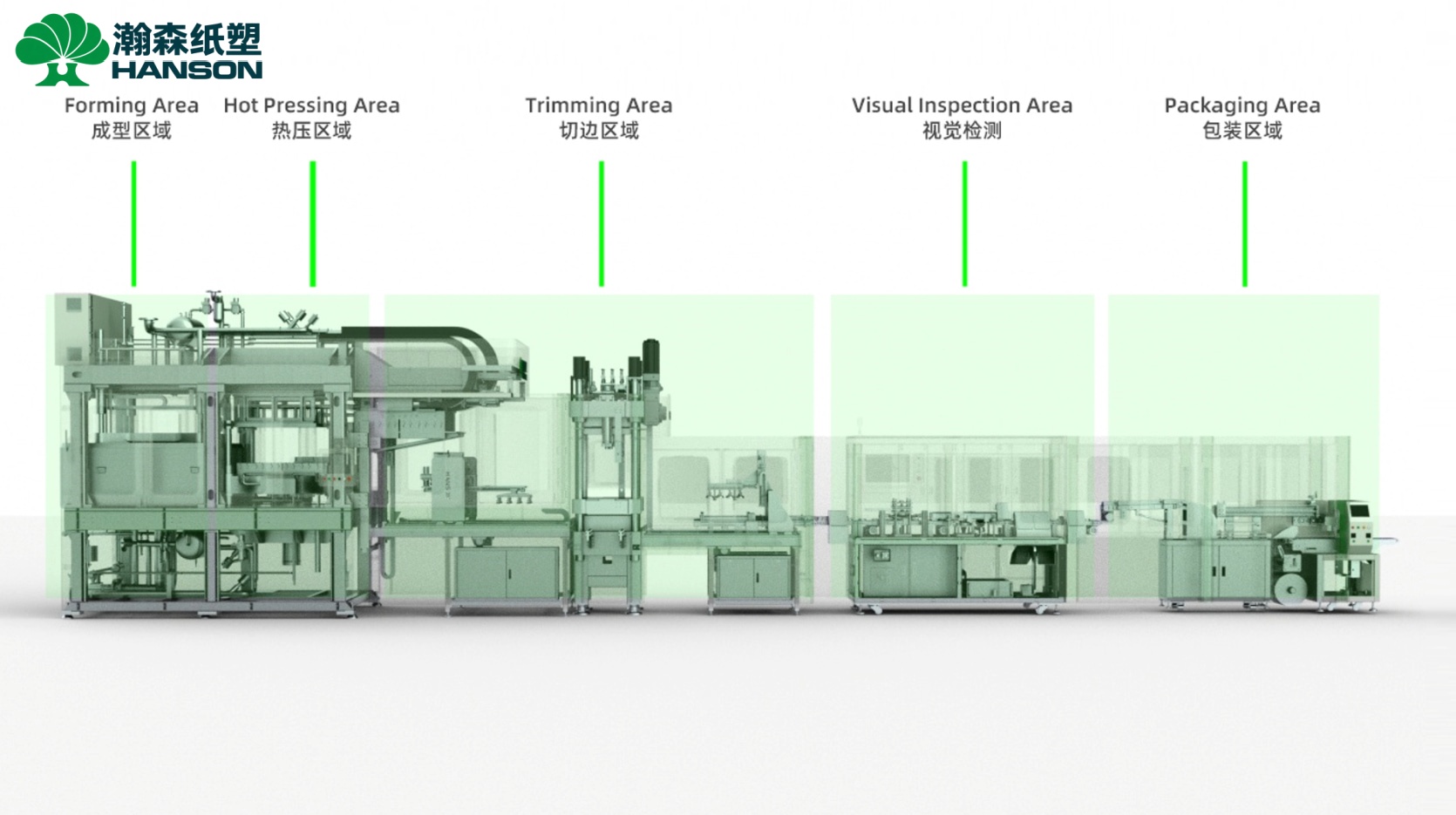
Integrated Automation: The ZAKS-9595 seamlessly integrates forming, hot pressing, trimming, vision inspection, and packaging into a single continuous production line.
-
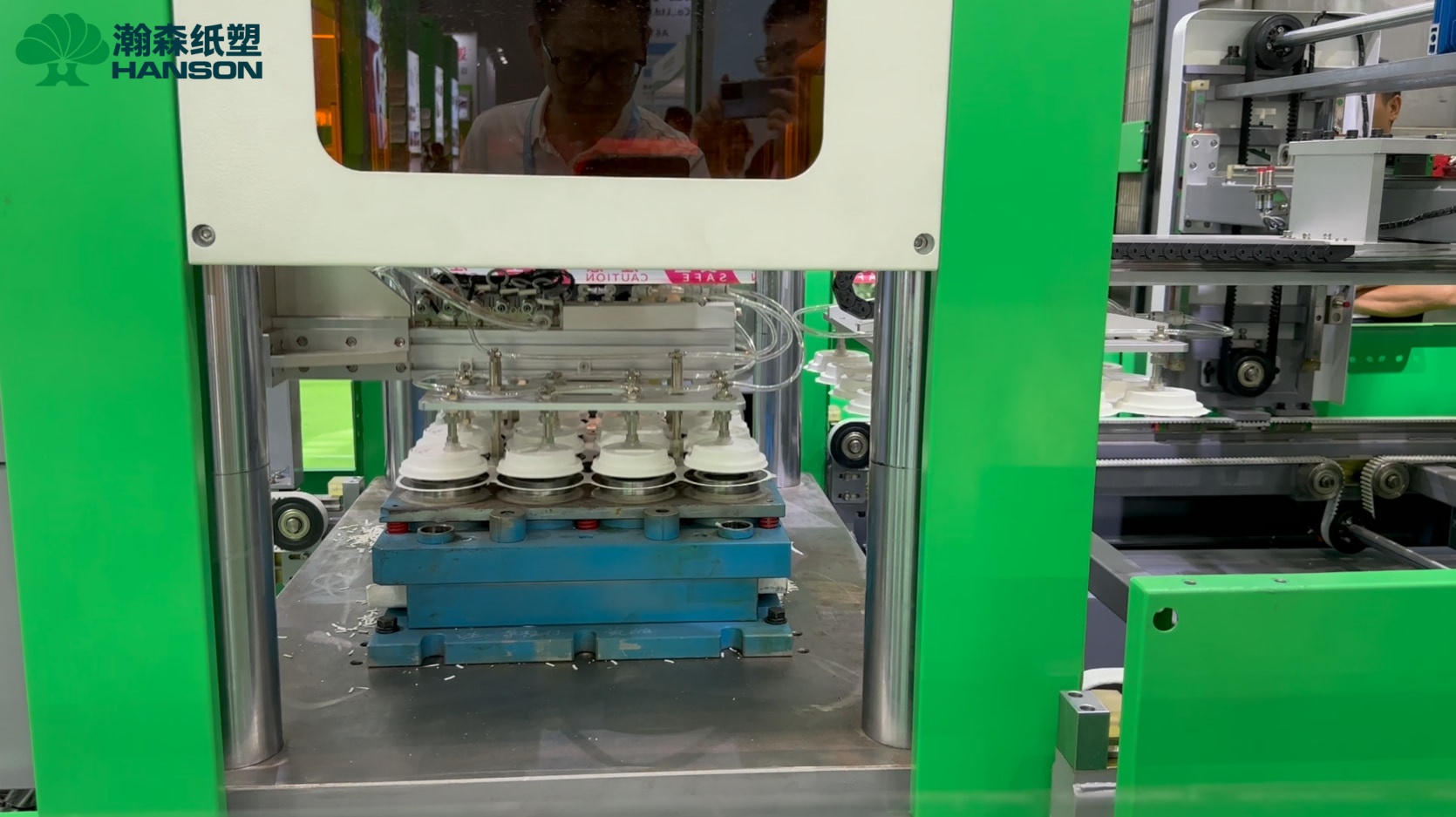
Servo-Driven Punch Cutting: To achieve the perfectly smooth edges required for cup lids, the machine uses precise servo trimming technology.
-
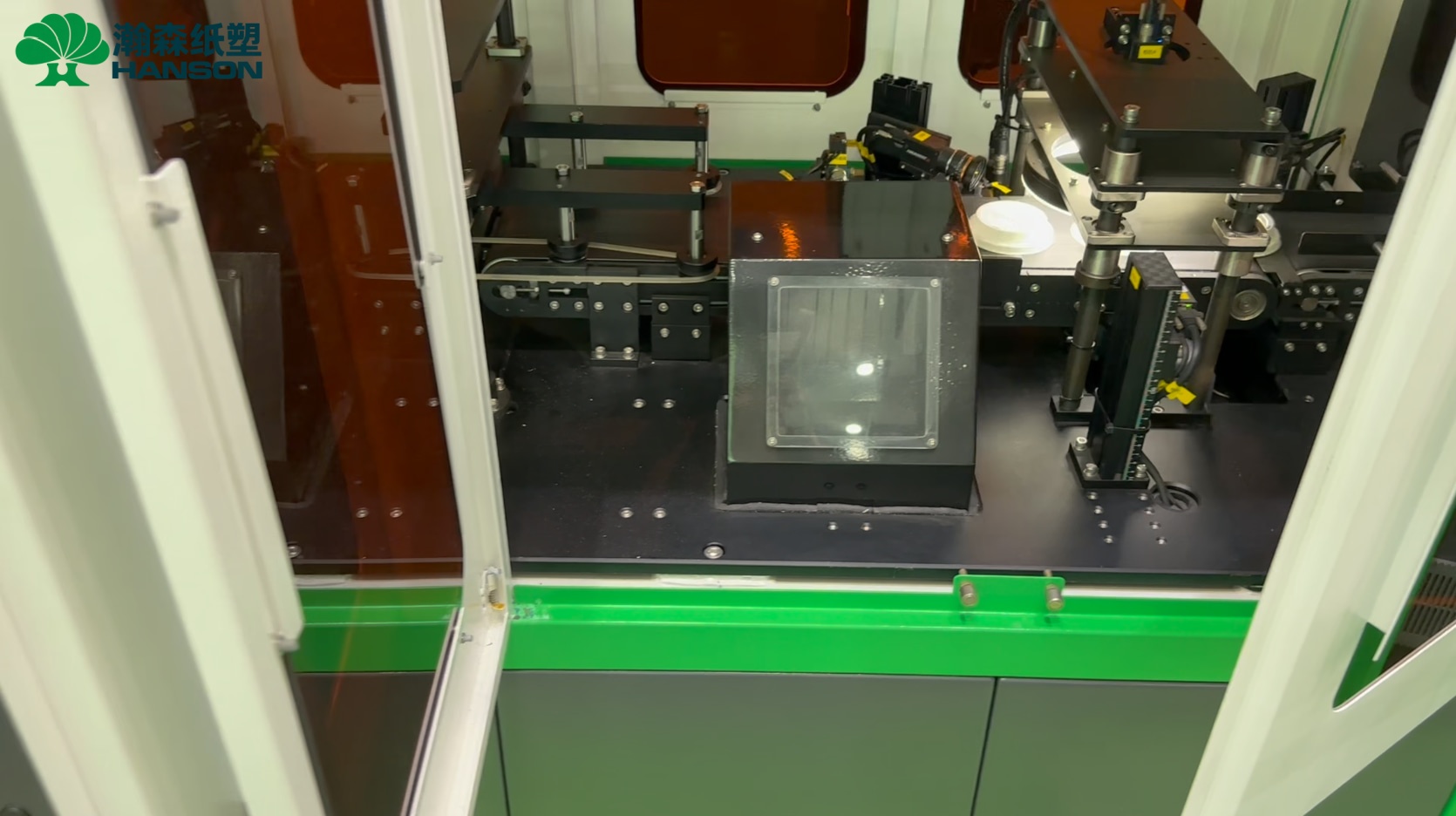
Machine Vision Inspection: Given the strict dimensional and visual requirements, an integrated vision inspection system automatically identifies and rejects defective lids, ensuring that only high-quality products proceed to packaging.
-
Stable Production Capacity: Under appropriate production conditions, the ZAKS-9595 can produce up to approximately 100,000–120,000 cup lids per 24 hours.
Note: It is important to distinguish between a “cup lid” and a “cup carrier” (the tray used to hold multiple drink cups). Cup carriers focus on load-bearing and cushioning and are typically produced on dry-press or semi-dry press lines. A cup lid, however, is a precision product that requires a dedicated automated line like the ZAKS-9595.
FAQ
1. What is the production capacity of a molded fiber cup lid machine? The Hanson Pulp Molding ZAKS-9595 cup lid machine has a standard capacity of 100,000–120,000 pcs/day (24H). The actual output depends on the specific cup lid design, tooling configuration, and effective equipment running time.
2. Why is vision inspection necessary for cup lid production? Manual inspection of hundreds of thousands of small cup lids is highly inefficient and prone to error. A machine vision inspection system rapidly identifies visual defects and dimensional inconsistencies, which is essential for maintaining product quality in high-speed, continuous automated production.
3. Can I use a standard tableware machine to make cup lids? It is generally not recommended. While standard tableware machines excel at high-tonnage plate and bowl production, cup lids require much stricter dimensional tolerances and the seamless integration of forming, hot pressing, trimming, and automated inspection. A dedicated machine like the ZAKS-9595 ensures the necessary precision and high yield rate.
Conclusion
Manufacturing molded fiber cup lids is much more than simply forming and drying pulp; it is a complex systemic challenge that demands precise dimensional control, advanced tooling, and robust automation. By prioritizing product definition and prototyping before purchasing equipment, you can effectively mitigate structural and process risks. When selecting the equipment, opting for a fully automated line that integrates forming, trimming, vision inspection, and packaging is the most reliable way to achieve stable mass production and high yield rates.
If you already have a 3D drawing, a product sample, or a target daily capacity for your cup lid project, Hanson Pulp Molding can help evaluate the product feasibility, conduct prototyping, and configure the ZAKS-9595 automated production line and tooling for your facility.
WhatsApp: +86 15920604830
Email: linchuangcheng@hspulpmolding.com