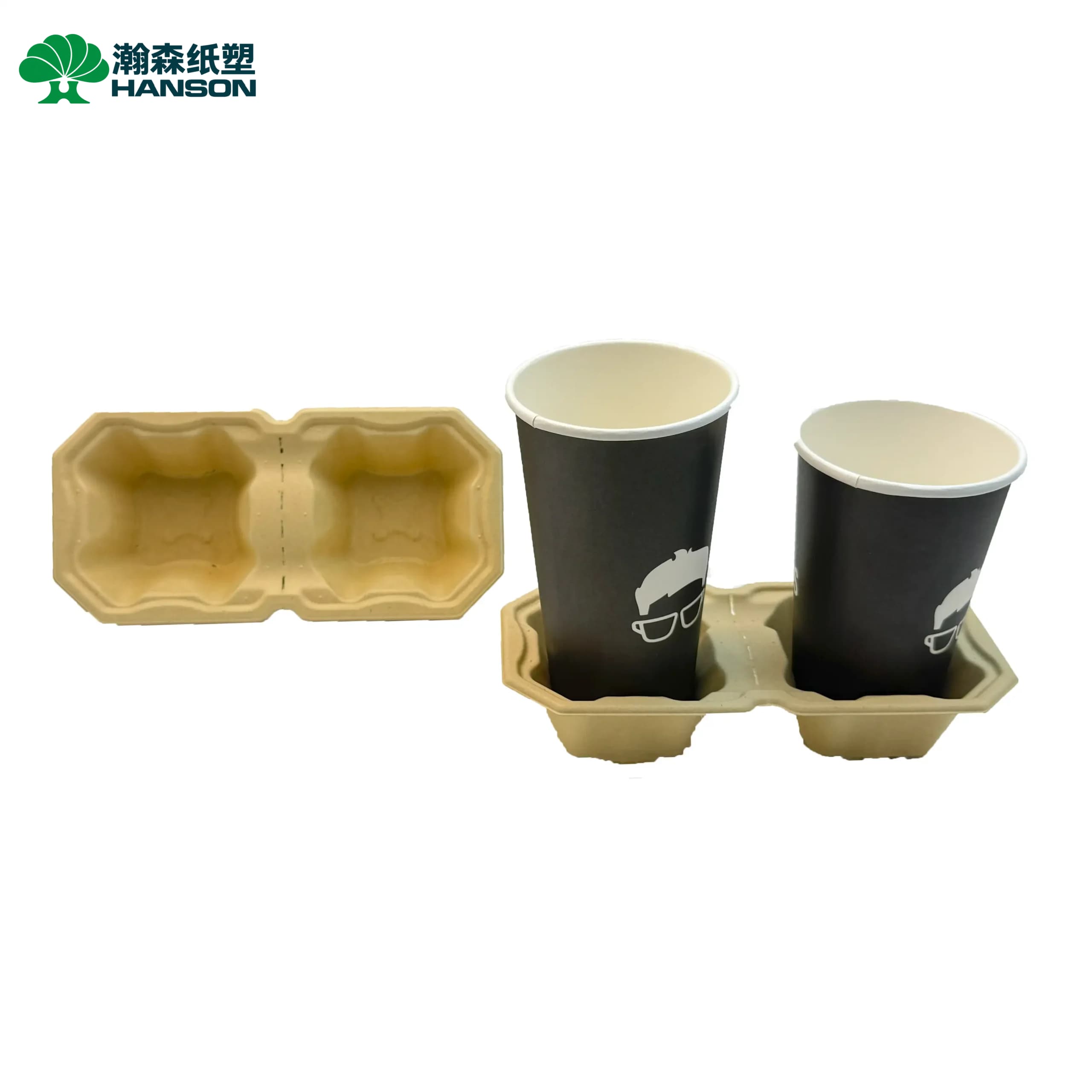
As the demand for takeaway beverages continues to rise, the market for molded fiber cup carriers (also known as drink carriers) is expanding rapidly. Because cup carriers primarily serve as protective and buffering packaging for multiple cups, they are typically manufactured using the dry-press or semi-dry press process.
However, many investors fall into purchasing traps when setting up a molded fiber cup carrier machine. Choosing equipment based solely on price or treating cup carriers like high-end wet-press tableware can lead to inefficiencies, high energy costs, and production bottlenecks. Here are four common configuration pitfalls to avoid when investing in a cup carrier production line.
Pitfall 1: Focusing Only on the Forming Machine While Ignoring Line Integration
A highly efficient molded fiber cup carrier machine is rarely a standalone forming unit. The production process involves pulping, forming, dewatering, drying, hot pressing, and stacking. If these stations are not seamlessly integrated, transferring wet preforms becomes a labor-intensive and error-prone process.
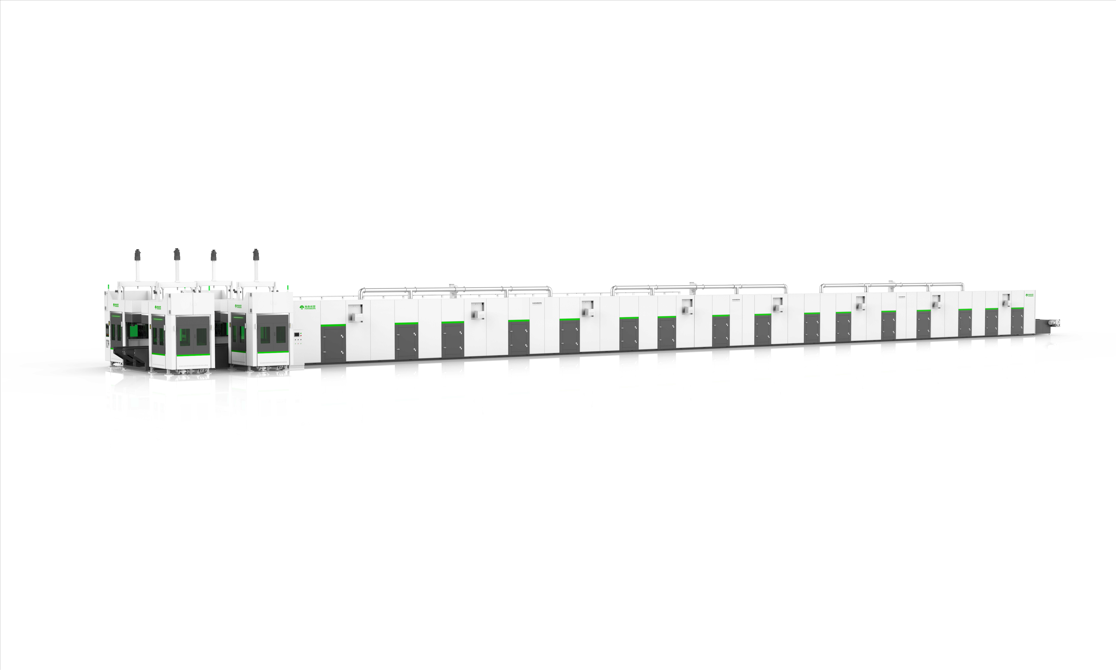
As a specialist in turnkey pulp molding solutions, Hanson Pulp Molding provides an Automatic Dry-Press Pulp Molding Production Line that integrates 4 sets of forming stations, 4 sets of cold pressing stations, a double-layer tunnel dryer, and 4 sets of hot pressing stations. The entire transfer process between these stations is executed by truss manipulators, which significantly reduces manual intervention and boosts production consistency.
Pitfall 2: Sending Wet Preforms Directly to the Dryer Without Pre-Dewatering
In traditional dry-press production, molded wet preforms are often sent directly into the dryer. The drawback of this approach is that higher moisture content entering the drying oven requires substantially more thermal energy (such as natural gas) to evaporate. Furthermore, excessive moisture can increase product deformation during drying.
To solve this, Hanson Pulp Molding integrates a cold pressing/pre-dewatering station right after forming and before the drying stage. This crucial step lowers the moisture content entering the dryer, which not only minimizes product deformation but also reduces mold scaling, extends the maintenance cycle of the molds, and improves the overall uptime of the production line.
Pitfall 3: Calculating Actual Capacity Based on Theoretical Cycle Times
A frequent mistake during equipment procurement is directly translating theoretical cycle times into daily production capacity. The actual output of a molded fiber cup carrier machine fluctuates significantly depending on the product weight, dimensions, number of cavities, drying efficiency, and line uptime.
Capacity must be evaluated under specific conditions. For example, the Hanson Pulp Molding dry-press line can achieve a daily output of approximately 18 tons per 23 hours, but this figure is specifically based on producing a 40g 4-cup carrier. Removing the product weight and specifications from the equation renders the capacity estimate meaningless.
Pitfall 4: Assuming Thick Buffering Products Do Not Require Servo Systems
Some manufacturers believe that because cup carriers are thick-wall protective packaging, standard or entry-level pneumatic/hydraulic systems are sufficient. However, maintaining stability, even pressure distribution, and precise mold alignment during continuous mass production requires robust mechanical designs.
In the Hanson Pulp Molding dry-press line, critical moving parts—including lifting, transferring, cold pressing, and hot pressing mechanisms—are powered by full-servo drives. This servo-driven architecture ensures parallel mold alignment, uniform pressure, and simplified maintenance, making it highly suitable for frequent mold changes and non-standard buffering inserts.
Conclusion
Purchasing a molded fiber cup carrier machine involves much more than comparing standalone equipment prices. To achieve stable commercial production, you must evaluate the entire system configuration—from cold pressing and pre-dewatering to integrated drying, hot pressing, and automatic stacking. By tailoring the dry-press production line to the specific weight and geometry of the cup carrier, investors can optimize both capacity and energy consumption.
FAQ
Q: What equipment is used to produce molded fiber cup carriers? A: Cup carriers (drink carriers) are protective buffering products that should be produced using a dry-press or semi-dry press production line. It is important to note that a cup carrier is entirely different from a cup lid; therefore, cup carriers should not be matched with high-speed cup lid machines like the ZAKS-9595.
Q: Why does the dry-press production line include a cold pressing pre-dewatering station? A: Cold pressing reduces the moisture content of the wet preforms before they enter the dryer. This helps minimize product deformation, reduces mold scaling, extends mold maintenance cycles, and improves the overall equipment uptime.
Q: What is the daily capacity of an automatic dry-press cup carrier production line? A: Capacity varies based on the product. For instance, the Hanson Pulp Molding dry-press line yields approximately 18 tons per 23 hours when configured specifically for a 40g 4-cup carrier. Actual output depends heavily on product weight, mold cavities, and drying efficiency.
CTA
If you already have a product sample, 3D drawing, product dimensions, or a target daily capacity for your 2-cup or 4-cup carriers, Hanson Pulp Molding can help evaluate the molding process, tooling, and equipment configuration for your turnkey dry-press project.
WhatsApp: +86 15920604830
Email: linchuangcheng@hspulpmolding.com