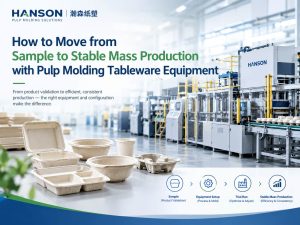
For many investors entering the molded fiber industry or existing manufacturers planning a major expansion, a common misconception often derails the project timeline: believing that purchasing forming equipment is the first step, and plant layout can be figured out later.
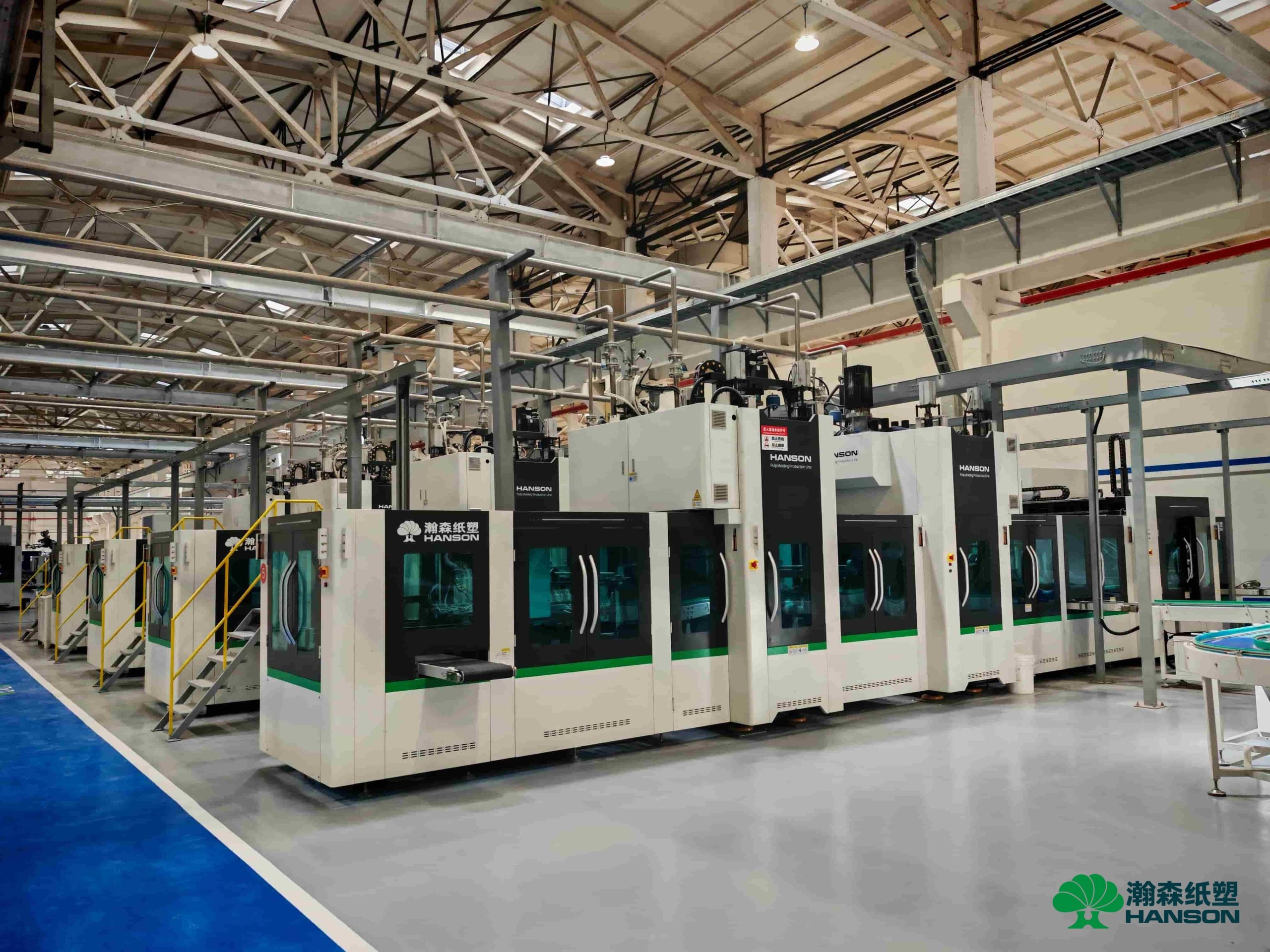
In reality, a pulp molding production line is not just a collection of independent machines. Actual production output is not solely determined by one machine. If you finalize your equipment without comprehensive plant planning—ignoring the capacity of your pulping system, the specific design of your pulp molding mold, and the layout of post-processing automation—you risk severe capacity mismatches.
The True Core: Molded Fiber Tooling and Process Matching
Equipment selection should be reversely deduced from the final product. The defining factor for product shape, structural integrity, and surface finish is the pulp molding mold (tooling).
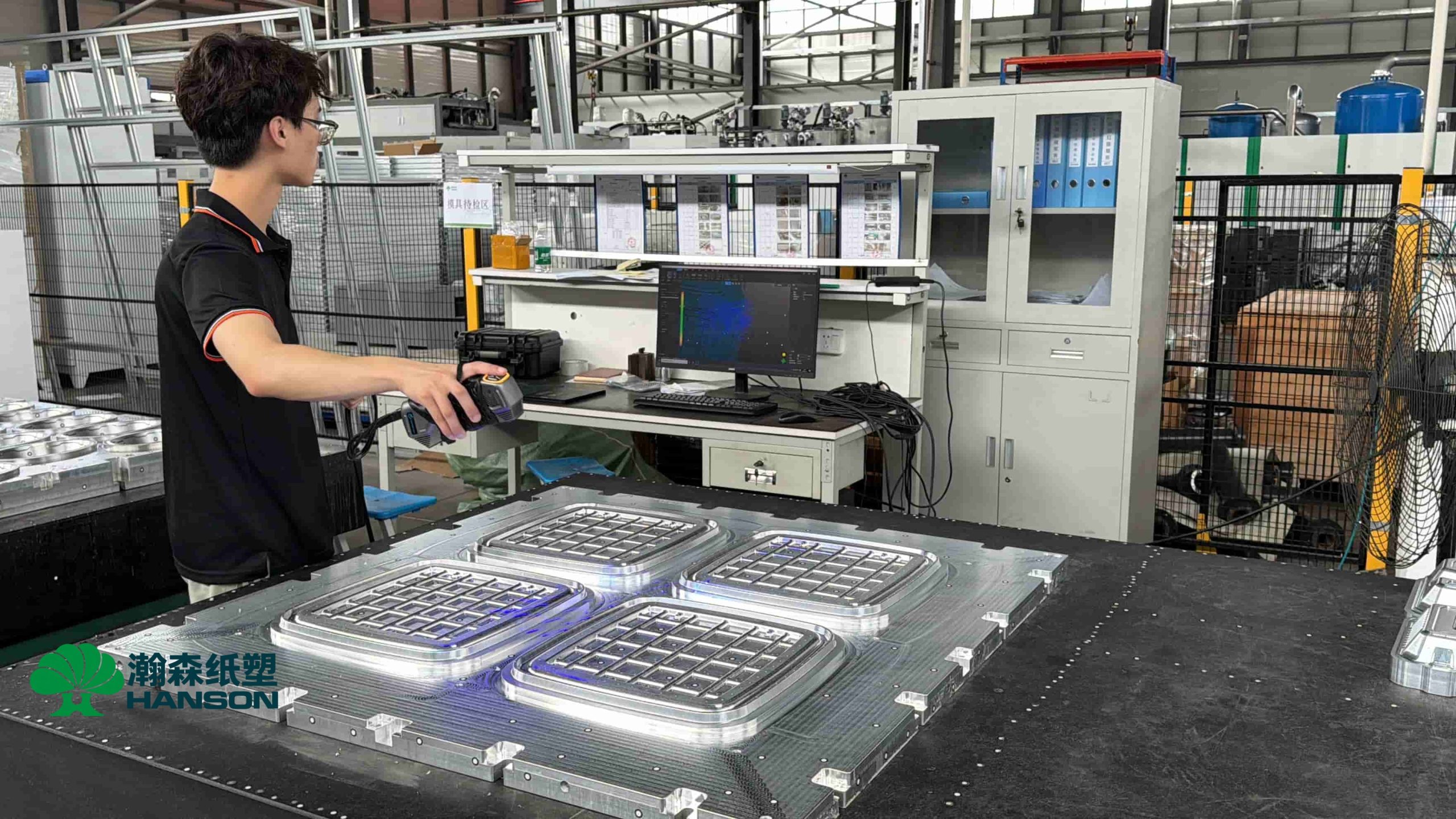
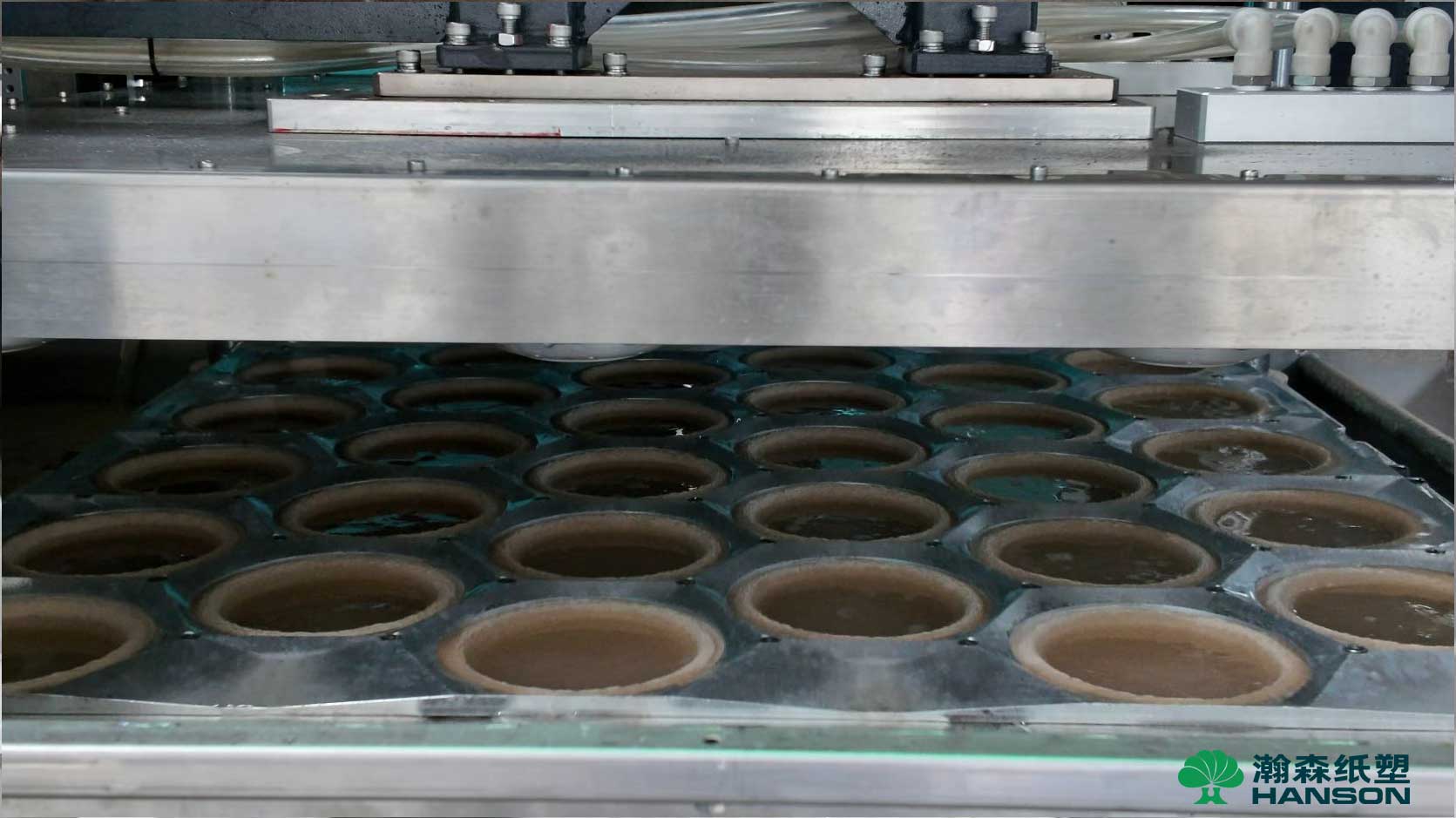
Molded fiber tooling is much more than a simple wear part. It directly participates in the forming, dewatering, transferring, and hot-pressing stages. The mesh covering the forming mold dictates drainage and fiber retention, while the precise matching between the forming tool and the press tool determines the moisture content of the wet preform and the duration of the hot-pressing cycle.
If the mold design, pulp slurry formulation, and equipment parameters are not developed concurrently, manufacturers often face uneven product thickness, warping, and excessive energy consumption. Therefore, similar equipment parameters do not guarantee the same product quality or output. Mold design, drainage structure, and process matching significantly impact actual production performance.
The Danger of Ignoring Plant Planning
Many projects face bottlenecks because they focus purely on the theoretical cycle time of the forming machine. However, actual daily production capacity is a system-wide result.
If your pulping system cannot supply stable slurry fast enough to meet the forming equipment’s demands, or if trimming and packaging processes lag behind, the entire production line will be bottlenecked by its slowest component. A proper plant planning phase evaluates product dimensions, required capacity, utility availability (water, electricity, steam, compressed air), and factory space before a single piece of equipment is ordered.
Why Equipment, Mold, and Process Require Joint Debugging
Transitioning from equipment installation to stable mass production involves meticulous joint debugging. It requires fine-tuning equipment parameters, mold modifications, process adjustments, and slurry preparation simultaneously.
When the forming equipment, molds, and downstream automation are sourced from disconnected suppliers without a unified strategy, the integration process often leads to prolonged downtime. Joint debugging ensures that the mechanical actions of the machine align perfectly with the thermal and drainage dynamics of the mold, reducing the scrap rate and accelerating production ramp-up.
The Hanson Pulp Molding Turnkey Approach
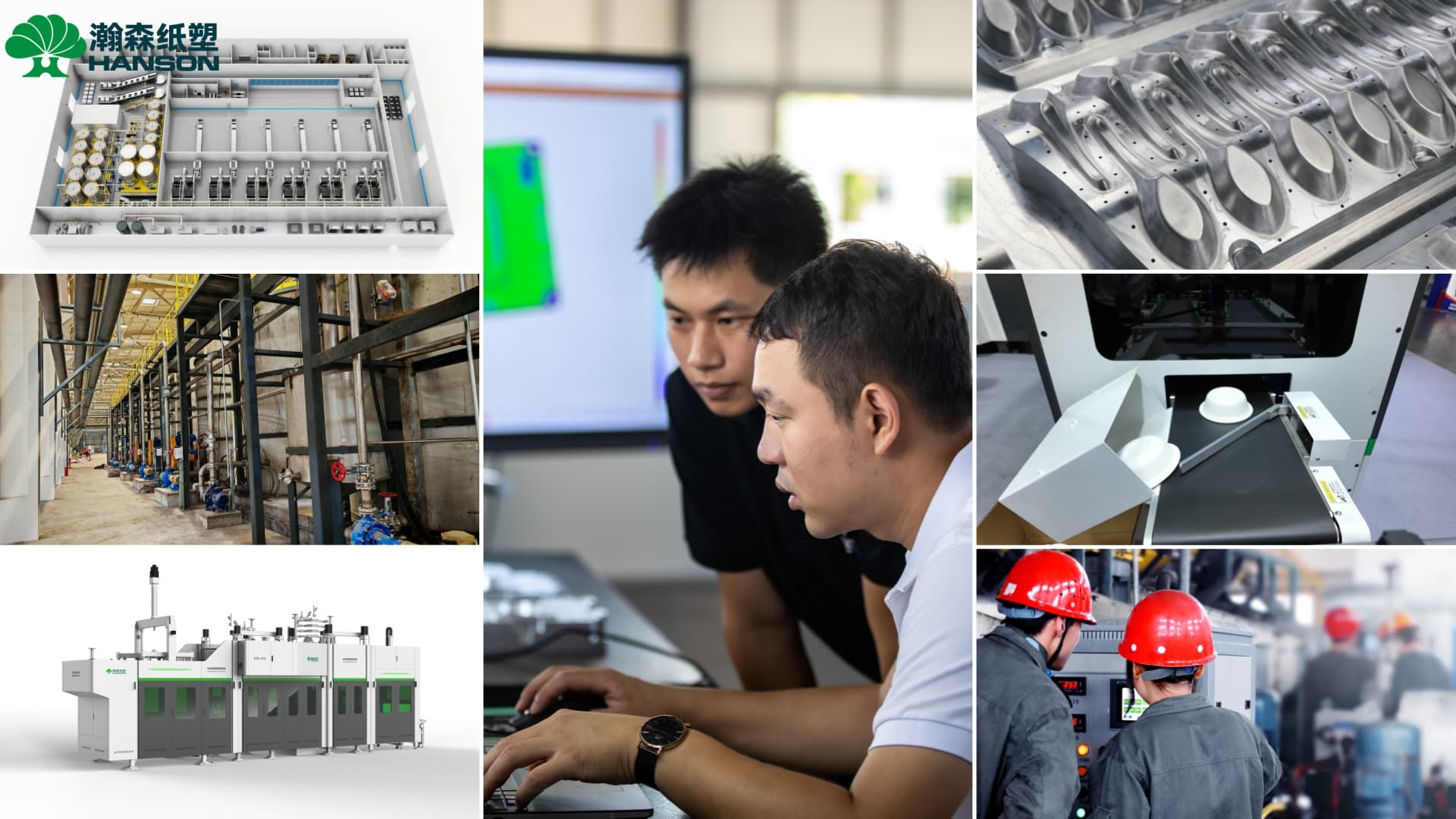
A successful project requires seamless coordination among pulping, forming, tooling, post-processing, and factory utilities. As a specialist in turnkey pulp molding solutions, Hanson Pulp Molding addresses these challenges through its 6+1 turnkey service model. This approach begins with product development and extends through plant planning, intelligent pulping systems, forming equipment, mold manufacturing, post-processing automation, and production ramp-up support.
By integrating these elements, Hanson Pulp Molding ensures that the equipment configuration strictly serves the product’s process requirements. For instance, in the Sichuan Jinzhu / Wuliangye project—an approximately 80 million RMB investment and the industry’s first dry and wet press mixed molded fiber turnkey plant—Hanson Pulp Molding managed the complex task of process matching for bamboo pulp, developing the tooling system, and validating the cross-process coordination for the entire factory.
FAQ
1. What is the first step when setting up a new pulp molding factory?
The first step is not purchasing equipment. It is defining the target product and the required production capacity. From there, the project should follow a logical sequence: Process → Tooling (Mold) → Equipment → Pulping → Post-processing → Plant Planning. Without a clear product definition, direct equipment procurement often leads to severe configuration errors.
2. Why does changing the mold affect the production capacity of the same machine?
Different molds alter the number of cavities, product dimensions, product weight, and drainage efficiency. These variations directly influence forming time, dewatering difficulty, and hot-pressing duration. Consequently, running different molds on the same machine can result in noticeably different daily outputs.
3. Can I use old molds on new pulp molding equipment?
It is possible, but it requires a thorough evaluation of the mold’s dimensions, mounting interfaces, drainage design, and mechanical compatibility with the new equipment. Hanson Pulp Molding can evaluate existing tooling and provide optimization or technical modification services based on specific project conditions.
Conclusion
Building a successful molded fiber manufacturing facility means constructing an integrated system, not merely assembling isolated machines. Buying equipment before undertaking comprehensive plant planning ignores the critical relationships between the pulp molding mold, the pulping capacity, and the forming process. By prioritizing product definition, process validation, and holistic plant design, investors can avoid costly mismatched capabilities and achieve stable commercial production.
If you are planning a new pulp molding plant or evaluating tooling and process validation for a new product, you can share your target products, required capacity, plant conditions and automation requirements. Hanson Pulp Molding can evaluate the project from product development and plant planning to pulping, forming equipment, tooling, post-processing and production ramp-up.
WhatsApp: +86 15920604830
Email: linchuangcheng@hspulpmolding.com