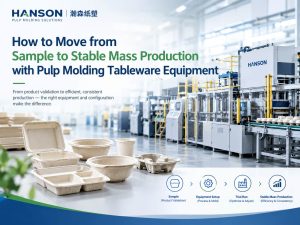
When investors and factory managers evaluate a pulp molding project, they often dedicate most of their time to comparing equipment specifications—such as theoretical cycle times, motor power, and machine prices. In this process, the pulp molding mold is sometimes treated as a simple, interchangeable accessory.
However, in actual commercial production, using the exact same machine parameters with different molds can result in drastically different daily outputs and product yield rates. A molded fiber tool is not merely a mechanism for “pressing a shape”; it actively participates in the core manufacturing stages, including forming, dewatering, wet preform transfer, hot pressing, and edge trimming. Therefore, whether a pulp molding equipment manufacturer possesses deep, in-house tooling capabilities and the ability to conduct joint equipment-mold-process debugging will directly determine the stability and profitability of your entire project.
Why Molded Fiber Tooling is More Than Just a “Shaping Accessory”
The essence of the pulp molding process is effectively removing a large volume of water from plant fibers. During this process, the tooling plays an irreplaceable role:
-
Impacting Dewatering and Wet Preform Quality: The forming tool must support the product structure, secure the mesh, establish vacuum channels, and facilitate water drainage. The mesh size and wire diameter on the mold surface simultaneously affect both drainage efficiency and the final product’s surface texture. Poor drainage design leaves the wet preform with excess moisture, increasing the energy load for subsequent hot pressing or drying and slowing down the overall machine cycle.
-
Determining Hot Pressing Efficiency and Consistency: For premium packaging using the wet press process, the wet preform is transferred directly into a heated mold, where it is pressed, dried, and shaped. The surface quality and moisture-venting design of the press tool directly dictate the final product’s surface smoothness, uniform thickness, and dimensional accuracy.
-
Ensuring Stable Transfer: Many machines require the wet preform to be transferred from the forming tool to the press tool or the next station. If the draft angles or mold precision are inadequate, the wet preform can tear, deform, or fail to transfer, causing frequent production interruptions.
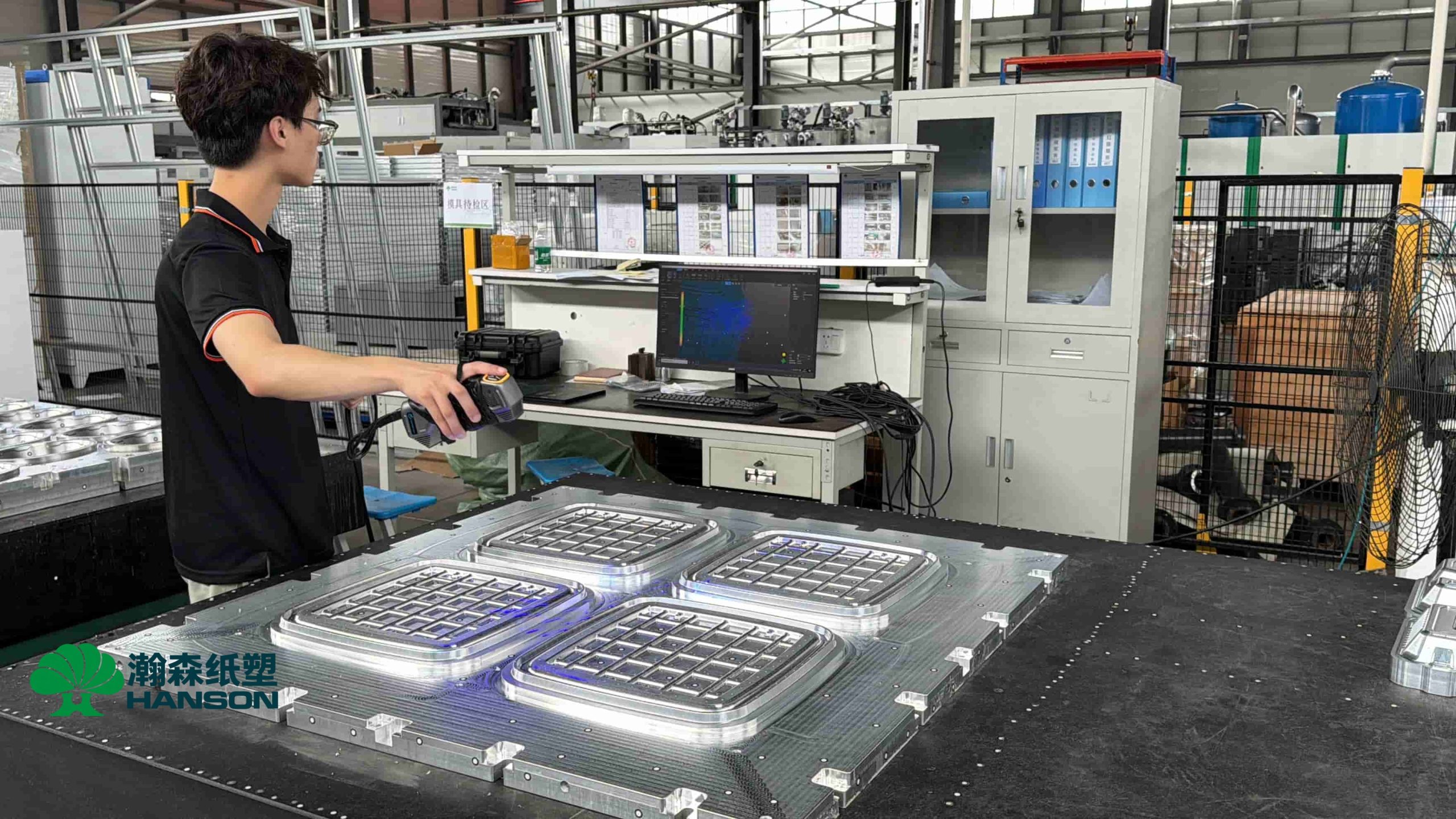
The Impact of Mold Design on Actual Production Capacity
Buyers often ask: Why do two machines with similar theoretical cycle times deliver completely different actual daily capacities?
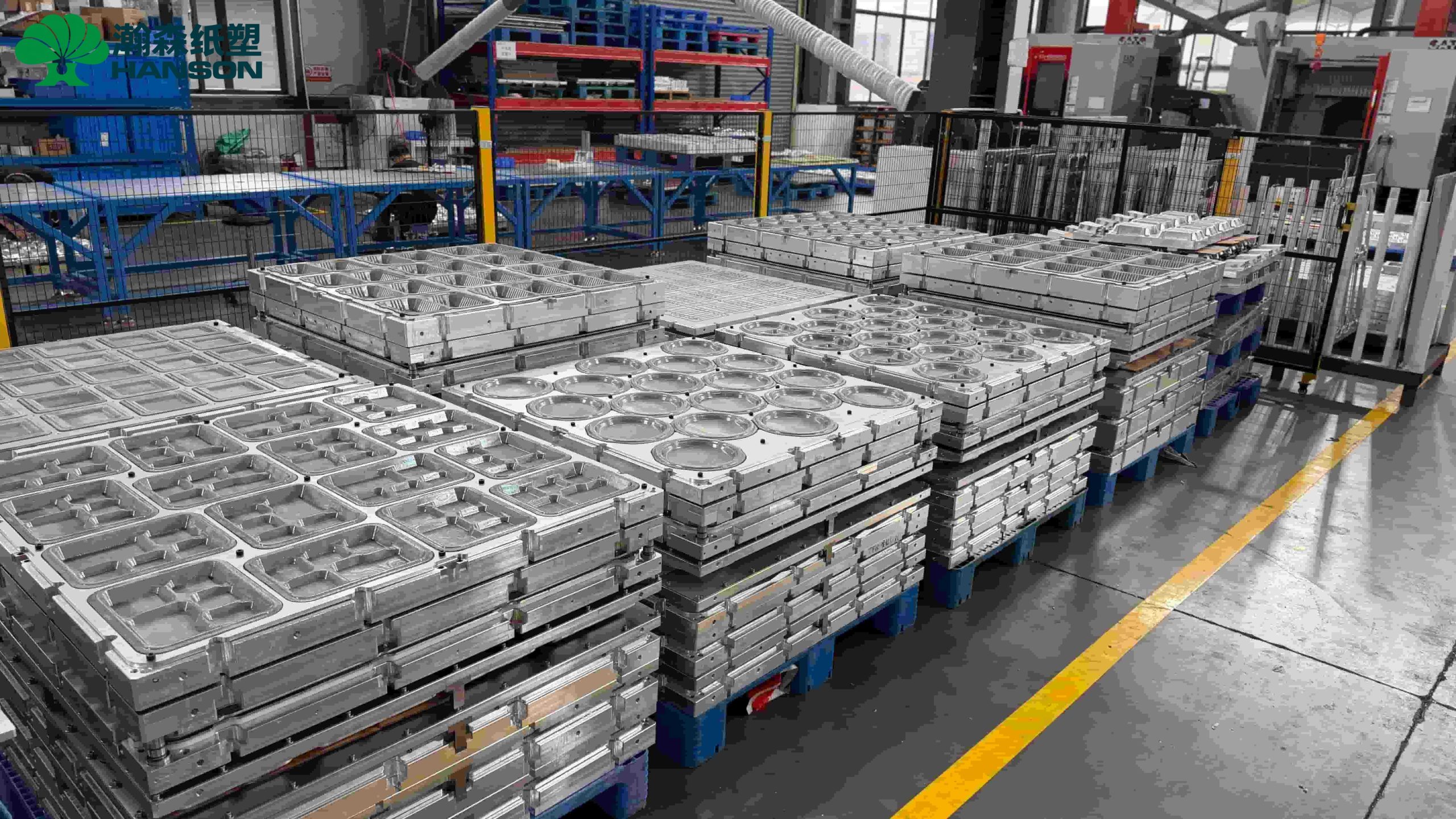
The answer largely lies in the synergy between the mold and the equipment. For instance, maximizing the number of mold cavities is not always the best approach. While more cavities can theoretically yield more products per cycle, this must be balanced against product dimensions, total mold area, vacuum load, drainage capacity, and the equipment’s structural strength. Forcing too many cavities can lead to uneven forming and a drop in yield rate, ultimately reducing the actual quantity of qualified products produced. True production capacity depends heavily on the mold’s design interacting efficiently with forming time, dewatering time, hot pressing time, and overall machine uptime.
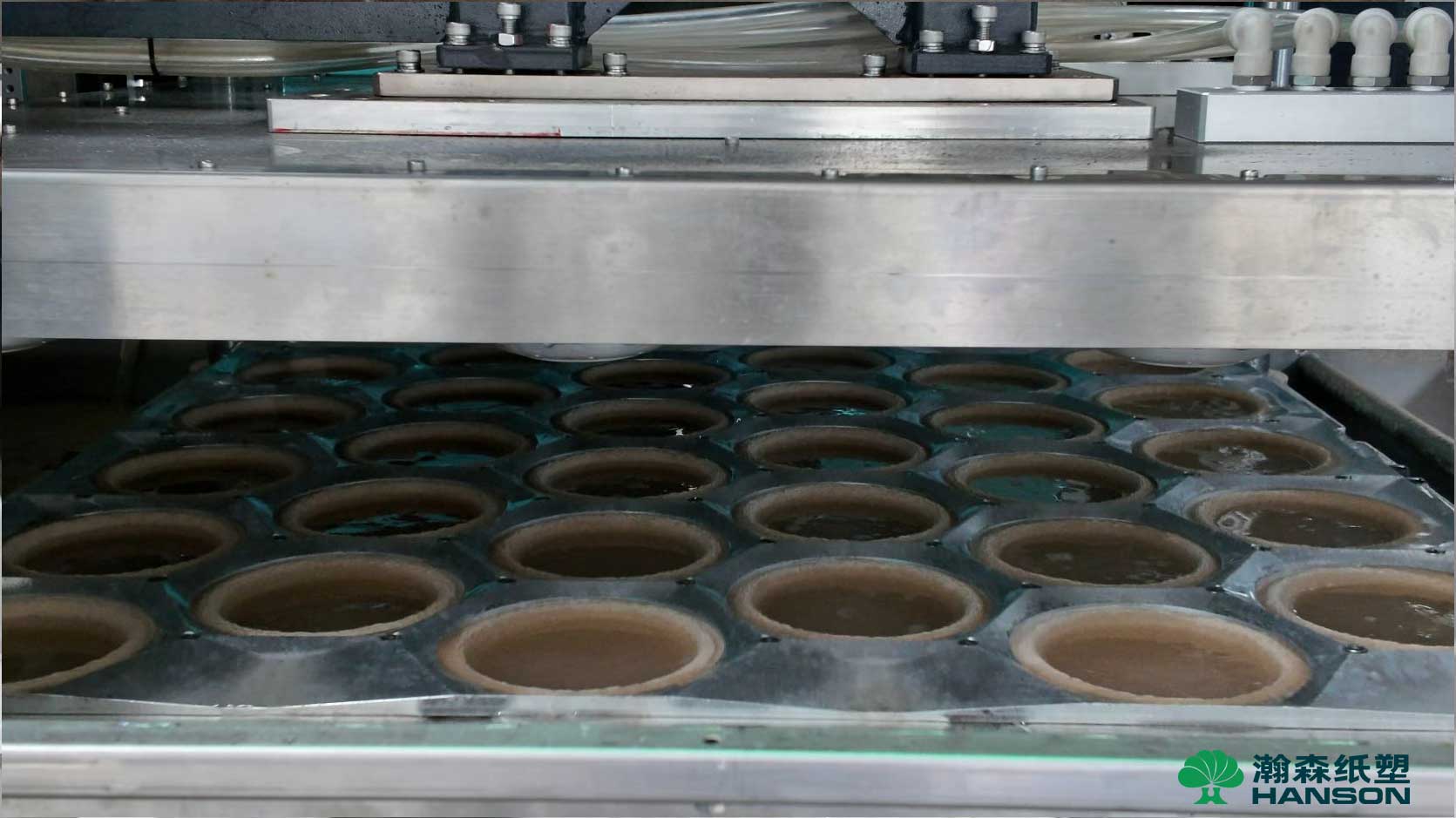
Product Defects: Equipment, Process, or Mold?
When facing production issues like product deformation, rough surfaces, or inconsistent dimensions, it is incorrect to simply blame the “machine.”
Such defects are usually the combined result of equipment parameters, mold design, material formulation, and process control. Product deformation, for example, could stem from blocked moisture-venting channels in the mold, excessive moisture in the wet preform, improper structural design of the product, or incorrect hot pressing temperature and pressure. If a pulp molding machine supplier only understands mechanical assembly but lacks the capability to diagnose tooling and optimize processes, resolving these mass production bottlenecks becomes extremely difficult.
Why Choose a Supplier with In-House Tooling Capabilities?
Hanson Pulp Molding operates on the principle that a successful project cannot rely on standalone machines alone. It requires the systematic synchronization of product design, process, tooling, equipment, pulping, and post-processing. As a turnkey specialist in pulp molding, Hanson Pulp Molding integrates tooling design with equipment manufacturing:
-
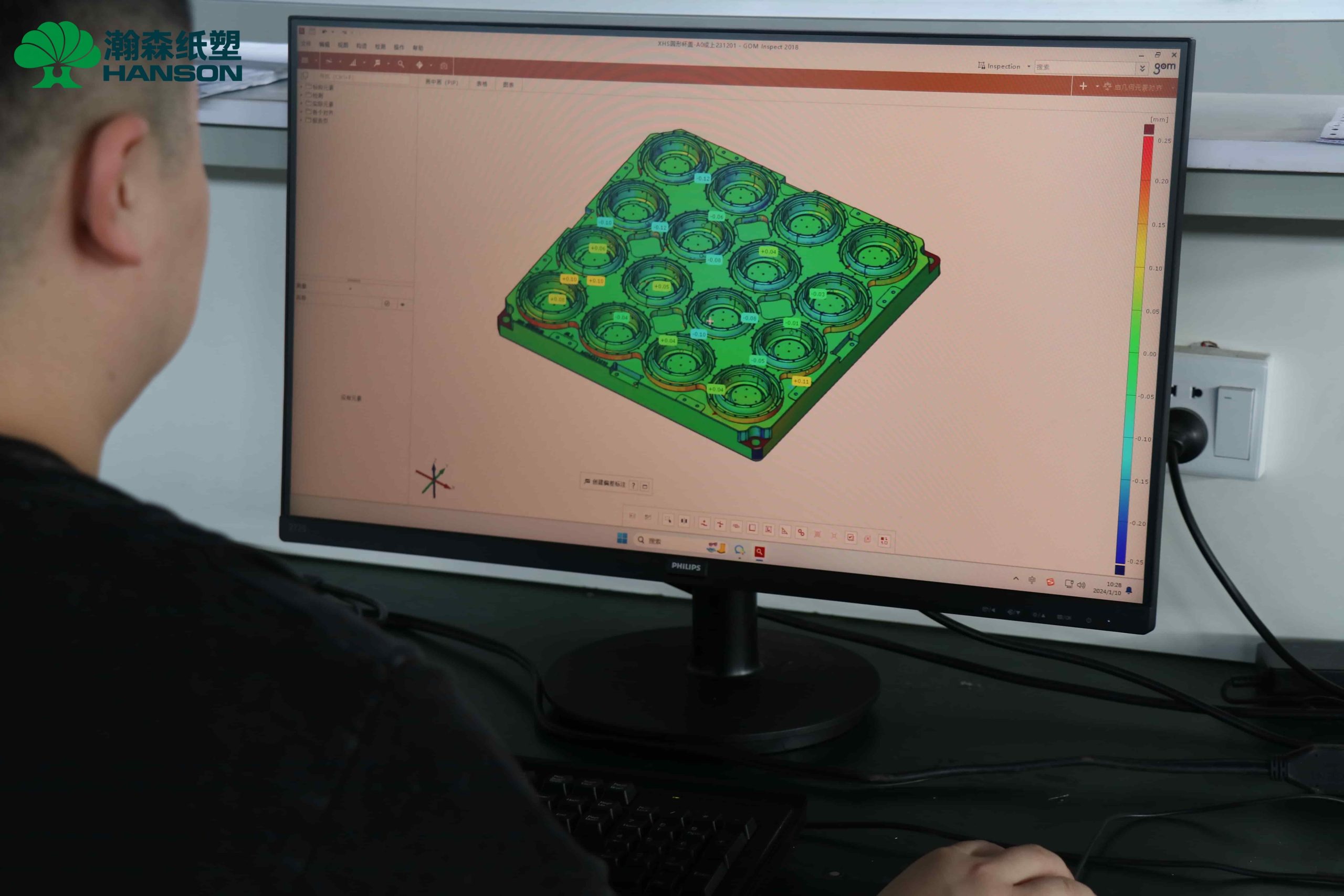
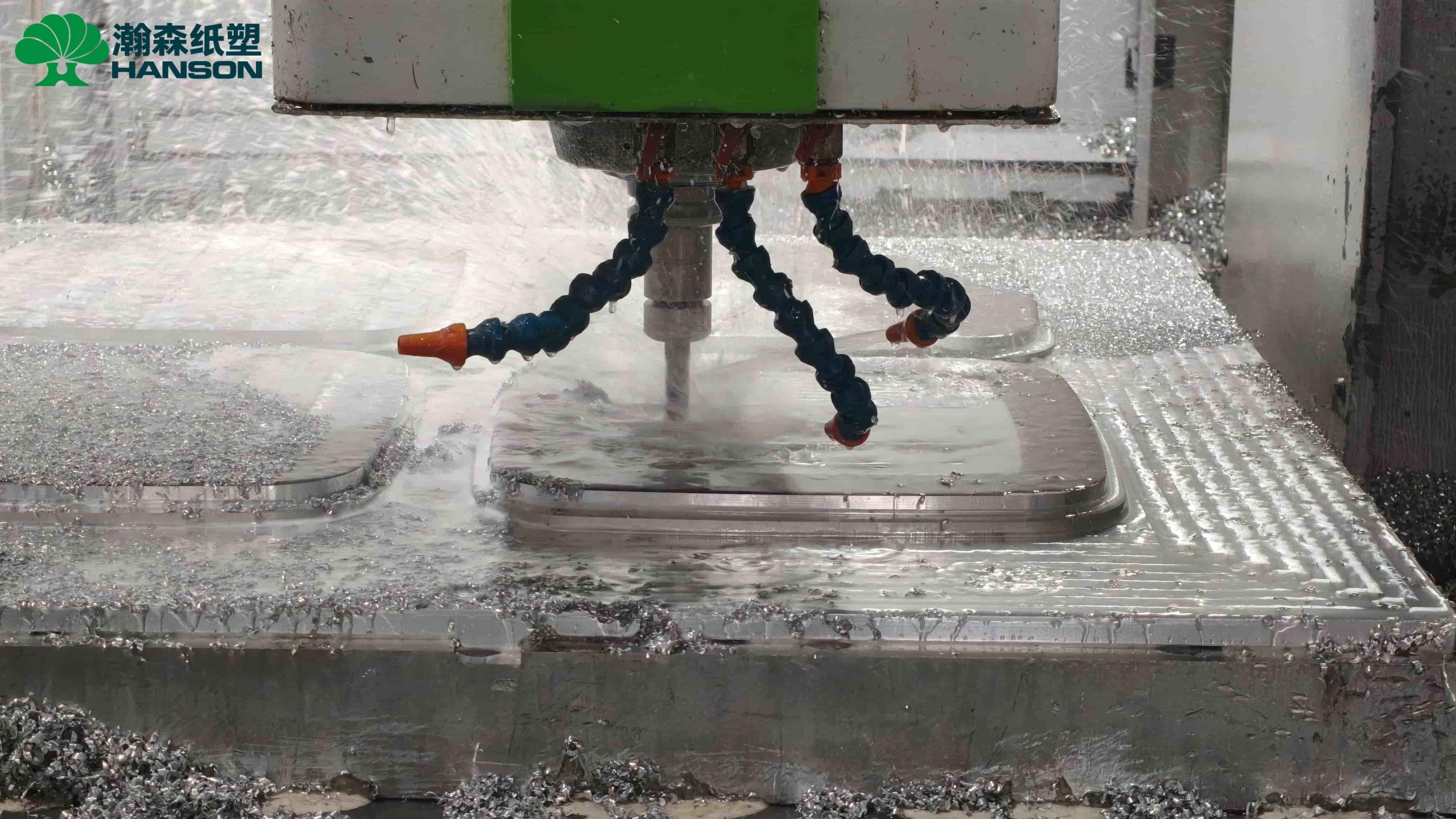
Collaborative Equipment and Tooling Design: Hanson Pulp Molding possesses comprehensive capabilities in mold design, manufacturing, and optimization. By coordinating tooling design with forming equipment from the very beginning of product development, we ensure that drainage, heating, vacuum systems, and pressure structures are perfectly matched.
-
Process-Driven Joint Validation: For premium industrial molded fiber packaging—where aesthetics and precision are paramount—the synergy between the machine, mold, and process is critical. In scale-up projects for clients like Wangying and Xibao, Hanson Pulp Molding utilized its premium industrial packaging equipment, precise mold adaptation, and rigorous process control to meet strict dimensional tolerances and international delivery standards.
-
Optimization of Existing Molds: For existing pulp molding plants looking to upgrade, Hanson Pulp Molding can evaluate the structure, drainage design, and precision of legacy molds to provide optimization and technical retrofitting, helping to break through existing capacity bottlenecks.
Pulp molding is an integrated manufacturing system. A truly professional manufacturer not only builds fast, robust machines but also applies its deep understanding of molds and processes to ensure that every machine cycle consistently yields high-quality products.
FAQ
1. Why does changing the mold on the same pulp molding machine affect actual production capacity? Different molds alter the number of cavities, the product weight, and the overall drainage efficiency. This causes variations in the required forming, dewatering, and hot pressing times, and also affects the stability of the wet preform transfer, leading to noticeable shifts in actual daily output.
2. Are more mold cavities always better for increasing yield? While more cavities can produce more items per cycle under identical conditions, the number of cavities is limited by mold area, product weight, vacuum dewatering capacity, heating load, and equipment strength. Blindly adding cavities can decrease the yield rate, thereby lowering the actual production of qualified items.
3. Can old pulp molding molds be used on new equipment? It is possible, but an evaluation is required. Important factors include external dimensions, mounting interfaces, drainage design, current precision, and compatibility with the new machine’s mechanisms. Hanson Pulp Molding can provide assessment and optimization services for older tooling setups.
Conclusion
When investing in a molded fiber plant, comparing machine prices and theoretical speeds alone is insufficient for predicting mass production success. The design and precision of the pulp molding mold fundamentally dictate the effective capacity of the equipment and the quality of the final product. Selecting a manufacturer who deeply understands the intrinsic relationship between product, process, mold, and equipment is the key to ensuring long-term stability and profitability for your factory.
If you are experiencing issues with product deformation, surface quality, dimensional accuracy, or dewatering efficiency, simply adjusting machine parameters is often not enough. Hanson Pulp Molding can evaluate your challenges by examining the product structure, mold design, process validation, and forming equipment as a unified system. Share your product 3D drawings, samples, or target capacities with us, and we will help you identify the right configuration to achieve stable commercial production.
WhatsApp: +86 15920604830
Email: linchuangcheng@hspulpmolding.com