When investing in a molded fiber foodservice packaging project, many buyers focus solely on the theoretical cycle time of the equipment. However, for a wet press pulp molding tableware project, the core focus should remain on capacity, energy consumption, forming and hot pressing efficiency, automation, product consistency, and stable mass production. Evaluating machinery without fully understanding the requirements of the final product often leads to hidden operational costs during mass manufacturing.
A successful investment requires balancing daily output, surface precision, and automation levels to match your project’s specific commercial goals.
Capacity: Why Cycle Time Doesn’t Equal Actual Output
When evaluating a pulp molding tableware machine, theoretical cycle time is just one of many factors influencing actual output. True daily production capacity depends on several systemic variables:
-
Product Weight and Dimensions: Heavier products require more fiber and generate higher dewatering loads, which typically necessitates longer hot pressing times to evaporate the moisture.
-
Mold Cavities and Drainage: While utilizing more cavities can increase output per cycle, the optimal number is restricted by product size, mold area, drainage capacity, and the equipment’s load limits.
-
Effective Uptime: Mold changeovers, routine maintenance, and overall process stability significantly dictate the total number of qualified products generated in a 24-hour period.
Therefore, equipment capacity must always be evaluated based on the specific combination of product geometry, tooling, process parameters, and machinery.
Precision and Yield: The Hidden Costs of Poor Quality
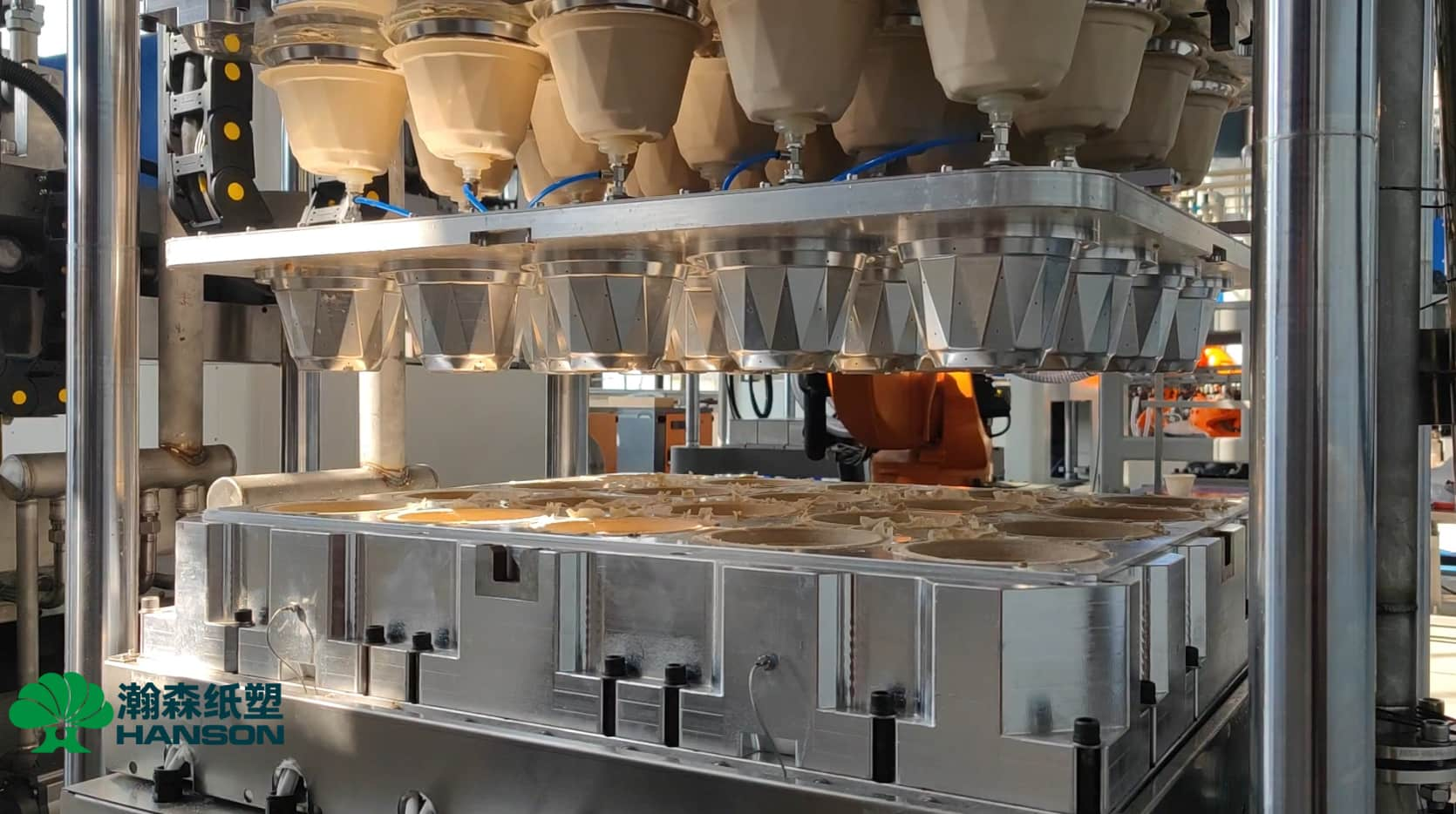
Wet press pulp molding is widely used for tableware products—such as plates, clamshells, and food trays—that demand a smooth surface and excellent dimensional stability. This is achieved because the wet preform is transferred directly to a heated mold, where it is pressed and dried simultaneously.
Opting for cheaper equipment that sacrifices mold precision and pressure control can lead to serious manufacturing challenges:
-
Inconsistent Product Quality: Tooling design directly impacts dewatering efficiency, hot pressing results, and overall product consistency.
-
High Defect Rates: Inadequate hot pressing pressure or uneven temperature distribution can cause product warping or uneven material distribution. High defect rates directly inflate the energy and material costs required to produce each qualified unit.
Automation: Is an Integrated Line Right for You?
Automation helps reduce manual intervention and improves production continuity, but the ideal level of automation should align with project scale, local labor costs, and product changeover frequencies.
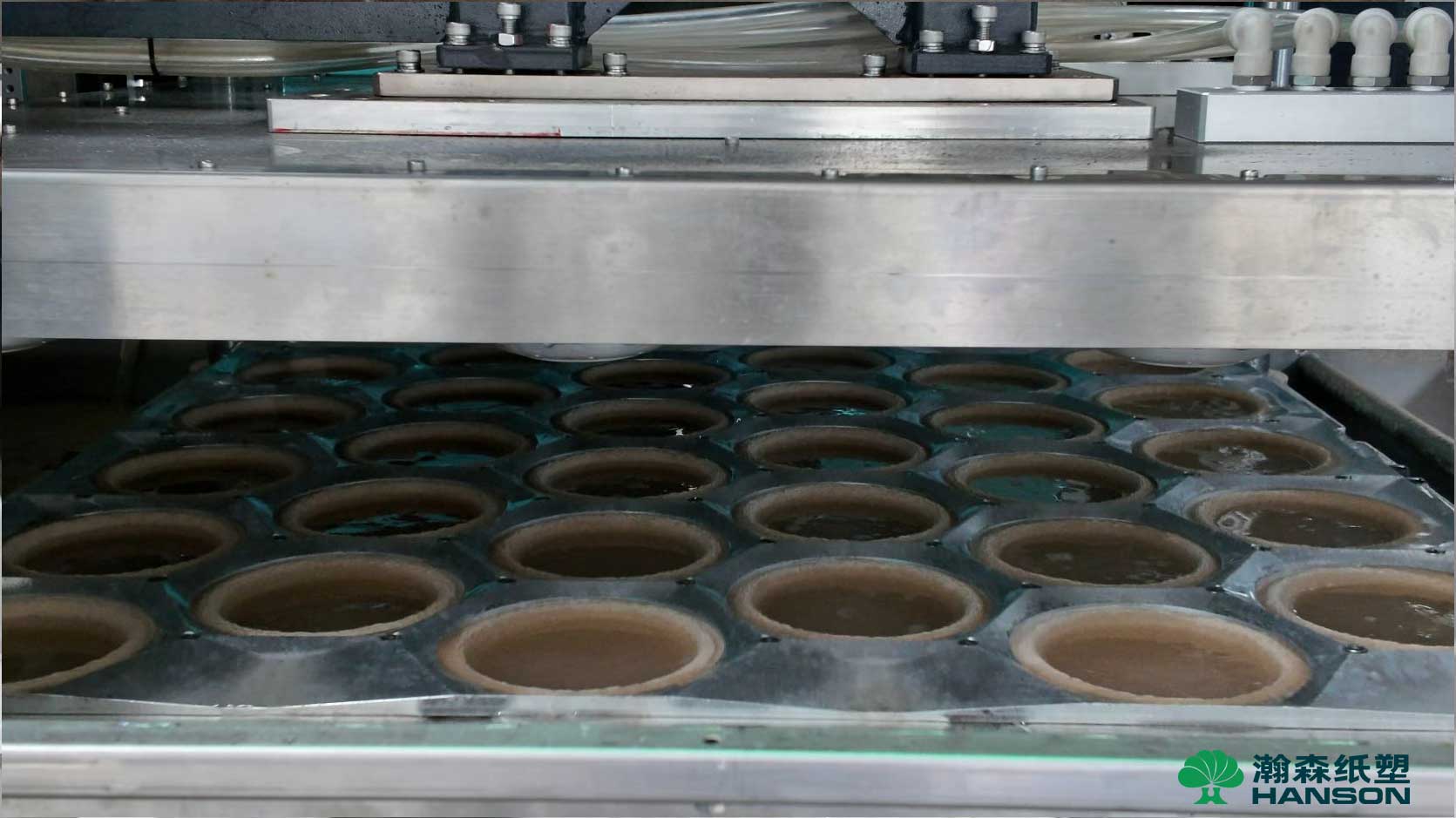
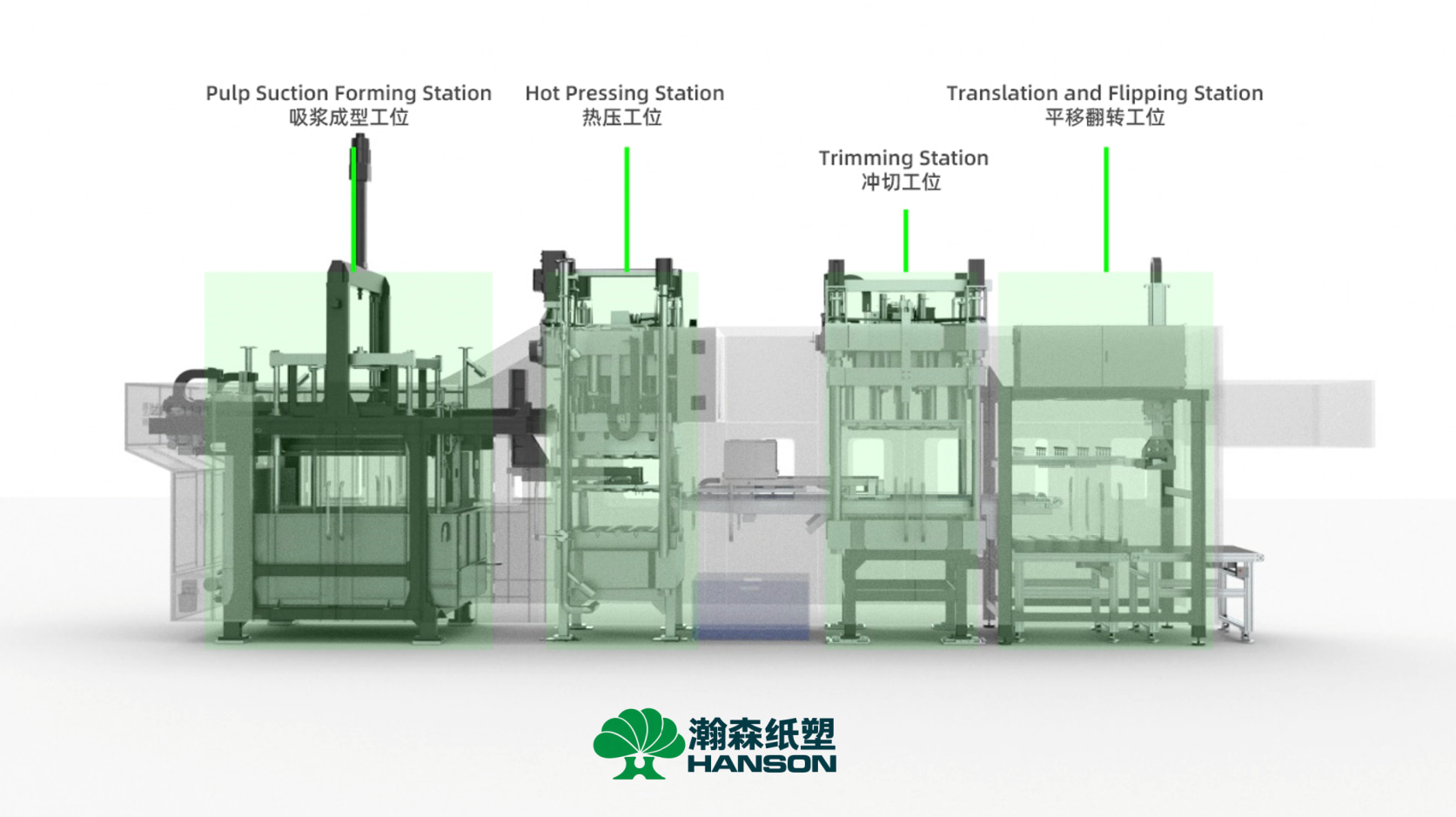
If the forming equipment operates at extremely high speeds, but the trimming and packaging processes are manually executed, the entire line’s capacity will be bottlenecked by the secondary processing. For high-volume standard products, integrating forming, hot pressing, trimming, and stacking into an automatic line is a highly effective method to optimize operational overhead and maintain continuous throughput.
Hanson Pulp Molding’s Approach to Tableware Equipment
As a specialist in turnkey pulp molding solutions, Hanson Pulp Molding believes that equipment configuration must be driven by the final product requirements. Depending on the project’s scale and priorities, Hanson Pulp Molding offers targeted solutions for the tableware sector:
-
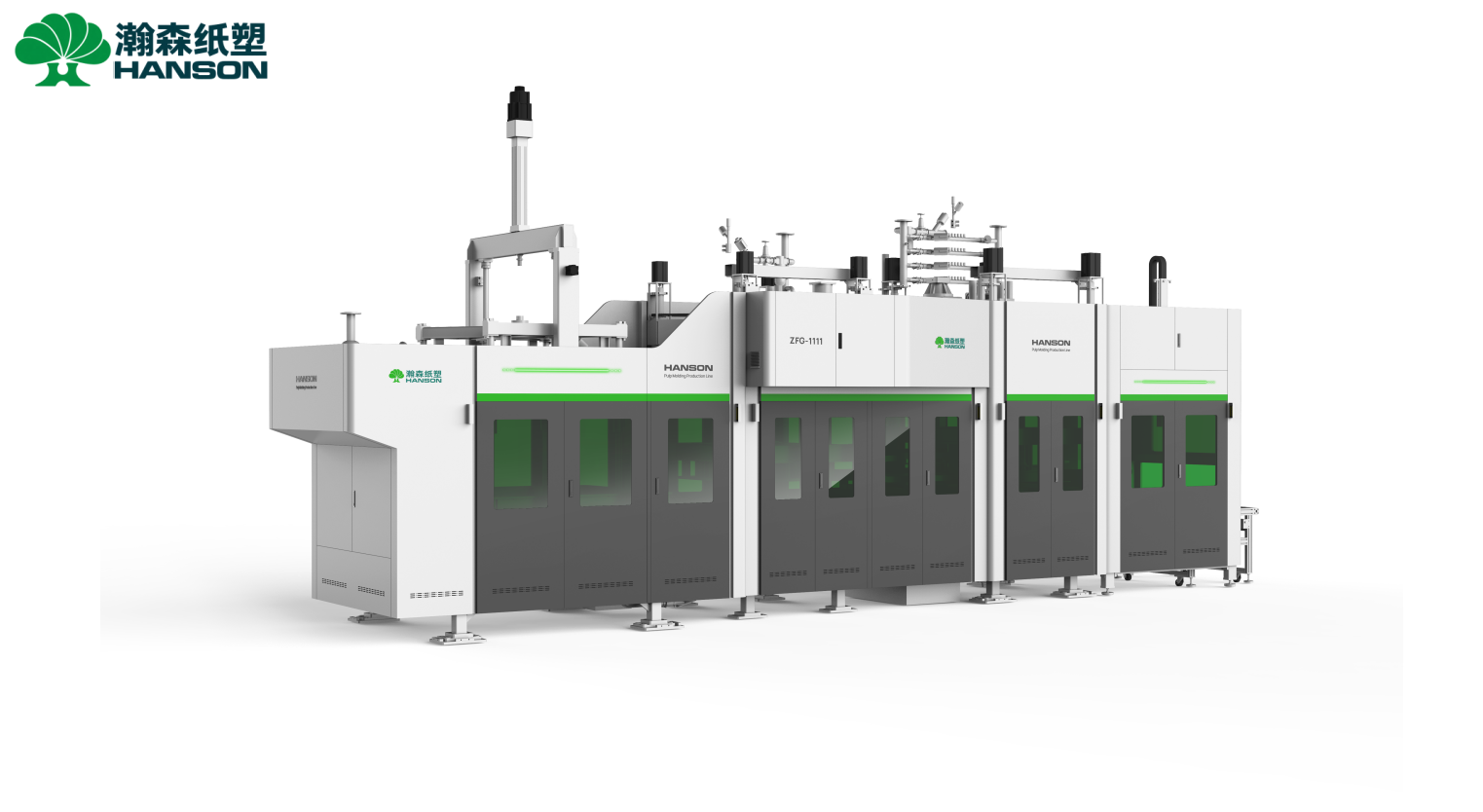
For High Integration and Output: The Hanson Pulp Molding ZFG-1111 integrates forming, hot pressing, trimming, and stacking within the machine architecture. Under appropriate production conditions, its daily capacity can reach over 1.8 tons per machine.
-
For Maximum Precision and Control: The ZBG-1111 features a one-forming and two-hot-pressing configuration driven by a full-servo system, specifically engineered for demanding wet press tableware mass production.

-
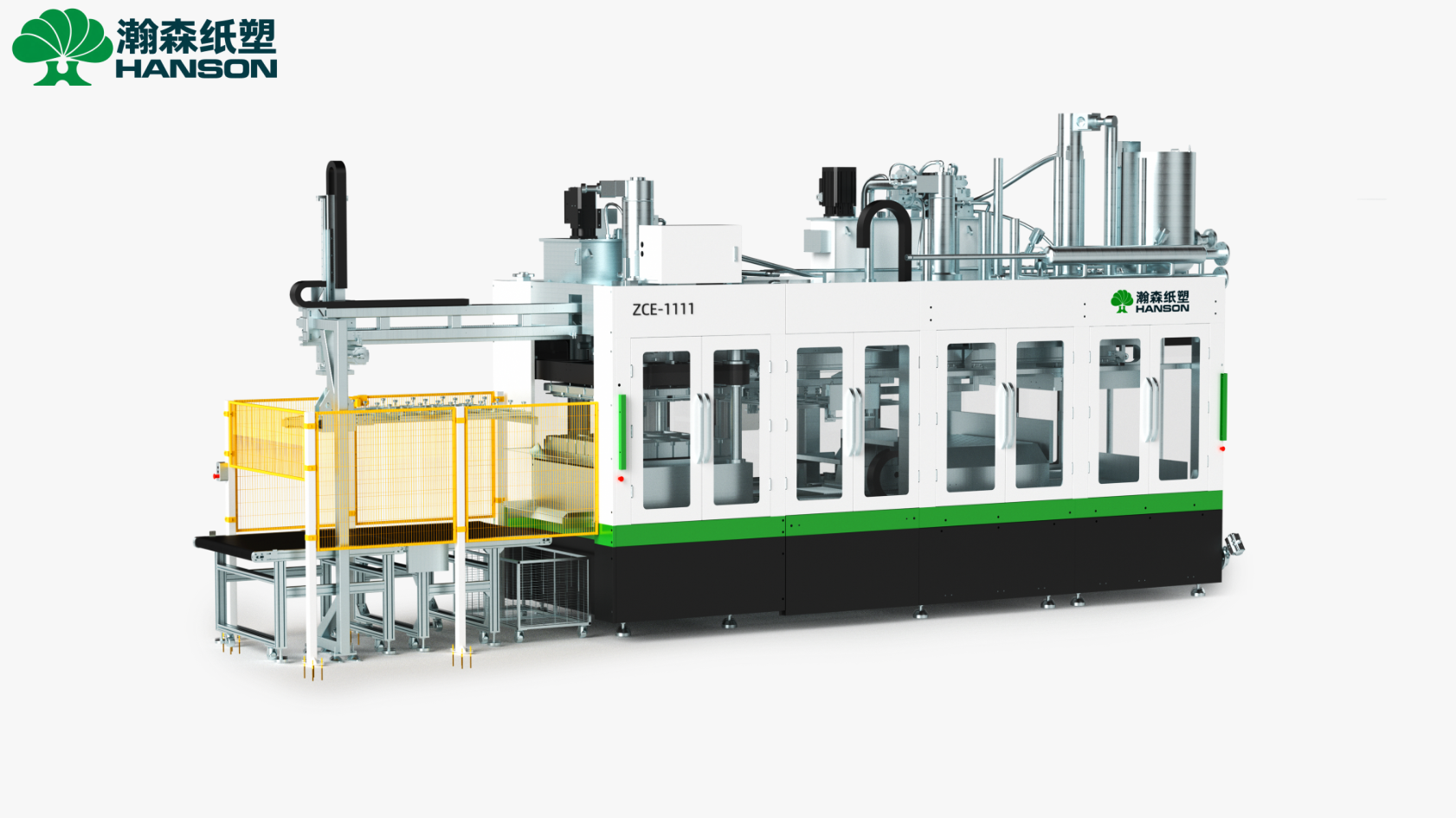
For Balanced Capital Investment: If initial capital investment is a primary concern, the ZCE-1111 utilizes metered pulp feeding, mold-to-mold transfer, and a pneumatic-hydraulic boosting structure to meet fundamental production needs while controlling equipment costs.
FAQ
How many products can a pulp molding tableware machine produce in a day?
Actual daily output is heavily influenced by product weight, size, mold cavities, forming time, hot pressing time, and the overall yield rate. For example, under appropriate production conditions, the Hanson Pulp Molding ZFG-1111 can achieve a daily capacity of over 1.8 tons. Accurate capacity can only be calculated based on specific product parameters.
Can I make both bagasse plates and clamshells on the same machine?
It is technically possible, but it depends on mold dimensions, product depth, mold area, and hot pressing capabilities. Switching products requires changing not only the tooling but also adjusting slurry formulation, forming time, hot pressing pressure, and trimming parameters.
Why shouldn’t I just compare equipment cycle times?
Cycle time only represents the operational speed of the forming stage. If product yield is low, machine downtime is high, or post-processing steps like trimming and stacking cannot keep up, the total daily output of qualified products will still fall significantly short of commercial expectations.
Conclusion
Building a highly profitable molded fiber tableware plant involves much more than purchasing the fastest standalone machine. It requires a systemic approach that harmonizes pulping, equipment, molds, process control, and automation. By clearly defining your precision requirements and realistically analyzing actual output, you can select a production line that genuinely supports your long-term commercial objectives.
If you already have a product sample, 3D drawing, product dimensions, or target daily capacity, Hanson Pulp Molding can help evaluate the molding process, tooling, and equipment configuration for your project.
WhatsApp: +86 15920604830
Email: linchuangcheng@hspulpmolding.com