When investors and packaging manufacturers plan to purchase pulp molding equipment, the first instinct is often to request a technical specification sheet. It is common to compare cycle times, motor power, and theoretical daily output before deciding which machine to buy.
However, in the molded fiber industry, this approach often leads to critical mismatches during mass production. The true logic of establishing a successful production line is the reverse: The product determines the process, the process dictates the tooling, and together they define the equipment configuration.
Evaluating a pulp molding machine solely based on numerical parameters—without first analyzing the product dimensions, weight, and structural complexity—can result in capacity shortfalls, unstable product quality, and high energy consumption.
Why Relying Solely on Machine Parameters is Risky
A machine’s theoretical “cycle time” merely indicates how fast the mechanical arms and presses can move in an empty or highly idealized state. However, actual production capacity is governed by the physics of removing water from plant fibers.
-
Product Weight: Heavier products require more slurry per cycle. This means a higher volume of water must be extracted via vacuum dewatering and evaporated during hot pressing, inherently extending the required cycle time.
-
Tooling Cavities: The number of products you can produce in one cycle is limited by the maximum mold area and the dimensions of the product itself.
-
Structural Complexity: Products with deep draws, steep draft angles, or complex ribs pose challenges during wet preform transfer.
-
Uptime and Automation: The theoretical speed is irrelevant if the machine experiences frequent downtime for mold cleaning or if the post-processing automation (like trimming or stacking) cannot keep pace.
Therefore, judging a machine’s efficiency requires pairing its capabilities with a specific product sample.
Step 1: Using the Product Sample to Determine the Molding Process
There is no single “universal” pulp molding machine. The very first step when analyzing a product sample or 3D drawing is determining the appropriate process route.
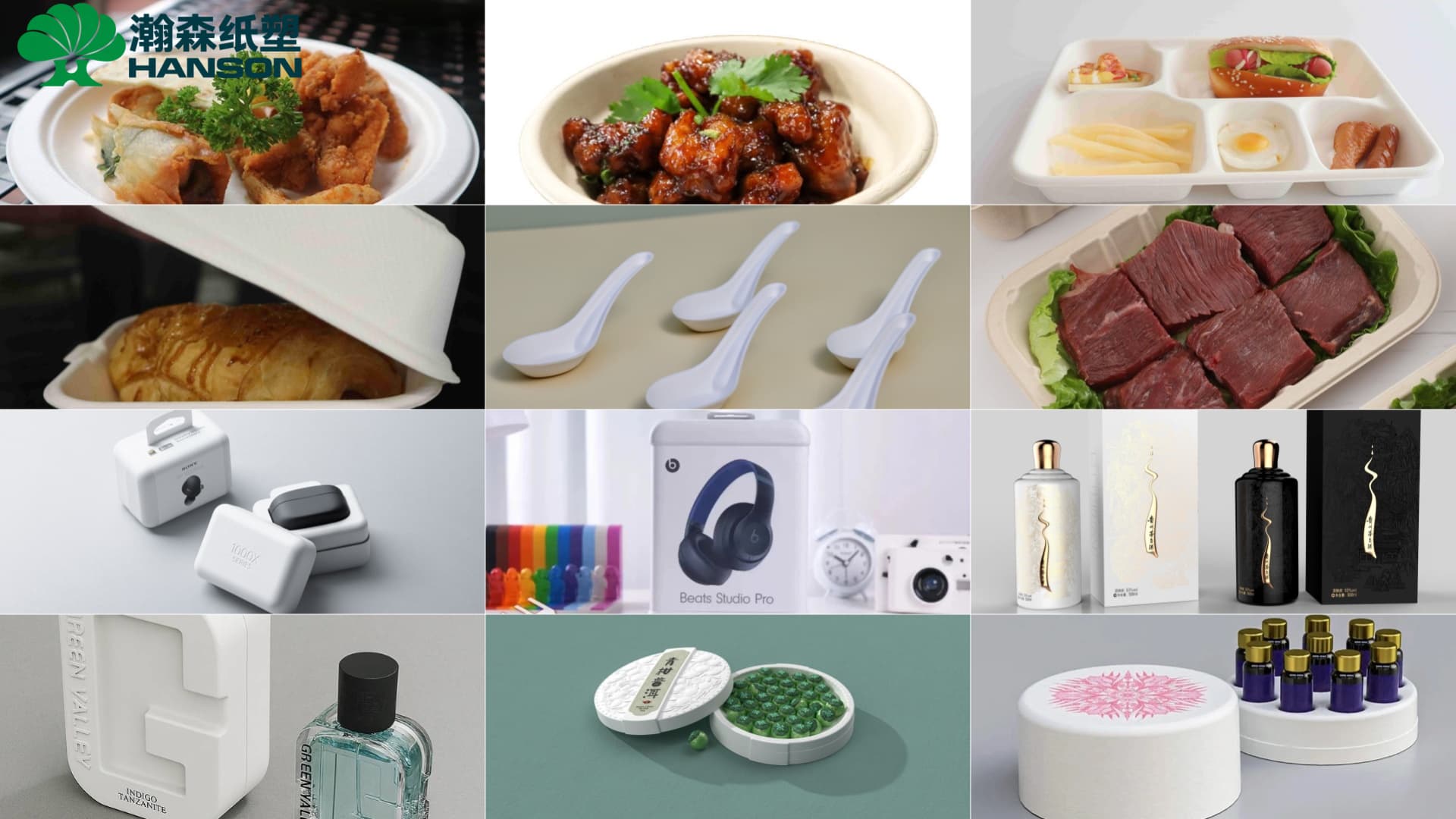
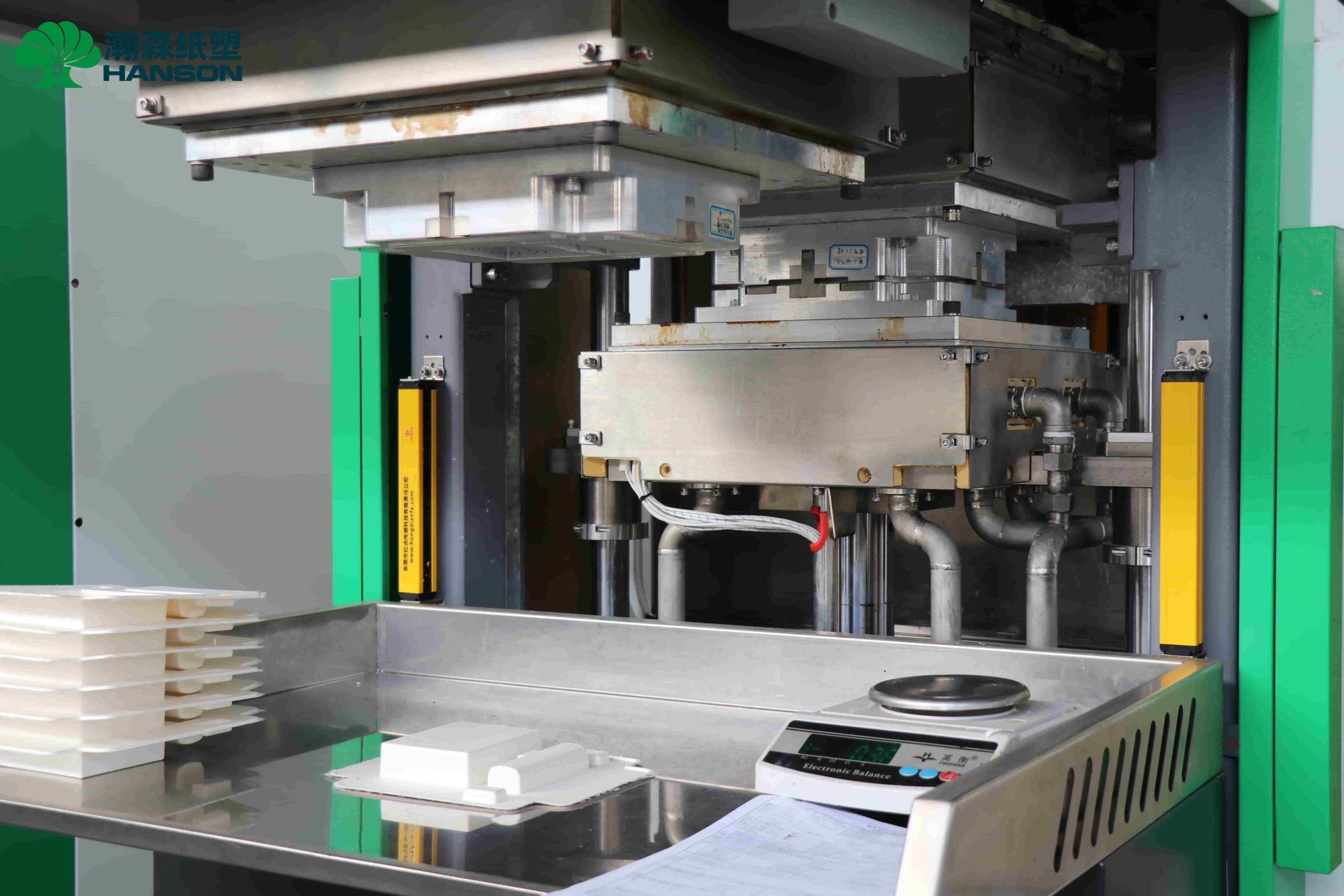
For Foodservice and Premium Industrial Packaging If the sample is a bagasse plate, a clamshell food container, or a high-precision smartphone insert, it requires a highly smooth surface, accurate dimensions, and crisp structural details. These products typically utilize the wet press process (often categorized internationally as Type 3 Thermoformed Fiber). The wet preform is transferred directly into a heated mold, where it is pressed and dried simultaneously. Hanson Pulp Molding evaluates these samples to recommend specialized systems, configuring the ZFG-1111 for high-capacity tableware or the ZAP-9585 for precision industrial molded fiber packaging.
For Protective and Transport Packaging If the sample is an egg tray, a multi-cup carrier, or a heavy-duty appliance buffer, its primary function is protection and shock absorption rather than an immaculate surface finish. These products are better suited for dry press or transfer molded processes. The process involves forming the preform, followed by a separate drying stage in a tunnel oven before any secondary hot pressing.
Step 2: The Crucial Role of Molded Fiber Tooling
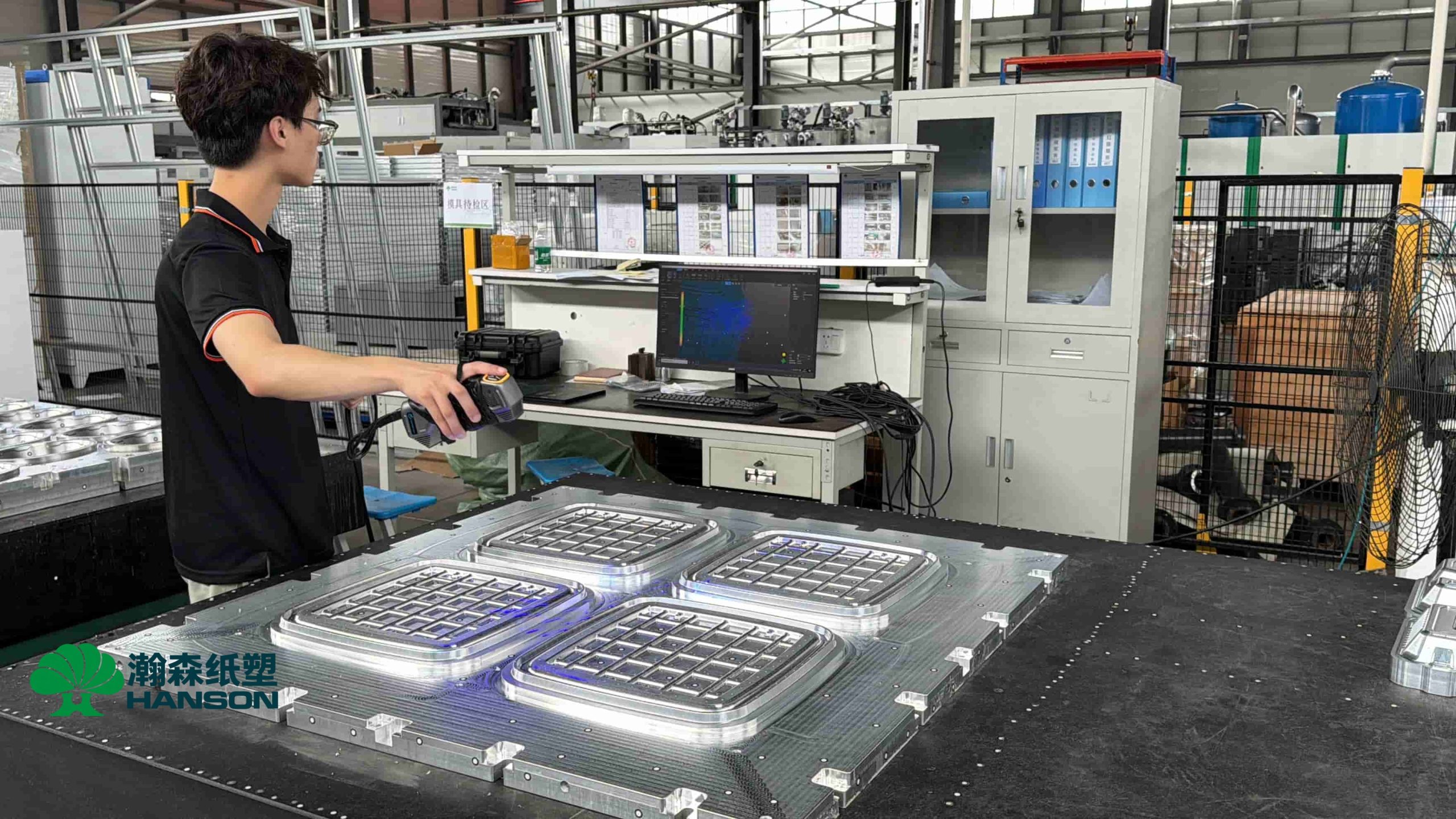
A common misconception is treating molds merely as interchangeable accessories. In reality, molded fiber tooling is a core component that actively influences product quality and machine performance.
The tooling dictates not only the final shape but also the drainage efficiency. If a mold is poorly designed and fails to extract enough water during the vacuum stage, the wet preform moisture content will remain too high. Consequently, the hot press must work longer and consume more energy to dry the product. As a turnkey specialist in pulp molding, Hanson Pulp Molding insists on a coordinated engineering approach where the equipment, tooling, and process are developed in unison based on the specific product requirements.
Step 3: For Innovative Products, Prototype Before Mass Production
If you are developing a completely new packaging format—such as transitioning a plastic blister pack into a molded fiber alternative or testing a novel barrier coating—purchasing a large-scale commercial production line immediately carries significant risk.
For projects lacking mature market references, the optimal route is prototyping. Prototyping allows manufacturers to test the fiber blend, refine the structural design, and validate the process parameters. Only after the process validation proves that the product can be manufactured stably should the focus shift to configuring the full commercial production line.
FAQ
Can one pulp molding machine make all types of products? While machines offer flexibility through mold changes, completely different product categories require distinct processes. For instance, the high-speed continuous automation required for cup lids (which demands integrated trimming and vision inspection) operates on a completely different logic than a dry-press line designed for heavy industrial cup carriers or egg trays.
How do you calculate the actual daily output of a pulp molding machine? Actual capacity cannot be calculated using just the machine’s mechanical cycle time. It is a combined result of the single-piece weight, the number of mold cavities, the required hot pressing time for that specific thickness, and the overall plant uptime.
Why does the wet press process yield a smoother surface? In the wet press (thermoformed) process, the product enters a heated, high-precision mold while still wet. The combination of heat, pressure, and physical confinement during the drying phase results in a dense, highly smooth surface and accurate dimensional stability.
Conclusion
Purchasing pulp molding equipment is not about finding a machine with the most impressive theoretical parameters; it is about finding the right manufacturing system that can economically and stably mass-produce your specific product. By starting with the product sample, you establish the correct process route, tool design, and automation level required to ensure long-term commercial success.
If you already have a product sample, 3D drawing, or target daily capacity, these details can be used to evaluate the molding process, mold configuration, and equipment setup. Hanson Pulp Molding specializes in turnkey pulp molding projects and can support your investment from product development to stable mass production.
WhatsApp: +86 15920604830
Email: linchuangcheng@hspulpmolding.com