
Does Advanced Machining Equipment Guarantee Better Pulp Molding Molds? What Buyers Should Actually Check
Not by itself. In pulp molding mold machining, high-speed CNC equipment is a manufacturing tool—not a guarantee of stable mass production. Two tooling shops can run aluminum blocks on identical high-RPM machining centers and still deliver completely different floor performance once the molds are mounted on a forming press.
If fiber shrinkage compensation, thermal stress relief, vacuum drainage layout, or stainless steel wire mesh installation are poorly executed, tight metal machining tolerances will not prevent sticking, warping, or uneven wall thickness. When comparing molded fiber tooling suppliers and drafting acceptance terms, buyers should treat machinery lists as a screening baseline and evaluate vendors on three measurable production outcomes: finished-part dimensional deviation, production repeatability, and continuous trial-run performance.
Why Workshop Machinery Lists Often Mislead Tooling Buyers
During supplier audits, it is common to receive impressive lists of multi-axis CNC machines and spindle speeds. While precision machining is essential for smooth cavity geometry and clean mating edges, cutting metal is only one segment of a multi-stage tooling workflow.
A production-ready pulp molding mold passes through blank preparation, rough machining, stress relief, precision finish machining, 3D scanning, vacuum drainage drilling, cleaning, re-inspection, wire mesh forming and fitting, final assembly, and trial verification. Weak execution in any downstream step erodes the precision gained on the CNC bed:
-
Thermal stability depends on stress relief, not just finish cutting. Hot-press molds run continuously under elevated temperatures and repeated clamping force. Skipping proper stress relief after roughing allows residual internal stress to distort the mold body once heated on the press, shifting closing clearances and creating edge flash or uneven compression.
-
Dewatering and fiber laydown rely on drilling and mesh work. Unlike plastic injection molding—where molten resin fills a sealed cavity under high pressure—pulp molding relies on vacuum suction to deposit suspended fibers onto a fine wire screen before transferring and pressing or drying the wet blank. Uneven drainage hole spacing, blocked holes, or poorly tensioned wire mesh directly cause thin spots, wrinkles, and tearing during wet-blank transfer.
-
Wet-press and dry-press tooling follow different engineering priorities. Thermoformed wet-press molds for foodservice tableware, molded fiber cup lids, and premium industrial protective inserts demand high surface finish, tight mating tolerances, and balanced heat transfer. Dry-press molds for egg trays or standard industrial cushioning trays prioritize rapid dewatering, air-flow efficiency, and long-term wear resistance. A machine spec sheet reveals none of this process discipline.

Three Measurable Outcomes Buyers Should Verify Instead
To separate machining job shops from capable molded fiber tooling suppliers, shift your technical review from “what machines do you own?” to “what production results can you document?”
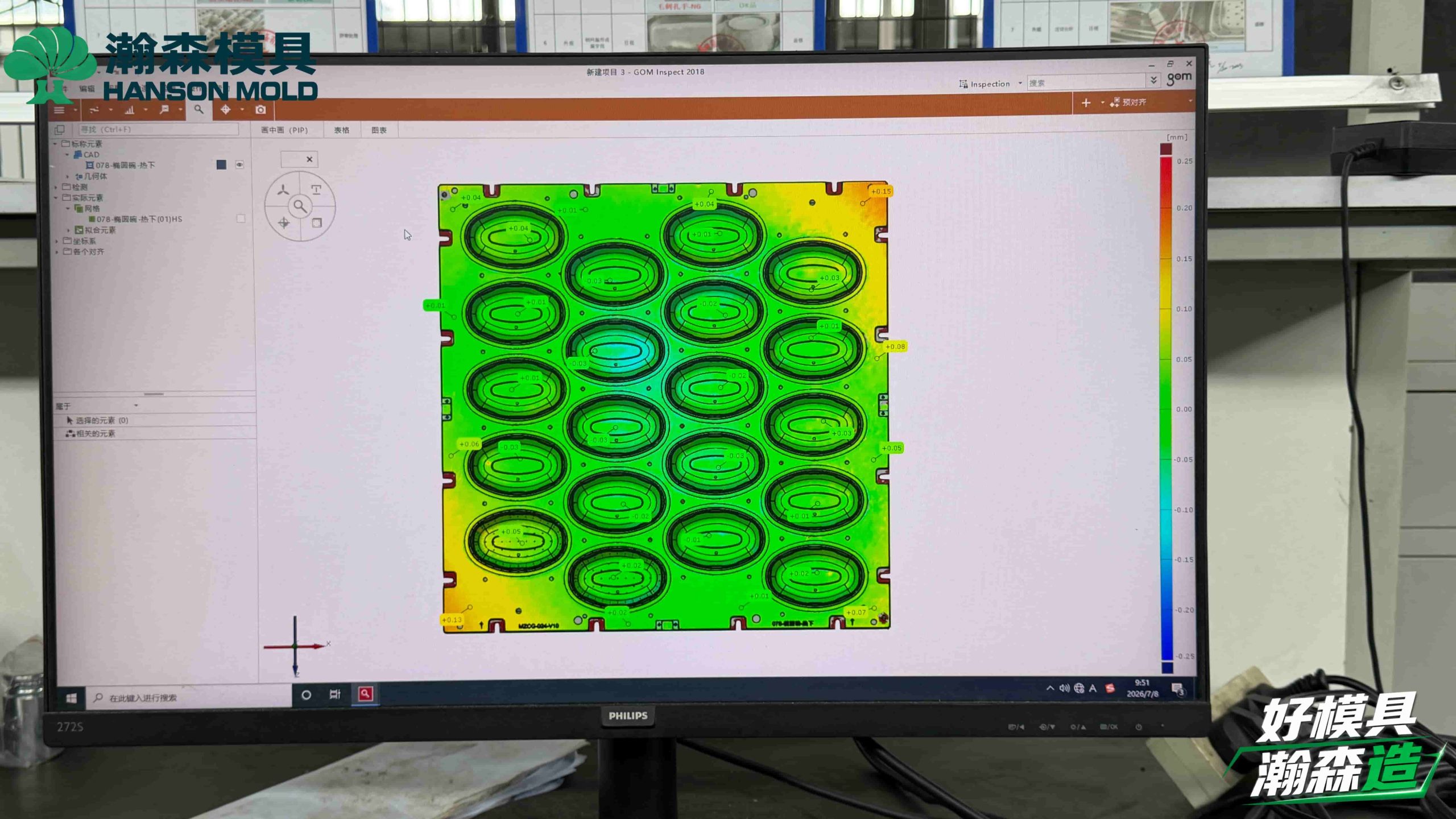
1. Finished-Part Dimensional Deviation and 3D Inspection Closure
An accurate metal cavity does not automatically yield an accurate molded fiber part. Natural fibers—whether bagasse, bamboo, wood pulp, or recycled paper—shrink and spring back during dewatering and hot pressing. That dimensional shift must be engineered into the mold geometry during CAD design rather than corrected by trial-and-error grinding later.
Before approving tooling delivery, ask suppliers for two aligned records:
-
3D scanning deviation reports taken after finish machining to verify the actual mold surface against the approved CAD model.
-
Measured dimensional checks on pressed parts, focusing on functional interfaces such as lid-to-cup snap fit, hinge alignment on clamshell containers, nesting height, and internal fit clearances for electronics or cosmetic inserts.
2. Multi-Cavity Consistency and Shift-to-Shift Repeatability
Hand-selecting three clean samples from a short test tells you very little about commercial viability. Mass production depends on repeatability across every cavity on the platen and across full operating shifts.
Evaluate these concrete indicators during mold acceptance:
-
Cavity-to-cavity uniformity: Compare dry part weight, critical wall thickness, and outer dimensions across all cavities on the same mold plate.
-
Thermal and run-time stability: Verify whether part flatness and dimensions remain within tolerance after sustained heating and continuous cycling, rather than only during the first ten cycles.
-
Downstream trimming stability: Consistent part edges reduce manual rework and keep automatic trimming scrap rates predictable.
3. Trial-Run Stability and Disciplined Defect Troubleshooting
A proper trial run evaluates release consistency, wet-blank transfer integrity, and cycle-time stability under realistic operating conditions. Equally important is observing how the tooling supplier diagnoses defects when they occur.
In molded fiber manufacturing, under-filling, warping, sticking, or heavy burrs cannot automatically be blamed on the mold. A competent engineering team isolates variables in a structured sequence before cutting steel or modifying cavities:
-
Pulp slurry condition: Verify slurry consistency, fiber refining level (freeness), fiber blend, and sizing/additive dosing stability.
-
Process settings: Review vacuum forming duration, vacuum pressure, blow-off air pressure and timing, hot-press temperature, and dwell time.
-
Press mechanics: Check platen parallelism, clamping pressure distribution, heating-zone uniformity, and vacuum line performance.
-
Mold and post-processing condition: Inspect drainage holes for blockage, wire mesh tension and wear, mold closing clearances, and trimming die alignment.
Because slurry, equipment, and tooling interact continuously on the floor, all parameter adjustments and troubleshooting conclusions must be confirmed through on-site validation.
Practical Mold Acceptance Checklist for Procurement Contracts
To prevent disputes after shipment, translate engineering priorities into clear RFQ and purchase-order checkpoints:
-
Lock part-level acceptance criteria upfront. Define critical dimensional tolerances, acceptable part-weight bands, visual defect limits, and functional fit tests based on whether the project uses wet-press tableware, cup-lid, wet-press industrial, or dry-press tooling .
-
Require in-process verification records. Specify that the supplier must deliver post-machining 3D scan reports, drainage-hole and wire-mesh inspection photos, and final assembly fit records prior to packing.
-
Separate sample approval from continuous-run validation. Define the required consecutive production cycles, random sampling ratio, and acceptable reject rate for formal sign-off .
-
Confirm press-interface drawings and support boundaries. Cross-check platen mounting patterns, heater cartridge specifications, thermocouple locations, and vacuum/air port connections before cutting blanks, and clearly document commissioning and after-sales support terms.
Aligning Tooling, Equipment, and Process for Reliable Output
Advanced machining centers still matter—they reduce lead times, hold tighter geometric consistency on complex contours, and minimize manual bench-work variability. However, they deliver full commercial value only when paired with deep forming-process and press-integration experience.
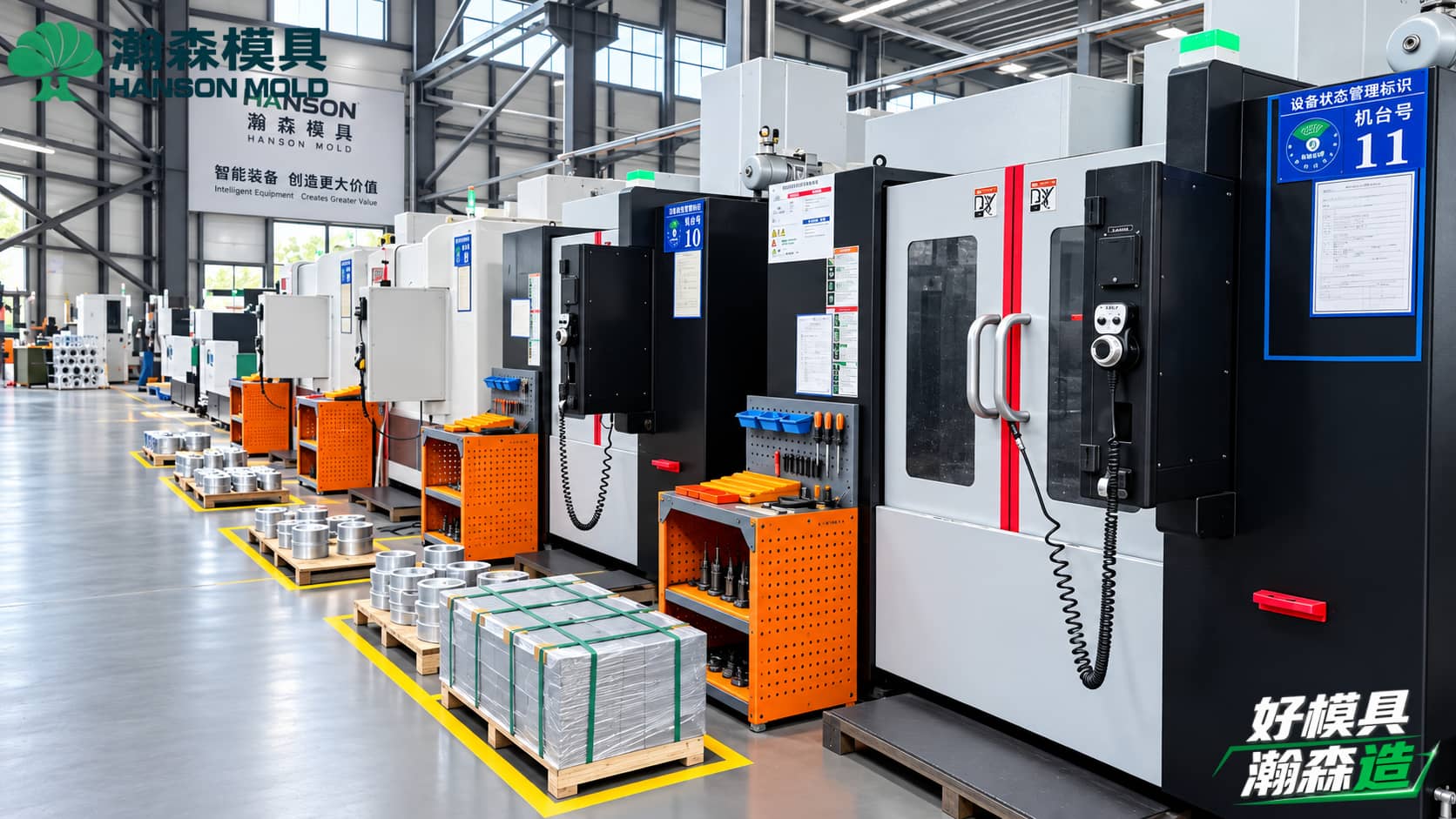
Within Hanson Pulp Molding’s mold and tooling services, an independent tooling division brings together 10 senior mold designers, high-speed CNC machining (spindle speeds up to 24,000 RPM), and 3D scanning inspection, with 500 pulp molding molds manufactured to date. Rather than treating tooling as standalone metal fabrication, the team aligns cavity design, drainage engineering, and press mechanics around real-world yield and cycle-time stability.
Depending on your plant’s existing machinery, collaboration follows three distinct, transparent pathways:
-
New molds paired with Hanson forming machines: Product development, complete mold design and manufacturing, in-house trial verification on matching equipment, and mass-production support.
-
New molds for non-Hanson forming machines: Product development, complete mold engineering tailored to your press interface specifications, and mass-production support (note that in-house press trials cannot be automatically assumed for third-party machine models).
-
Refurbishing existing molds on non-Hanson machines: Targeted mold optimization and structural upgrades followed by mass-production support, with final tuning verified on-site.
When comparing tooling suppliers, use CNC capabilities to confirm baseline manufacturing capacity—but base your final purchasing decision on documented part accuracy, multi-cavity repeatability, and proven trial-run discipline.
FAQ
Q1: What practical benefit does 24,000 RPM high-speed CNC machining offer for pulp molding molds? High-speed CNC machining improves surface smoothness and contour precision on intricate wet-press geometries, thin ribs, and tight-fitting lid or insert profiles. It also reduces heavy manual polishing that can distort designed dimensions. Still, CNC cutting is only one stage—stable production equally depends on proper shrinkage compensation, stress relief, 3D scan verification, and consistent drainage drilling and mesh fitting.
Q2: How can we reduce commissioning risk when ordering custom molds for a third-party forming press? Start with complete interface verification before machining begins. Share exact platen bolt patterns, heating zones, thermocouple positions, vacuum/blow-off port layouts, and target pulp formulations. For new molds built for non-Hanson machines, the standard workflow covers product development, turnkey mold manufacturing, and mass-production support—relying on pre-shipment 3D inspection and structured on-site commissioning rather than assuming identical third-party presses exist in the mold maker’s shop.
Q3: If trial runs show sticking or part deformation, does it mean the mold was machined poorly? Not necessarily. Sticking, warping, and rough edges frequently stem from interacting shop-floor variables. Troubleshoot systematically: check pulp consistency and chemical additives first, then verify hot-press temperature, dwell time, vacuum timing, and blow-off pressure, followed by press platen parallelism and mold drainage or wire mesh condition. Final corrective steps should always be confirmed through on-site testing.
Evaluating molded fiber tooling suppliers or preparing technical acceptance criteria for an upcoming project? Share your 3D part files, target molding process (wet-press or dry-press), and forming press specifications with the Hanson Pulp Molding engineering team for a structured tooling evaluation and quote. Overseas Contact: [+86 15920604830]