
Choosing the right molded pulp egg carton tooling comes down to one practical benchmark: cartons that close securely, survive automated packing and retail handling, and stack without crushing. Before issuing a tooling purchase order, engineering and procurement teams need to lock in the forming process—dry-press or wet-press—and verify four critical design elements: latch geometry, hinge durability, nesting and stacking load paths, and cavity-to-cavity dimensional consistency.
1. Choose Dry-Press or Wet-Press First
Your target retail tier and unit-cost ceiling dictate the process route and mold architecture:
-
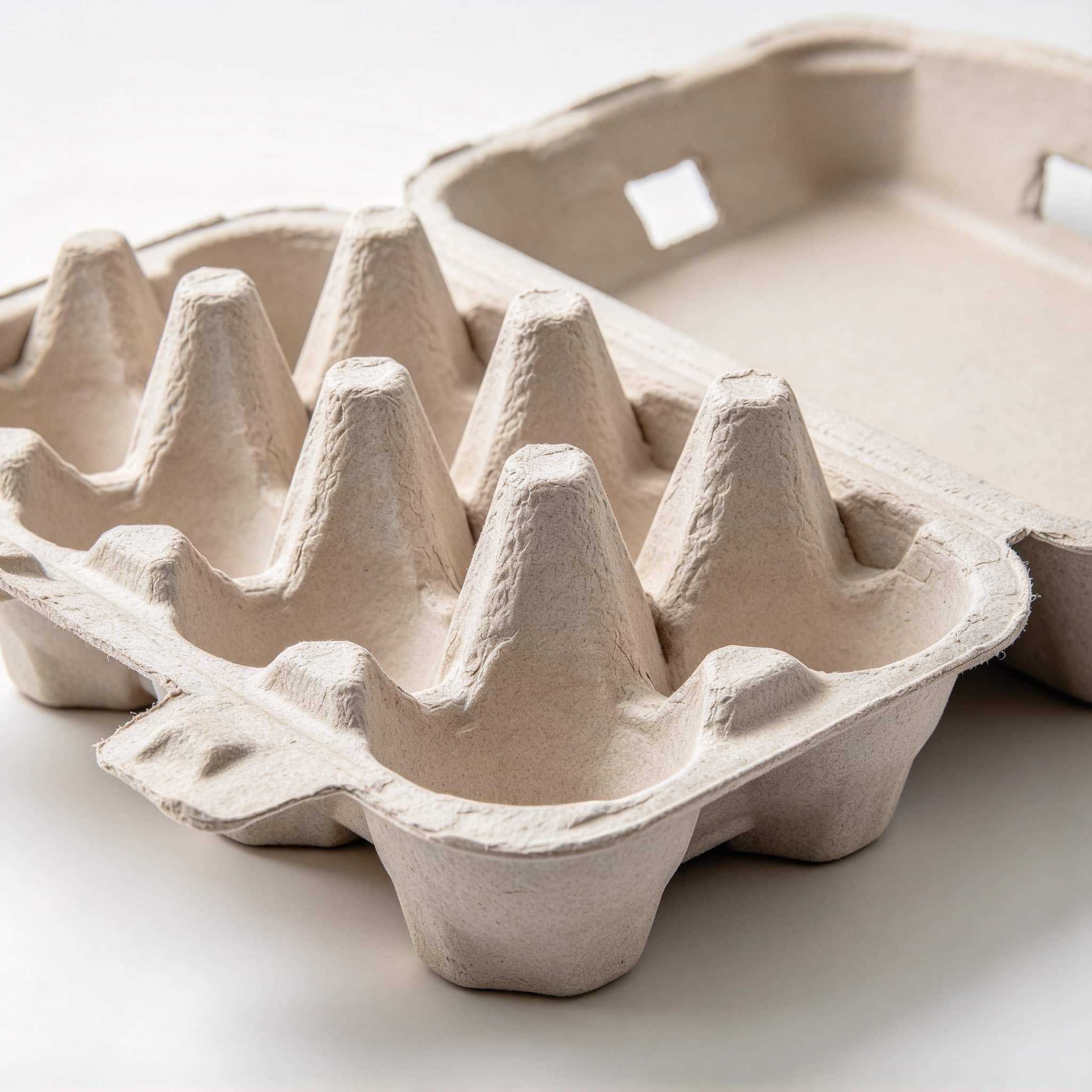
Dry-press (dry process) with oven drying and after-pressing: Typically uses recycled pulp and serves high-volume supermarket cartons and automated grading lines. Dry-press cartons have slightly thicker walls and a rougher texture. Tooling priorities include reliable drainage through the mesh side, well-balanced draft angles, and accurate after-pressing dies to sharpen latches and carton contours.
-
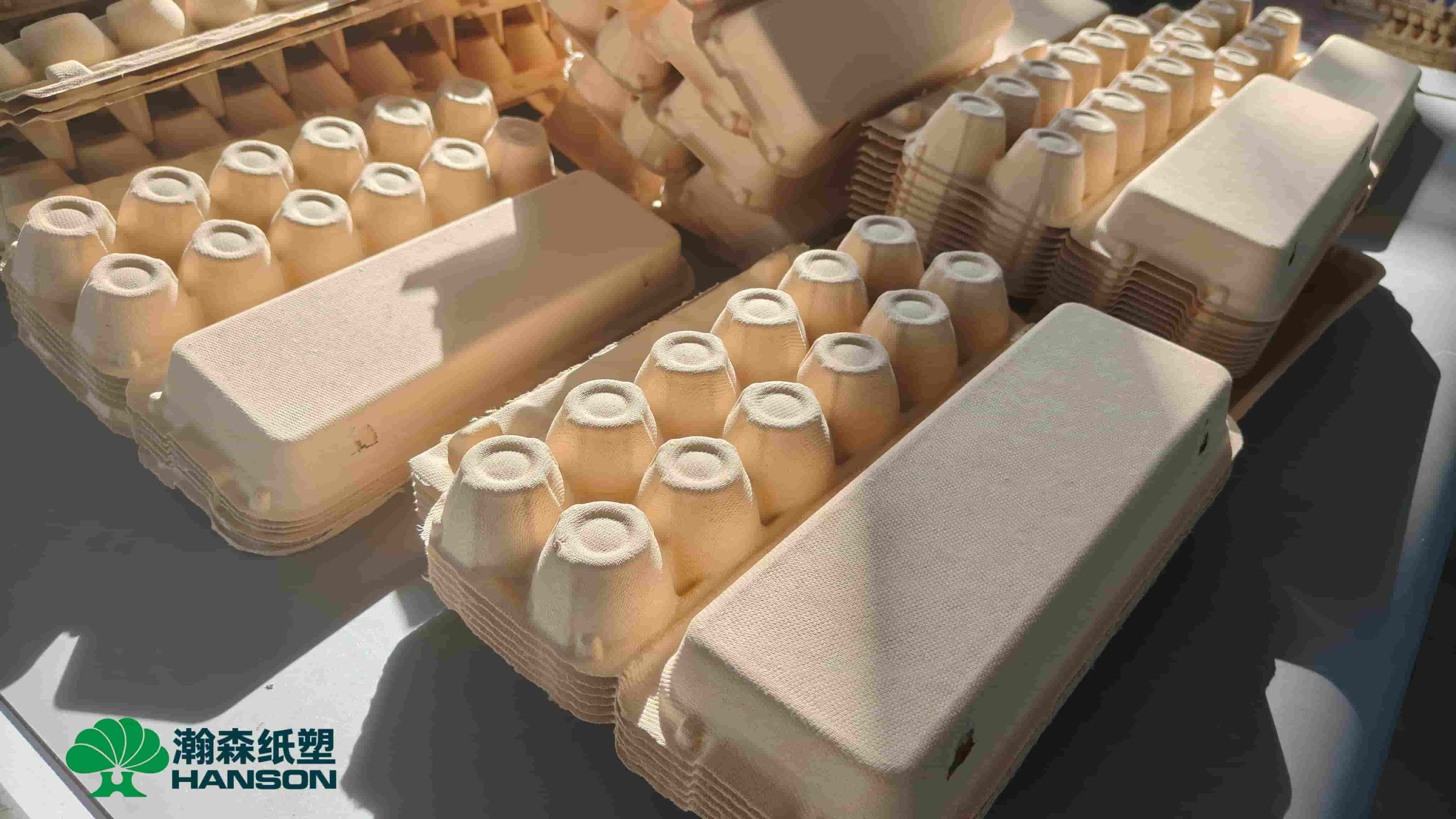
Wet-press (wet pressing) with suction, transfer, and hot-pressing molds: Uses virgin plant fibers such as bagasse, bamboo, or wood pulp. In-mold hot pressing produces a smooth cosmetic side and tighter dimension tolerances for premium retail cartons. This route demands tighter CNC machining accuracy, uniform mold clearance, and disciplined steam exhaust design.
Avoid applying open egg-tray tolerances to hinged egg cartons, and never transfer injection-molding snap-fit logic directly to molded fiber. Pulp fibers shrink, rebound, and dewater differently than thermoplastics, so wall thickness and draft angles must be engineered specifically for fiber behavior.
2. Three High-Risk Structural Zones in Egg Carton Mold Design
Most field complaints on molded pulp egg cartons trace back to three structural details:
Latch Engagement
Whether using button-style closures or side tabs, the latch must hold during transit vibration without tearing during opening. Insufficient interference causes lids to pop open on the packing line; overly steep undercuts or poor mesh fitment at the latch edge cause fiber dragging during mold release and inconsistent closure.
Hinge Durability
The hinge along the folded line endures repeated flexing during packing and retail use. If the suction mold builds excessive thickness or the hot-pressing mold over-compresses the hinge, fibers crack when folded. If it is too thin, the lid loses tear resistance. Smooth radius transitions and calibrated cavity clearance keep the hinge flexible yet durable.
Empty Nesting vs. Loaded Stacking
Egg carton tooling must solve two distinct stacking challenges:
-
Empty carton denesting: Properly placed denesting lugs and draft angles keep stacked cartons compact in shipping while preventing jamming in automatic denesters.
-
Loaded stacking strength: Internal support pillars and ribbed pockets carry vertical compression resistance so stacked pallets protect the eggs rather than transferring weight onto the shells.
3. Dimensional Consistency Is Not Solely a Tooling Variable
When multi-cavity production shows weight discrepancies between positions on the mold, warped lids, or uneven latch tightness, resist blaming the tooling alone.
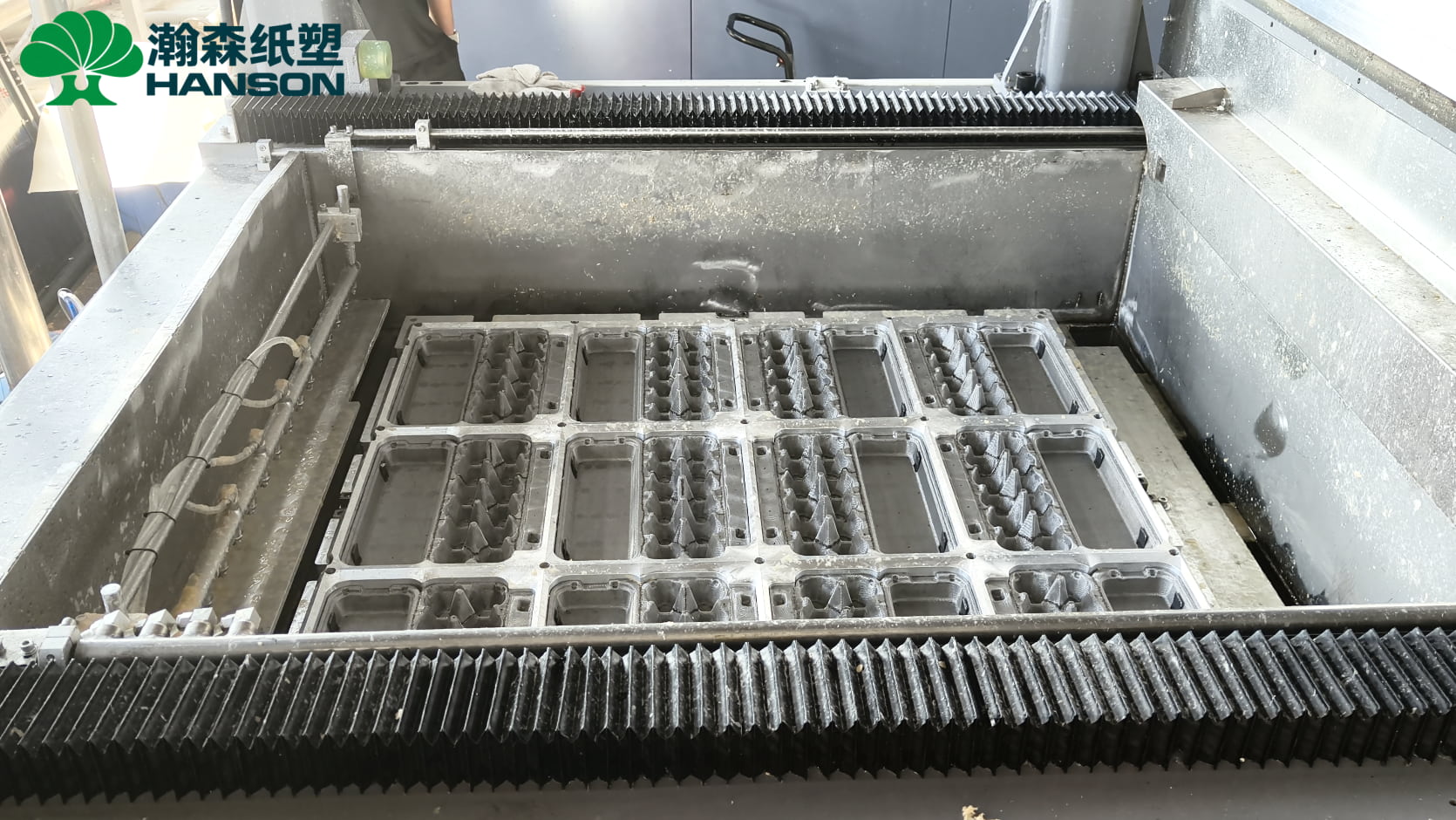
Tooling accuracy certainly sets the baseline—balanced mold layout, uniform drainage hole placement, tight mesh wrapping, and verified cavity profiles matter. Hanson Pulp Molding operates a dedicated tooling division with 10 experienced designers, high-speed CNC machining (up to 24,000 RPM), and 3D scanning inspection, with 500 pulp molding molds manufactured to date. Coordinating mold design with forming equipment and process windows helps catch clearance and alignment issues before metal is cut.
On the shop floor, however, defects are often multi-factor. Troubleshoot in a clear priority order:
-
Slurry and fiber: Check pulp consistency, beating degree, and raw material proportioning first.
-
Equipment and process parameters: Verify vacuum stability, suction time, molding temperature, and molding pressure.
-
Tooling and post-processing: Inspect mesh blinding, mold clearance wear, and trimming alignment. All parameter adjustments should be confirmed through on-site trial validation.
4. Pre-Tooling and Sampling Checklist
Before committing to a full mass production mold, confirm these prerequisites to prevent mid-project revisions:
-
Egg size envelope: Define target egg weight and diameter/height ranges ([Verification required: regional egg grading dimensions for the target market]) with appropriate cushioning clearance.
-
Machine interface specs: Confirm platen dimensions, closing height, mounting bolt patterns, and vacuum/air interfaces on your existing forming machine.
-
Sample mold validation: Run a sample mold first to test latch feel, hinge folding, denesting, and loaded compression resistance before scaling to multi-cavity mass production molds.
-
Execution path alignment: For new tooling paired with Hanson equipment, projects follow product development → complete mold service → mold trial verification → mass production support. For new tooling built for non-Hanson machines, teams align machine interface specs up front and follow product development → complete mold service → mass production support. If existing molds on third-party machines suffer from weak latches or stacking tilt, evaluate mold optimization and retrofit followed by mass production support.
FAQ
Q1: Should we build a sample mold before ordering a multi-cavity egg carton production mold? A: Yes, in most new developments. Hinged egg cartons combine latch engagement, hinge flex life, automatic denesting, and loaded compression requirements that cannot be fully predicted from 3D CAD alone. Validating fiber shrinkage and latch performance on a sample mold first significantly lowers the risk of expensive modifications on a full mass production mold.
Q2: Why does egg carton latch fit change after switching pulp suppliers or fiber blends? A: Changes in fiber length, beating degree, and pulp consistency alter wet-preform moisture and drying shrinkage, which directly affects wall thickness and stiffness around the latch. Before modifying the mold, stabilize slurry parameters and verify suction time, molding temperature, and pressing pressure through on-site trials.
Q3: Can Hanson Pulp Molding supply egg carton tooling for third-party forming machines? A: Yes. Provided accurate platen drawings, closing height, mounting hole layouts, and vacuum/air port specifications are confirmed prior to design, Hanson Pulp Molding’s tooling services support new mold delivery for non-Hanson equipment under the product development → complete mold service → mass production support workflow, as well as retrofitting existing molds.
Planning a new molded pulp egg carton project or troubleshooting latch and stacking issues on existing tooling? Contact Hanson Pulp Molding for a structural review, tooling evaluation, or retrofit assessment. [+86 15920604830]