
In-House vs. Outsourced Pulp Molding Tooling: Team, Machining, and Trial Resources
Choosing between building an internal mold shop and relying on outsourced pulp molding tooling comes down to two operational thresholds: whether your annual mold volume can sustain full-time engineering and CNC machining overhead, and whether your plant can afford to take active forming presses offline for extended trial fitting.
For most packaging converters handling variable SKU launches across thermoformed tableware or wet-press industrial packaging inserts, outsourcing new tooling to a process-focused mold maker—while keeping routine mesh replacement and cleaning in-house—reduces capital lockup and startup scrap.
1. Launch Frequency and Engineering Depth: The Real Cost of Going In-House
Many converters consider building an internal tooling workshop after experiencing slow vendor communication or delayed design revisions. Before allocating capital to machine tools and headcount, management should stress-test two foundational variables.
Annual Mold Volume vs. Fixed Overhead
A self-sufficient mold shop requires more than a single CNC operator. It demands CAD/CAM engineers, CNC machinists, micro-hole drilling technicians, stainless-steel wire mesh specialists, and assembly fitters. If your factory launches only a handful of new SKUs per year—or experiences seasonal spikes followed by months of idle machining capacity—fixed payroll and depreciation quickly inflate the true cost per mold well above external quoting rates.
An in-house fabrication shop typically makes economic sense only when a plant runs continuous, high-frequency tooling iterations within a narrow product family, such as high-volume dry-press egg trays or repetitive standard tableware formats. Even then, many plants restrict internal teams to preventive maintenance and minor modifications while outsourcing complex new structures.
Why General CAD Experience Is Not Enough
Molded pulp tooling does not follow plastic injection molding logic. Engineers without hands-on pulp forming experience frequently miscalculate process-critical details:
-
Process-specific baselines: Wet-press thermoformed tableware and smooth industrial inserts require fundamentally different wall-thickness compensation, hot-press clearance, and thermal tolerances than dry-press protective trays or egg cartons.
-
Dewatering and vacuum layout: Vacuum drainage hole diameter, pitch, and backing-plate flow channels control fiber deposition uniformity. Poor drainage engineering creates persistent thin spots or weight variance that machine adjustments alone cannot fix.
-
Demolding and trimming integration: Draft angles, corner radii, and trimming die clearances must match press kinematics to prevent fiber tearing, edge burrs, and misalignment during continuous runs.
2. Machining Resources and Press-Trial Bottlenecks
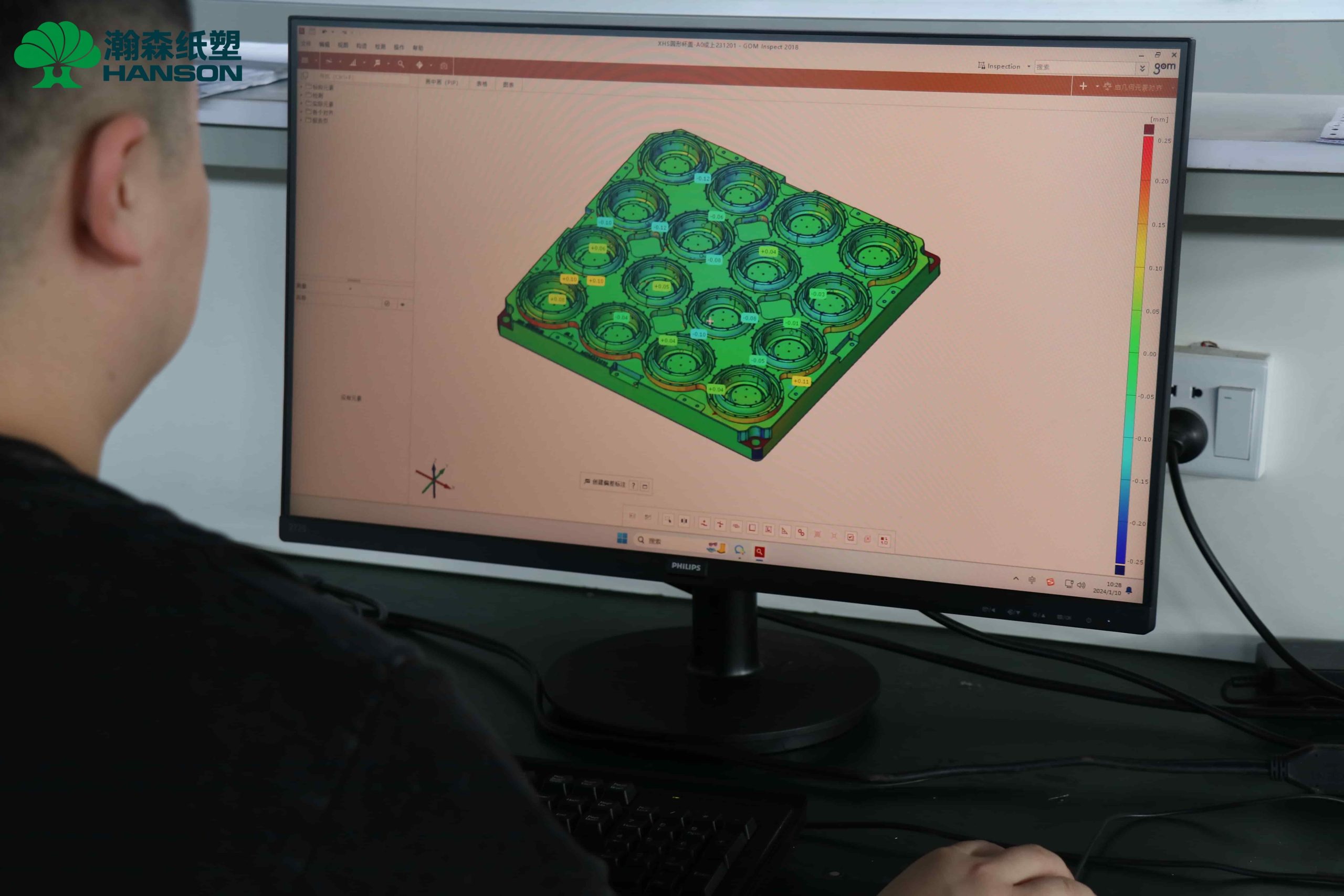
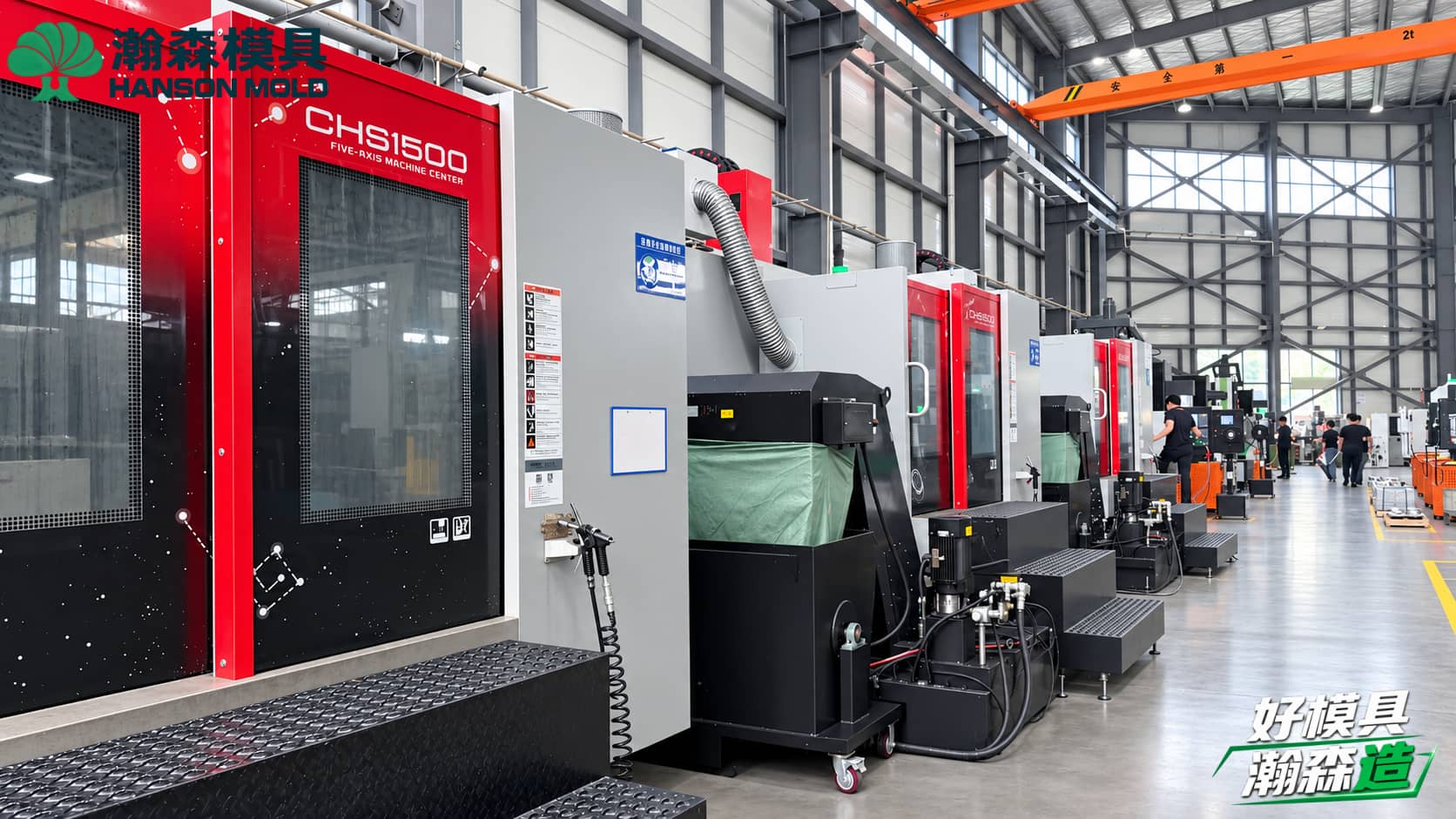
Producing a production-ready mold requires tightly controlled steps—including rough machining, stress relief, finish CNC machining, 3D scanning inspection, vacuum hole drilling, cleaning, wire-mesh forming, final assembly, and trial verification. Underestimating either machining precision or trial press availability often derails internal shops.
First, skipping stress relief or relying on low-speed general-purpose mills without 3D dimensional inspection leads to subtle thermal distortion once molds enter high-temperature hot-pressing cycles. Even minor flatness deviations show up quickly as parting-line marks, inconsistent density, or premature wear.
Second, press-trial downtime carries a hidden production penalty. Every hour a wet-press or rotary forming machine sits idle while an internal crew troubleshoots mold fitment, re-drills vacuum ports, or adjusts mesh tension represents lost billable output.
When evaluating an external pulp molding mold manufacturer, look beyond basic machining hours for integrated mastery of tooling, forming machinery, and pulp processes. Hanson Pulp Molding operates an independent tooling division supported by 10 senior mold designers, high-speed CNC machining (up to 24,000 RPM), and 3D scanning inspection, with 500 pulp molding molds manufactured to date. Covering design, fabrication, sampling assembly, on-site commissioning, and mass-production support, this combined equipment-and-tooling background helps resolve dimensional accuracy and assembly fitment before molds ever reach your press floor.
3. Dividing Mass-Production Accountability Before Issuing a PO
The table below outlines how operational risk and accountability shift across three common tooling strategies:
| Evaluation Factor | Full In-House Mold Shop | Outsourced Pulp Molding Tooling | Hybrid Model (Outsource New + In-House Maintenance) |
| Best-Fit Launch Cadence | High-frequency, year-round repetitive SKU launches | Variable project volume or diverse product formats | Most mid-sized and scaling pulp molding converters |
| Engineering Depth | Requires expensive recruiting and long learning curves | Leverages cross-project forming and tooling experience | Internal specs management paired with external tooling engineering |
| Machining & Trial Assets | High CapEx; trials pull production presses offline | Zero machining CapEx; minimizes line disruption | Minimal maintenance tools in-house; complex work outsourced |
| Lead-Time Control | Fast for minor tweaks; bottlenecks on complex builds | Schedule-dependent, higher first-pass accuracy | Rapid daily upkeep with predictable new-SKU launches |
| Production Accountability | Plant absorbs 100% of rework and scrap cost | Defined by milestone sign-offs in the PO | Supplier accountable for build precision; plant owns routine wear |
Drawing Fair Troubleshooting Boundaries
A common mistake in custom pulp molding molds contracts is attempting to make the tooling vendor automatically liable for any non-conforming part during startup. In reality, defects such as short fills, sticking, warpage, or edge burrs stem from five interacting factors: the mold itself, pulp slurry preparation, forming equipment condition, process parameters, and downstream trimming setup.
When issues arise during commissioning, plant and tooling teams should follow a structured troubleshooting sequence—always validating adjustments on-site:
-
Verify slurry and dosing: Check pulp consistency, freeness, and suction timing before modifying metal.
-
Audit machine and process stability: Inspect vacuum pressure, platen temperature uniformity, clamping force, and platen parallelism.
-
Inspect mold condition: Check for clogged drainage holes, loose or creased wire mesh, and guide-pin wear.
-
Review post-forming operations: Confirm trimming die clearance and positioning accuracy.
To prevent commercial disputes, divide contract responsibility into three clear gates: (1) joint drawing sign-off locking part geometry, draft angles, and dimensional tolerances; (2) supplier liability for pre-shipment machining accuracy, 3D scan compliance, and mesh/assembly integrity; and (3) clearly documented commissioning scope, on-site support terms, and change-order fees if part specs change mid-build.
4. Matching Service Scope and Acceptance Checks to Your Machine Fleet
Before finalizing a supplier, confirm that the quoted service pathway matches your actual press fleet—especially regarding trial validation:
-
Pathway 1 — New Molds for Hanson Equipment: Follows a full cycle of product development → complete mold manufacturing → in-house trial validation → mass-production support, utilizing matched presses for pre-shipment parameter alignment.
-
Pathway 2 — New Molds for Third-Party Equipment: Follows product development → complete mold manufacturing → mass-production support. Do not assume any mold maker keeps every third-party forming press on-site for trial runs. Instead, confirm platen bolt patterns, stroke/daylight, heating interfaces, and vacuum/air manifolds during design freeze, rely on thorough 3D scanning inspection prior to shipment, and align on-site commissioning protocols upfront.
-
Pathway 3 — Existing Molds on Third-Party Equipment: Follows mold optimization and refurbishment → mass-production support. For legacy molds suffering from low output, frequent sticking, or worn drainage features, conduct a structured tooling evaluation first to determine whether re-meshing, re-drilling, or partial rework is viable.
Four Essential Molded Pulp Tooling Acceptance Checks
Regardless of machine brand, require documented evidence across four verification steps before final sign-off:
-
Dimensional & 3D Scan Verification: Cross-check the supplier’s 3D scan report against approved production drawings, verifying cavity geometry, wall-thickness clearance, and parting-line contact.
-
Surface Finish & Wire-Mesh Inspection: Confirm clean aluminum/metal surfaces free of burrs or machining residue, unobstructed vacuum ports, and tight, crease-free wire-mesh wrapping with clean seams.
-
Mechanical & Machine Interface Check: Verify smooth guide-pin travel, ejector clearance, mounting-plate hole positions, and exact alignment with your press’s air and vacuum manifolds.
-
Sample & Baseline Documentation: Record dry-weight consistency, wall-thickness spot checks, key dimensional measurements, and operating parameters from initial trial samples in a jointly signed acceptance log.
If you are weighing an in-house tooling investment against external sourcing—or preparing an RFQ for upcoming molded pulp SKUs—share your 3D product files, physical samples, and press mounting drawings with Hanson Pulp Molding’s tooling services for an objective feasibility and pathway review. [+86 15920604830]
FAQ
Q1: When does building an in-house pulp molding mold shop actually make financial sense? An in-house fabrication shop usually makes sense only when a converter runs steady, year-round mold builds across standardized product lines—such as continuous dry-press egg tray or standard tableware expansions. If new SKU launches are irregular, fixed payroll for CAD/CAM engineers, CNC operators, and mesh technicians quickly outweighs outsourcing fees. Most plants achieve better ROI by outsourcing new molds while keeping cleaning and mesh repair in-house.
Q2: How are trial validation and acceptance handled if we order custom molds for non-Hanson forming machines? For third-party presses, the standard service pathway is product development → complete mold manufacturing → mass-production support, without assuming identical third-party machinery is available at the supplier’s facility for trials. To safeguard fitment and startup speed, provide exact platen mounting drawings, daylight dimensions, and vacuum/air port specs upfront, require a full 3D scan and assembly inspection report before shipment, and define on-site commissioning support terms in the purchase order.
Q3: If trial samples show sticking, burrs, or uneven weight, is the mold manufacturer automatically responsible? Not automatically. Molded pulp production quality depends on five variables: tooling, slurry consistency, forming machine alignment, cycle parameters, and downstream trimming. Sticking or weight variation often traces back to slurry concentration swings, uneven platen temperatures, or vacuum fluctuations rather than cavity error. Troubleshooting should evaluate slurry and machine settings first, then inspect mold drainage holes and mesh tension, with accountability based on verified on-site test findings.
Evaluating make-vs.-buy tooling economics or preparing a new mold RFQ? Send your 3D part drawings, reference samples, and forming press interface specs to Hanson Pulp Molding’s tooling services for a technical feasibility and acceptance-scope assessment. Contact: [+86 15920604830].