
Mold Sticking in Pulp Molding Hot Pressing: How to Tell Whether It Is a Tooling or Process Problem
When wet-press molded fiber products stick inside hot-pressing molds, pulling the tooling for immediate polishing—or randomly raising platen temperatures—rarely solves the root cause. The fastest way to separate a mold fault from a process issue is to read where the sticking happens across the platen.
If sticking repeats in the same one or two cavities or along one fixed wall, inspect the mold surface, local heating, and air-blow channels first. If sticking shifts across multiple cavities, worsens mid-shift, or starts after a pulp batch change, focus on buildup, temperature stability, pulp chemistry, and wet-preform moisture. Every parameter adjustment should be validated directly on your production line.
Read the Sticking Pattern Before Touching the Mold
In wet-press thermoforming lines—such as molded fiber tableware or high-finish industrial packaging—sticking typically shows up as fiber tearing, rough surfaces, scorched patches, or erratic robotic takeoff. Before changing settings, log 20 to 30 consecutive cycles and classify the pattern:
-
Fixed-cavity or fixed-corner sticking: Points strongly toward localized cavity damage, coating wear, plugged vent or blow holes, uneven local heating, or insufficient draft angle.
-
Gradual buildup across the platen: Starts clean after startup but worsens over several hours, usually indicating carbonized fiber residue, additive crusting, or thermal drift.
-
Sudden line-wide sticking after a material change: Points to pulp freeness shifts, excess oil- and water-repellent additives, or inconsistent wet-preform moisture entering the hot press.
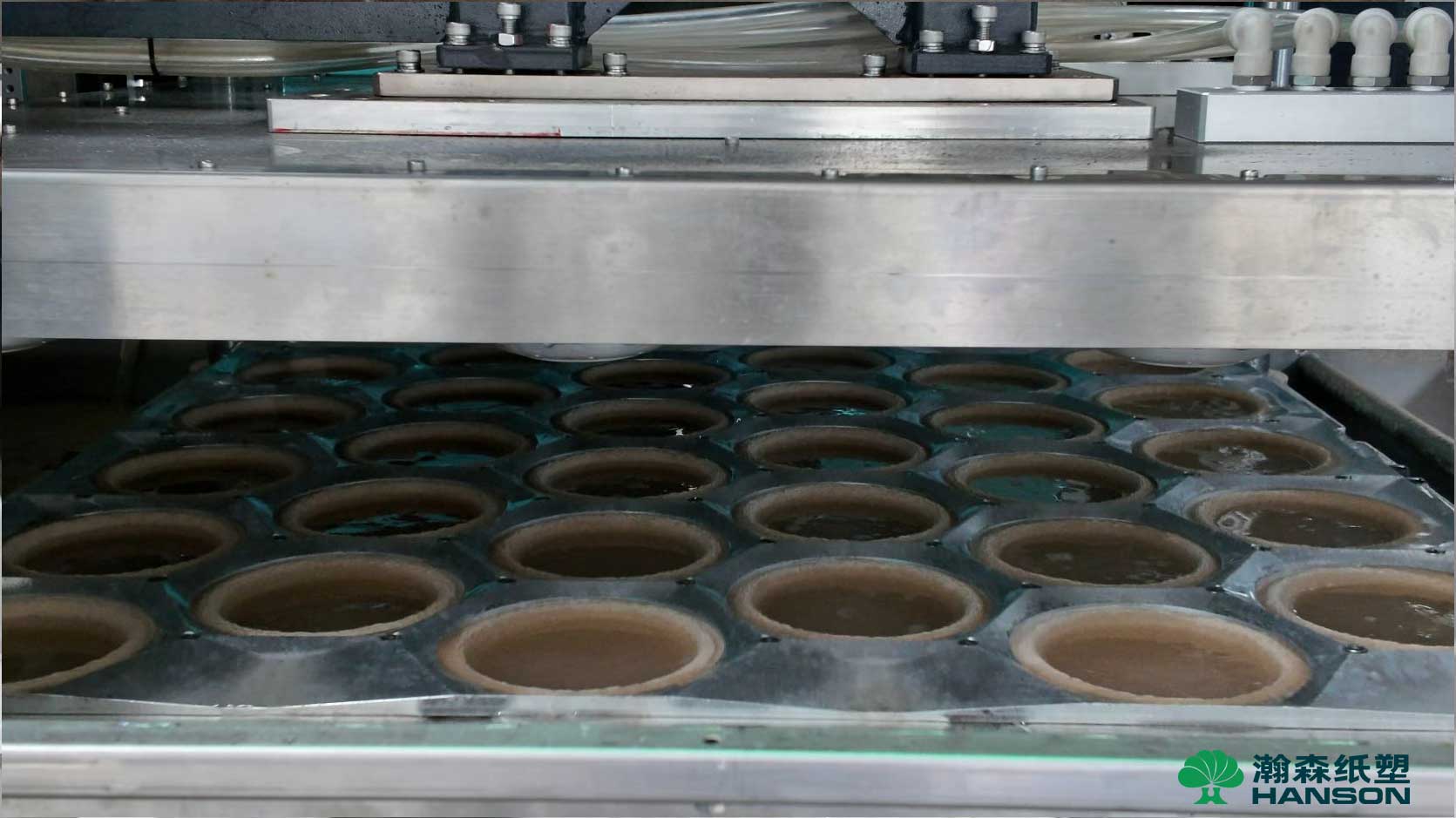
A Five-Point Diagnostic Sequence for Hot-Press Sticking
Follow a clear priority order—moving from quick external checks to structural tooling inspection—so you avoid damaging precision cavities unnecessarily.
1. Mold Cleanliness and Surface Buildup
Residual fine fibers and chemical additives bake onto hot mold faces, sharp radii, and vent holes during continuous runs. Even a thin carbonized film increases friction and tears the wet fiber surface on release. Inspect both upper and lower hot-press cavities for dark residue, verify whether cleaning intervals are slipping, and confirm operators are not using overly hard metal scrapers that create micro-scratches.
2. Temperature Uniformity and Pressing Parameters
Low mold temperature prevents timely steam evaporation, leaving damp fiber adhered to the cavity. Excessively high temperature scorches additives and binds fiber to the metal surface. Do not rely solely on controller readings—measure actual cavity surface temperatures across the platen to catch failing heating elements, restricted thermal oil flow, or drifting thermocouples. Also review pressing time and degassing (breathing) cycles so trapped steam can escape cleanly.
3. Pulp Furnish, Additives, and Wet-Preform Moisture
Material variability is a frequent driver of pulp molding yield loss. Over-refined pulp with high fines reduces drainage and steam permeability during hot pressing, raising sticking risk. Overdosing waterproof or oil-resistant agents—or poor chemical mixing—can cause sticky deposits on the hot mold face. Equally important, unstable wet-preform moisture from the forming station creates erratic steam pressure inside the hot press.
4. Release Geometry and Air-Blow Systems
Once cleaning, heat, and furnish are verified, inspect how the part physically separates from the mold:
-
Air-blow and vacuum systems: Check for clogged air-blow ports, insufficient blow pressure, or timing lag between mold opening and air-assisted release.
-
Draft angle and mesh fit: Verify that deep-wall cavities maintain adequate draft angles, and check forming or transfer molds for loose or wrinkled wire mesh that may damage the wet preform before it even reaches the hot press.
5. Mold Surface Condition and Dimensional Wear
If sticking persists in specific cavities after clearing all process variables, evaluate the mold surface itself. Look for dull or abraded cavity finishes, worn or peeling PTFE (Teflon) coatings, dented parting lines, or minor burrs around corners. After extended high-temperature, high-pressure cycles, older molds can also develop slight warpage that causes uneven clamping clearances.
Matching Corrective Actions to Root Causes
Separate process tuning from tooling repair. If temperature drift, blow-air timing, or pulp chemistry is the driver, adjust one variable at a time and track cycle stability. If coating failure, surface scoring, or draft-angle issues are confirmed, schedule proper reconditioning rather than running damaged cavities and compounding scrap.
When sticking stems from cavity geometry or surface wear, Hanson Pulp Molding supports overseas manufacturers through a dedicated tooling team built around process, equipment, and mold alignment. Using 3D scanning inspection to verify cavity wear and draft angles—paired with high-speed CNC machining up to 24,000 RPM for precision cavity finishing—the team addresses recurring release problems accurately. Service paths depend on your press setup: facilities running existing molds on third-party equipment can access mold refurbishment, optimization, and mass-production support; plants ordering new molded fiber tooling for third-party presses receive product development, full tooling manufacturing, and mass-production support, while new tooling paired with Hanson equipment also includes structured mold trial validation before full ramp-up.
Verification Checks Before Returning to Full Production
After completing parameter adjustments or mold reconditioning, avoid signing off based on a few sample parts. Record before-and-after production data across a sustained run:
-
Cavity-by-cavity scrap tracking: Monitor continuous operation for a baseline window for product-specific duration to confirm fixed-cavity sticking is eliminated.
-
Cycle time and release consistency: Confirm hot-press cycle time returns to target without manual prying or extra spray intervention.
-
Standardized operating limits: Document verified cavity temperature ranges, blow-air timing, cleaning intervals, and wet-preform moisture limits so operators can prevent recurrence.
FAQ
Q1: Can spraying more release agent or raising mold temperature permanently fix hot-press sticking? No. While higher temperatures or heavy release-agent spraying may mask sticking briefly, they often speed up carbonized buildup on the cavity surface, cause scorching or discoloration, and raise food-contact compliance concerns for tableware. Identifying whether the root cause lies in buildup, moisture, temperature uniformity, air-blow timing, or worn mold coatings delivers more reliable yield improvement.
Q2: Why do only one or two cavities stick on a multi-cavity hot-press mold? When sticking stays locked to the same cavities across multiple batches, pulp formulation is rarely the primary issue. Inspect those specific cavities for localized PTFE coating wear, surface scratches, clogged air-blow or vent holes, local heating element drop-off, or dimensional wear affecting clamping clearance and draft angle.
Q3: How do we decide between recoating/reconditioning an old mold and ordering a new one? Start with a dimensional and surface inspection. If the cavity geometry remains accurate and the issue is limited to residue buildup, worn coating, or minor blocked vents, professional cleaning and recoating are usually cost-effective. If 3D scanning reveals cavity warpage, severe base-metal corrosion, or inadequate draft geometry, building a new mold typically yields better long-term cycle stability and lower scrap.
Dealing with recurring hot-press sticking, uneven cavity yield, or aging molded fiber tooling on your production line? Share defect photos, cavity layout details, and current pressing conditions with Hanson Pulp Molding for a tooling evaluation, sample review, or on-site troubleshooting consultation. Contact our team at [+86 15920604830].