The global market keeps expanding, packaging regulations are evolving across Europe and the U.S., water-based barrier technologies are advancing, and dry molded fiber is opening up new applications…
From market trends and technological innovation to regulatory changes and commercialization, what new signals are emerging in the molded fiber industry?
And where will the next growth opportunities come from?
On November 19–20, Moulded Fibre Packaging Asia 2026, hosted by global market research and technical consulting firm Smithers, took place in Shanghai.
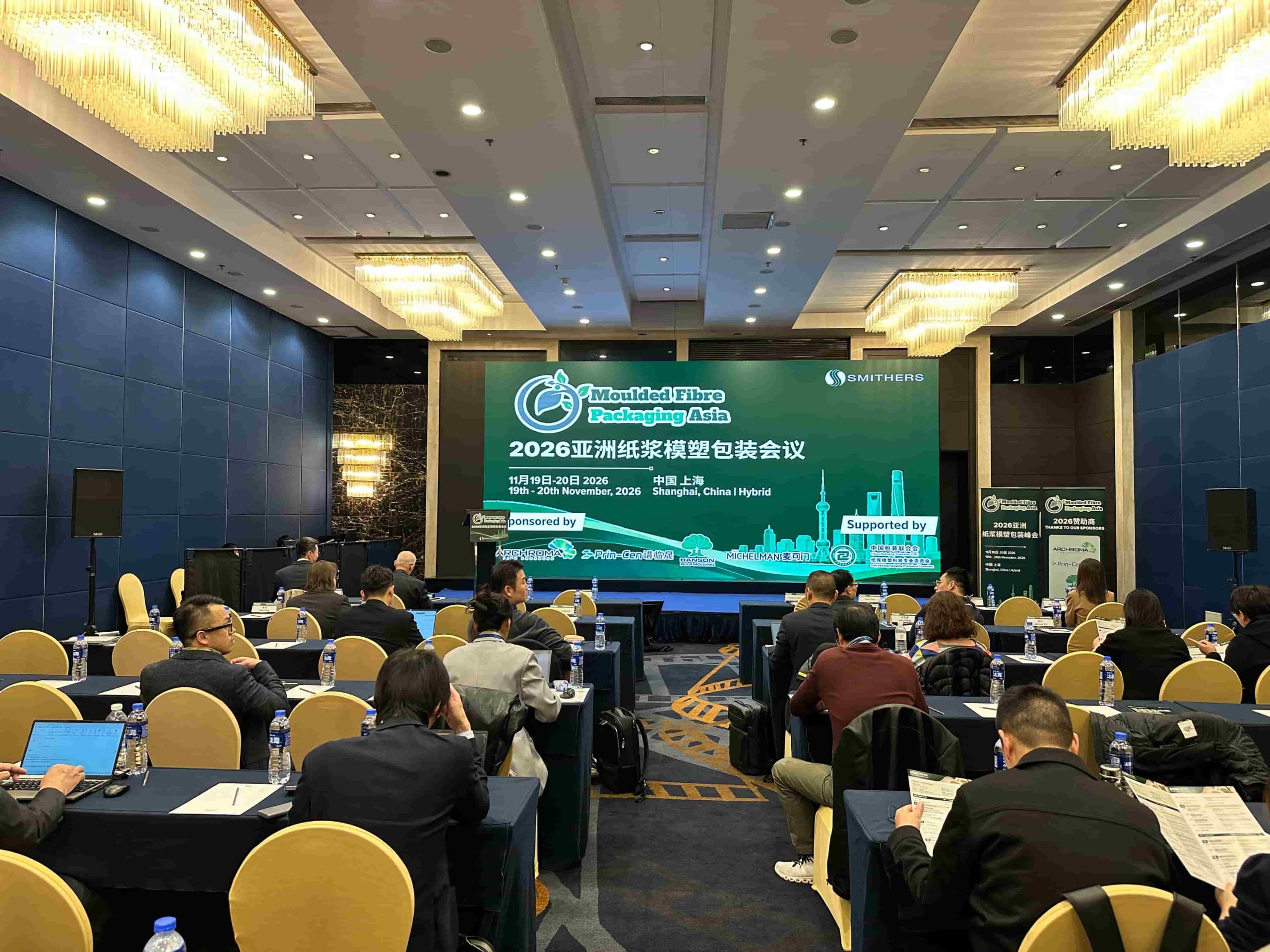
The conference brought together specialists in market research, packaging regulations, material technologies, and product innovation to discuss market prospects, regulations, technological advances, and commercial applications of molded fiber packaging.
As a conference participant, HANSON Pulp Molding has compiled key insights shared by Smithers, PSL, Keller & Heckman, Michelman, PA Consulting, and other organizations.
For industry professionals who could not attend, this article explores what’s changing in molded fiber and where the next opportunities may lie.
01 Market Outlook: Steady Growth and Strong Potential for Molded Fiber Over the Next Five Years
Insights from: Smithers
As a leading market research organization in the global packaging industry, Smithers presented its latest findings from *The Future of Moulded Pulp Packaging to 2030*, offering valuable insights into the industry’s future.
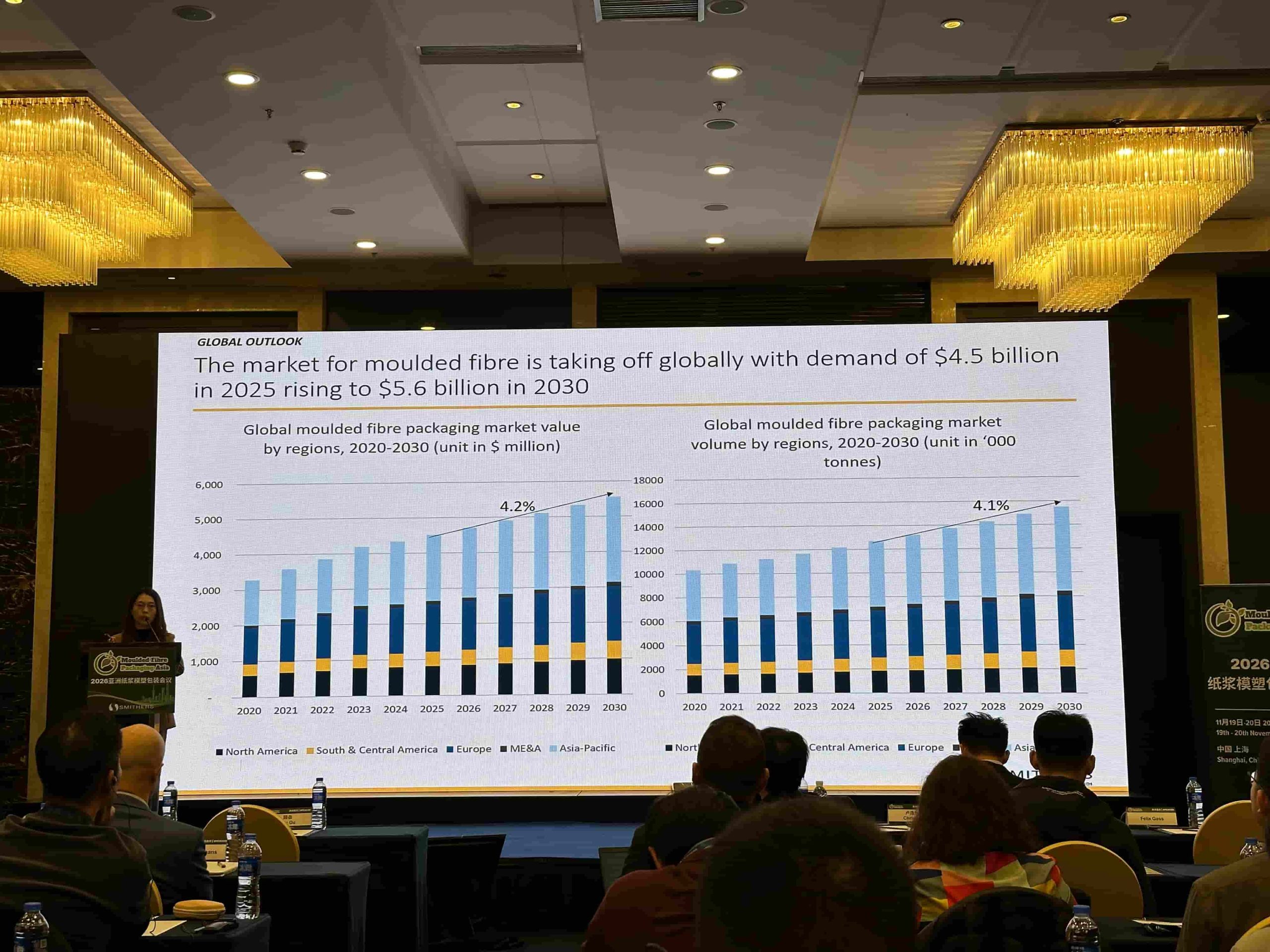
The global molded fiber packaging market continues to show strong growth potential.
According to Smithers, the global molded fiber packaging market is projected to grow from approximately **US$4.52 billion in 2025** to **US$5.55 billion by 2030**, with a compound annual growth rate (CAGR) of **4.2%** over the next five years.
As the industry matures, growth will increasingly depend on product innovation, new applications, and commercial competitiveness.
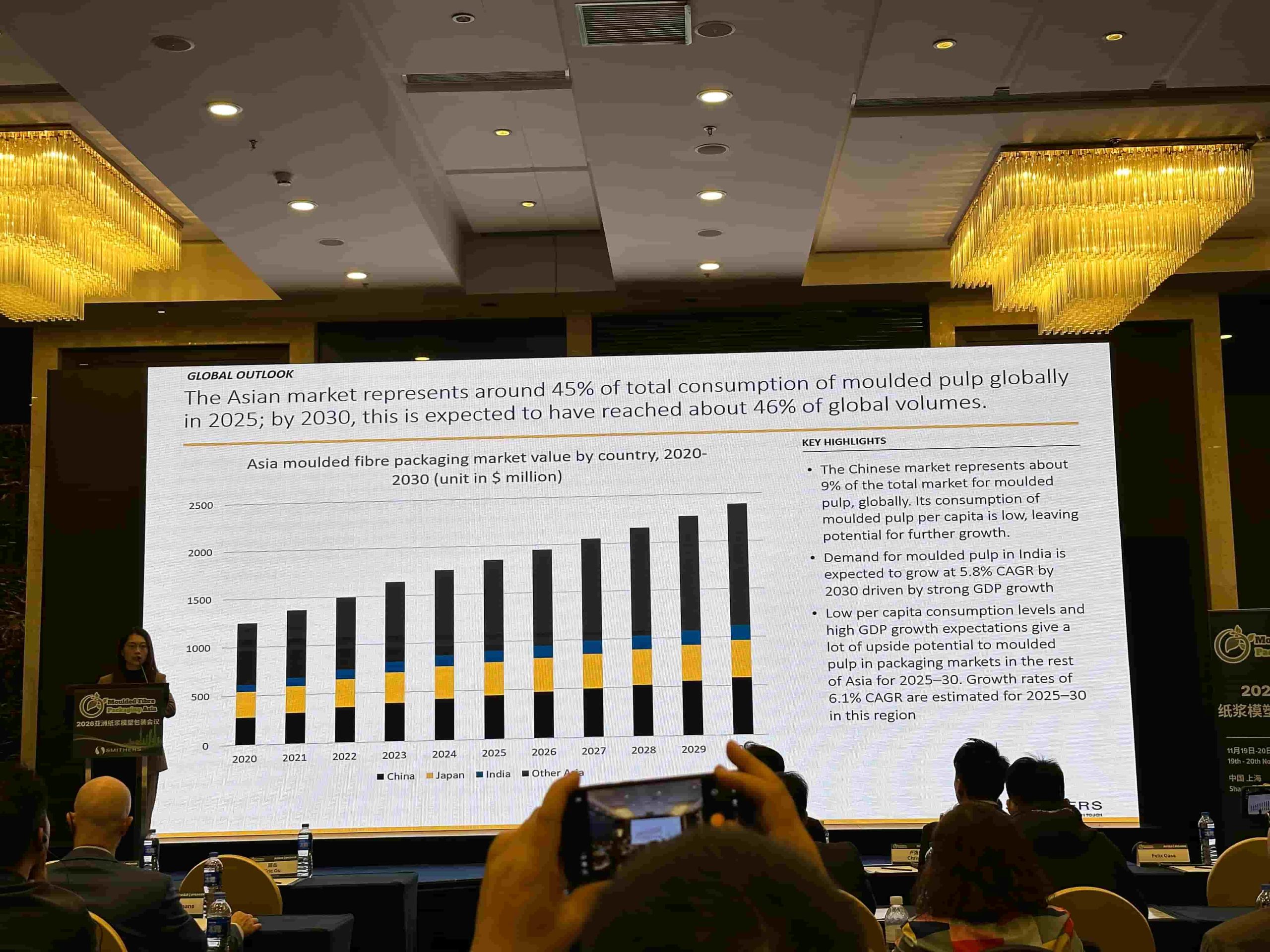
Regionally, Asia remains a key growth engine for the global molded fiber packaging market.
In 2025, Asia accounted for approximately 45% of global molded fiber packaging consumption, a share projected to rise to 46% by 2030.
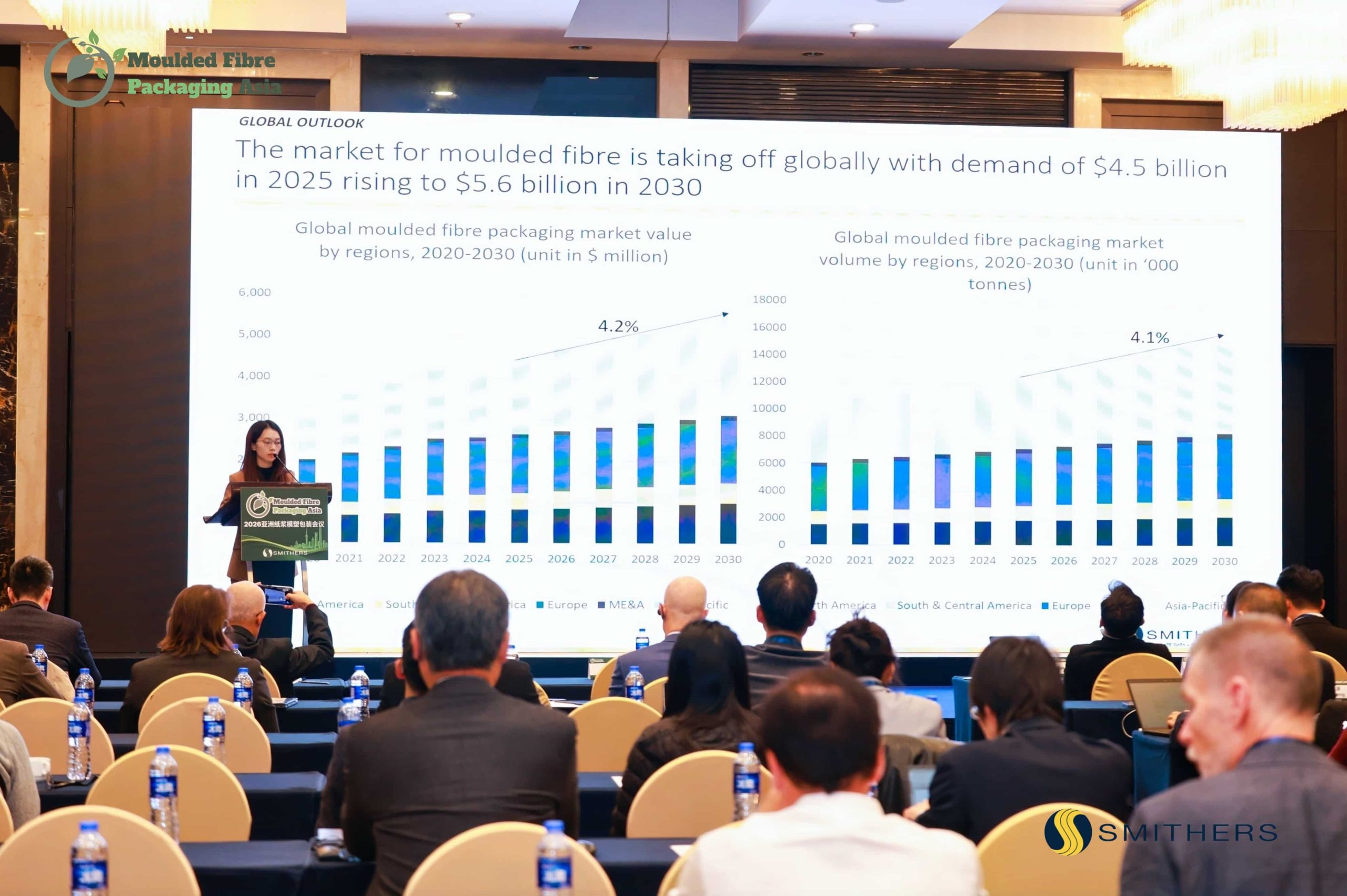
India and other Asian markets are expected to see particularly strong growth, with projected CAGRs of **5.8% and 6.1%**, respectively, from 2025 to 2030, highlighting significant market potential.
In Europe, environmental regulations and growing demand for alternative packaging materials continue to create new opportunities.
Across industries, molded fiber applications continue to expand.
Retail food and beverage packaging remains the largest application segment, valued at approximately US$2.6 billion in 2025. Meanwhile, the foodservice sector shows strong growth momentum, with a projected CAGR of 4.6% over the next five years.
Meanwhile, consumer electronics, cosmetics, healthcare packaging, and protective packaging for automotive components are creating more high-value opportunities for molded fiber.
Notably, Smithers highlighted that **cost remains a key barrier to the wider adoption of molded fiber packaging.
As market demands become more diverse, future competition will go beyond sustainable materials alone. It will increasingly depend on technological innovation, process optimization, and scalable production to improve cost competitiveness without compromising product performance.
The market is growing, and applications are expanding. The next challenge is to make molded fiber not just a sustainable alternative, but a truly competitive commercial solution.
02 REGULATIONS | Tighter Rules in Europe and the U.S. Create New Opportunities for Plastic Replacement
Presenting organizations: PSL; Keller & Heckman
Regulatory change was among the conference’s key topics.
European packaging strategy consultancy PSL and U.S. food and packaging regulatory law firm Keller & Heckman examined the latest developments in EU and U.S. regulations, respectively.
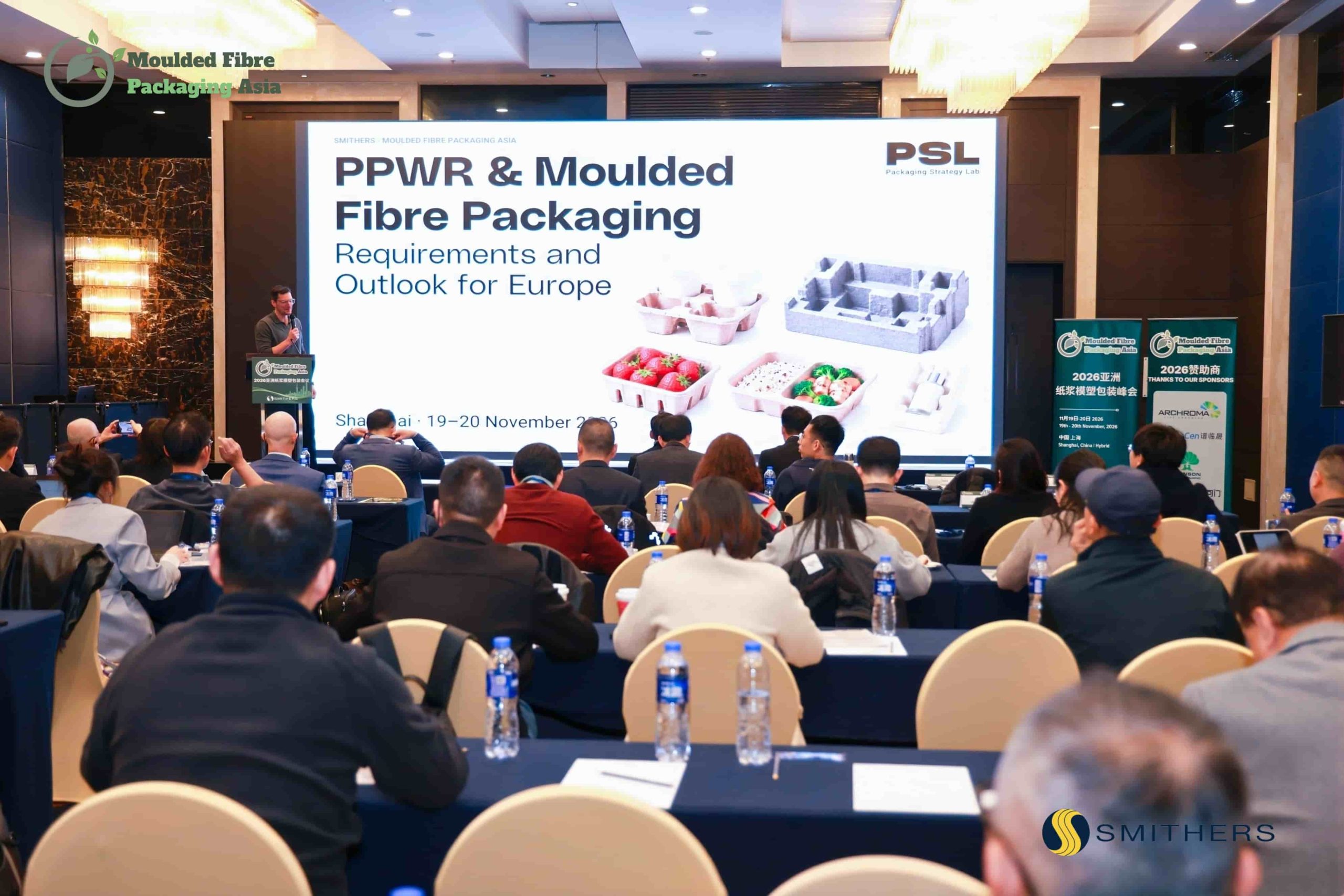
EUROPE | PPWR Drives Packaging Redesign and Material Substitution
The EU Packaging and Packaging Waste Regulation (PPWR) began to apply on August 12, 2026.
As the rules are implemented, packaging will face stricter requirements for safety, recyclability, and material reduction.
The year 2030 will be an important milestone.
According to PSL, from January 2030, the EU will restrict certain single-use plastic packaging applications, including some small-format fresh fruit and vegetable packaging, single-serve condiment packaging in foodservice, and certain packaging for food and beverages consumed on-site.
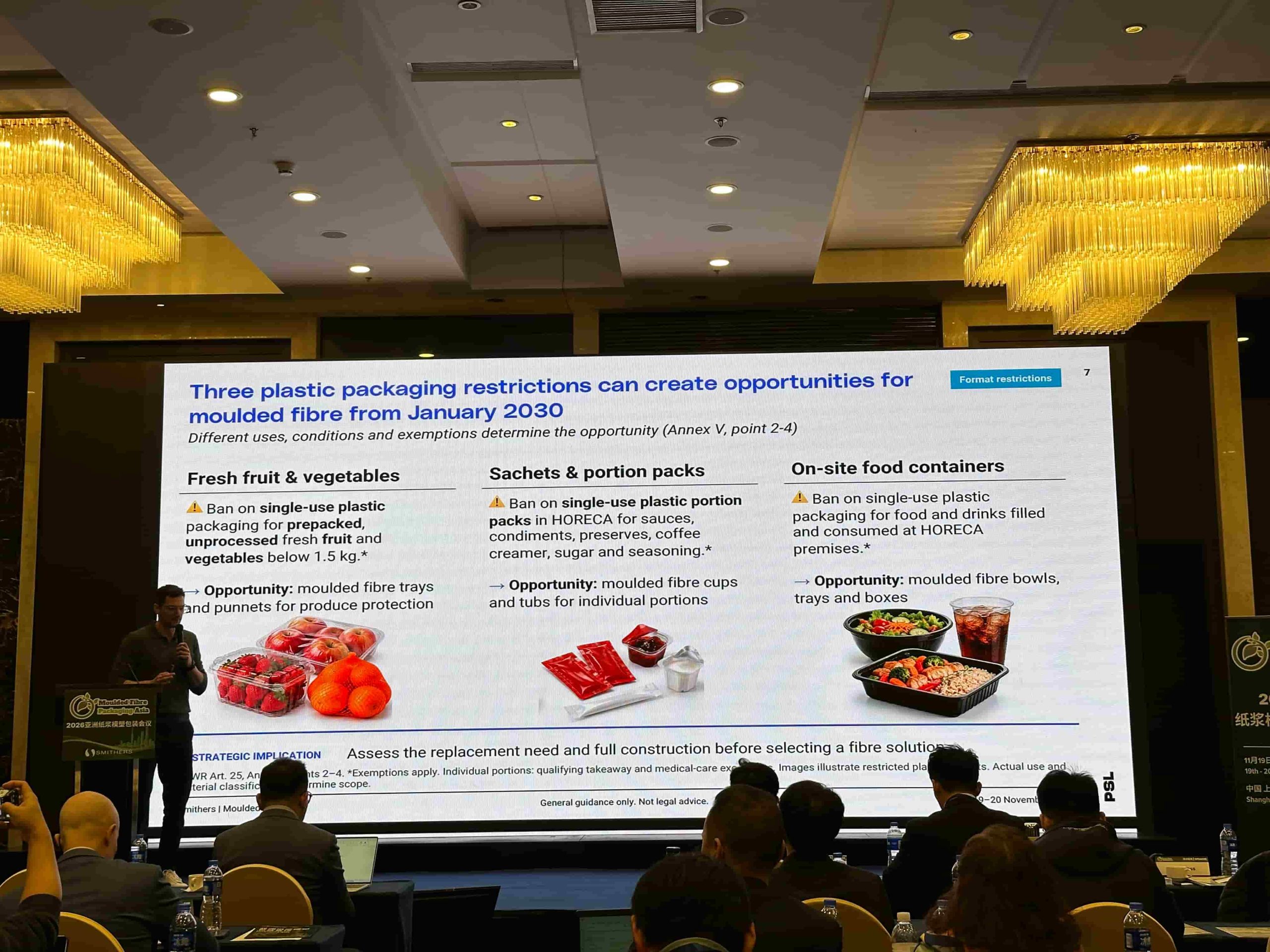
These changes could create new opportunities for molded fiber produce trays, food containers, paper bowls, and small foodservice containers.
These restrictions have specific conditions and exemptions, however; they do not amount to a blanket ban on all plastic packaging.
PSL also stressed an important point:
For the European market, biodegradability alone is not enough. Packaging must also be compatible with existing recycling systems.
Recyclability, material structure, barrier coatings, and packaging reduction by design will become increasingly important in product development.
UNITED STATES | PFAS Regulations Continue to Tighten
In the United States, PFAS remain a major focus of food-contact packaging regulation.
According to Keller & Heckman, the U.S. FDA has phased out PFAS-based grease-proofing agents used in paper food packaging and announced in 2025 that 35 related food contact notifications were no longer effective.
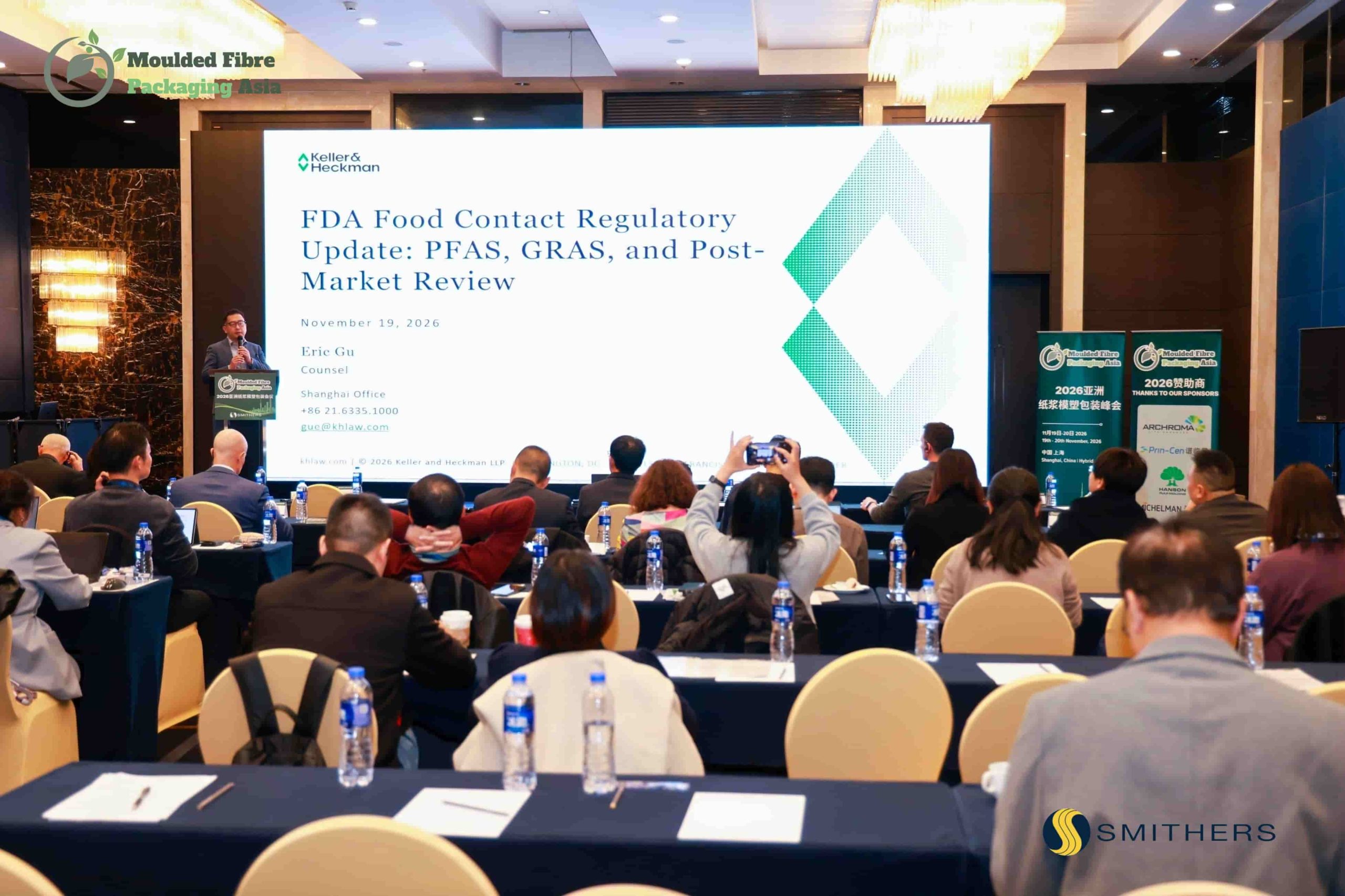
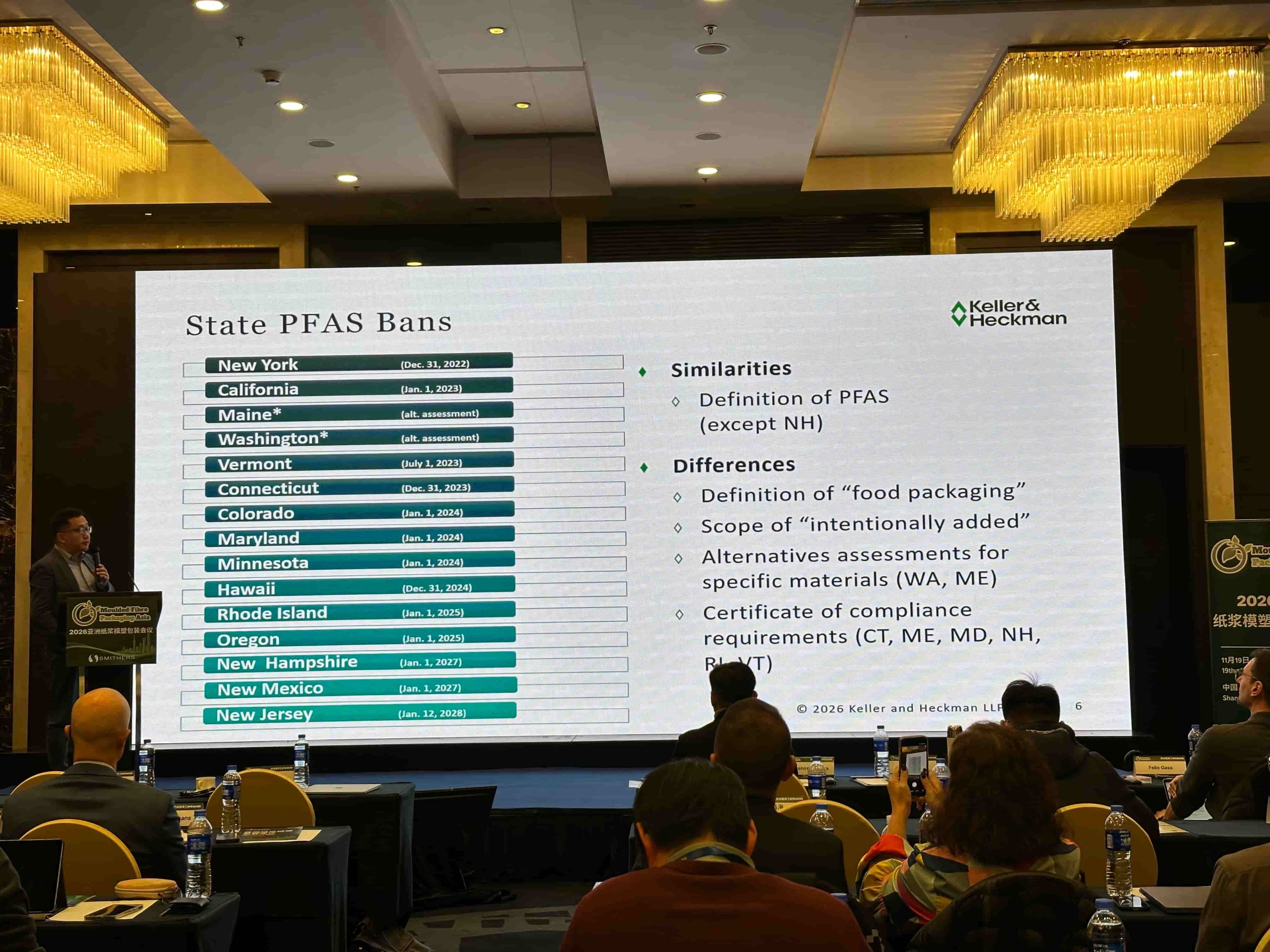
Meanwhile, several U.S. states have enacted PFAS restrictions for food packaging, with differences in scope, intentionally added substances, and testing requirements.
The FDA is also advancing its post-market review of food chemicals and proposed reforms to the GRAS framework in August 2026 to strengthen notification oversight.
These reforms remain at the proposal stage.
Across Europe and the United States, the regulatory direction sends an increasingly clear signal:
Sustainable packaging must do more than replace materials. It must also meet food safety, material compliance, and sustainability requirements.
For molded fiber manufacturers targeting European and U.S. markets, testing raw materials, additives, coatings, and finished products will become increasingly important.
03 MATERIALS | Water-based Barrier Coatings Open Up More Applications
Presenting organization: Michelman
To replace a wider range of plastic packaging, molded fiber must overcome a long-standing challenge: functional performance.
Water resistance, grease resistance, moisture protection, oxygen barriers, heat resistance, heat sealing, and more.
Different applications require different packaging performance characteristics.
At the conference, Michelman, a global specialty chemicals company known for water-based coating technologies, shared advances in water-based barrier coatings for molded fiber.
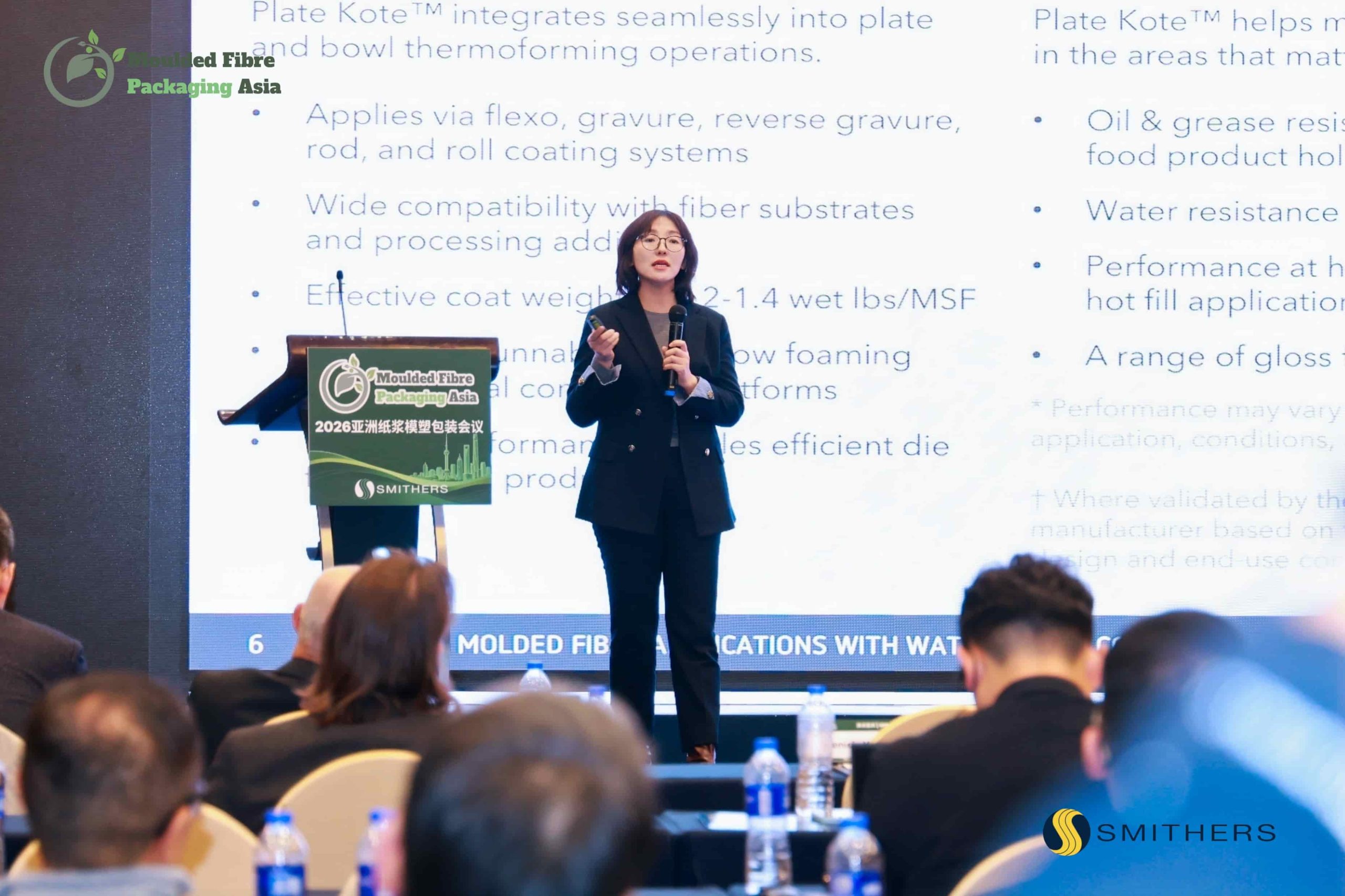
From food trays and cold-chain packaging to premium protective inserts and paper bottles, more applications are demanding higher-performance surface treatments.
Michelman presented several coating solutions already used in, or being adapted for, molded fiber applications.
Examples included water- and grease-resistant coatings for meat and food trays, scratch- and abrasion-resistant coatings for electronics and premium packaging, and moisture-vapor barriers for complex three-dimensional molded fiber products.
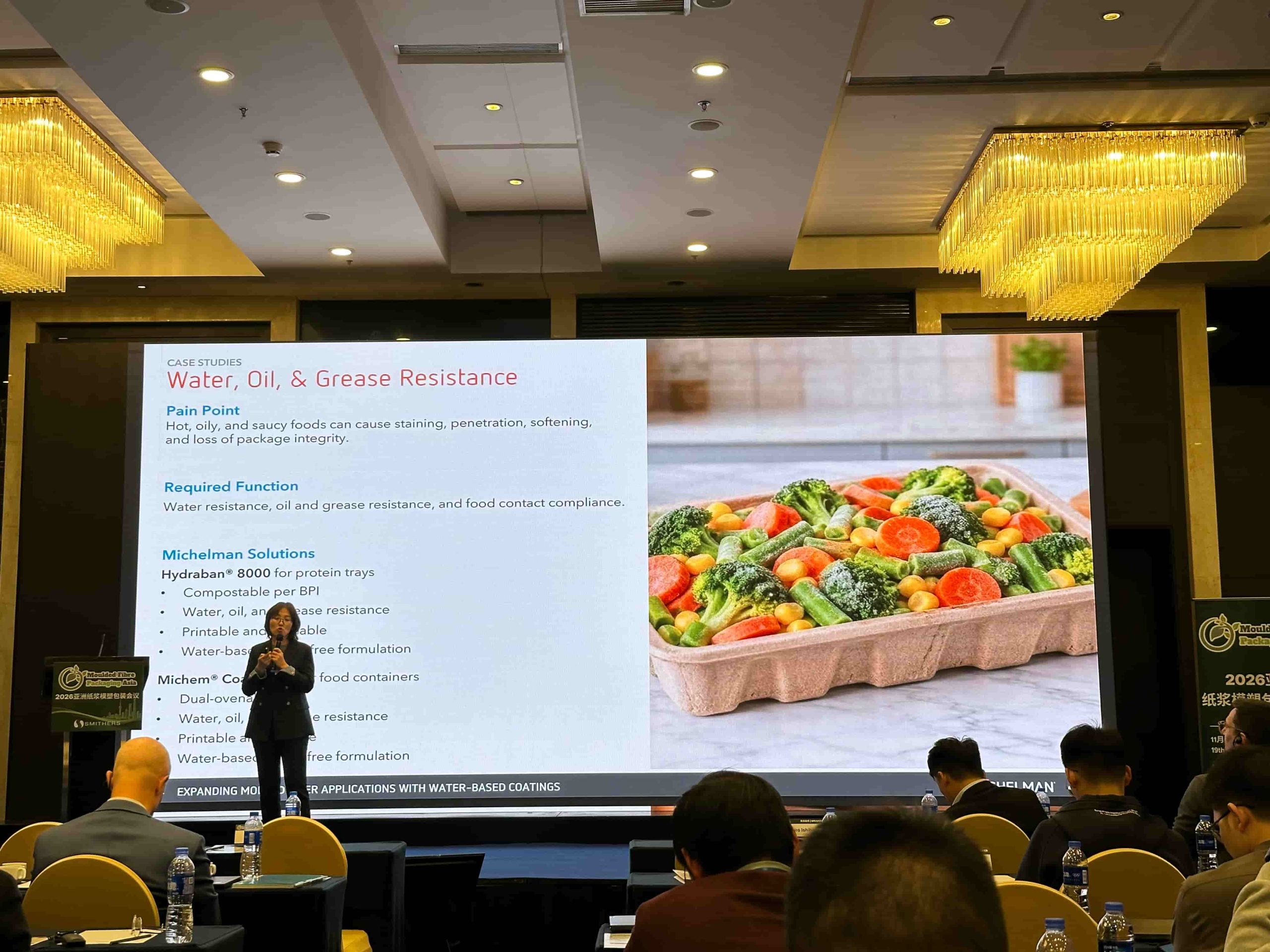
Some of these water-based coatings have already reached commercial applications.
Michelman emphasized another key point:
Coating performance depends not only on formulation, but also on the fiber substrate, application method, and drying process.
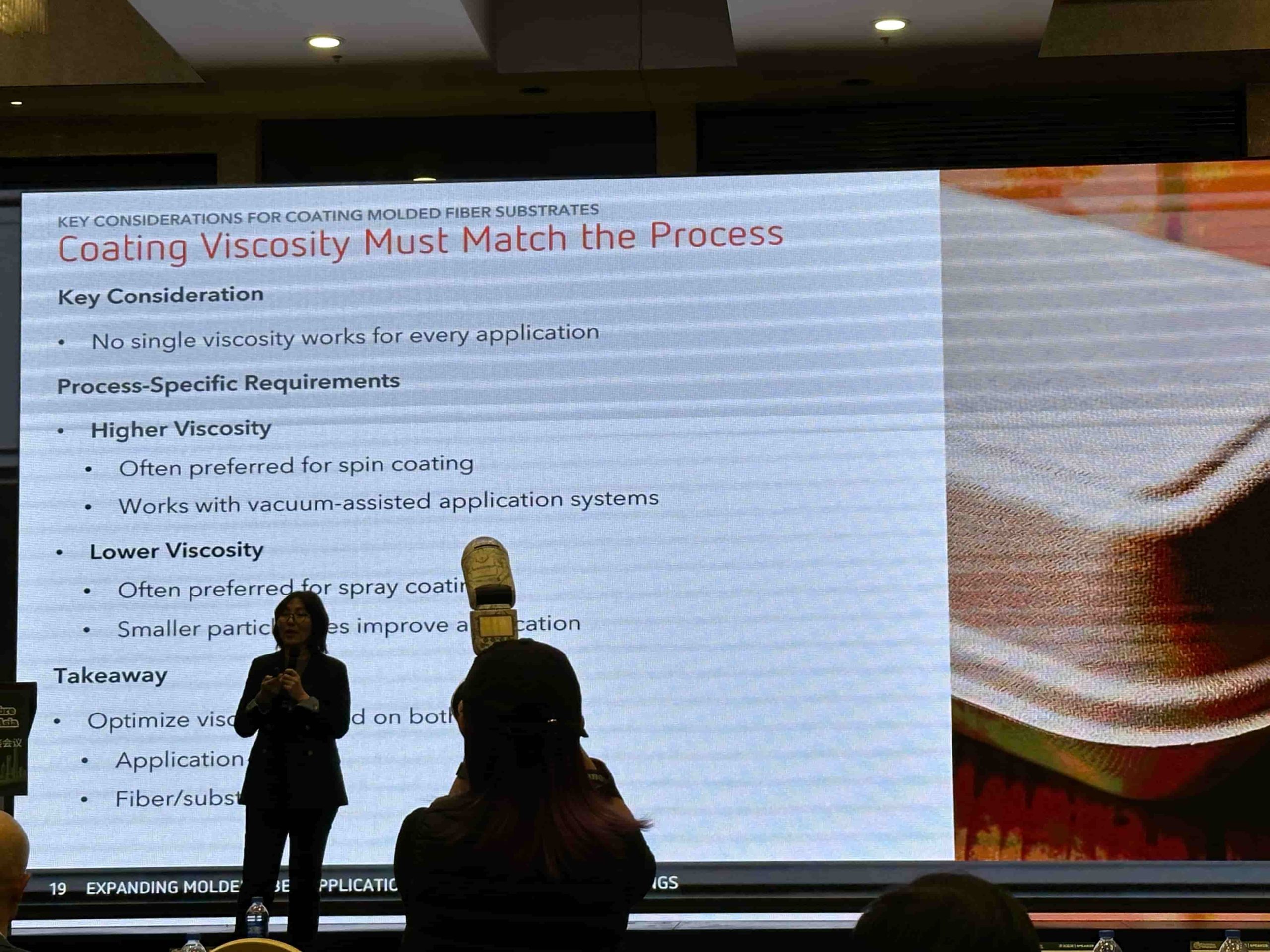
For example, fiber surface roughness affects coating uniformity, coating viscosity must suit the chosen application method, and unsuitable drying conditions can directly undermine barrier performance.
This shows that advances in molded fiber functionality are moving beyond individual material improvements toward integrated optimization of materials and manufacturing processes.
As water-based barrier technologies develop, molded fiber may expand further into food preservation, cold-chain logistics, premium retail packaging, and other markets.
04 TECHNOLOGY | Dry Molded Fiber Expands the Range of Possible Products
Presenting organization: PA Consulting
Alongside conventional wet molding, Dry Molded Fiber (DMF) was another major technology topic at the conference.
PA Consulting, a global development partner of dry molding technology company PulPac, shared recent development directions and application examples.
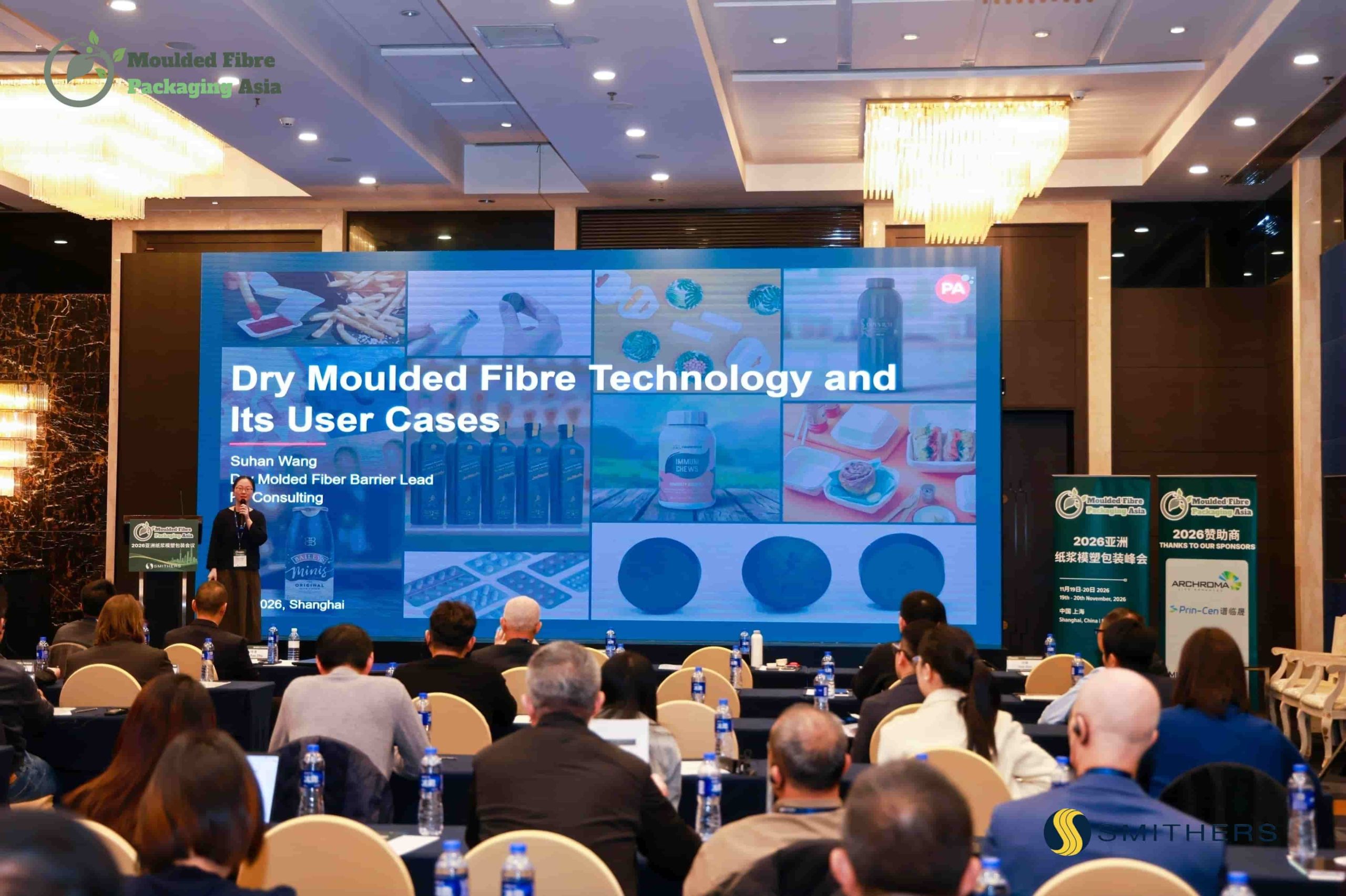
The technology is moving beyond conventional pressed packaging into products with more complex structures.
Examples include paper bottles, closures, pharmaceutical blister packs, and single-serve sauce cups.
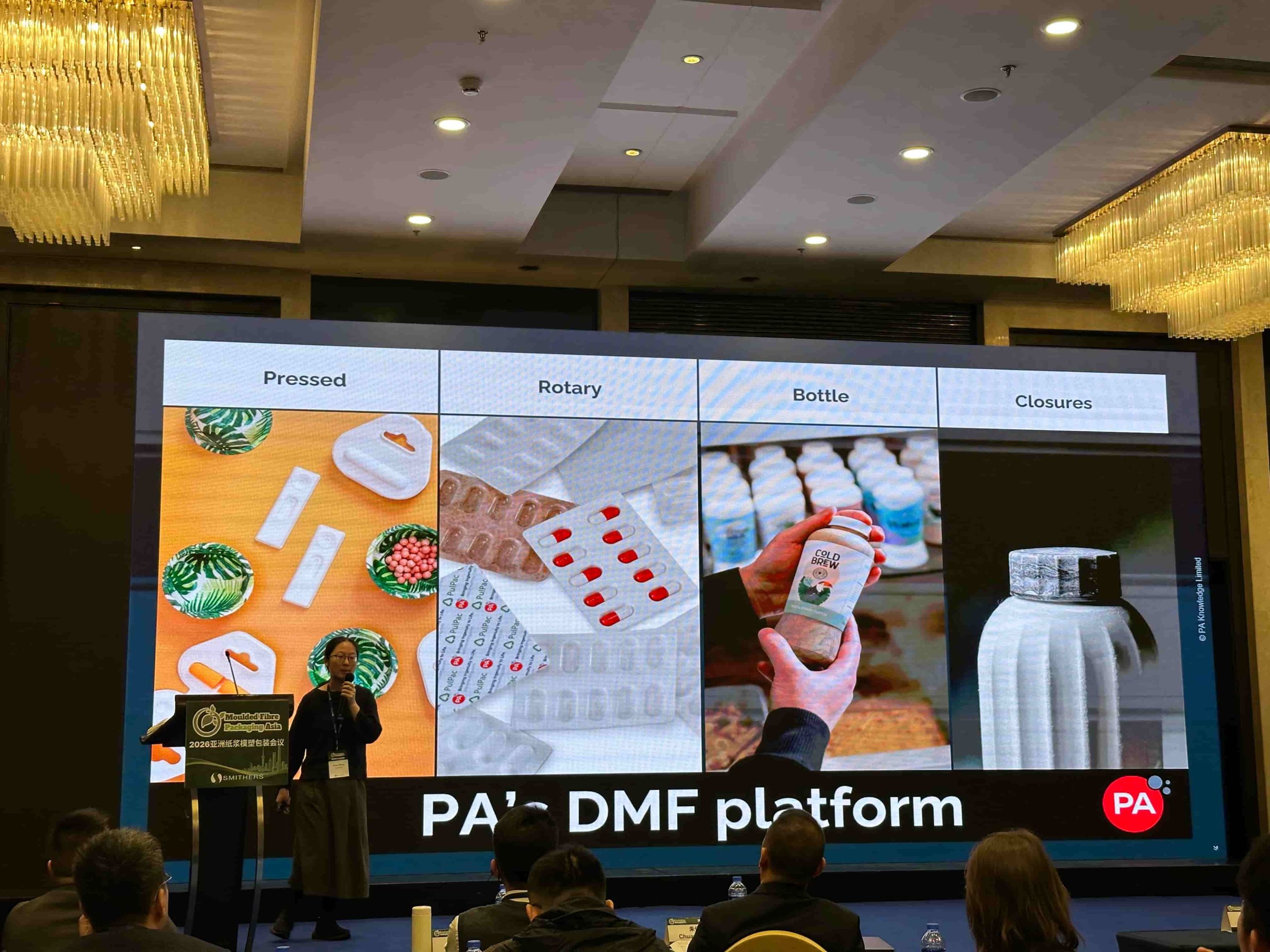
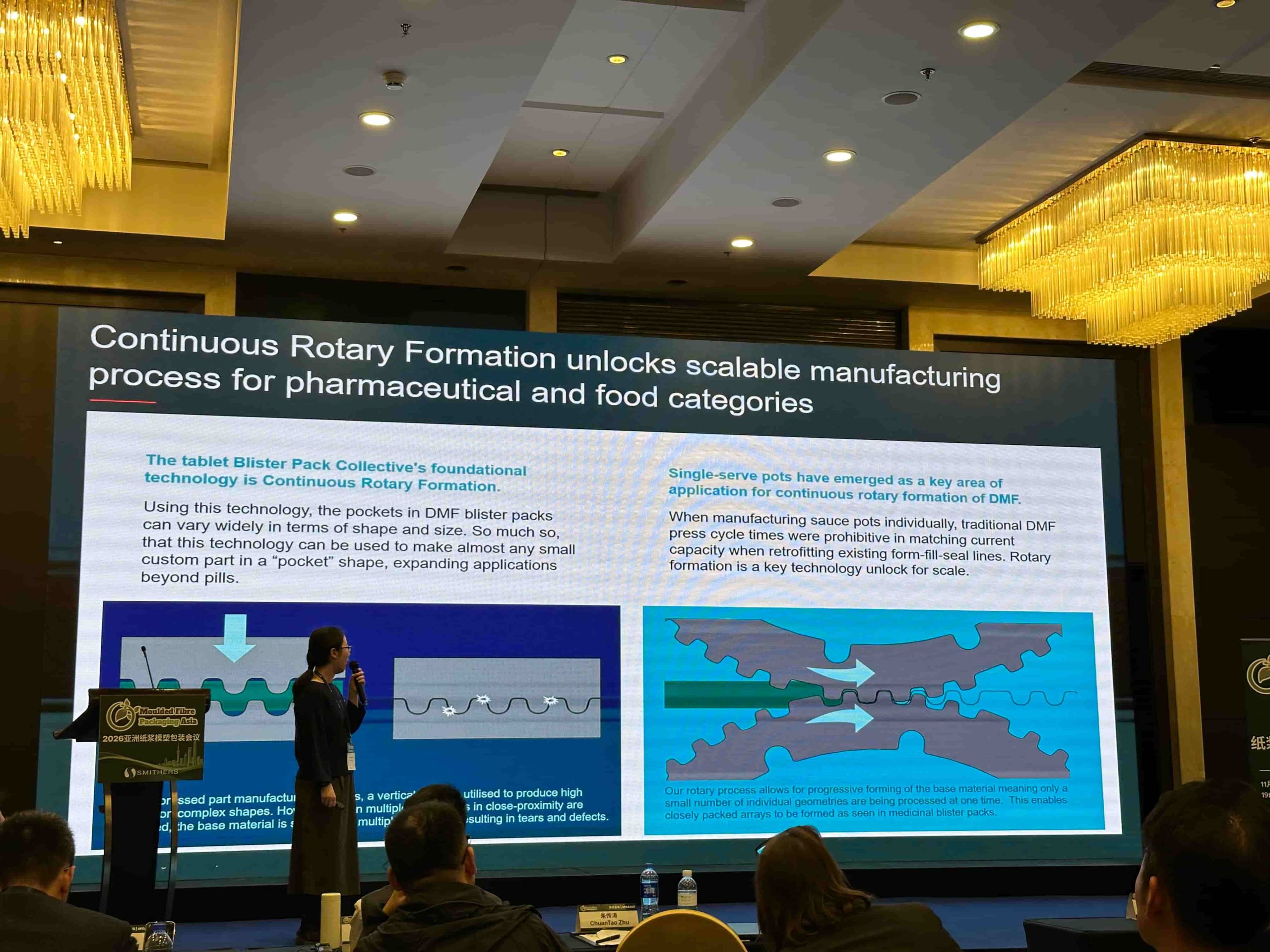
Continuous rotary forming is one particularly noteworthy technology.
By continuously rotating two wheel-shaped molds against each other and forming products progressively, the process can create densely arranged cavities, offering new possibilities for mass-producing pharmaceutical blisters and portion-sized sauce cups.
PA Consulting also showcased innovations such as fiber-based spirits bottles. These designs have made progress in increasing fiber content and reducing packaging weight, though some still require plastic liners.
Will dry molding eventually replace conventional wet molding?
Smithers also examined this question in its market report.
Its assessment is that dry molding will continue to develop and may become highly competitive in certain segments, but is unlikely to dominate the overall molded fiber market in the near term.
Wet molding retains important advantages for complex shapes, deep cavities, high precision, and demanding surface-quality requirements.
For the foreseeable future, different forming processes are more likely to serve different applications according to specific product needs.
05 INDUSTRY OUTLOOK | From Sustainable Substitution to Commercial Competitiveness
Taken together, the conference presentations point to a common trend worth watching:
The molded fiber industry is moving from being driven mainly by sustainability toward a model shaped jointly by environmental benefits, functionality, cost, and scalability.
On one hand, plastic restrictions and brands’ plastic-reduction targets continue to create new demand.
On the other, water-based barrier coatings, dry forming, new plant fibers, and precision hot-pressing technologies continue to expand the range of molded fiber applications.
Yet commercial viability will ultimately determine whether these new applications can scale.
Can the products meet their performance requirements?
Can they be manufactured reliably at scale?
Can raw material, energy, labor, and production-loss costs be reduced further?
Can the total packaging cost compete with existing plastic solutions?
These questions will increasingly shape investment decisions in molded fiber projects.
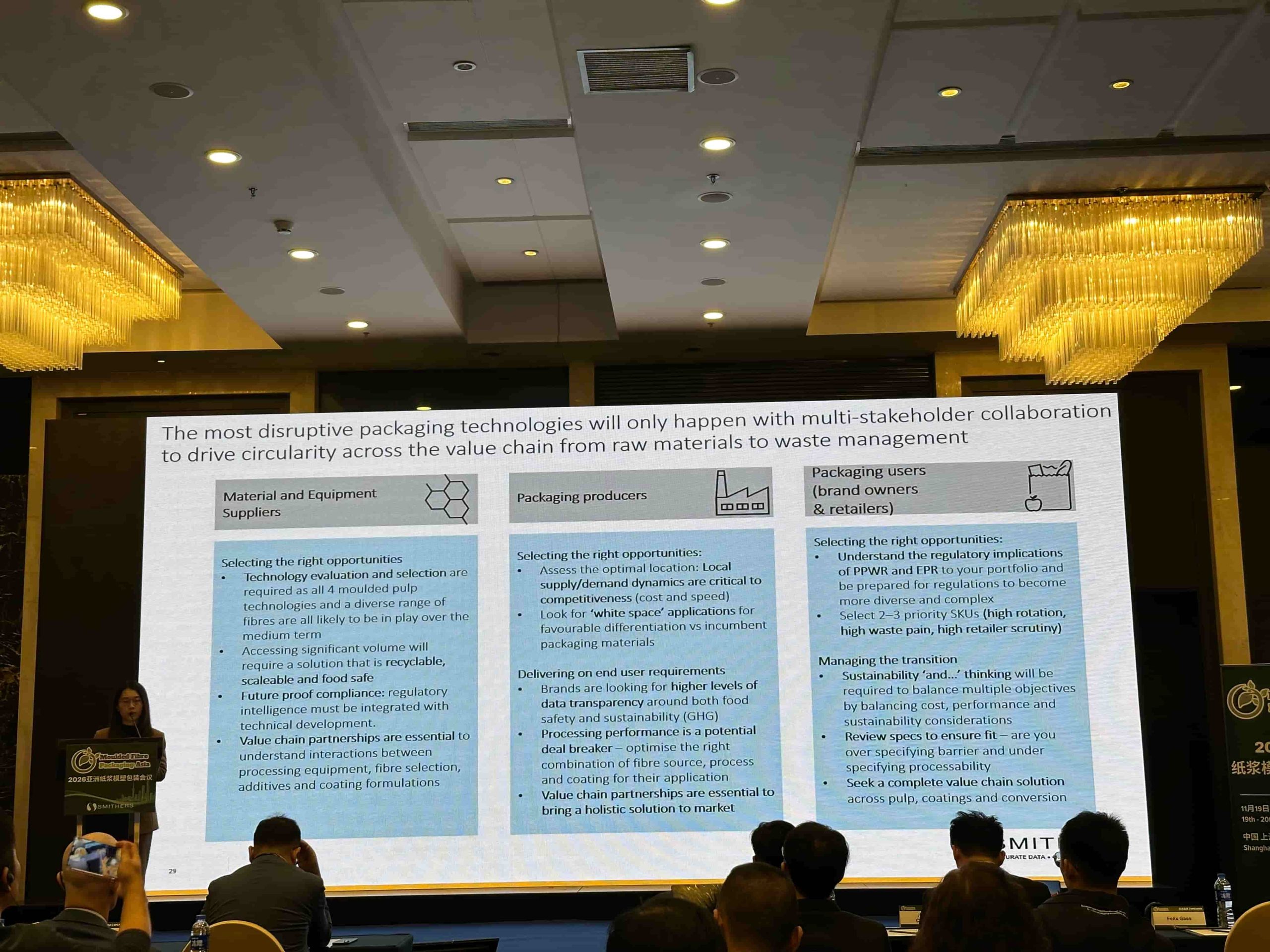
Smithers also highlighted the importance of collaboration across the value chain.
From fiber feedstocks, functional additives, forming processes, molds, and equipment to end-brand applications and recycling, every link needs closer coordination.
For equipment manufacturers, future value will go beyond improving the efficiency of individual machines. It will mean helping customers achieve higher-quality, lower-cost production at scale through integrated process and production optimization.
CLOSING THOUGHTS | Real Plastic Replacement Requires the Entire Value Chain
Moulded Fibre Packaging Asia 2026 revealed both the market potential for continued growth and new challenges in material performance, regulatory compliance, cost control, and technological innovation.
From market research and regulation to functional materials and forming technologies, specialists across the industry are pursuing one shared goal:
To make molded fiber not only a more sustainable packaging choice, but also a commercially viable solution with mature technology, dependable performance, and competitive costs.
As a supplier of molded fiber equipment and turnkey plant solutions, HANSON Pulp Molding will continue to monitor global market and technology developments, exploring how to improve production efficiency and lower total costs through coordinated advances in materials, processes, molds, machinery, and complete plant systems.
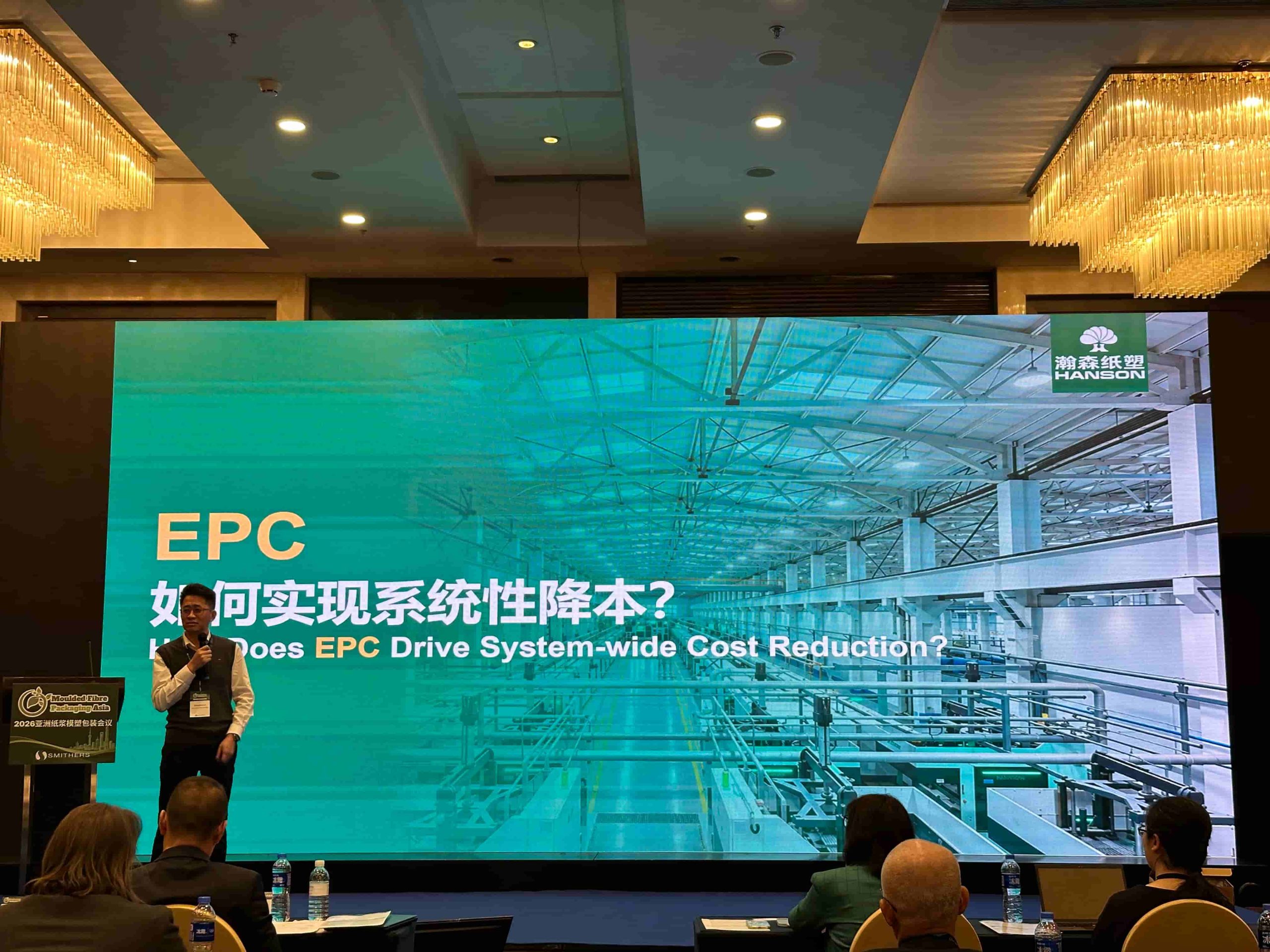
We aim to help more molded fiber products move from innovative concepts to stable mass production—and make sustainable packaging a practical choice across more applications.
The future of plastic replacement is not just about how much plastic we eliminate, but whether sustainable packaging can become a truly competitive market choice.