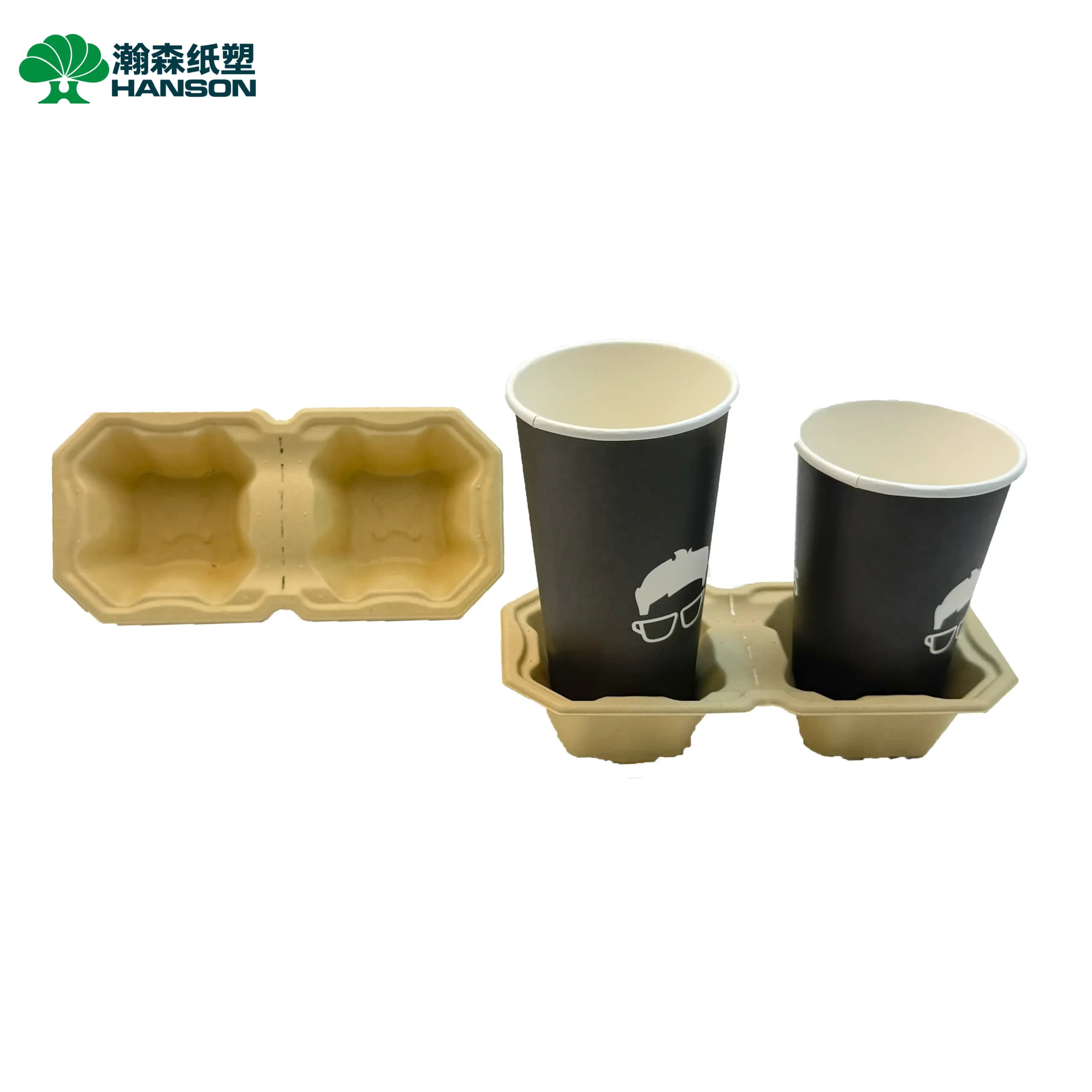
In the molded fiber packaging industry, cup carriers (or drink carriers) are designed primarily for load-bearing, stabilization, and transport cushioning. Given these functional requirements, cup carriers are typically manufactured using dry-press or semi-dry press pulp molding processes.
When planning a new molded fiber factory or expanding capacity, investors often notice a substantial variance in quotations for “cup carrier equipment.” This massive price gap is rarely just a matter of brand premium. Rather, it is determined by fundamental differences in the process route, automation levels, tooling configurations, and the overall scope of the plant planning. Understanding these differences is the first critical step toward making an informed purchasing decision.
1. Process Differences: Traditional Dry Press vs. Pre-Dewatering Technology
The most basic dry-press equipment forms the pulp on a mold and then directly transfers the highly saturated wet preform into an independent drying system. The manufacturing cost of such basic machinery is relatively low, which is reflected in a cheaper initial price tag.
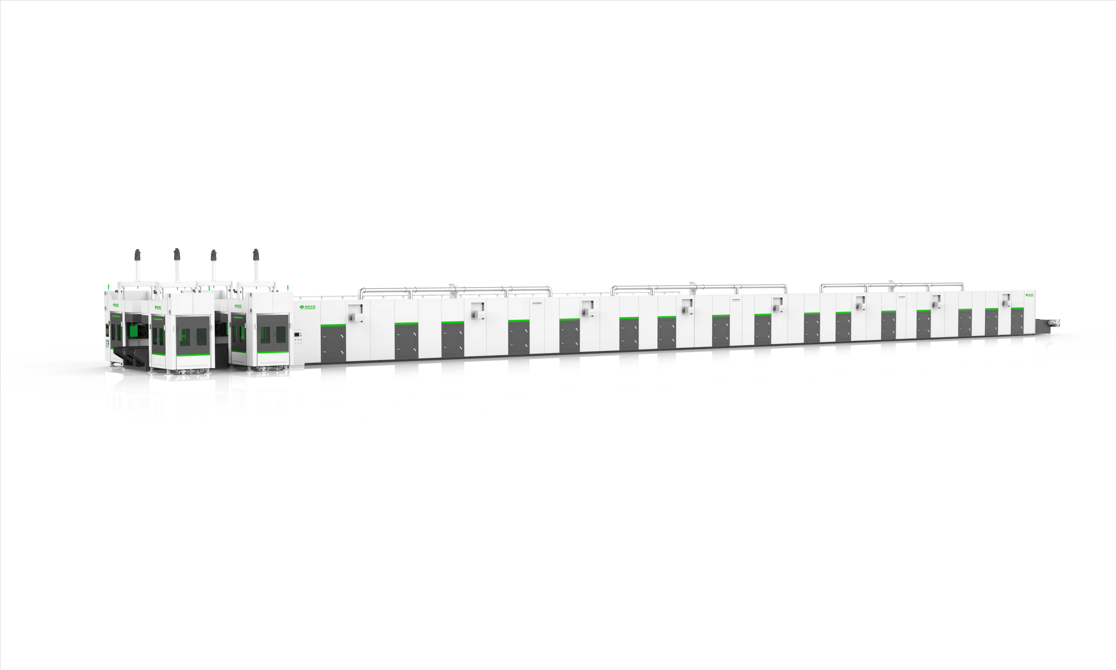
However, advanced automatic dry-press production lines incorporate a crucial step between forming and drying: cold pressing or pre-dewatering. For instance, the automatic dry-press pulp molding production line developed by Hanson Pulp Molding utilizes a 120-ton servo-driven cold pressing station to pre-dewater the wet preform before it enters the tunnel dryer. This structural addition impacts actual commercial production in several ways:
-
Reduced Energy Consumption: Removing excess moisture mechanically before applying heat significantly lowers the energy burden on the natural gas or electrical drying systems.
-
Enhanced Quality and Uptime: Cold pressing works in synergy with the drying process to minimize product deformation. Furthermore, it helps reduce scale build-up on the molds, thereby extending mold maintenance cycles and improving the actual machine utilization rate (uptime) of the entire line.
2. Automation Levels: From Manual Transfer to Fully Servo-Driven Lines
A complete cup carrier manufacturing process involves pulping, forming, dewatering, drying, hot pressing, and stacking. The difference in equipment pricing largely hinges on whether these stations are connected by manual labor or seamless automation.
Lower-priced machines might require operators to manually transfer products into hot-press molds or stack the finished goods. In contrast, high-end automated lines rely entirely on truss manipulators and automated transfer mechanisms. The Hanson Pulp Molding dry-press line, for example, integrates 4 forming stations, 4 cold pressing stations, a double-layer dryer, and 4 hot-pressing stations. All movements between these stages are handled by servo-driven transfer systems, enabling continuous, unmanned production from pulp to stacked finished products. While a higher level of automation requires a larger initial investment, the long-term savings in labor costs and the consistency of production significantly reduce the cost per unit.
3. Production Capacity: Why Product Weight and Tooling Matter
Many buyers compare equipment based solely on the supplier’s stated “daily capacity.” However, evaluating capacity without context can be highly misleading.
The actual daily output of a pulp molding machine is not determined by the theoretical cycle time alone. It is influenced by the product’s weight, dimensions, the number of mold cavities, drying efficiency, and overall equipment uptime. When evaluating cup carrier equipment, capacity must be tied to a specific product weight. As an example, the Hanson Pulp Molding automatic dry-press line states a standard capacity of approximately 18 tons per 23 hours, but this is explicitly based on producing a 40g 4-cup carrier. If another supplier claims the same tonnage but bases it on an 80g industrial heavy-duty insert, the two machines will perform vastly differently when producing your specific cup carrier.
4. Scope of Supply: Standalone Machine vs. Turnkey Pulp Molding Plant
Finally, price discrepancies often arise from the boundaries of what the supplier actually provides. A lower quotation might only cover the forming machine. To achieve stable mass production, the plant also requires an intelligent pulping system, high-pressure mold washing water systems (e.g., 1.6 MPa), vacuum and air compressor systems, precision molded fiber tooling, and expert production ramp-up support.
As a specialist in turnkey pulp molding solutions, Hanson Pulp Molding delivers a comprehensive 6+1 turnkey service system. This covers everything from initial product development and plant planning to pulping, forming equipment, tooling, post-processing automation, and on-site production ramp-up. A quotation for a fully synchronized turnkey plant naturally differs from a standalone machine price, but it dramatically lowers the risk of interface issues and hidden engineering costs during the factory setup phase.
FAQ
Q: What process is used for cup carriers, and can the same machine make cup lids? A: Cup carriers (drink carriers) focus on load-bearing and cushioning, prioritizing a dry-press or semi-dry press production route. Molded fiber cup lids, however, require extremely high dimensional accuracy and edge fitting, necessitating dedicated, high-precision automated lines (such as the ZAKS-9595). The two products use completely different equipment configurations and cannot be run on the same machine simply because they both involve “cups”.
Q: What is the benefit of adding a cold pressing station to a dry-press line? A: According to the latest dry-press line technology, pre-dewatering the wet preform via cold pressing significantly reduces the moisture content before it enters the dryer. This lowers drying energy consumption, reduces product deformation, minimizes mold scaling, extends maintenance intervals, and ultimately improves the overall utilization rate of the production line.
Q: How should I compare the production capacity of different cup carrier machines? A: Never compare capacity based purely on stated tonnage or piece count alone. Always ensure that the comparison is grounded in the exact same product specifications—such as a 40g 4-cup carrier—under the same drying moisture requirements and operational hours (e.g., 23 hours per day).
Conclusion
The price variation in pulp molding cup carrier equipment fundamentally reflects differences in process technology, automation configurations, and turnkey plant engineering capabilities. Focusing solely on the lowest initial capital expenditure often leads to higher long-term operational costs, including excessive energy bills, heavy reliance on manual labor, and unstable product quality. When planning your investment, clearly define your target product weight, capacity, and desired automation level, and use those metrics to evaluate the true commercial value of the production line.
If you already have a product sample, 3D drawing, product dimensions, or a target daily capacity for your cup carrier project, Hanson Pulp Molding can evaluate the molding process, tooling design, and the optimal automatic dry-press equipment configuration for your new plant.
WhatsApp: +86 15920604830
Email: linchuangcheng@hspulpmolding.com