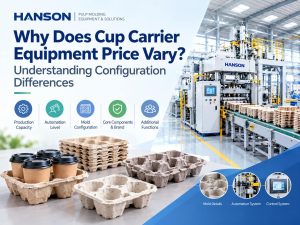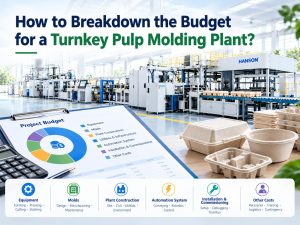
When investing in molded fiber protective packaging such as egg trays, egg cartons, or cup carriers, buyers often encounter a massive gap in equipment quotes. When comparing the egg tray machine price, looking only at the theoretical capacity or mold cavities is rarely enough to make a sound decision.
Products like egg trays and cup carriers typically use the dry press molded fiber process, which prioritizes support, cushioning, and high-efficiency production. The true difference in investment cost lies not just in the metal frame, but in the completeness of the production line, the drying technology, and the level of automation.
Single Machine vs. Turnkey Production Line: Understanding the Scope
The most common reason for extreme price differences is the scope of supply.
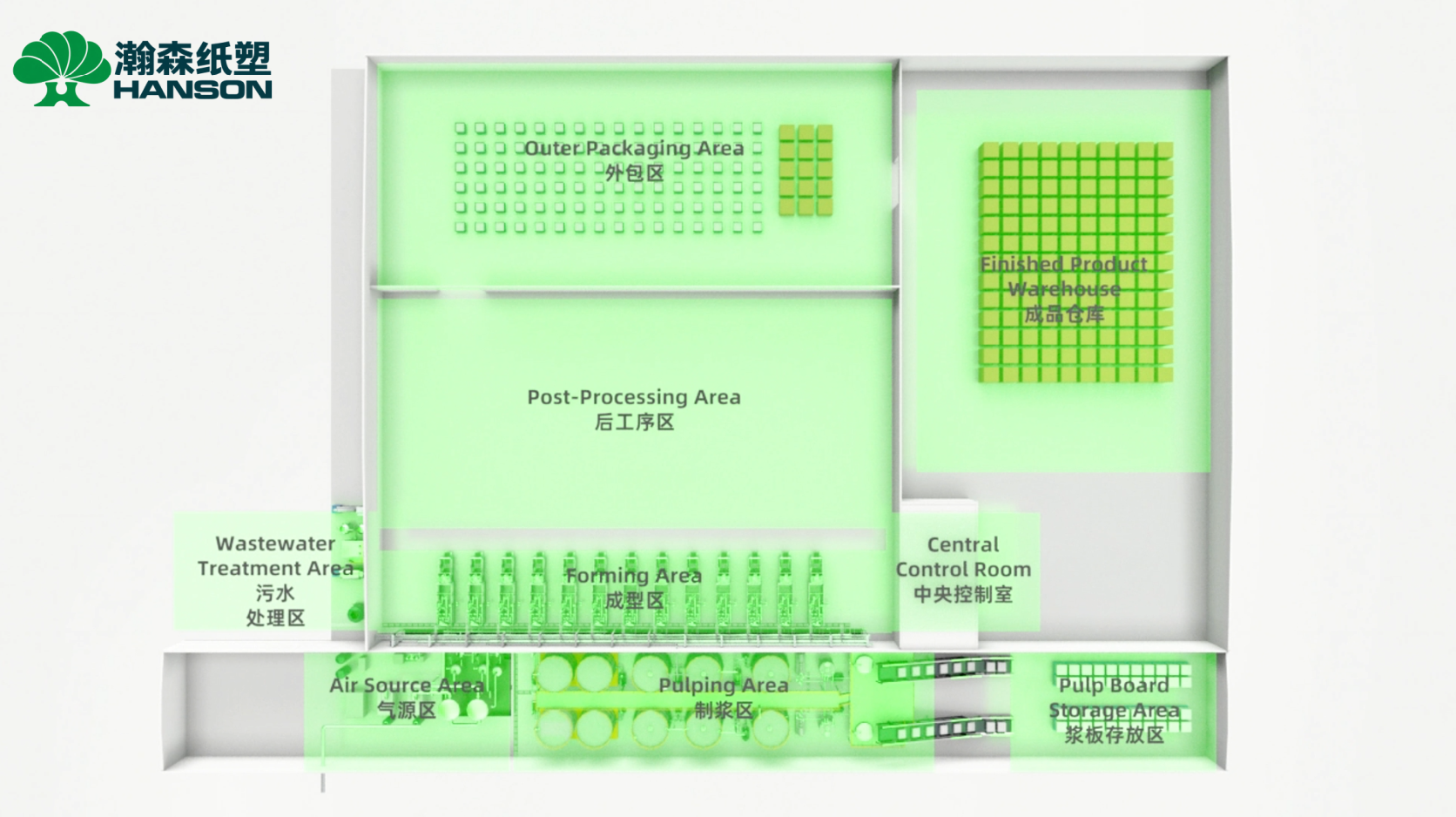
A low-cost quote typically includes only the standalone forming machine. However, setting up a functional molded fiber factory requires much more. A complete production line includes the pulping system, vacuum and air compressor systems, drying units, hot pressing stations, and post-processing automation.
The pulping system is a critical variable. If the pulp preparation capacity does not match the forming machine’s speed, or if the pulp consistency fluctuates, the forming equipment will suffer from downtime or low product quality. Comparing a single machine quote with a complete turnkey plant solution is the primary reason buyers see such significant price discrepancies.
The Impact of Drying Systems and Pre-Dewatering
In the dry press molded fiber process, the wet preform retains a significant amount of water after initial forming, which must be removed through a relatively independent drying process. The efficiency of this stage directly influences energy consumption and equipment price.
-
Traditional Drying: Basic setups often rely on natural sun drying or simple brick kilns. While the initial equipment cost is low, these methods depend heavily on weather conditions, require substantial manual labor, and struggle to control product deformation.
-
Advanced Cold Pressing and Tunnel Drying: A modern automatic dry-press pulp molding production line integrates sophisticated moisture control. Before entering the drying tunnel, the wet products pass through a cold pressing or pre-dewatering station. According to Hanson Pulp Molding’s technical data, this cold extrusion process significantly reduces the moisture content before drying. This not only prevents product deformation but also minimizes mold scaling, extending maintenance cycles and improving overall line uptime.
Automation and Transfer Mechanisms
For high-volume protective packaging like egg trays and cup carriers, controlling labor costs is essential.
Lower-priced machines often require operators to manually transfer the wet preforms from the forming mold to the drying trays, and again from drying to hot pressing and stacking.
Conversely, an automatic dry-press production line utilizes truss manipulators to handle all transfers automatically. From forming and cold pressing to drying, hot pressing, and final stacking, servo-driven mechanisms ensure precise positioning and continuous, stable production without heavy manual intervention. This level of automation inherently increases the upfront equipment cost but offers a much faster return on investment at scale.
Hanson Pulp Molding’s Automatic Dry-Press Production Line
Hanson Pulp Molding specializes in turnkey pulp molding projects. When evaluating equipment, Hanson advises clients to plan the entire factory system rather than just buying an isolated machine.
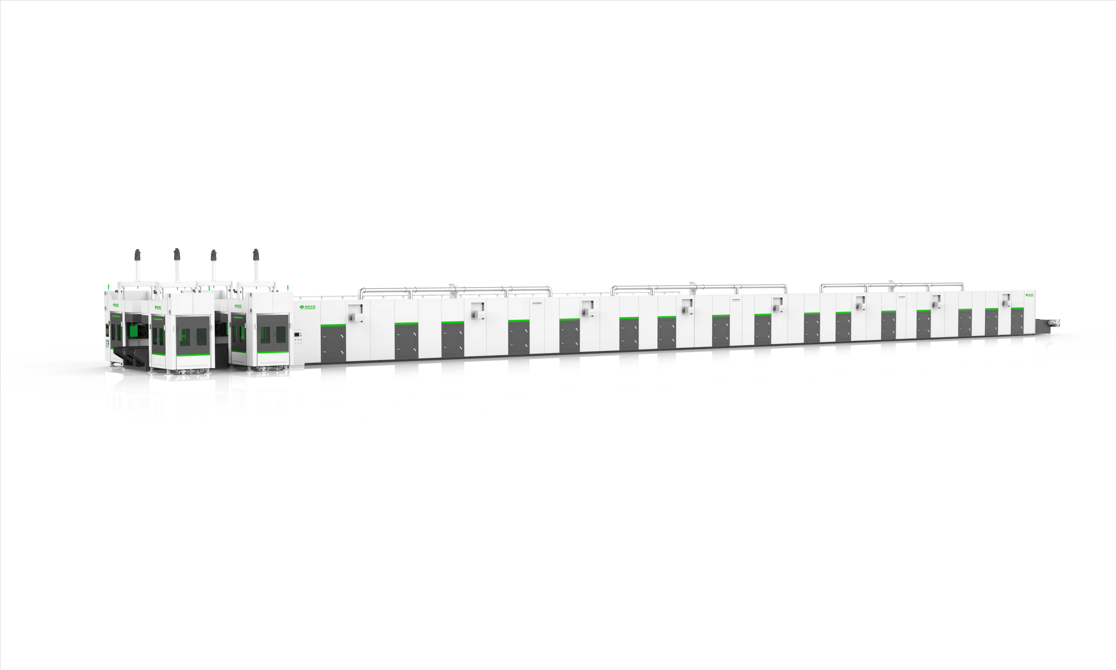
Designed for cup carriers, egg cartons, and industrial protective packaging, Hanson Pulp Molding’s Automatic Dry-Press Production Line integrates four forming stations, four cold pressing stations for pre-dewatering, a double-layer drying tunnel, and four hot press stations. All transfers are managed seamlessly by automated manipulators, and the main driving systems use servo motors for stability and easy maintenance. The system also features an accessible mold design, making it highly efficient for projects that require frequent mold changes for different non-standard packaging designs.
FAQ
Does a more expensive production line mean a slower return on investment (ROI)? Not necessarily. The true ROI is influenced by the unit cost per product, yield rate, energy consumption, and equipment uptime. Highly automated lines reduce labor dependency, improve dewatering efficiency, and ensure stable production, which often leads to better profitability in commercial-scale operations.
What is the capacity of Hanson’s automatic dry-press line? Capacity cannot be stated as a single fixed number for all products. Taking a 40g 4-cup carrier as an example, the capacity of Hanson’s dry-press line is approximately 18 Tons/23 Hours under appropriate conditions. The actual output will vary based on product weight, structure, mold cavities, drying time, and overall equipment uptime.
Can I produce different products on the same egg tray machine? Technically, molds can be changed. However, switching products requires matching the mold size, product depth, drying parameters, and hot pressing conditions. Hanson’s dry press line features large mold platens and accessible structures designed to facilitate changeovers for various non-standard custom items.
Conclusion
The price of a pulp molding egg tray machine reflects the completeness of the process it offers. The gap between basic manual machines and fully automatic dry-press lines is defined by integrated pulping, advanced pre-dewatering technology, efficient tunnel drying, and robotic transfer mechanisms. To ensure stable and profitable mass production, evaluate the equipment based on the complete turnkey configuration rather than the lowest initial bid.
If you are planning a new dry press or semi-dry press pulp molding project, sharing your target products, required daily capacity, and automation requirements is the best way to get an accurate assessment. Hanson Pulp Molding can evaluate your project from pulp preparation and automatic dry-press forming to molds and post-processing to ensure a successful turnkey plant setup.
WhatsApp: +86 15920604830
Email: linchuangcheng@hspulpmolding.com