When investing in a pulp molding egg tray machine, many buyers tend to focus on a single parameter during the acceptance phase: the theoretical cycle time of the equipment running without pulp. However, evaluating a complete molded fiber production line requires a systemic approach.
An industrial pulp molding plant’s actual profitability depends on stable mass production capability, energy efficiency, and reliable product quality. If you are preparing for the commissioning and acceptance of a dry-press pulp molding line, here are the key performance indicators you should evaluate beyond the basic machine price and theoretical speeds.
1. Actual Production Capacity vs. Theoretical Speed
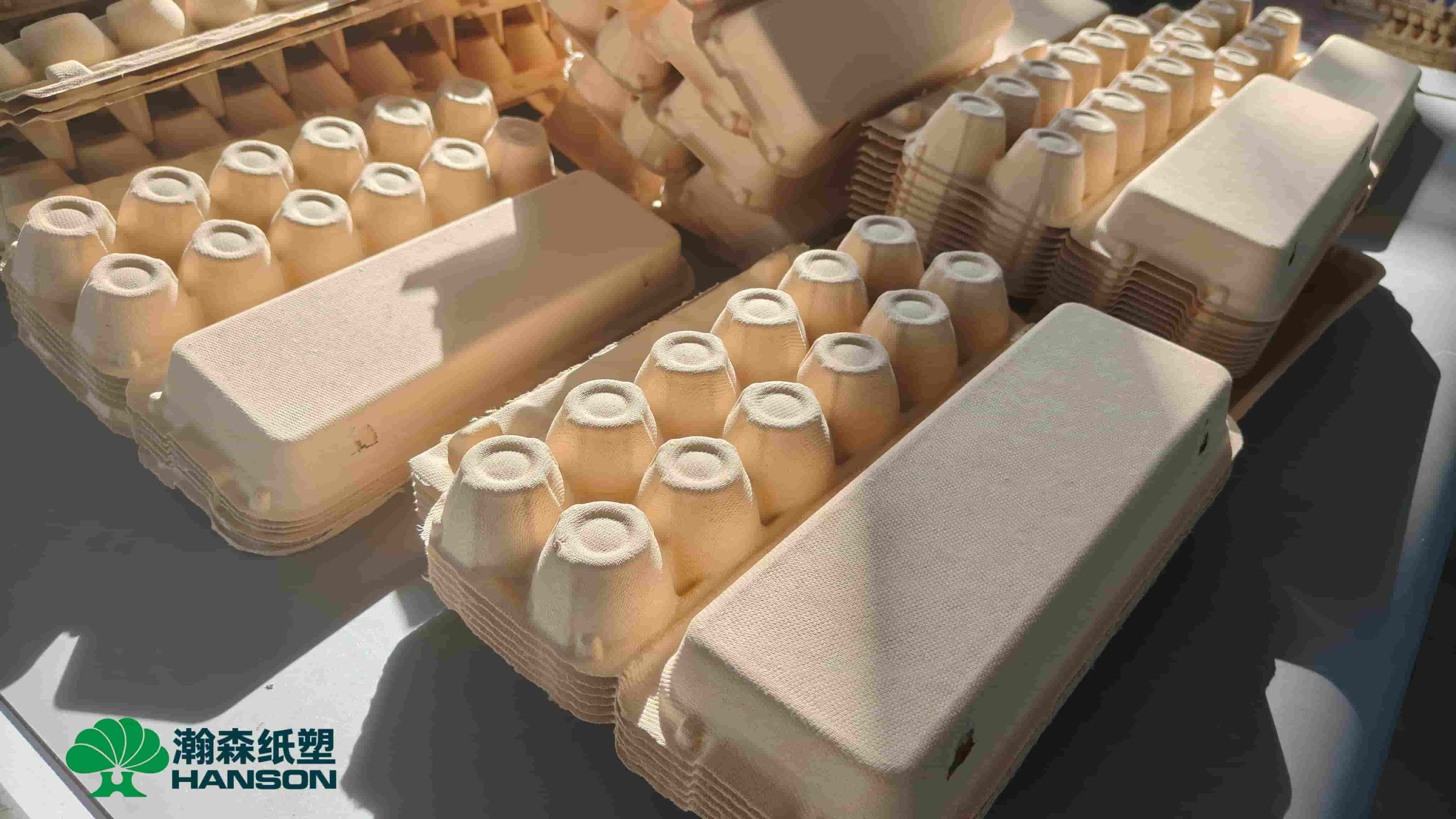
A common misunderstanding is multiplying the theoretical cycle time directly by 24 hours to calculate daily output. In reality, actual production capacity is influenced by product weight, dimensions, the number of mold cavities, molding time, and equipment effective running time.
During equipment acceptance, you should run the machine with actual pulp slurry for a continuous period to assess its stable production rate and downtime. As a turnkey specialist in pulp molding, Hanson Pulp Molding ensures that its Automatic Dry-Press Pulp Molding Production Line utilizes servo-driven mechanisms for all major transfer and lifting motions. This configuration guarantees high positioning accuracy and operational stability, keeping the actual yield close to theoretical expectations.
2. Dewatering Efficiency and Drying Energy Consumption
Egg trays and protective molded fiber inserts are typically manufactured using dry-press or semi-dry press processes. If the wet preforms enter the drying system with excessive moisture content, the consumption of natural gas or electrical energy required for drying will increase significantly, thereby driving up production costs.
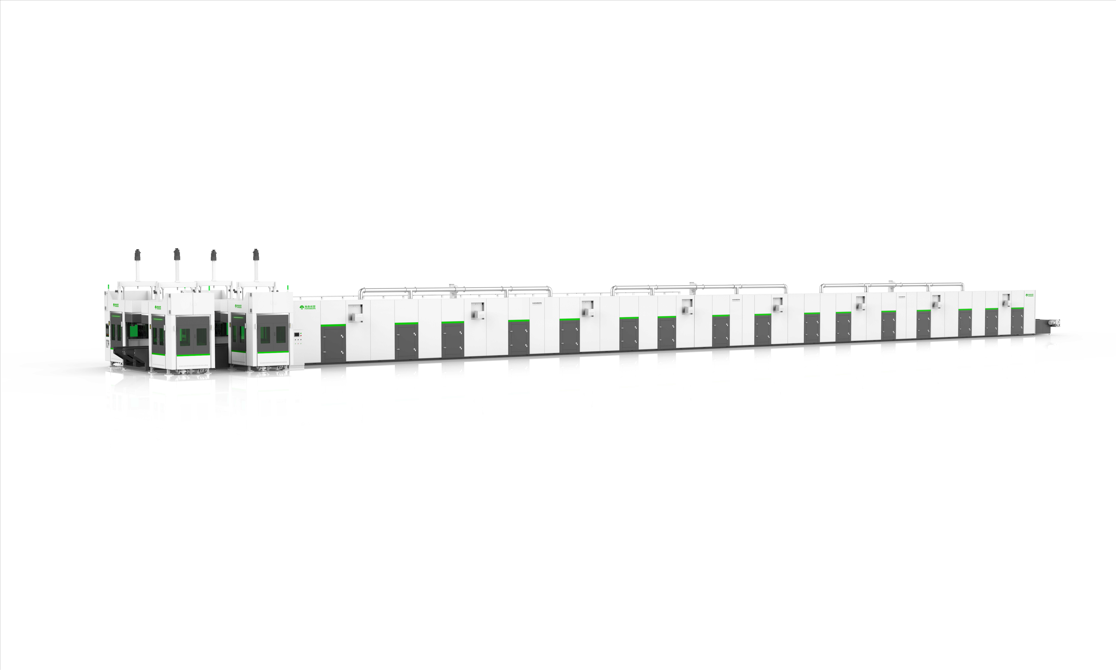
Therefore, moisture content before drying is a critical acceptance metric. The Hanson Pulp Molding automatic dry-press production line adopts an optimized process route: Forming → Cold Pressing / Pre-Dewatering → Drying → Hot Pressing → Stacking. The dedicated cold pressing stations act as a pre-dewatering mechanism, effectively reducing the moisture content of the wet preform before it enters the double-layer tunnel dryer. This synergy between cold pressing and drying minimizes energy waste and prevents the drying section from becoming a production bottleneck.
3. Product Quality: Deformation Control and Stacking Consistency
The primary function of egg trays, cup carriers, and industrial packaging is structural protection. If the equipment fails to manage dewatering and drying stresses, the final products may suffer from edge warping and severe deformation, causing issues during automatic stacking and transport.
Inspect a continuous batch of molded fiber products during the acceptance test. The synergy between the cold pressing and drying processes in the Hanson Pulp Molding dry-press line not only lowers energy use but also reduces product deformation. Following the drying stage, the equipment utilizes 120-ton hot-press stations to further define and stabilize the product’s dimensional accuracy.
4. Mold Maintenance and Production Line Automation
Frequent mold cleaning and maintenance can drastically reduce the effective operational time of a pulp molding machine. If the forming molds are difficult to access, labor costs will increase, and line changeovers will become highly inefficient.
Compared to traditional rotary-type machines, the structure of the Hanson Pulp Molding dry-press line is much more streamlined, featuring exposed mold stations. This open design makes wire mesh inspection, cleaning, and mold replacement significantly more convenient, which is ideal for factories dealing with frequent product changes and non-standard custom protective packaging. Furthermore, the pre-dewatering process effectively reduces scale buildup on the molds during the high-temperature drying phase, thereby extending the mold maintenance cycle.
5. Stability of the Pulp Preparation System
High-quality molded fiber products require stable slurry conditions. When evaluating the forming equipment, you must also assess how well it integrates with the pulp preparation system. The Hanson Pulp Molding dry-press line utilizes an internal circulation system for continuous pulp feeding. This maintains a consistent slurry concentration inside the forming vat, ensuring uniform thickness and weight across all egg trays and protective inserts produced.
FAQ
How many egg trays can a pulp molding machine produce in a day? Actual production capacity depends entirely on the product’s weight, structural complexity, and mold configuration. For example, when producing 40g 4-cup carriers, the Hanson Pulp Molding automatic dry-press production line can achieve a capacity of approximately 18 tons per 23 hours under appropriate production conditions. Producing standard egg trays will require a specific capacity evaluation based on the tray design.
Why is pre-dewatering important for egg tray machines? Pre-dewatering (such as cold pressing) removes excess water from the wet preform before it enters the drying oven. This step lowers the drying energy consumption, helps reduce product deformation, minimizes mold scaling, and improves the overall uptime of the production line.
Can the same machine make both egg trays and cup lids? Generally, no. Egg trays and cup carriers focus on structural cushioning and are produced using dry-press or semi-dry press processes. Molded fiber cup lids demand extremely high precision, dedicated trimming, and vision inspection systems, which require specialized automated equipment (such as the Hanson Pulp Molding ZAKS-9595 machine).
Conclusion
Accepting an egg tray machine involves much more than verifying its dry-run cycle time. It is a comprehensive evaluation of the pulp supply stability, pre-dewatering efficiency, drying energy consumption, automation integration, and final product consistency. By establishing strict criteria across the entire production line, investors can ensure that their turnkey pulp molding plant will achieve stable, large-scale commercial production and long-term profitability.
If you are planning to establish a new molded fiber factory for egg trays, cup carriers, or industrial protective packaging, Hanson Pulp Molding can evaluate your project from plant planning and pulp preparation to forming equipment, tooling, and post-processing automation.
WhatsApp: +86 15920604830
Email: linchuangcheng@hspulpmolding.com