
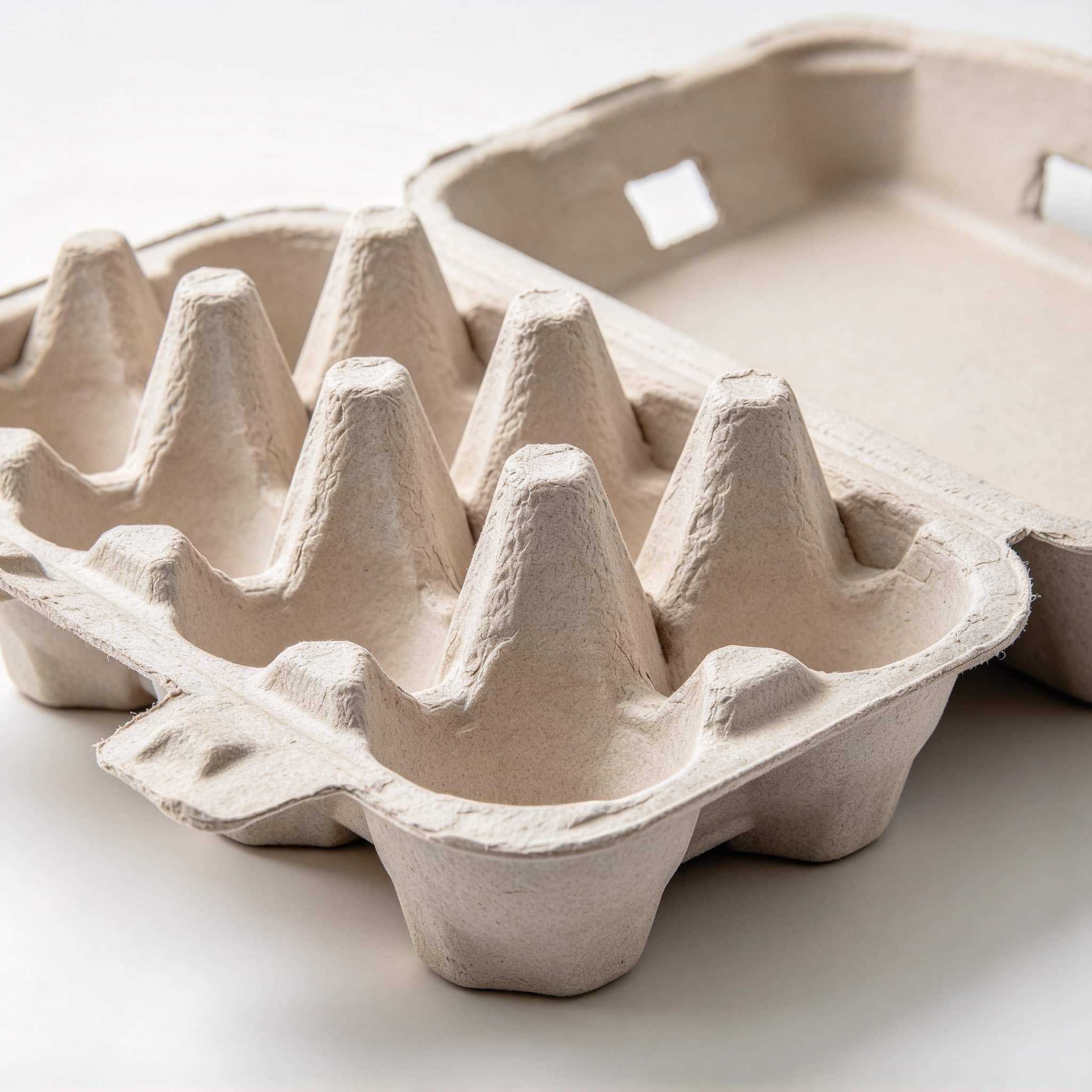
In the first stage of a molded fiber project, successfully producing a high-quality prototype validates your product design, material selection, and forming mold. However, transitioning from a successful sample to stable commercial production introduces a completely new set of challenges for your egg tray machine and production line.
For dry-press and semi-dry press molded fiber products—such as egg trays, cup carriers, and industrial protective packaging—the actual daily output is not solely determined by the theoretical cycle time of the forming equipment. Commercial mass production is an exercise in eliminating bottlenecks across pulp preparation, dewatering, drying, and post-processing automation.
Evaluating Actual Capacity vs. Theoretical Cycle Time
When investing in an automatic dry-press pulp molding production line, relying on a simple formula of “cycle time multiplied by mold cavities” can lead to inaccurate capacity projections. In real-world commercial production, the actual output fluctuates significantly based on several factors:
-
Product Weight and Geometry: Heavier products require more pulp slurry and longer dewatering times. Deep-cavity products, such as certain industrial protective inserts, require extended forming and transfer times to prevent structural tearing.
-
Mold Configuration: While increasing the number of cavities on a mold plate can theoretically boost output, it must be balanced against drainage efficiency and hot-pressing constraints.
-
Uptime and Product Changeovers: For factories producing multiple types of packaging, the ease of mold installation directly impacts equipment uptime.
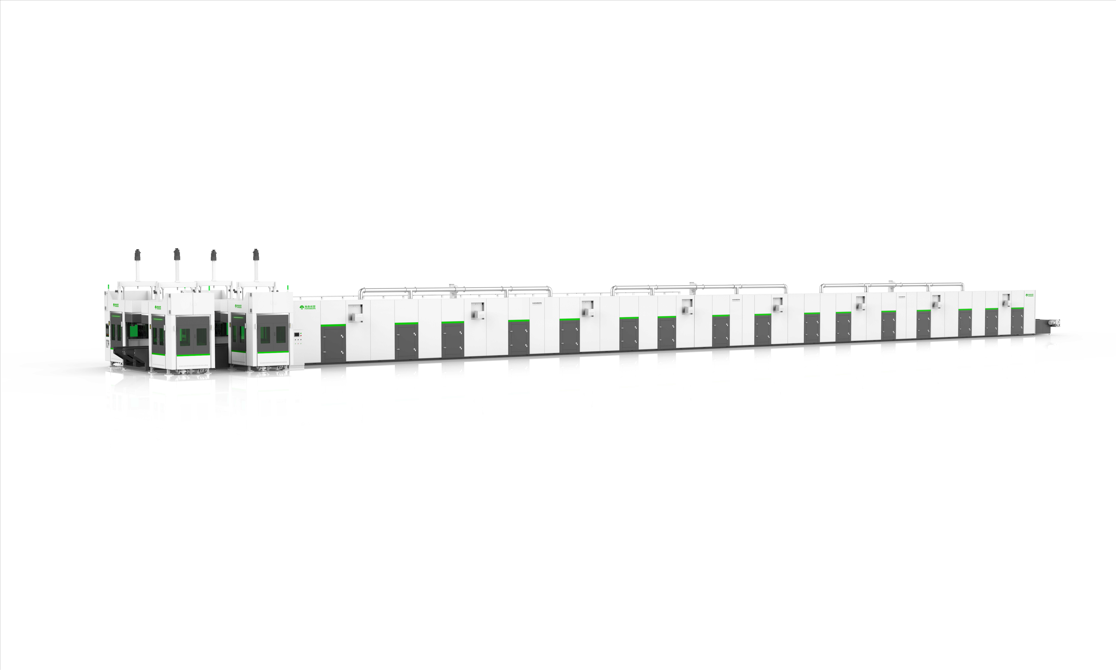
For example, using the Hanson Pulp Molding automatic dry-press production line, the capacity can reach approximately 18 tons per 23 hours when producing a standard 40g 4-cup carrier. However, this output is specific to that product’s weight and configuration and will vary when switching to a different product structure.
Overcoming the Drying Bottleneck: The Role of Pre-Dewatering
In traditional transfer molded fiber processes, wet preforms are typically moved directly from the forming station into a drying tunnel. Because the moisture content of the wet preform is still very high, the drying oven must handle a massive evaporation load. This not only increases energy consumption but also elevates the risk of product shrinkage and deformation during the extended drying process.
To address this critical mass-production hurdle, the Hanson Pulp Molding automatic dry-press line incorporates a Cold Pressing (Pre-Dewatering) station between the forming and drying stages.
Driven by a servo-controlled system, this cold-pressing station physically squeezes excess water from the wet preform before it enters the high-temperature oven. This intermediate step provides multiple benefits for stable production:
-
Lower Energy Consumption: By reducing the moisture content entering the oven, the drying time and associated thermal energy load (e.g., natural gas consumption) are significantly reduced.
-
Improved Dimensional Stability: Pre-shaping the product prior to the oven minimizes uncontrolled warping and shrinkage during the evaporation phase.
-
Extended Tooling Life: Less residual water translates to reduced scaling and buildup on the molds, which extends maintenance cycles and improves overall line efficiency.
Post-Processing and Turnkey Synchronization
Once the dry-press products exit the tunnel oven, they often require hot pressing to ensure surface smoothness, precise thickness, and optimal stackability.
In a high-capacity plant, the speed of these post-processing steps must perfectly match the output of the forming machine. If a line is heavily reliant on manual labor for transferring, hot pressing, or stacking, the post-processing area quickly becomes a bottleneck. The Hanson Pulp Molding line utilizes automated truss manipulators to seamlessly connect forming, cold pressing, drying, hot pressing, and automatic stacking into a single synchronized system.
Conclusion
Taking an egg tray or cup carrier project from a sample to mass production requires a comprehensive approach to factory engineering. It is not just about a faster forming machine; it is about matching pulping capacity, integrating pre-dewatering to ease the drying load, and automating post-processing. By addressing these factors in the plant planning phase, manufacturers can achieve consistent product quality, lower energy costs, and reliable commercial output.
FAQ
Why is cold pressing added to a dry-press production line? Cold pressing, or pre-dewatering, is used to squeeze excess water out of the wet preform before it enters the drying oven. This reduces the energy required for drying, minimizes product deformation, and decreases mold scaling, ultimately improving the line’s overall uptime.
Can cup carriers and egg cartons be produced on the same equipment? Yes. Both cup carriers and egg cartons typically utilize a dry-press or semi-dry press molded fiber process. As long as the product dimensions fit within the equipment’s specifications, they can be produced on the same automatic dry-press production line by switching the molds and adjusting process parameters.
Will the daily output change if I switch to a different product on the same machine? Yes. Actual production capacity is influenced by the product’s individual weight, depth, number of mold cavities, and the specific drying time required. A heavier or more complex product will result in a different daily tonnage and piece count compared to a standard egg tray.
If you have validated your molded fiber sample and are ready to plan a commercial-scale factory, evaluating equipment based solely on theoretical speed is not enough. Hanson Pulp Molding can evaluate your target products, required capacity, and plant conditions to configure a complete automatic dry-press production line—from intelligent pulping and cold-press dewatering to drying and automated stacking.
WhatsApp: +86 15920604830
Email: linchuangcheng@hspulpmolding.com