When entering the protective molded fiber packaging sector, many manufacturers encounter a critical transition gap. A basic prototype machine can easily produce a structurally sound egg tray sample. However, scaling that success to a stable mass production line—capable of outputting tons of products daily without excessive energy costs or severe product deformation—requires much more than simply purchasing a single piece of equipment.
Products like egg trays, egg cartons, cup carriers, and industrial protective packaging primarily utilize the dry press (or transfer molded) process. Evaluating an egg tray machine requires looking beyond the theoretical cycle time. It demands a systemic approach that aligns pulping, forming, pre-dewatering, drying, and post-processing into a synchronized commercial production line.
Defining Product Specifications: The Foundation of Production
The golden rule of pulp molding equipment selection is that the product dictates the machine. Before evaluating any production line, it is essential to define the target product’s specifications:
-
Weight and Dimensions: The weight of a single egg tray or cup carrier directly determines the amount of pulp required per cycle and the volume of water that must be evaporated during the drying phase.
-
Mold Size and Cavities: For high-volume protective packaging, multi-cavity tooling is standard. However, the number of cavities must be balanced with the mold area, slurry distribution efficiency, and the equipment’s load-bearing capacity.
-
Structural Demands: Protective packaging requires specific draft angles, wall thicknesses, and structural strength to withstand stacking and transit. The mold tooling must be designed to facilitate smooth dewatering and rapid transfer.
Forming and Pre-Dewatering: The Value of Cold Pressing
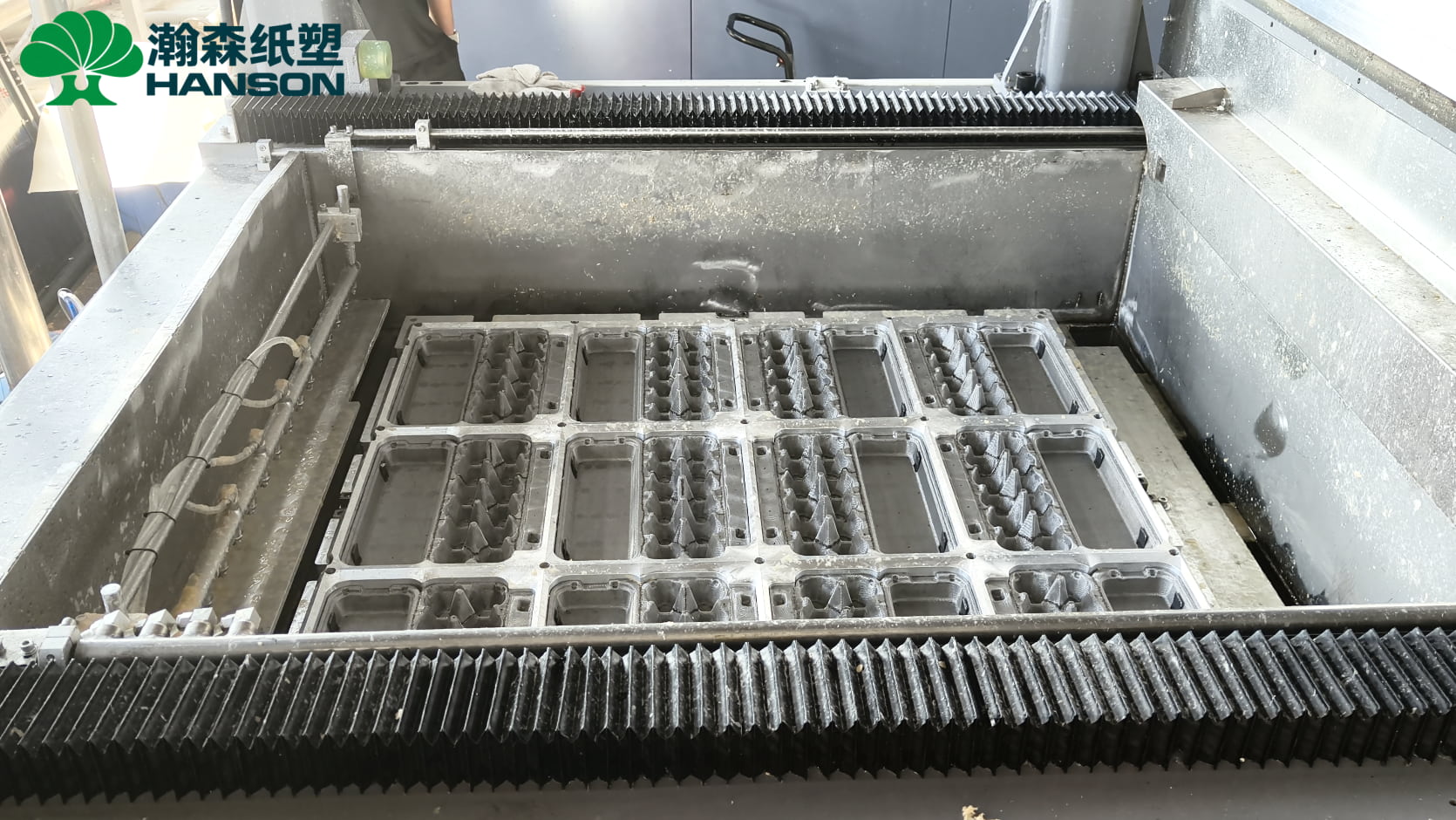
In traditional dry press processes, the wet preform is transferred directly into the drying system immediately after vacuum forming. Because the moisture content is still relatively high at this stage, it places a massive thermal load on the tunnel dryer. Rapid water evaporation can also lead to significant product warpage and deformation.
For modern, high-efficiency automatic dry-press pulp molding production lines, cold pressing (pre-dewatering) is a critical game-changer. By introducing independent cold press stations before the drying stage, excess water is physically squeezed out of the wet preform. This step significantly reduces the moisture content entering the dryer, resulting in lower energy consumption (such as natural gas or electricity). Furthermore, reducing the moisture and residual slurry helps prevent scaling on the forming molds, thereby extending the maintenance cycle and improving the overall operational efficiency of the plant.
Drying and Hot Pressing: Overcoming Capacity Bottlenecks
A common issue in pulp molding factories is that while the forming machine operates swiftly, the actual daily output remains low. This bottleneck usually occurs because the drying and hot pressing stages cannot keep pace with the forming cycle.
Large-scale egg tray and industrial protective packaging production rely on continuous drying systems. If the dryer cannot efficiently expel humidity, it limits the speed of the entire line and results in unevenly dried products. Depending on the product’s dimensional requirements, dried items may also pass through hot press stations to achieve final surface finishing and dimensional stability, ensuring perfect stacking.
Hanson Pulp Molding Automatic Dry-Press Production Line
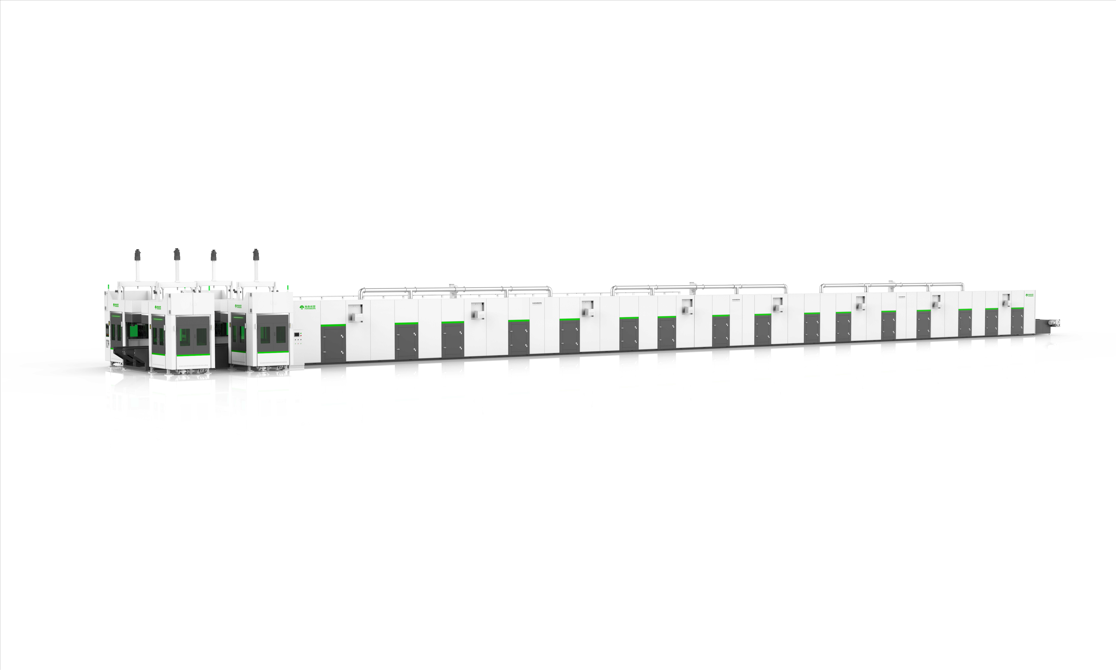
As a turnkey specialist in pulp molding, Hanson Pulp Molding offers a comprehensive automatic dry-press production line designed for egg trays, cup carriers, and industrial molded fiber packaging. This system eliminates isolated operations by integrating all critical processes into a continuous, automated workflow.
-
Integrated Workflow: The standard line configuration includes 4 forming stations, 4 cold press (pre-dewatering) stations, 1 double-layer double-row dryer, and 4 hot press stations.
-
Efficient Pre-Dewatering: Equipped with 120-ton servo-driven cold press stations, the system physically removes excess moisture before drying. This minimizes product deformation and significantly lowers thermal energy demands.
-
Servo-Driven Transfer: Forming, transferring, and hot pressing mechanisms are primarily servo-driven. Coordinated with gantry robotic arms, the system ensures highly accurate positioning and stable continuous production with minimal manual intervention.
-
Actual Production Capacity: Output depends on product geometry, weight, and mold cavities. For example, when producing a 40g 4-cup carrier, the production line can achieve an output of approximately 18 tons per 23 hours under appropriate production conditions.
Whether you are setting up a standard egg tray factory or designing customized deep-cavity industrial protective packaging, aligning the equipment, tooling, drying system, and overall plant layout is the only reliable path to stable commercial production.
FAQ
What is the difference between dry press and wet press pulp molding? The core difference lies in how and when moisture is removed. The dry press (or transfer molded) process, typical for egg trays and cup carriers, involves forming the product and then utilizing a standalone drying system to remove the majority of the water. The wet press process, used for premium industrial packaging, transfers the wet preform directly into heated molds where it is pressed and dried simultaneously, yielding a smoother surface.
Why does the same egg tray machine have different daily outputs for different products? Actual production capacity is influenced by the product’s weight, structural complexity, the number of mold cavities, drying efficiency, and the factory’s overall uptime. A heavy-duty industrial protective tray and a lightweight egg carton place entirely different dewatering loads on the system, leading to variations in daily tonnage and piece counts.
What is the advantage of adding a cold press station to a dry press line? A cold press station mechanically removes excess water from the wet preform before it enters the drying oven. This pre-dewatering lowers drying energy consumption, reduces the risk of product deformation, and slows down mold scaling, which decreases downtime for cleaning.
Conclusion
Scaling a protective molded fiber packaging project from a prototype to a daily output of a dozen tons requires rigorous plant-wide coordination. When evaluating an egg tray machine, manufacturers must look past theoretical forming speeds and assess the efficiency of pre-dewatering, the capacity of the drying system, and the reliability of automated transfers. By integrating pulp preparation, precision tooling, and automated post-processing, facilities can achieve the efficiency needed to remain competitive in the industrial packaging market.
If you already have product samples, 3D drawings, or a target daily capacity for egg trays, cup carriers, or protective molded fiber packaging, Hanson Pulp Molding can evaluate the process, tooling, and equipment configuration for your project to ensure stable mass production.
WhatsApp: +86 15920604830 Email: linchuangcheng@hspulpmolding.com