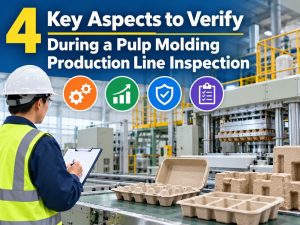
When preparing to invest in a molded fiber factory, many buyers make the mistake of focusing entirely on the theoretical cycle time of the forming equipment. However, the final production capacity of a pulp molding project is not determined by a single machine. It is affected by pulping, forming, hot pressing, molds, post-processing, personnel, energy, and effective equipment operation rates.
To accurately evaluate a pulp molding production line during a site inspection, you must look beyond the forming station and examine the entire system’s workflow, bottlenecks, and automation efficiency.
Verification 1: True Cycle Time vs. Post-Processing Bottlenecks
Theoretical cycle time is only one factor affecting actual capacity. In a continuous manufacturing environment, the actual capacity of an entire production line is dictated by its slowest step.
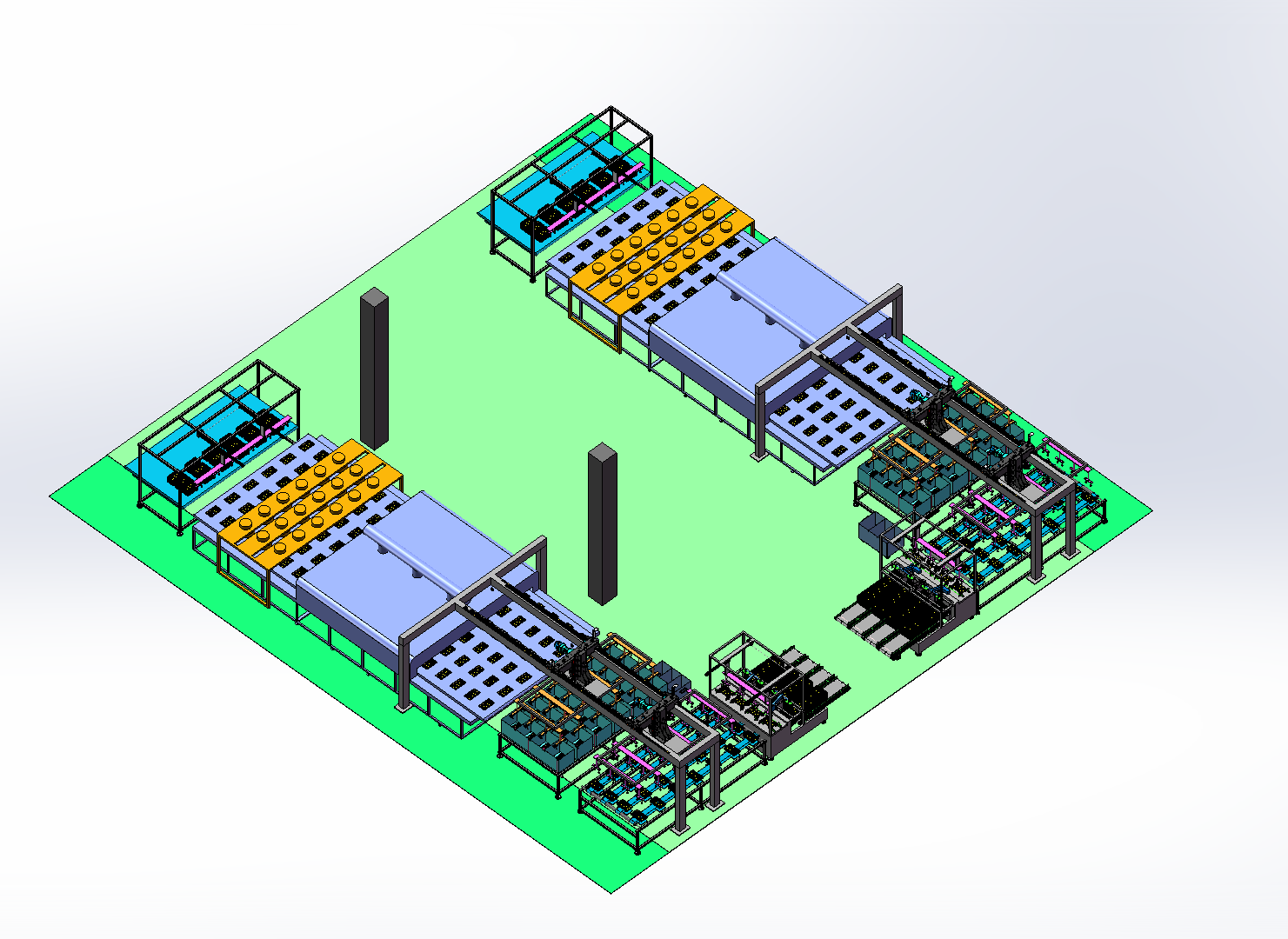
If the forming equipment has a high capacity, but the downstream trimming, inspection, or packaging speeds cannot keep up, products will pile up. During your inspection, strictly evaluate how the wet preforms transition into post-processing. For products requiring barrier coatings, verify the capacity of the coating and drying systems. For instance, Hanson Pulp Molding’s HXT-24 automatic rotary spray coating line integrates automatic loading, secondary positioning, rotary spray coating, a tunnel oven, air cooling, and automatic stacking. Equipped with 24 spray barrels, this line can process approximately 55,000–65,000 pieces per 23 hours per line, ensuring that high-speed forming is not choked by slow surface treatment processes.
Verification 2: Real Labor Distribution and Automation Effectiveness
Automation generally reduces manual intervention and improves continuity. However, the effectiveness of automation is measured by how well it eliminates labor-intensive bottlenecks.
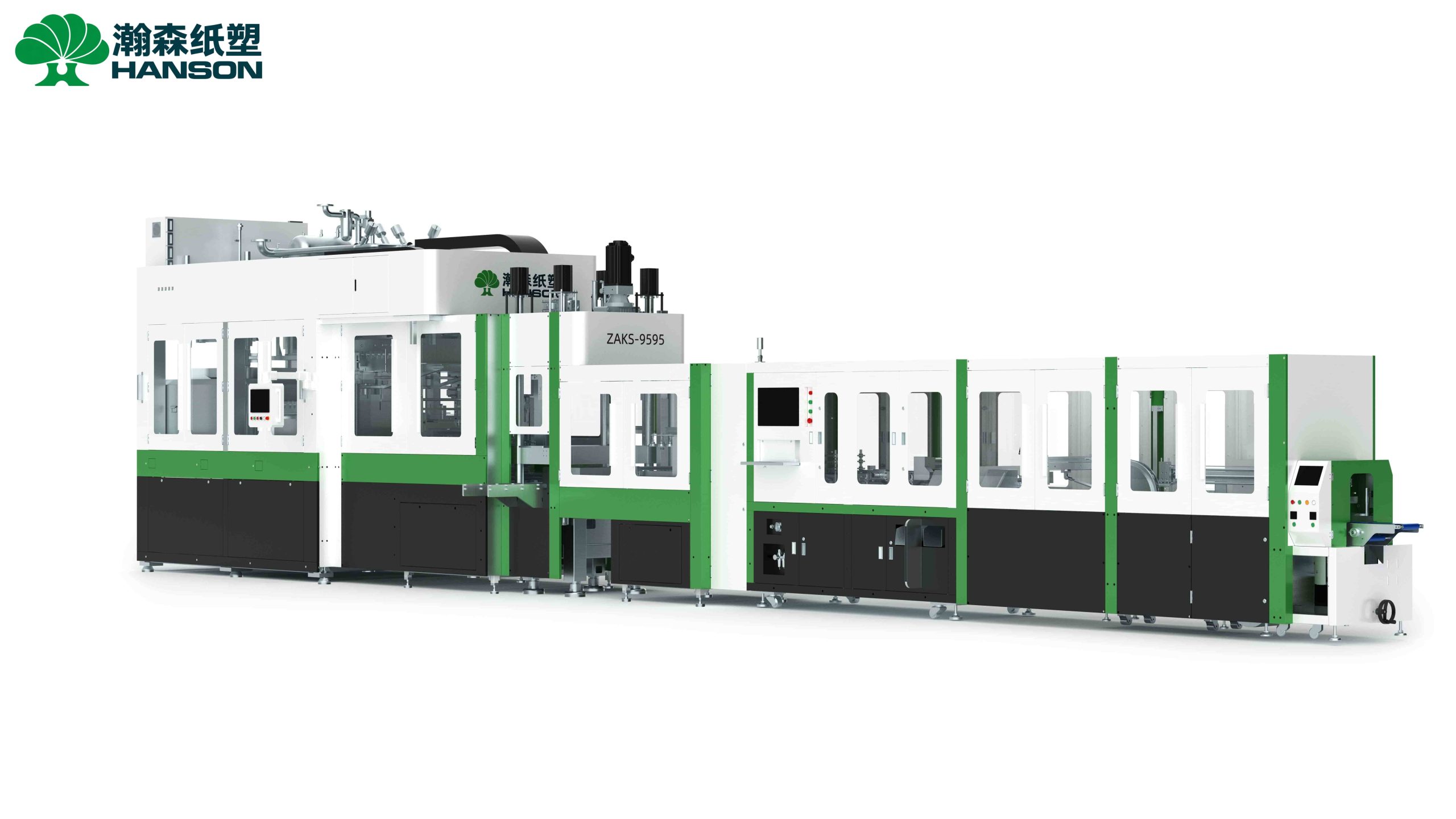
During the inspection, locate where the manual workers are stationed. If the forming process is fully automatic but trimming, stacking, transferring, loading/unloading, and visual inspection still rely heavily on manual labor, the line’s automation is incomplete. For high-volume items like molded fiber cup lids, automation across the entire line is crucial. The Hanson Pulp Molding ZAKS-9595 molded fiber cup lid machine integrates forming, hot pressing, servo die cutting, vision inspection, and packaging into a continuous automatic production line, achieving an output of approximately 100,000–120,000 cup lids per 24 hours under appropriate production conditions. This comprehensive automation drastically reduces the production risks and capacity losses associated with manual inspection and packing.
Verification 3: Quality Consistency and Changeover Downtime
Identical equipment parameters do not guarantee identical actual output when fitted with different molds. Mold design directly impacts forming, dewatering, hot pressing, and product consistency.
For production lines designed to handle multiple product SKUs, verify the complexity of mold changeovers and how quickly the line stabilizes its process parameters (such as vacuum, heating, and pressing) afterward. Furthermore, verify how the line’s structural design mitigates mold maintenance. For traditional dry-press products like cup carriers and egg cartons, Hanson Pulp Molding’s automatic dry-press production line incorporates a cold pressing pre-dewatering station after the slurry forming phase. This step reduces the moisture content of the wet preform before it enters the tunnel dryer, which helps minimize product deformation, reduces mold scaling, extends mold maintenance cycles, and ultimately improves the line’s overall utilization rate.
Hanson Pulp Molding: Integrating Forming and Post-Processing Automation
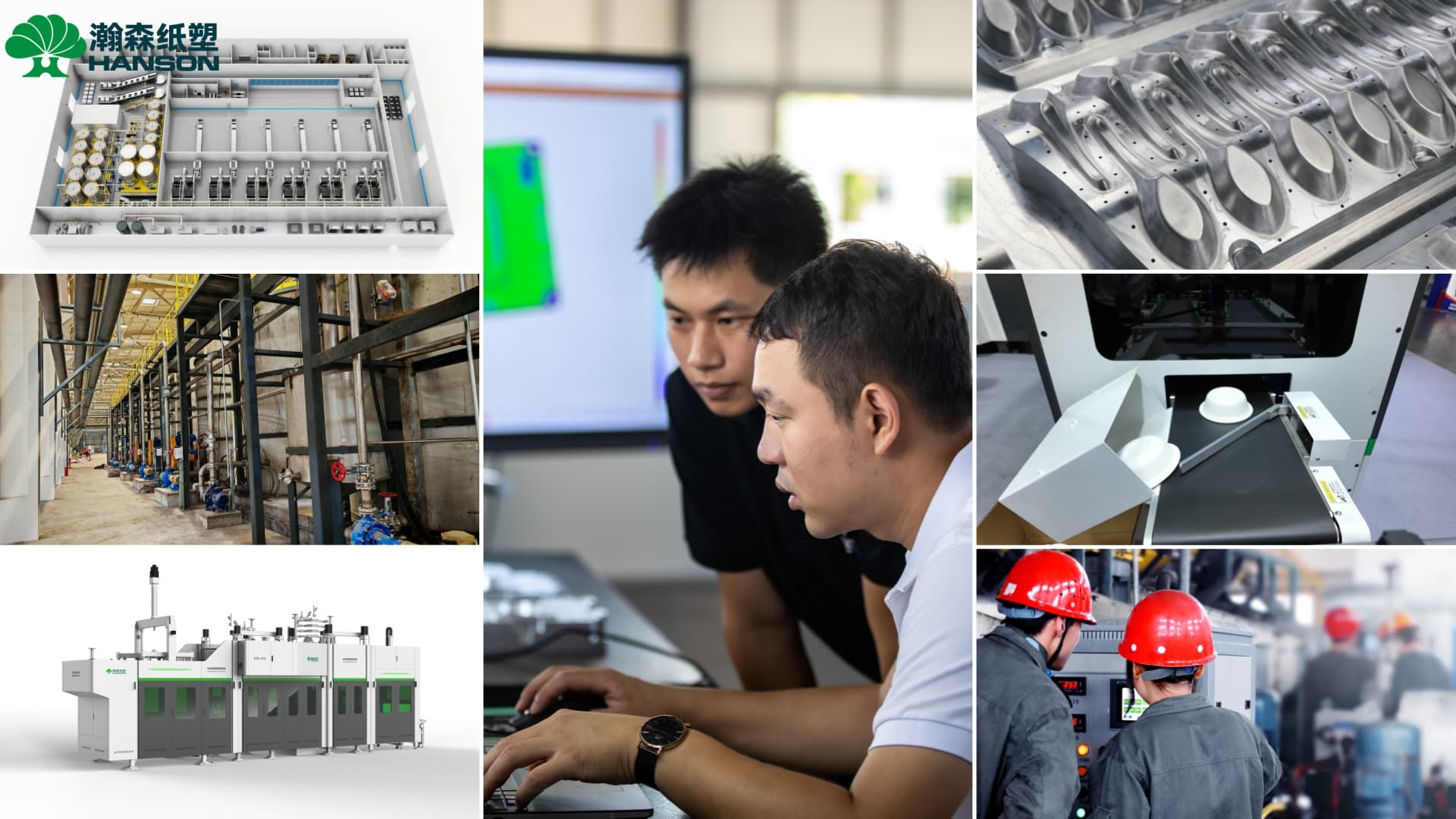
As a specialist in turnkey pulp molding solutions, Hanson Pulp Molding does not just supply standalone machines. Through its 6+1 turnkey service system, the company integrates product development, plant planning, intelligent pulping systems, forming equipment, mold manufacturing, post-processing automation, and production training and ramp-up support into a cohesive project framework. This turnkey approach minimizes interface issues between equipment, molds, processes, and post-processing, ensuring that your investment translates seamlessly into stable mass production.
FAQ
Does a faster cycle time guarantee higher daily production capacity? Not necessarily. Theoretical cycle time is just one factor. You must also consider the number of pieces produced per mold, single-piece weight, mold cavities, product yield, effective operational time, downtime, mold changeovers, and whether post-processing can keep up.
Why is post-processing automation important in a pulp molding plant? If a forming machine operates at high speeds but processes like trimming, visual inspection, and packaging rely on manual labor, these downstream steps become a bottleneck, limiting the real output of the entire plant.
What factors should be considered when estimating the footprint of a new pulp molding plant? You cannot determine plant size solely based on the number of forming machines. A thorough plant planning phase must account for the pulping system, forming area, hot pressing, post-processing, raw material storage, finished product warehousing, logistics aisles, personnel flow, maintenance space, and future expansion.
Conclusion
A successful site inspection for a pulp molding production line must look past the theoretical speeds of a single machine. By rigorously validating post-processing bottlenecks, the true effectiveness of automation, and quality consistency during mold changeovers, buyers can secure a system capable of reliable, high-volume commercial production.
If you are planning a new pulp molding plant, you can share your target products, required capacity, plant conditions and automation requirements. Hanson Pulp Molding can evaluate the project from product development and plant planning to pulping, forming equipment, tooling, post-processing automation and production ramp-up.
WhatsApp: +86 15920604830
Email: linchuangcheng@hspulpmolding.com