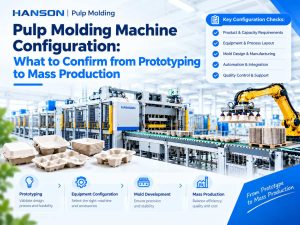
When planning a new molded fiber factory or expanding existing capacity, equipment selection is often the most critical investment decision. In recent years, “full-servo control” has become a highly sought-after feature in pulp molding equipment. Servo-driven systems are known for offering higher motion precision, faster response times, and superior process control.
But does this mean every pulp molding project must use a full-servo machine? Not necessarily. The core logic of equipment selection should never be based solely on machine specifications. Instead, it must be reverse-engineered from the product you intend to manufacture: defining the product structure, required dimensional accuracy, target capacity, and automation needs before determining the appropriate forming process and equipment setup.
The Golden Rule of Pulp Molding Equipment Selection
A common pitfall for new investors is looking at a machine’s operating speed first, and then figuring out what products it can make. In reality, the theoretical cycle time of a machine does not equal the actual daily output. Actual production capacity is influenced by product weight, tooling cavity layout, dewatering efficiency, and hot-pressing time.
The standard approach for factory planning should follow this sequence: Product → Material → Process (Wet/Dry) → Tooling → Equipment → Automation → Plant Layout.
For complex, high-precision premium packaging, full-servo systems are excellent at maintaining product consistency. For mass-produced protective packaging, the focus shifts to balancing equipment investment costs with overall line efficiency. Let’s break down how to match equipment to specific product lines.
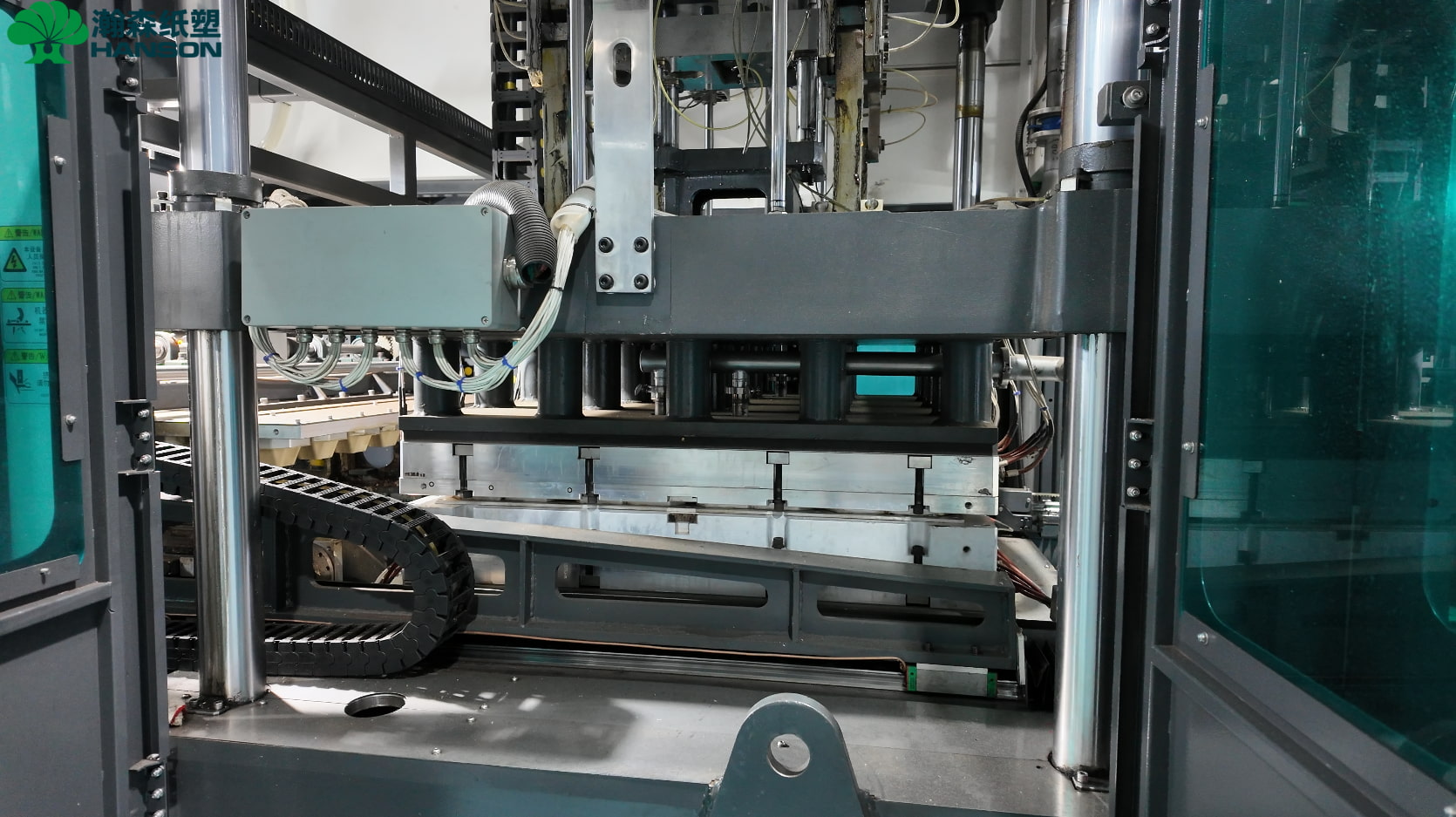
Matching Pulp Molding Equipment to Your Product Line
To understand how production requirements dictate machinery choices, we can look at the equipment matrix provided by Hanson Pulp Molding, a specialist in turnkey pulp molding solutions.
1. Molded Fiber Foodservice Packaging: Maximizing Capacity and Stability
Products like plates, clamshells, and food trays require high-volume, continuous production. For these projects, the most critical metrics are daily capacity, energy consumption per ton, and stable mass production.
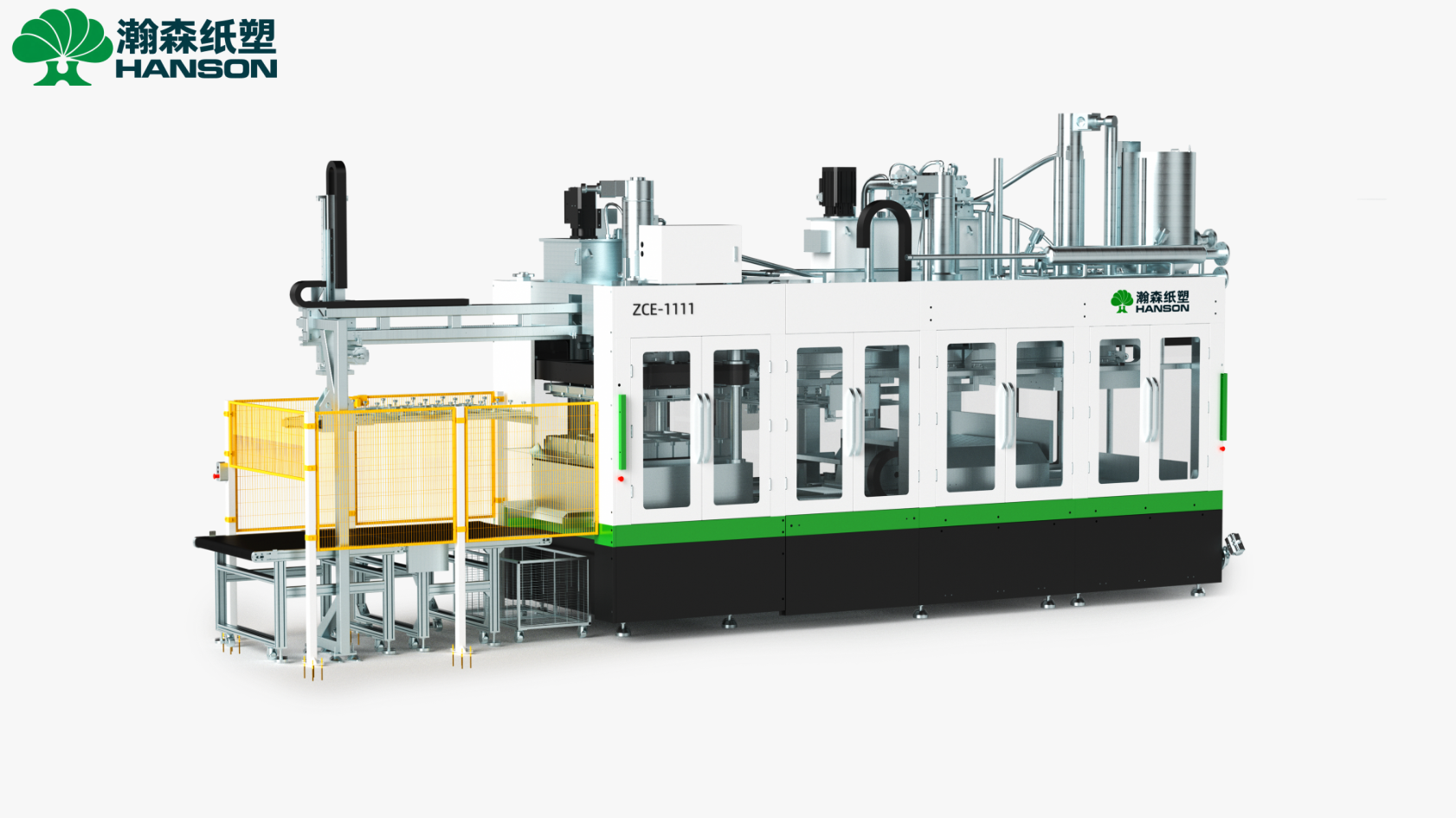
For this category, equipment must endure heavy continuous loads. The Hanson Pulp Molding ZBG-1111 tableware machine features a full-servo drive combined with a “one forming station + two hot-press stations” configuration. The servo system enhances mold alignment precision and operational smoothness, optimizing the overall production rhythm. Alternatively, for projects highly sensitive to initial capital investment, equipment utilizing metered pulp feeding and pneumatic-hydraulic boosting (like the ZCE-1111) remains a viable and proven option.

2. Premium Industrial Packaging: Focusing on Surface and Dimensional Precision
Premium industrial molded fiber packaging—such as inserts for smartphones, electronics, and high-end cosmetics—operates on a completely different logic than tableware. These products require minimal draft angles, exceptional surface smoothness, and tight dimensional tolerances, relying heavily on the wet press (thermoformed) process.
Here, forming precision and hot-press pressure control are paramount. The Hanson Pulp Molding ZAP-9585 machine integrates forming and hot pressing, utilizing dynamic pulp replenishment to address complex structural details. For premium packaging, machine speed is often secondary to yield rate and dimensional consistency.

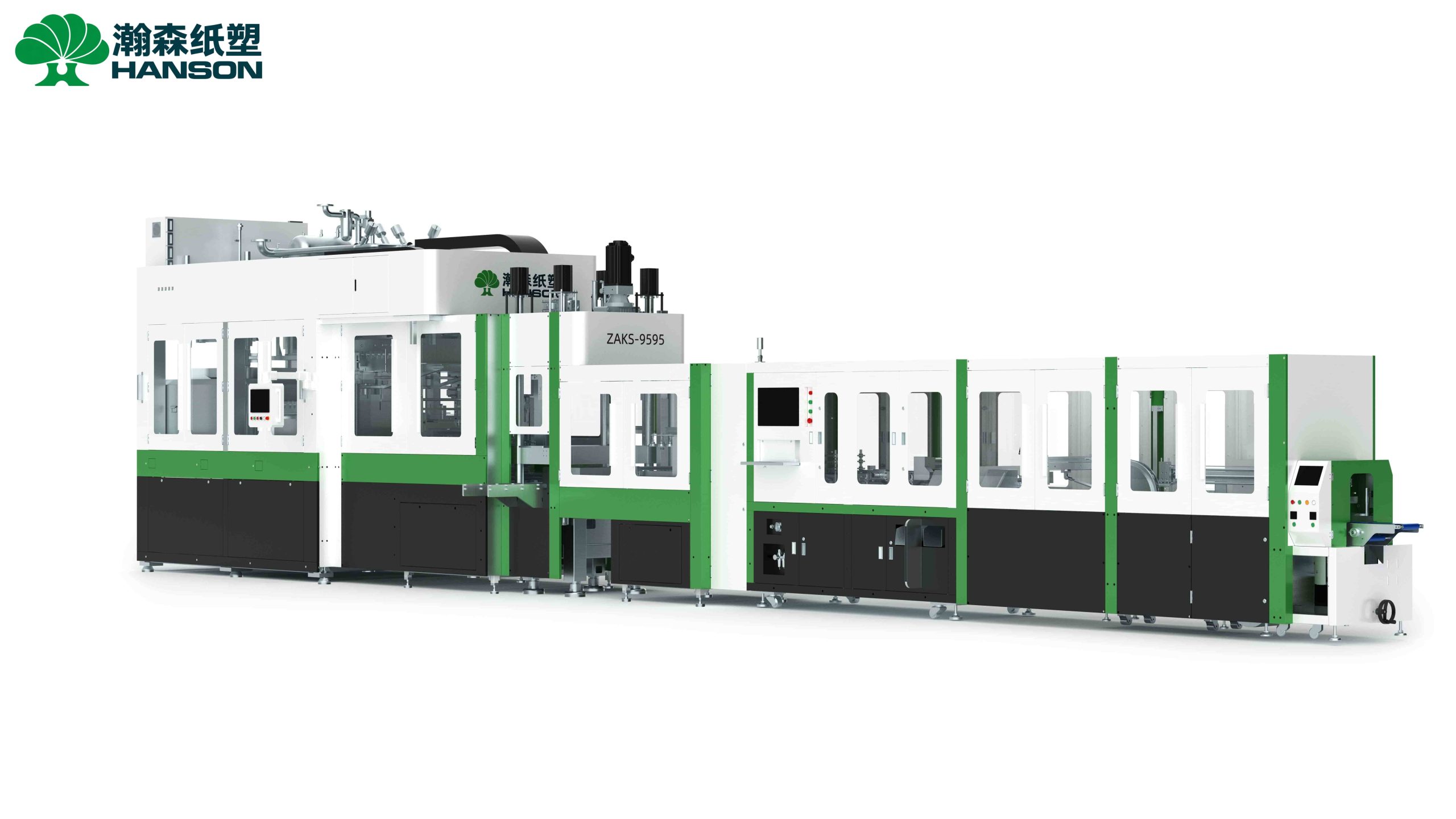
3. Molded Fiber Cup Lids: High-Speed Automation and Inspection
Molded fiber cup lids are small components with extreme functional demands. The precision of the lid rim and its fit on the cup are critical. Producing hundreds of thousands of lids daily requires robust post-processing; manual trimming or inspection is not an option.
The Hanson Pulp Molding ZAKS-9595 is a dedicated molded fiber cup lid machine that integrates forming, hot pressing, servo-driven punch cutting, machine vision inspection, and automatic packaging into a single continuous line. Capable of producing up to approximately 100,000–120,000 lids per 24 hours under appropriate conditions, this line relies heavily on servo control for its trimming station to maintain extreme accuracy during high-frequency cycles.
4. Dry Press Protective Packaging: Dewatering and Plant Efficiency
For products like egg cartons, cup carriers, and standard industrial protective inserts, the primary goals are load-bearing capability and low unit costs. These products typically utilize a dry press or semi-dry press production line.
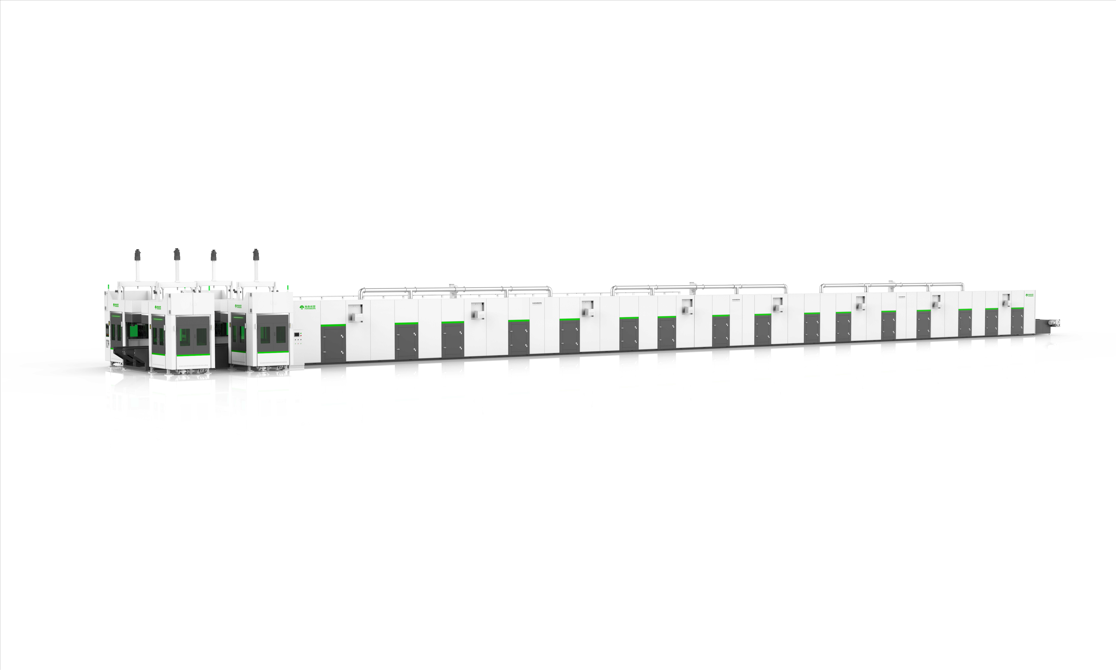
The latest automatic dry-press pulp molding production lines from Hanson Pulp Molding utilize servo drives across all transfer mechanisms to ensure smooth operation. More importantly, they integrate a cold-pressing (pre-dewatering) station before the wet preform enters the tunnel dryer. By removing excess water mechanically first, this process significantly reduces the natural gas required for drying, minimizes product warpage, and extends the maintenance cycle of the tooling, thereby boosting overall plant efficiency.
Beyond the Machine: The Importance of a Turnkey Solution
Whether you choose full-servo equipment or conventional systems, a single machine does not determine your factory’s success. An efficient pulp molding plant requires consistent furnish from the pulping system, excellent dewatering from high-precision tooling, and seamless integration with post-processing automation, such as lamination lines or automatic rotary spray coating lines (like the HXT-24).
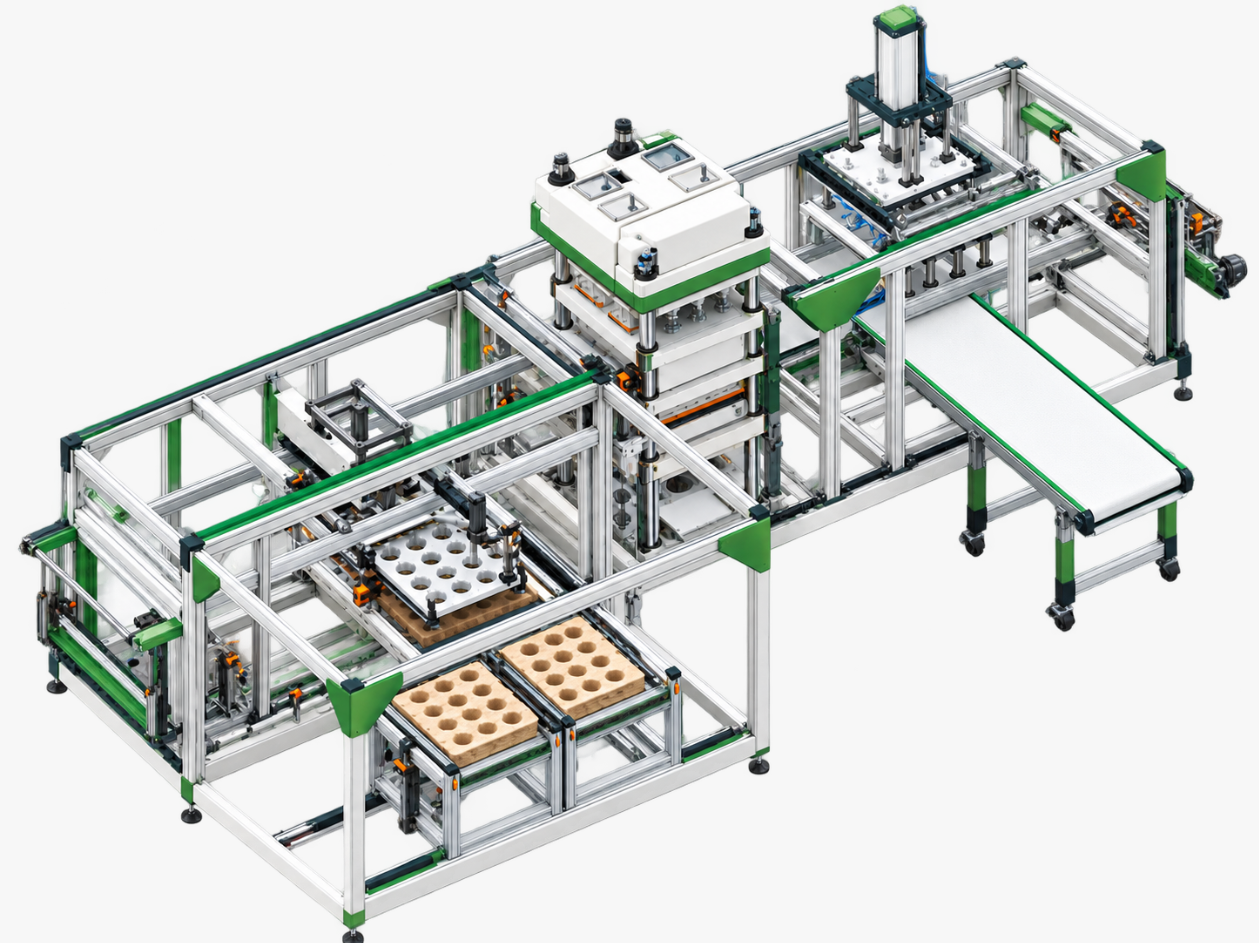
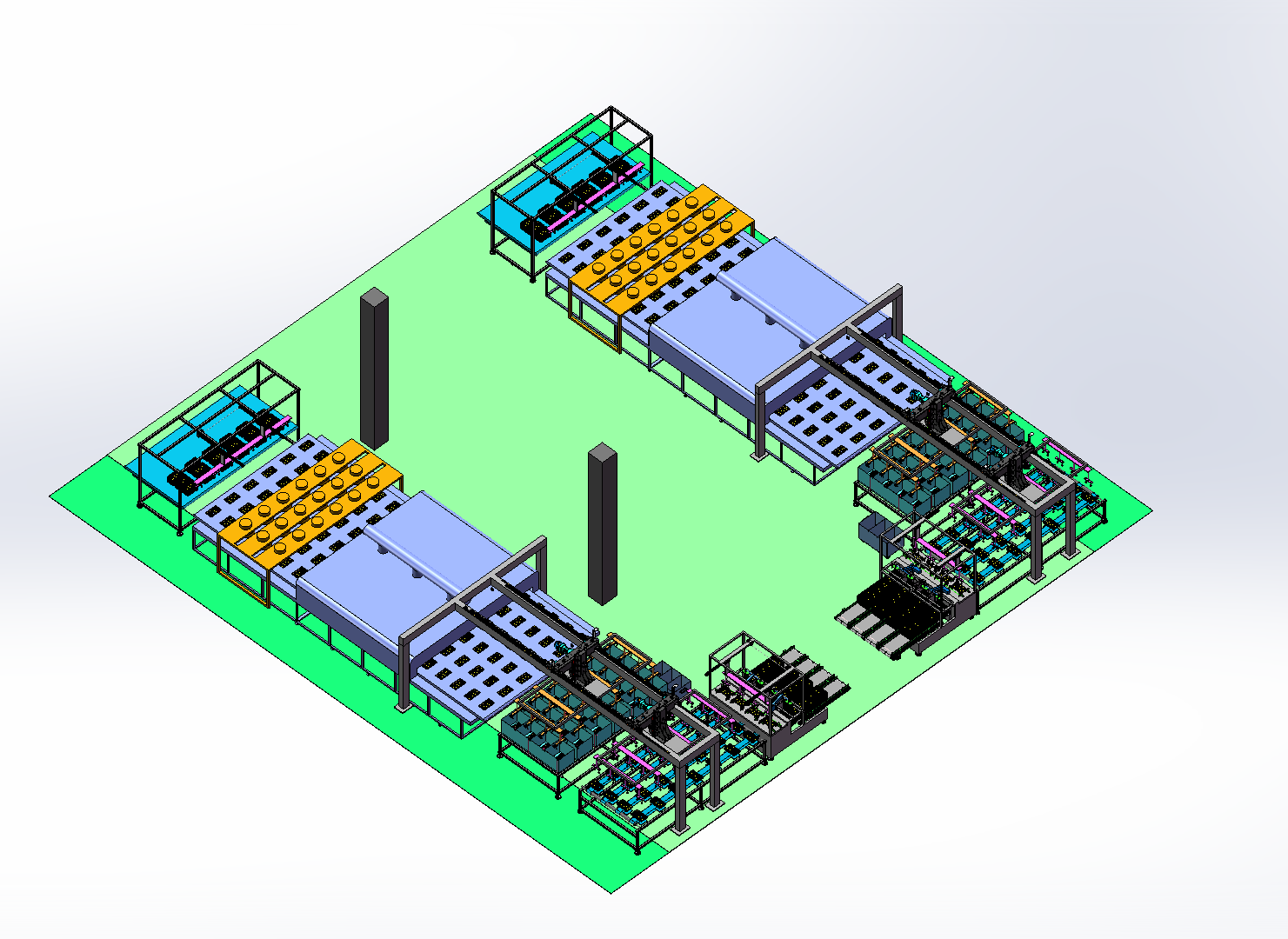
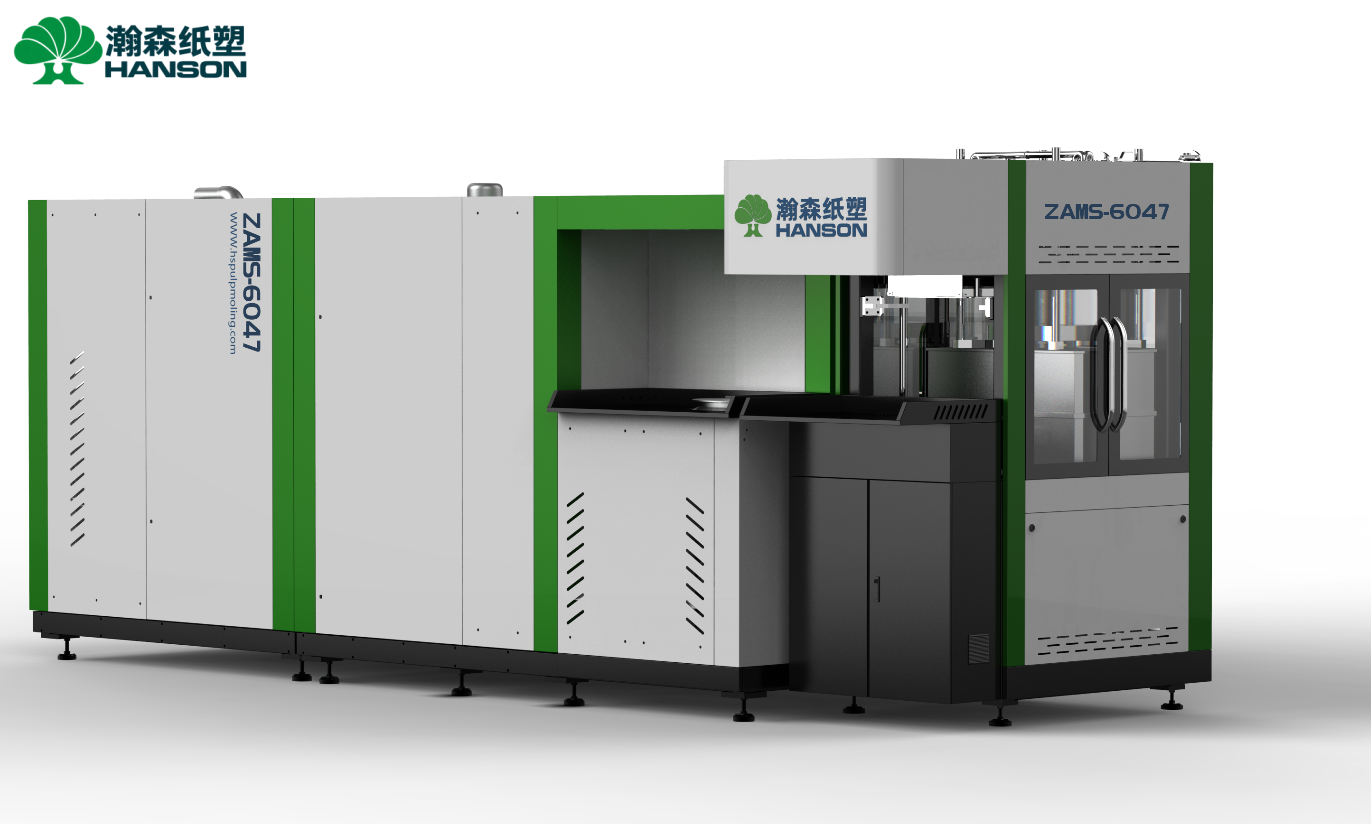
Hanson Pulp Molding is not just an equipment manufacturer; we are a turnkey specialist. From product development and prototyping (using R&D machines like the ZAMS-6047) to plant planning, tooling, forming equipment, and on-site production ramp-up support, we ensure that every stage of your project is perfectly synchronized for stable commercial production.
FAQ
Q1: Can I use the same machine to produce cup carriers and cup lids? No. Cup carriers (drink carriers) are protective packaging products generally produced on dry-press or semi-dry press lines optimized for high-volume drying. Cup lids require extremely tight dimensional tolerances and smooth finishes, necessitating a specialized wet-press automated line (like the ZAKS-9595) that includes precision hot pressing, trimming, and vision inspection.
Q2: Will a full-servo pulp molding machine guarantee higher output? Not necessarily. While full-servo systems improve motion precision, response speed, and stability, actual daily capacity is determined by a combination of product weight, tooling cavity count, dewatering efficiency, hot-pressing time, and overall line uptime, rather than just the machine’s theoretical cycle time.
Q3: Why add a cold-pressing station to a dry press production line? The more moisture a wet preform carries into the drying oven, the more thermal energy is required to evaporate it. Adding a cold-pressing (pre-dewatering) station removes a significant amount of water mechanically before drying. This lowers energy consumption, reduces product warpage, and decreases mold scaling.
Conclusion
Full-servo control technology undoubtedly raises the ceiling for precision and stability in pulp molding equipment. However, the first step in equipment selection is always clearly defining your product. Whether you need a high-capacity tableware line, a precision-focused premium packaging machine, or a highly automated dry-press system, aligning your product, tooling, process, and post-processing automation under a unified turnkey strategy is the true key to commercial success.
Evaluate Your Project
If you already have a product sample, 3D drawing, product dimensions, or a target daily capacity, Hanson Pulp Molding can help evaluate the molding process, tooling, and equipment configuration for your project.
WhatsApp: +86 15920604830
Email: linchuangcheng@hspulpmolding.com