When molded fiber packaging requires enhanced waterproof, oil-proof, barrier properties, or specific surface finishes, lamination is a viable post-processing solution to evaluate. However, when selecting a pulp molding laminating machine, many buyers focus exclusively on equipment price or theoretical speed. Ignoring core structural and processing parameters can lead to unstable lamination quality, misaligned trimming, and overall production bottlenecks.
What parameters should you actually focus on during equipment selection? Based on the detailed specifications referenced in the document “覆膜机设备简介V10_2026.01.15(1).doc”, here are the key factors to evaluate:
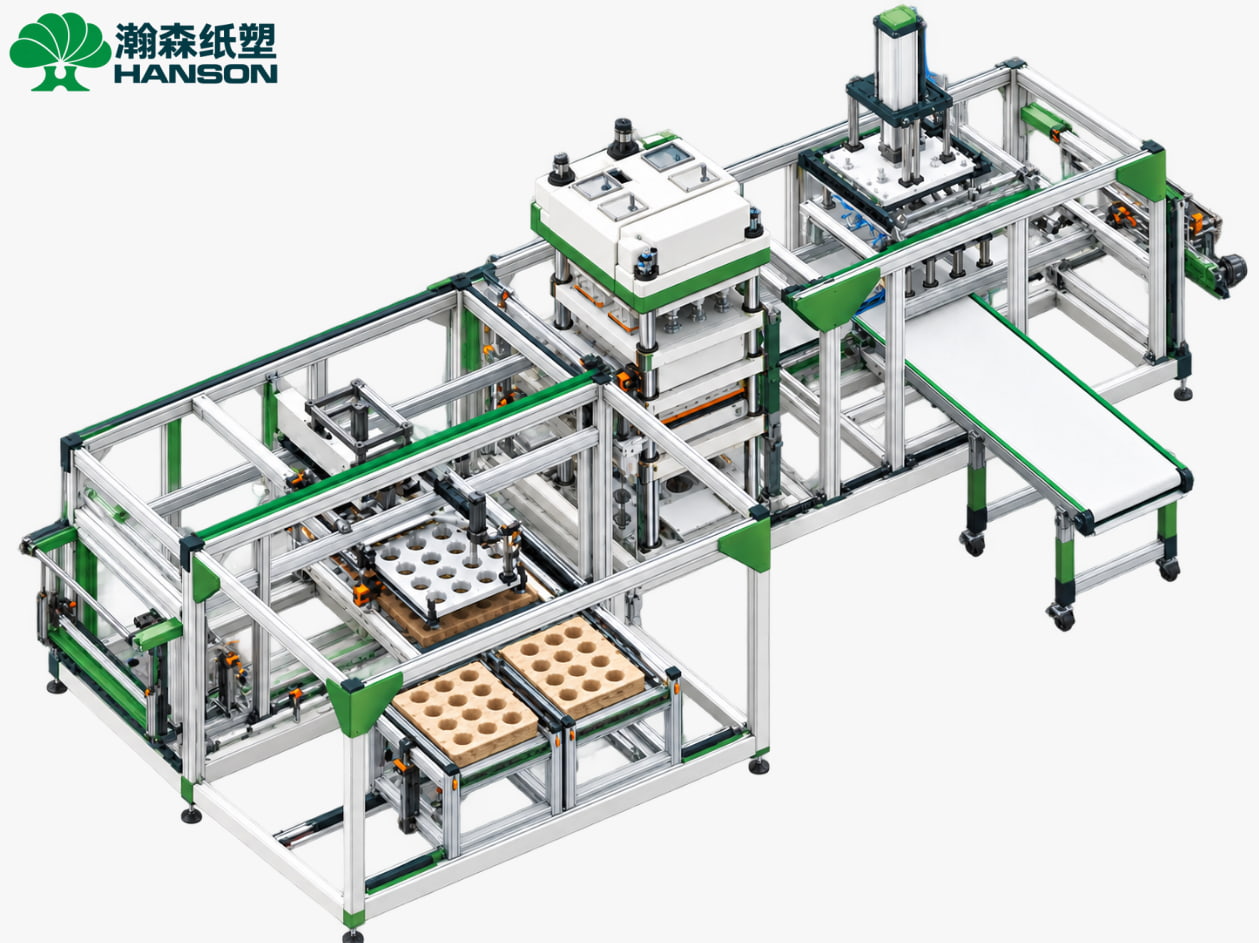
1. Mold Platen Size & Product Dimensions The platen size determines your mold layout and directly impacts output per cycle. Hanson Pulp Molding’s Automatic Pulp Molding Laminating Line features a mold platen size of 1100 × 1100 mm. Additionally, it accommodates a maximum product height of 80 mm. It is crucial to verify these dimensions against your existing product designs to ensure proper clearance and optimal multi-cavity layouts.
2. Motion Structure and Servo Control Stable pressure is essential for flat, bubble-free lamination. The equipment relies on a vertical up-and-down motion structure with no complex lateral movements, maintaining excellent platen flatness and parallelism. Both the lamination station and the trimming station are servo-driven. This servo-controlled motion helps maintain stable and precise operation throughout the cycle.
3. Trimming Force & Process Integration A high-quality production line connects lamination with precise finishing. This system integrates film unwinding, lamination, trimming, and product stacking into a continuous automated flow. The trimming station is equipped with an 80-ton trimming force, ensuring clean, accurate cuts for the laminated edges without manual handling.
4. Film Compatibility & Heating Depending on market demands, you may need to run various films ranging from standard plastics to fully biodegradable options. The machine utilizes electric heating and is compatible with a wide range of films, including PE, PET, PLA, PBAT, PP, and EVOH. The PLC and HMI control system allows operators to adjust parameters for different materials easily.
5. Real Lamination Cycle vs. Capacity While the theoretical lamination cycle is 15 s/mold, actual daily capacity is strictly product-dependent. Factors such as product thickness, specific film requirements, and mold complexity will dictate the true cycle time. Buyers should avoid calculating fixed daily capacities based solely on the fastest machine speed.
If you are evaluating lamination for a molded pulp product, send Hanson Pulp Molding your product photos, dimensions, film requirements, and target performance. Our team can help evaluate the process and suitable equipment configuration.