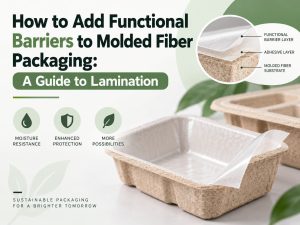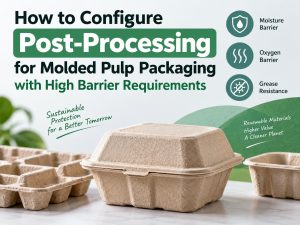
When molded pulp products require enhanced waterproof, oil-proof, barrier, or specific surface properties, the forming process alone is often insufficient. Choosing the right post-processing method is critical. Currently, lamination and coating are the two primary surface treatment solutions in the molded fiber industry. Understanding their differences in functional performance and application can help manufacturers make the right technical decision.
Core Process Differences
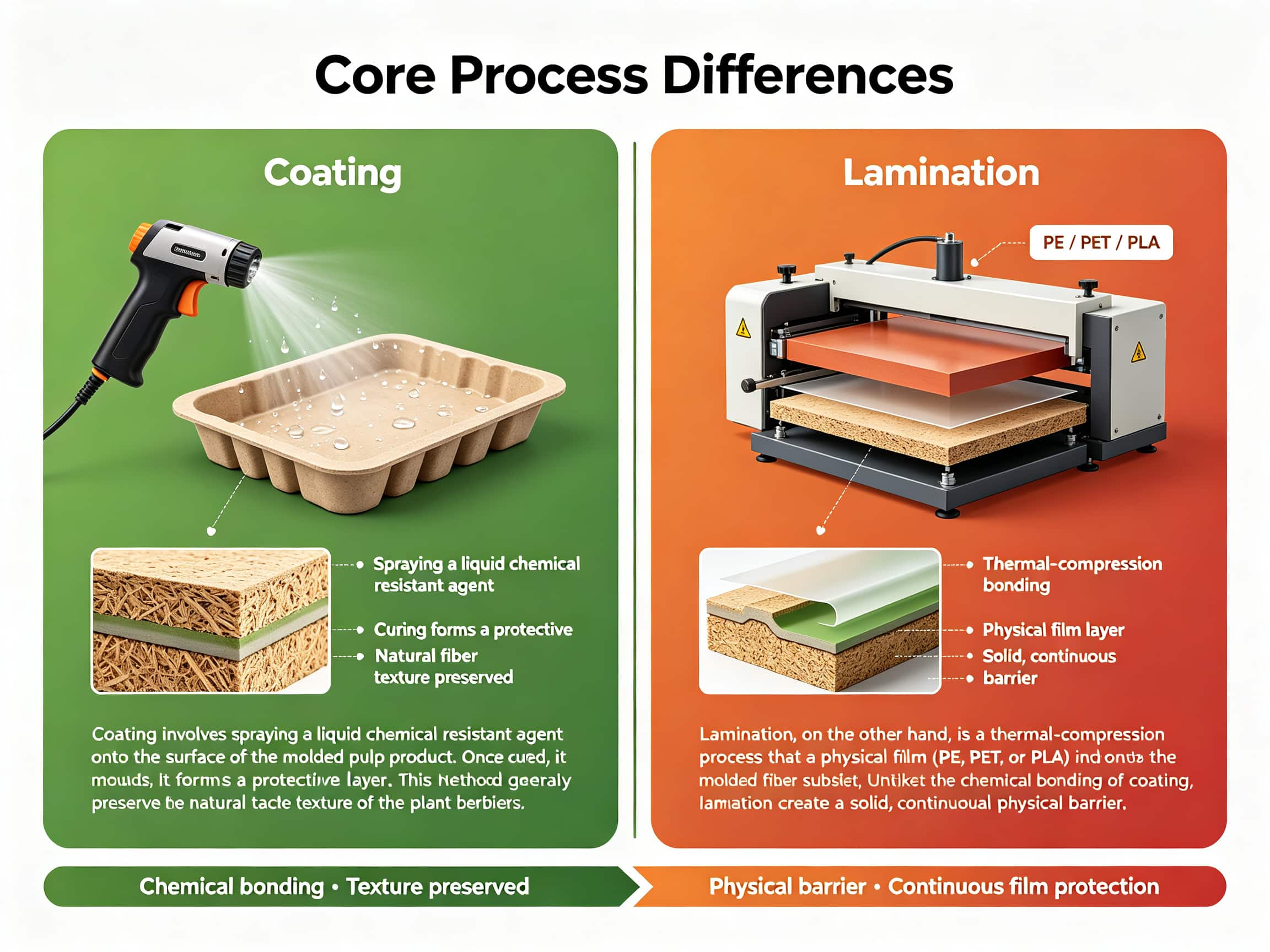
Coating involves spraying a liquid chemical resistant agent onto the surface of the molded pulp product. Once cured, it forms a protective layer. This method generally preserves the natural, tactile texture of the plant fibers.
Lamination, on the other hand, is a thermal-compression process that bonds a physical film (such as PE, PET, or PLA) directly onto the molded fiber substrate. Unlike the chemical bonding of coating, lamination creates a solid, continuous physical barrier.
Performance and Application Comparison
1. Barrier Requirements
If the product only requires basic water and oil resistance for short-term use, high-quality coating can be sufficient. However, if the packaging demands strict gas barrier properties (such as oxygen resistance for extended shelf life), zero-leakage performance, or prolonged resistance to heavy grease, lamination is the superior choice. The continuous physical film prevents liquid or gas penetration effectively.
2. Surface Finish and Functionality
Coating rarely changes the inherent surface smoothness of the pulp product. Conversely, using a pulp molding laminating machine allows manufacturers to apply various finishes—such as glossy or matte—depending on the film selected. Furthermore, if the packaging requires heat-sealing capabilities (e.g., sealing a film lid onto a fresh food tray), lamination provides the necessary medium for a secure seal.
3. Material Adaptability Different films offer different functionalities. The current Automatic Pulp Molding Laminating Line can adapt to a wide variety of films, including PE, PET, PLA, PBAT, PP, and EVOH. This flexibility allows manufacturers to meet specific client demands, whether they require high-barrier EVOH or other specified materials.
How to Choose a Pulp Molding Laminating Machine
If product evaluation indicates that lamination is the optimal process, selecting the right equipment is the next step.
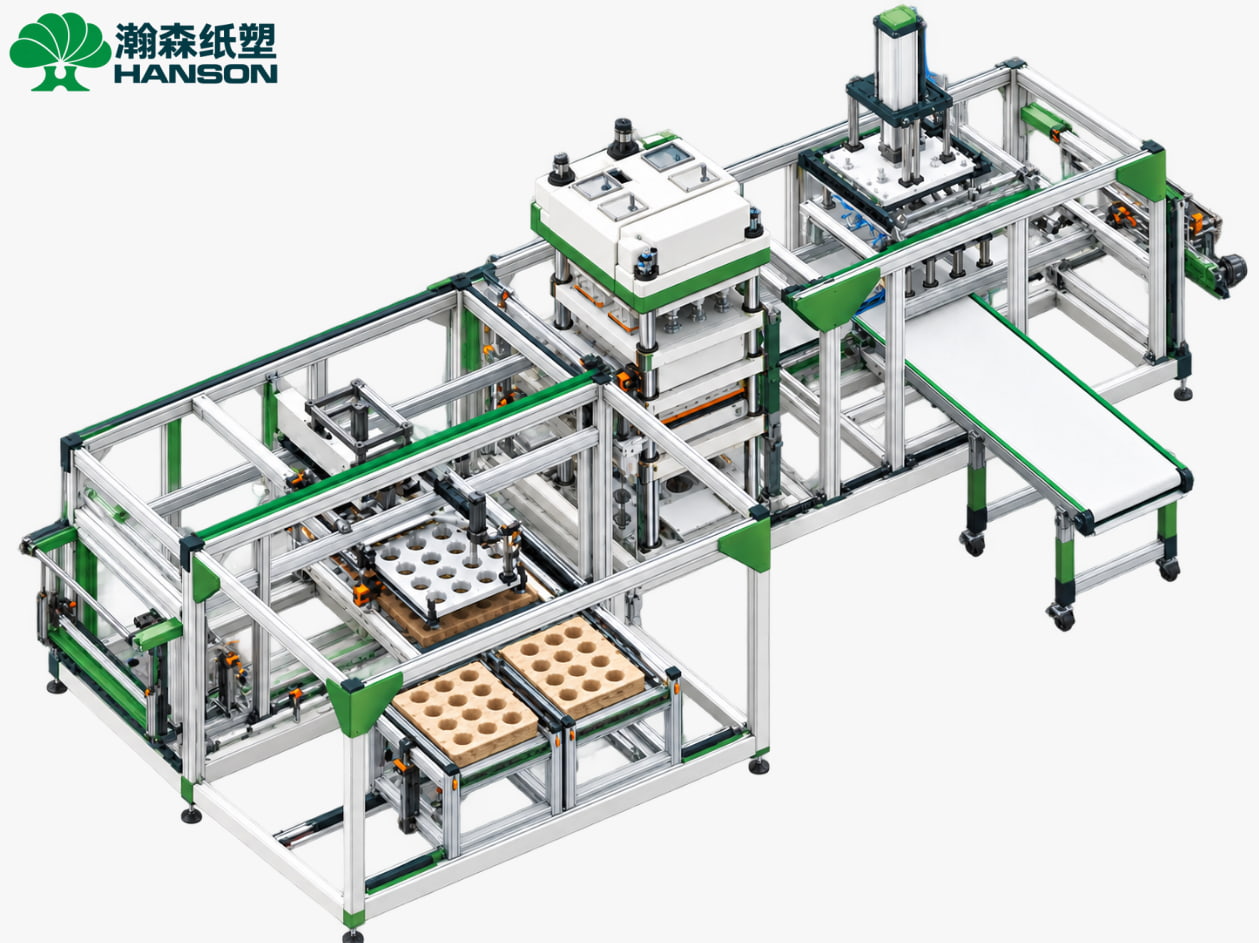
Hanson Pulp Molding provides an Automatic Pulp Molding Laminating Line that seamlessly integrates film unwinding, lamination, trimming, and product stacking. This automated continuous production reduces intermediate manual handling and optimizes the overall line efficiency.
The equipment utilizes full servo control, with servo-driven motions for both the lamination and trimming stations. The servo linkage structure ensures more even pressure distribution and maintains excellent platen parallelism.
Key specifications include a large mold platen size of 1100 × 1100 mm and an 80-ton trimming force, capable of processing products with a maximum height of 80 mm. The machine operates at a lamination cycle of 15 s/mold (please note that actual production capacity is product-dependent). The line’s robust heating system relies on reliable electric heating, managed through a PLC and HMI control system.
Next Steps:
If you are evaluating lamination for a molded pulp product, send Hanson Pulp Molding your product photos, dimensions, film requirements and target performance. Our team can help evaluate the process and suitable equipment configuration.