
In molded pulp manufacturing operations, as equipment ages or client packaging requirements change, plant managers often face a difficult decision: should existing underperforming molded pulp tooling be scrapped, or can it be retrofitted for continued service? Scrapping immediately increases capital expenditure, but forcing a modification on a severely degraded mold can lead to trial failures and project delivery delays. To make an informed decision, packaging manufacturers must evaluate the tooling based on wear, dimensional accuracy, material condition, original machine compatibility, and cost.
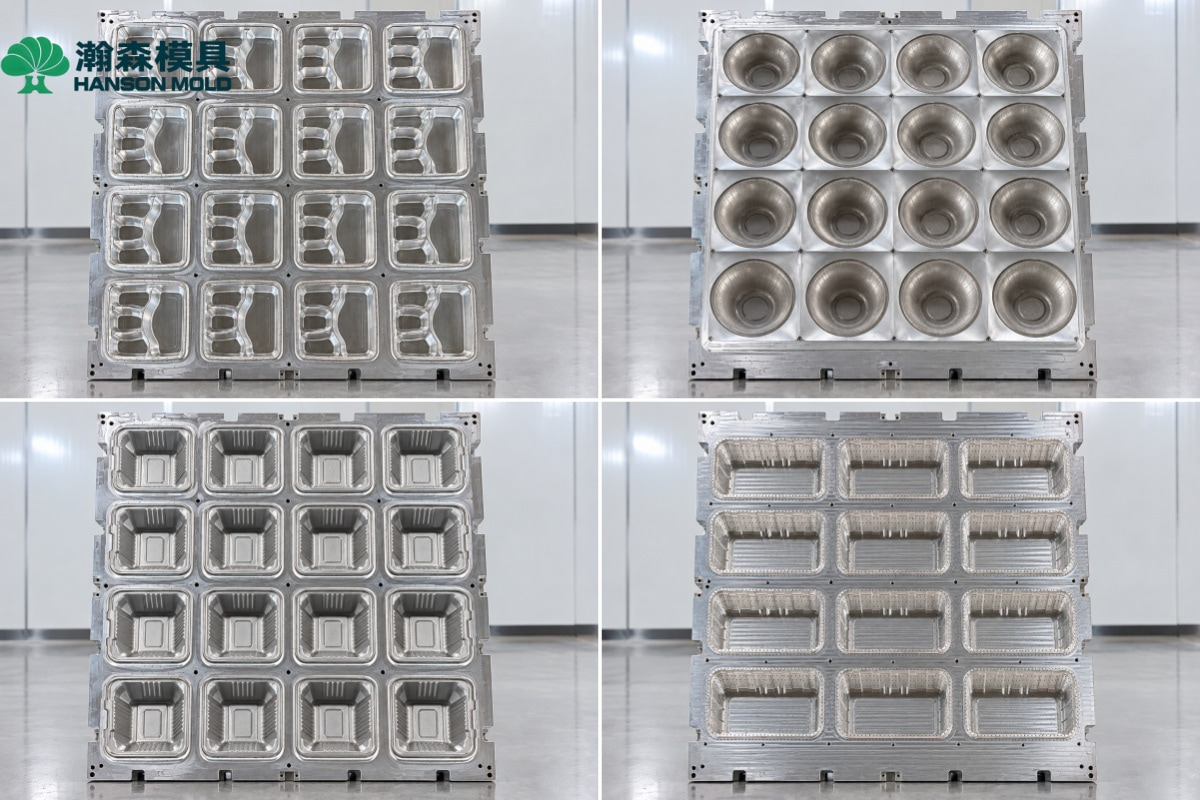
1. Assessing Surface Wear and Structural Deformation
Molded pulp tooling operates in harsh environments, enduring constant slurry flushing and high-pressure thermal cycling. The first assessment step is distinguishing between “consumable wear” and “core structural damage.” If the damage is limited to torn wire mesh on the forming mold or degraded Teflon coating on the hot-pressing mold, the tooling can easily be restored through deep cleaning, re-meshing, or recoating. However, if the main aluminum cavity exhibits severe slurry erosion, edge collapse, or core deformation that alters the draft angles, the structural integrity is compromised. Tooling with this level of physical damage has low modification value and should typically be replaced.
2. Dimensional Accuracy and 3D Scanning Validation
Continuous exposure to heat and pressure can cause internal stress release, leading to micro-deformation in old molds. Strict mold quality inspection is mandatory before any modification begins. The most reliable industry practice is to thoroughly clean the old mold and use high-precision 3D scanning for reverse inspection. By comparing the scanned point cloud data against the original 3D CAD drawings, engineers generate a deviation color map. If critical assembly dimensions and wall thickness clearances remain within acceptable tolerances, the mold is a candidate for modification. If crucial locating holes or closing surfaces are irreversibly misaligned, the retrofit project should be abandoned.
3. Tooling Material Condition and Fatigue
The current health of the mold’s base material dictates whether it can withstand secondary CNC machining. Some older or low-cost molds use inferior cast aluminum, which may contain internal porosity or micro-cracks. After hundreds of thousands of production cycles, metal fatigue sets in. If a retrofit requires adding vacuum holes, adjusting ribs, or performing deep drilling, inferior aluminum is highly prone to edge chipping or cracking during high-speed CNC finishing. Therefore, verify that the original mold is made of high-strength aviation-grade aluminum (such as 6061 or 7075) with no signs of deep corrosion.
4. Original Machine Compatibility and Process Alignment
When modifying old molds that operate on non-Hanson equipment, machine compatibility is a critical metric. Different forming and hot-pressing machines have varying platen sizes, clamping force distributions, vacuum piping, and heating layouts. Before modifying, ensure the proposed changes align with the original machine’s stroke and piping. Often, defects like incomplete forming, sticking, or uneven thickness are not solely mold issues; they require a comprehensive diagnosis of slurry concentration, vacuum timing, and hot-pressing temperatures. The tooling retrofit should focus on optimizing drainage and venting efficiency, but the final validation must always be conducted on the actual production equipment in your facility.
5. Cost-Benefit Analysis (Retrofit vs. New Tooling)
Once technical feasibility is confirmed, conduct a financial review. A standard old mold modification process includes: disassembly → cleaning → 3D scanning → targeted CNC machining → re-drilling/re-meshing → assembly and inspection. If extensive structural changes are required, the combined costs of labor, CNC tool wear, and logistics can easily exceed 60% of the price of a brand-new mold. From a mass production support perspective, if the retrofit cost surpasses 50% of new tooling—considering the shortened remaining lifespan of the old mold—investing in a new set of molded pulp molds usually offers a better Return on Investment (ROI).
Tooling Optimization and Support with Hanson Pulp Molding
With a dedicated tooling division and 500 pulp molding molds manufactured to date, Hanson Pulp Molding understands that superior tooling requires a deep understanding of both processes and equipment. For old tooling running on non-Hanson machinery, we offer a dedicated service path: Old Mold Optimization & Modification → Mass Production Support. Utilizing high-speed CNC machining (up to 24,000 RPM) and rigorous 3D scanning, our engineering team accurately diagnoses your mold’s retrofit potential—preventing wasted investments and ensuring stable yields after project delivery.
-
FAQ 1: Our products have severe flash (burrs). Does this mean our old mold must be retrofitted? Not necessarily. Flash issues should be troubleshooted systematically. First, verify if the hot-press machine’s platen parallelism and clamping force meet standards, and check if the slurry fiber length is too long. If equipment and slurry are optimal, mold quality inspection can determine if the hot-pressing mold’s cutting edges are worn or misaligned, which would then require targeted modification.
-
FAQ 2: Can we send molds from non-Hanson equipment to your facility for trial after you modify them? Because mounting hole layouts, piping designs, and operating parameters vary significantly across different brands of forming and hot-pressing machines, we focus on optimizing and manufacturing the physical tooling itself. To ensure perfect compatibility, tooling trials must be conducted on your actual production line. We provide remote or on-site mass production support to assist with this phase.
-
FAQ 3: How long does it take to deliver a molded pulp tooling retrofit project? Delivery timelines depend on the depth of the modification. Routine maintenance like cleaning, re-meshing, and basic stress relief takes about 3 to 5 days. Complex projects requiring 3D scanning reverse engineering and extensive CNC remachining of the cavity may take 7 to 10 days. A precise timeline is provided after our initial assessment.
-
Are your old molded pulp molds creating production bottlenecks? Contact the engineering team at Hanson Pulp Molding for a professional tooling evaluation. Reach out to us today to discuss your mold retrofit feasibility or arrange for diagnostic mass production support. [+86 15920604830].