
When developing premium molded pulp inserts for applications like consumer electronics or high-end cosmetics, tooling design is about much more than just shaping the product. It is about finding the optimal balance between providing rigorous physical protection for drop tests and ensuring high-yield mass production feasibility. Early in the molded pulp product development phase, engineers must systematically evaluate buffer structures, product positioning, aesthetic requirements, demolding efficiency, and tolerances for subsequent assembly.
Structural Buffering: Integrating Shock Absorption into Tooling Design
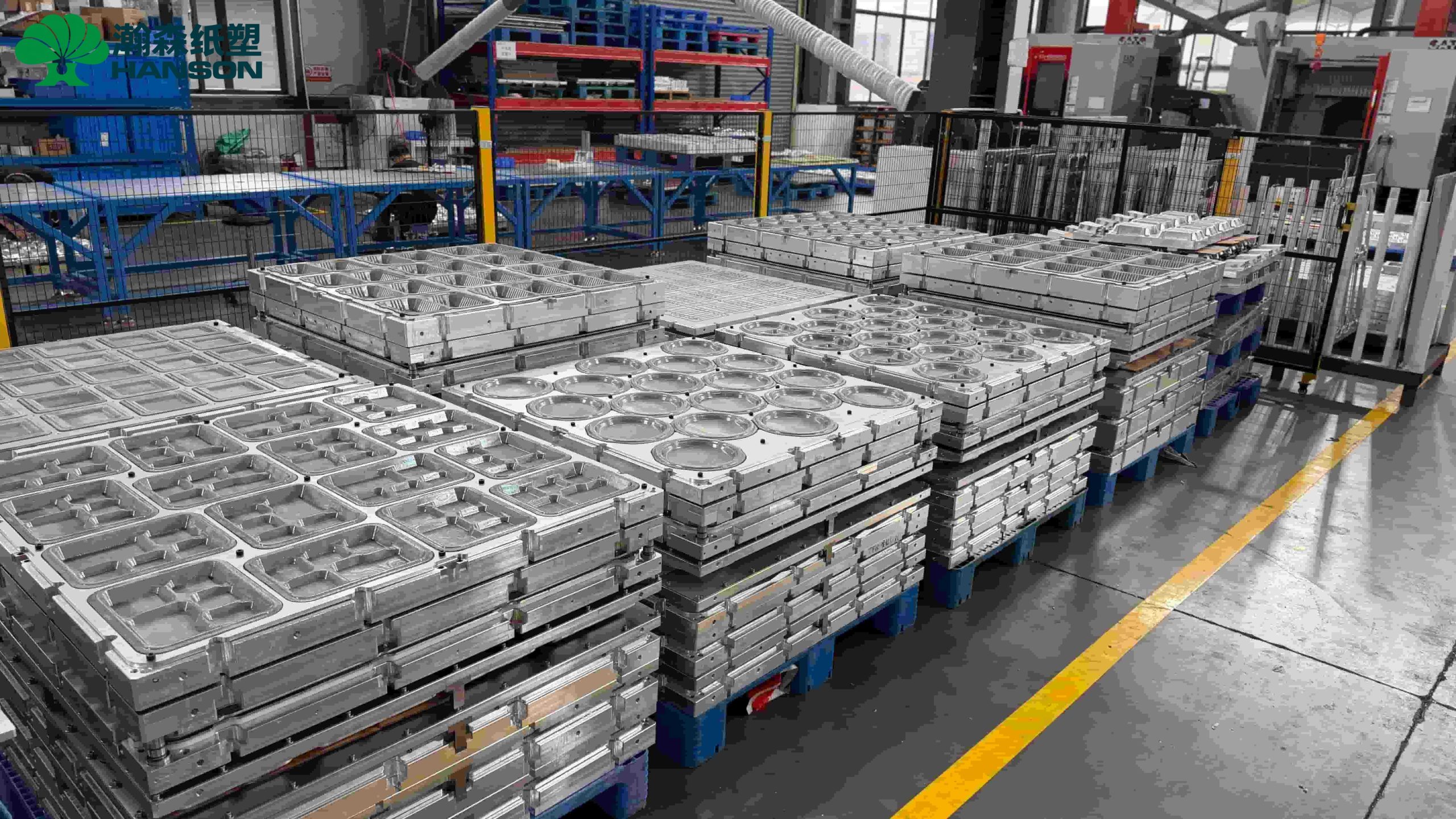
Molded fiber inserts rely on specific geometric structures and wall thicknesses to absorb impact. During tooling design, ribs and buffering cavities must be strategically placed in stress-bearing areas and along the edges. A critical design check is avoiding overly deep or narrow cavities. Excessively deep sections can cause uneven pulp suction, resulting in localized areas that fail to meet weight specifications and subsequently lose their cushioning effect. Therefore, during the rough and finish machining of the tooling, cavity dimensions must align precisely with fluid dynamics analysis, and vacuum holes must be distributed optimally to ensure uniform fiber formation across complex geometries.
Positioning and Aesthetics: Flawless Smooth Side Execution
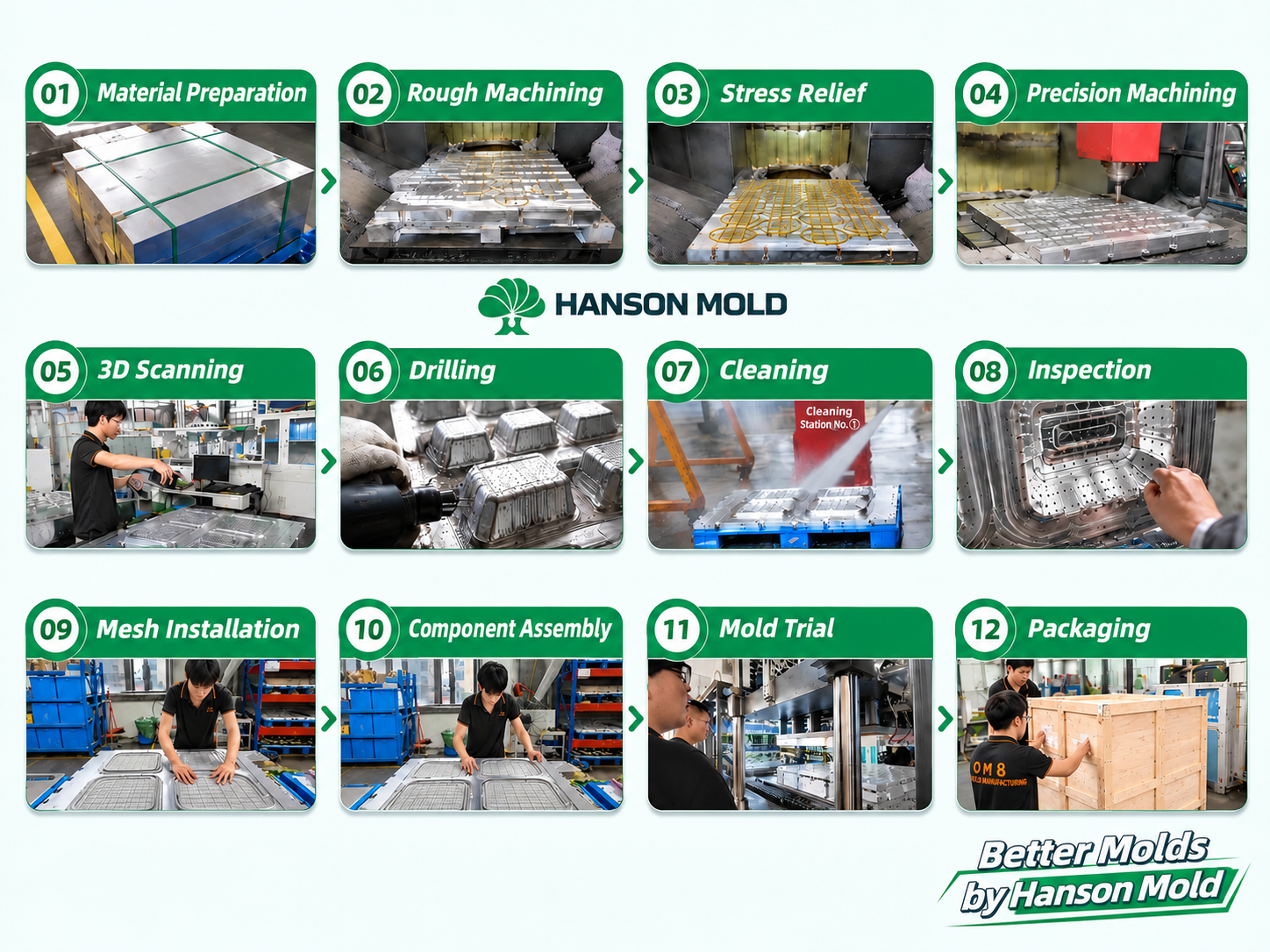
Premium industrial packaging typically requires the smooth side (cosmetic side) of the molded fiber product to exhibit exceptional flatness and visual quality, while providing high-precision positioning (like snap-fits) for the items inside (e.g., smartphones or glass bottles). The finish of the cosmetic side heavily depends on the surface machining of the hot-pressing mold. Hanson Pulp Molding utilizes high-speed CNC machining centers (reaching up to 24,000 RPM) to ensure the hot-pressing molds are entirely free of machining marks. Following this, 3D scanning is employed to verify the dimensional tolerances of key positioning points, ensuring the final molded product firmly secures the internal items without causing friction scratches during transit.
Ensuring Smooth Demolding: A System-Wide Diagnostic Approach
During prototyping and tooling trials, production supervisors often encounter sticking, tearing, or localized burrs. A common mistake is to blame these issues entirely on insufficient draft angles or poor mold polishing. In reality, demolding is a systematic process, and troubleshooting should follow a clear priority checklist:
-
Tooling Factors: For premium packaging, draft angles should generally be maintained between 3° and 5°. Furthermore, the smoothness of the mesh covering on the forming mold’s mesh side (rear side) directly impacts the distribution of demolding forces.
-
Slurry Factors: Verify the proportion of sizing agents (such as AKD emulsion) in the slurry recipe and the water retention capabilities of the fibers. Abnormal slurry properties can lead to insufficient wet-web strength, causing tearing.
-
Equipment and Process Factors: Conduct on-site checks to ensure vacuum suction, transfer blow-off pressures, and hot-pressing temperatures are stable and appropriate. If demolding difficulties occur, do not rush to modify the mold; always cross-verify process parameters on the factory floor first.
Tolerances for Subsequent Assembly: Managing Shrinkage
Premium molded fiber packaging often involves multi-part assembly, such as fitting a molded pulp insert precisely into a rigid outer carton. Molded pulp undergoes unavoidable shrinkage during forming and hot-pressing, so tooling design must pre-calculate and accommodate these allowances. With an independent tooling division, a team of 10 senior designers, and 500 pulp molding molds manufactured to date, Hanson Pulp Molding excels at predicting shrinkage variables across different slurries (such as bagasse, bamboo, or mixed wood pulp). By incorporating stress relief steps and precise tooling parameters, we effectively control product deformation.
Whether operating with Hanson equipment or non-Hanson machinery, we support product development through a complete pathway: from product development and comprehensive tooling services to trial validation and mass production support. We understand the process, the equipment, and especially the tooling, effectively eliminating production risks right at the design phase.
B3 附加输出 (English Additional Outputs)
English FAQs:
-
What is the recommended draft angle for premium molded pulp packaging molds? Answer: To ensure smooth demolding without tearing the side walls, a draft angle between 3° and 5° is typically recommended for premium inserts. If the product is unusually deep or has a complex structure, localized increases in the draft angle may be required.
-
If the snap-fit positioning deforms during tooling trials, is it a mold tolerance issue? Answer: Not necessarily. Deformation at positioning points can result from insufficient wall thickness in the mold’s hot-pressing cavity, miscalculated slurry shrinkage, or inadequate hot-pressing temperature and dwell time. It requires cross-referencing machine process parameters with the mold’s 3D scanning data.
-
What steps are involved in the manufacturing cycle of a new molded pulp mold? Answer: A complete manufacturing process for premium tooling includes casting/aluminum blanking, rough machining, stress relief, high-speed finish machining, 3D scanning inspection, drilling, cleaning, mesh covering, assembly, and finally, the prototyping tooling trial to guarantee mass-production readiness.
CTA (Call to Action): Preparing to develop a new molded fiber insert for consumer electronics or premium cosmetics? Contact Hanson Pulp Molding’s independent tooling division today. We offer end-to-end services—from structural evaluation and tooling design to sample making and tryouts—clearing your path to seamless mass production. (International contact to be confirmed)