
In molded fiber packaging production, demoulding or stripping difficulties—such as sticking, tearing, or severe warping—require a multi-dimensional diagnosis. It is a common engineering mistake to solely blame the tooling design. The correct troubleshooting priority should be: first, inspect the tooling side (demoulding angles and surface finishes); second, evaluate the pulp process (fiber characteristics and wet-blank moisture); and finally, verify the equipment settings (vacuum and blow-off parameters of the transferring mold). All adjustments must be cross-verified with on-site production data.
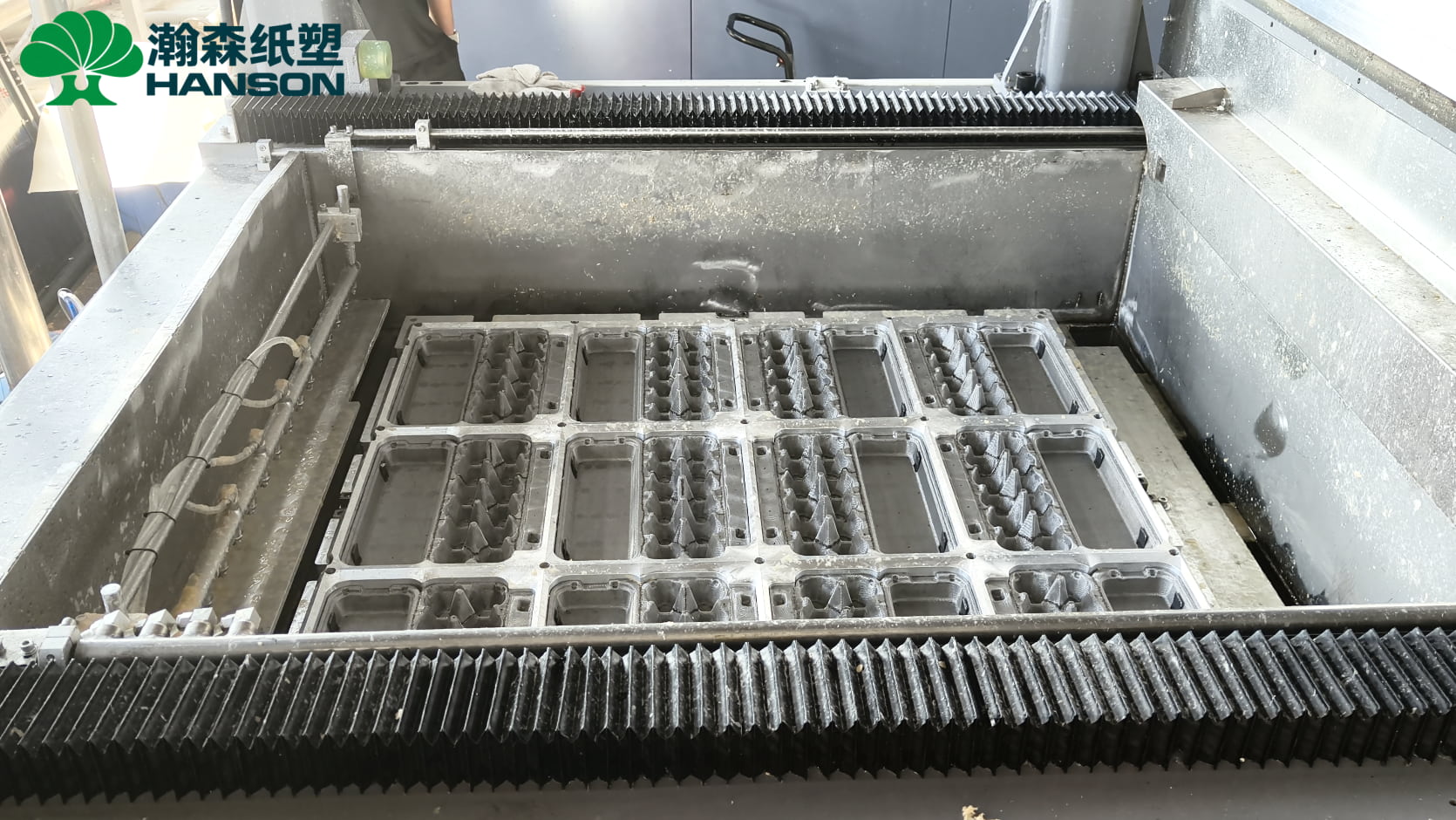
Step 1: Tooling Analysis — Draft Angles and Surface Conditions
The physical geometry and condition of the mold are the foundation of a smooth release. If fundamental flaws exist here, parameter tuning will not solve the underlying issue.
Demoulding Angle Anomalies Molded pulp products require an appropriate draft angle for a clean release. If product designers insist on perfectly vertical walls and apply a low angle demoulding technology or zero-draft design without specialized tooling ejection mechanisms, the product will inevitably get stuck in the cavity. If an insufficient draft angle is suspected, use 3D scanning equipment to inspect the problematic cavities and compare the actual machined geometry against the original CAD design.
Surface Finish and Mesh Fit Precision machining directly dictates the friction during stripping. A rough mold surface, or localized carbon buildup in hot-pressing applications, dramatically increases adhesion. Furthermore, the installation of the meshes (both the cosmetic side and mesh side) must be flawless. Any torn mesh or excessive gaps will cause the pulp to bite into the crevices, creating mechanical undercuts that prevent the product from releasing.
Step 2: Pulp and Process Analysis — Fiber Characteristics and Wet-Blank Moisture
Once mechanical tooling issues are ruled out, evaluate the physical state of the material during the forming cycle.
Fiber Composition and Drainage Different plant fibers (such as wood pulp, bamboo, or bagasse) possess varying fiber lengths, flexibilities, and shrinkage rates. If the pulp formulation contains an excessive ratio of long fibers, or if the beating degree is too high (resulting in poor drainage), the formed walls become highly dense. As it shrinks, the product tightly grips the mold core, making stripping difficult. Adjusting the fiber blend can significantly improve the demoulding property.
Moisture of Wet Preform After pressing but before demoulding, the condition of the wet-blank is a critical variable. The moisture of the wet preform must be strictly maintained (typically between 60% and 80%, depending on the specific process). If the moisture level is too high, the wet-blank remains overly soft, and high surface tension causes it to adhere firmly to the cavity wall, severely dragging down the yield rate. Optimizing vacuum duration during the forming stage is the primary method to correct this.
Step 3: Equipment Synergy — Transferring Mold Settings
Stripping is essentially a physical handover between two stations, requiring precise synchronization between the forming mold and the transferring mold.
Vacuum and Blow-off Timing As the molds separate, the forming mold must release a momentary burst of compressed air to push the product out, while the transferring mold must simultaneously activate its vacuum suction. If the air blow is delayed, the air pressure is insufficient, or the transferring mold lacks adequate vacuum power, the product cannot be safely handed over. This mismatch results in the wet-blank tearing or remaining stuck in the forming cavity. Operators should check the PLC timing settings and inspect pneumatic lines for blockages.
Temperature Distribution (For Hot-Press Demoulding) If the demoulding issue occurs during the in-mold drying phase, verify the temperature uniformity of the heating plates. Excessive heat can cause the fiber on the wet-blank’s surface to scorch and bond to the metal. Conversely, if the temperature is too low, the moisture cannot vaporize quickly enough to form the steam layer necessary for a smooth release.
Solving Demoulding Bottlenecks with Hanson Pulp Molding
Persistent demoulding failures often point to legacy defects in tooling design or imprecise machining. Hanson Pulp Molding operates a dedicated tooling division and has successfully delivered 500 pulp molding molds manufactured to date. We understand the deep interplay between mold mechanics and process parameters.
Following a strict 12-step manufacturing protocol—incorporating high-speed CNC precision machining (up to 24,000 RPM), stress relief, 3D scanning, assembly, and trial runs—we ensure optimal process adaptation before delivery. For legacy molds running on non-Hanson equipment, we offer comprehensive tooling optimization and on-site troubleshooting to help you overcome demoulding bottlenecks and maximize your production yield rate.
B3 English Extras
-
English FAQs:
-
Do demoulding difficulties always lead to scrap products? Yes. Minor stripping issues will cause surface burrs, scuffs, or dimensional warping. Severe sticking will tear the wet-blank completely, forcing machine downtime to manually clean the pulp out of the cavities, which drastically reduces your continuous yield rate and cycle efficiency.
-
How can I quickly tell if it’s a mold angle issue or a parameter problem? Use variable control. If the same mold exhibits inconsistent demoulding behavior across different shifts or parameter adjustments, it’s likely a process adaptation issue. However, if specific cavities consistently stick no matter how the parameters are tuned, stop production and use a 3D scanner to check those specific cavities for incorrect draft angles or poor polishing.
-
Can wear and tear on the transferring mold cause stripping failures? Absolutely. The transferring mold relies on airtight seals to generate vacuum suction. If the suction meshes are blocked by loose fibers, or if the perimeter seals are degraded and leaking, it cannot provide the necessary pull force to overcome the wet-blank’s adhesion to the forming mold, leading to a handover failure.
-
-
CTA: Are you struggling with demoulding difficulties or low yield rates in your molded pulp facility? Contact Hanson Pulp Molding for expert tooling evaluation and on-site support. Reach out to our engineering team at [International contact to be confirmed] for a comprehensive diagnostic of your legacy tooling and process parameters.