
When investing in a molded fiber factory, much of the initial focus is often placed on the theoretical cycle time and price of the pulp molding equipment. However, purchasing machinery is not equivalent to establishing a stable, commercial-scale production facility. Many investors, whether transitioning from the plastic packaging industry or expanding from paper manufacturing, encounter delays because they underestimate the systematic nature of molded fiber production.
A successful pulp molding project requires coordination among product definition, raw materials, molded fiber tooling, forming equipment, and the pulping system. As a specialist in turnkey pulp molding solutions, Hanson Pulp Molding has supported numerous enterprises through plant planning and mass production. Based on actual project reviews, here are four critical areas that are frequently overlooked in the early stages of a pulp molding project.
1. Skipping Prototyping and Process Validation
A common oversight is moving directly to the procurement of large-scale production lines based solely on a 3D product design. The dynamics of molded fiber—such as fluid flow, vacuum dewatering, and draft angles—require practical process validation. Customizing a mass production line without prior prototyping introduces risks.
Project Insight: Custom Development for Shengquan When Shengquan initiated a project for a special-sized diamond bowl, there was no readily available equipment solution on the market. Instead of offering standard machinery, Hanson Pulp Molding engaged in custom development and conducted OEM production (prototyping and process validation) for approximately seven months. Only after the product structure, dewatering efficiency, and process parameters were verified did the project transition to mass production using the Hanson Pulp Molding ZBG-1111 full-servo tableware machine.
Takeaway: For non-standard products, conducting prototyping and process validation before configuring mass production equipment helps mitigate investment risks.

2. Underestimating the Role of Molded Fiber Tooling
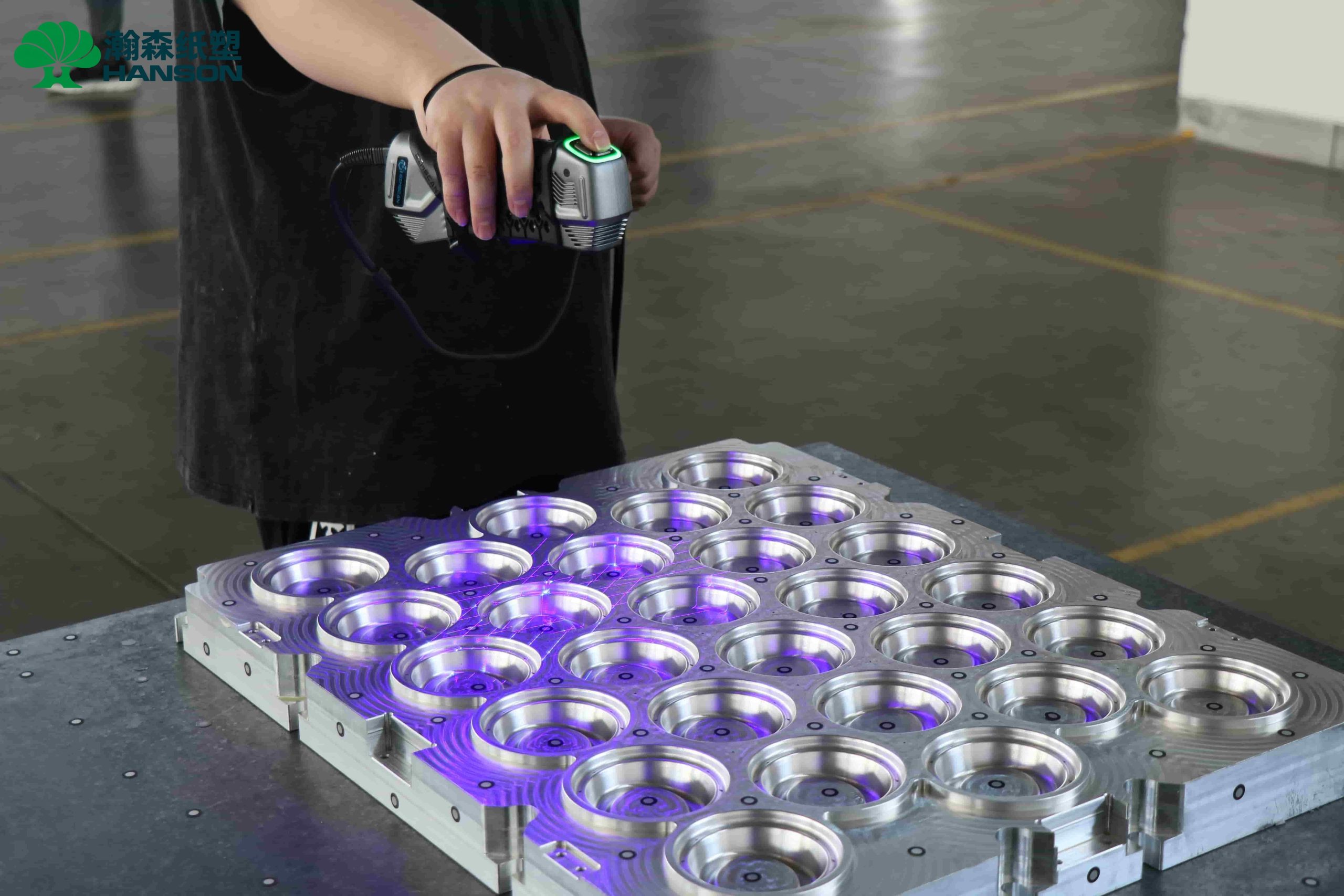
In the pulp molding process, molds are not simply consumable accessories. The design of the forming tool influences fiber retention, the moisture content of the wet preform, hot pressing results, and the final dimensional accuracy. The same pulp molding equipment may yield different daily outputs and quality levels depending on the dewatering efficiency of the molds.
Project Insight: Premium Industrial Packaging with Tonglibo Premium industrial packaging, such as inserts for consumer electronics, requires strict dimensional tolerances and surface smoothness. In a collaboration with Tonglibo, five orders were placed over approximately two years. This continued partnership was based on the synergy between the equipment, tooling design, and dynamic process control, which supported production consistency across multiple batches. Similarly, Gaoyi Packaging has completed eight repeat purchases of Hanson Pulp Molding equipment, demonstrating that long-term stability relies heavily on tooling adaptation.
3. Ignoring the Pulping System in Plant Planning
The overall efficiency of a pulp molding production line is determined by the system as a whole. If the pulping system delivers an inconsistent slurry concentration, the weight and quality of the formed products will fluctuate. Additionally, if factory utilities are not planned adequately, the forming equipment cannot operate at its designed capacity.
Project Insight: Turnkey Plant Planning for Hunan Linggao The Hunan Linggao project included approximately 35,000 tons of pulp molding tableware and 120,000 tons of bamboo pulp. As the industry’s first BCTMP project, Hanson Pulp Molding participated in the turnkey system setup, integrating plant planning, the pulping system, forming equipment, and process adaptation. Furthermore, in a project with Yongfa Printing, the focus was specifically on a customized intelligent pulping system, where piping layout and consistency control were optimized to improve slurry stability.
Takeaway: Plant capacity is the combined result of pulping, forming, utilities, and post-processing.、

4. Equating Equipment Installation with Stable Mass Production
Completing the installation of a pulp molding machine and producing qualified samples indicates that the commissioning phase is successful, but achieving stable commercial production involves a production ramp-up period. Operator training, process parameter stabilization, and energy dispatch optimization require ongoing engineering support.
Project Insight: Multi-Process Integration for Wuliangye / Jinzhu In the Wuliangye / Jinzhu project—an investment of approximately 80 million RMB representing the first turnkey factory to integrate both wet press and dry press molded fiber lines—the process required deep adaptation for bamboo pulp characteristics and energy scheduling. Hanson Pulp Molding provided turnkey support beyond equipment delivery, enabling the facility to roll out products by November 30, 2025.
Conclusion
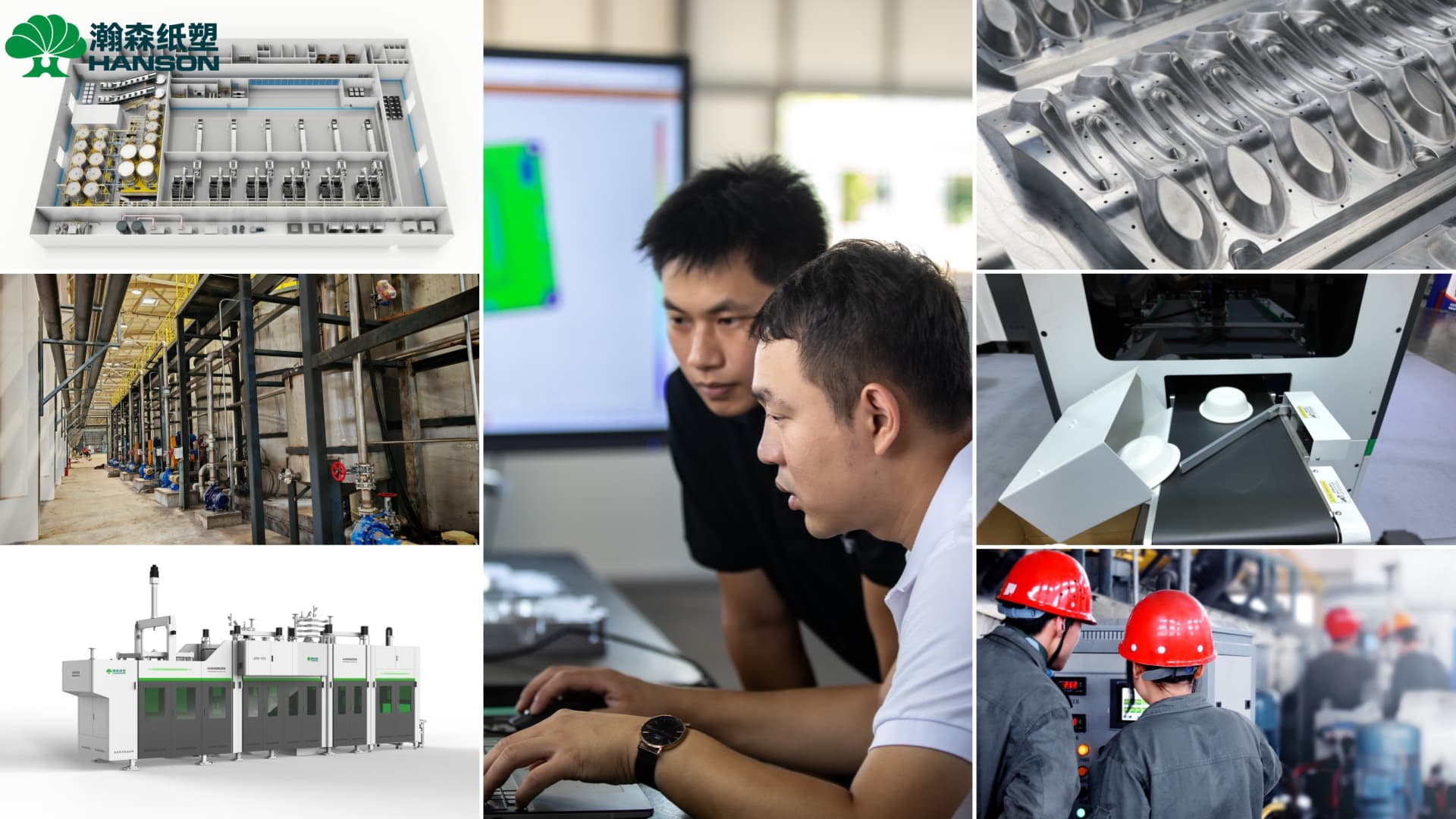
Evaluating pulp molding equipment should involve a comprehensive assessment of the entire production process. From plastic packaging manufacturers transitioning to molded fiber, to paper mills extending their product lines, a practical approach is to plan the factory based on the target product. Integrating product definition, tooling, intelligent pulping, forming equipment, and post-processing automation into a cohesive turnkey logic facilitates a smoother transition to stable mass production.
FAQ
1. How is the actual daily capacity of a pulp molding machine determined? Actual daily capacity is not solely based on theoretical cycle times. It depends on the product weight, dimensions, number of mold cavities, forming time, hot pressing time, and overall equipment utilization. For instance, under appropriate production conditions, the Hanson Pulp Molding ZFG-1111 can reach a daily capacity of over 1.8 tons, but this must be confirmed based on specific mold and process parameters.
2. Why should new products undergo prototyping first? Prototyping using specialized equipment (such as the ZAMS-6047) allows you to validate the product structure, material suitability, and dewatering efficiency before investing in mass production lines. This step helps identify and resolve potential molding issues early on.
3. What is the value of a turnkey pulp molding solution? A turnkey approach reduces interface issues among the pulping system, molds, forming equipment, and post-processing automation. By managing the project under a unified technical logic, risks such as inadequate pulping capacity or mismatched tooling can be minimized, shortening the time needed to reach stable production.
Evaluate Your Pulp Molding Project
If you are planning a new pulp molding plant or evaluating equipment for molded fiber packaging, sharing details such as your target product type, expected capacity, and plant conditions is recommended. Hanson Pulp Molding can help evaluate the molding process, mold configuration, and turnkey equipment setup for your project.
-
WhatsApp: +86 15920604830
-
Email: linchuangcheng@hspulpmolding.com