When a company is preparing to develop a completely new product structure, use a new type of fiber material, or transition from conventional plastic thermoformed packaging to sustainable paper-based packaging, directly purchasing large-scale pulp molding equipment can involve significant technical and capital risks. Sufficient preliminary verification is essential for achieving stable and efficient commercial mass production.
The right approach should always begin with equipment prototyping: first validate the materials and molds, and then plan the mass-production line and equipment configuration. So, what key conditions should you focus on before deciding to purchase a prototyping line?
Condition 1: Comprehensive Material and Pulp Compatibility Testing
The core of a pulp molding project is not only the machine itself. The pulp system also plays a decisive role. For companies developing new bio-based materials or conducting specialized chemical additive research, the primary function of prototyping equipment is to serve as a reliable material testing platform.
Project Verification Example: In Solenis’ chemical additive R&D projects, frequent testing of different pulp systems and functional additive formulations was required. HANSON Pulp Molding therefore customized dedicated prototyping equipment to ensure high compatibility with formulation iterations and testing experiments, laying the foundation for moving from R&D to industrial-scale verification.

Condition 2: Accurately Identify Product Structure and Mold Issues
No matter how perfect a 3D drawing may look, factors such as draft angles, drainage hole design, wall-thickness distribution, and fiber shrinkage after drying must ultimately be verified through actual forming and pressing tests.
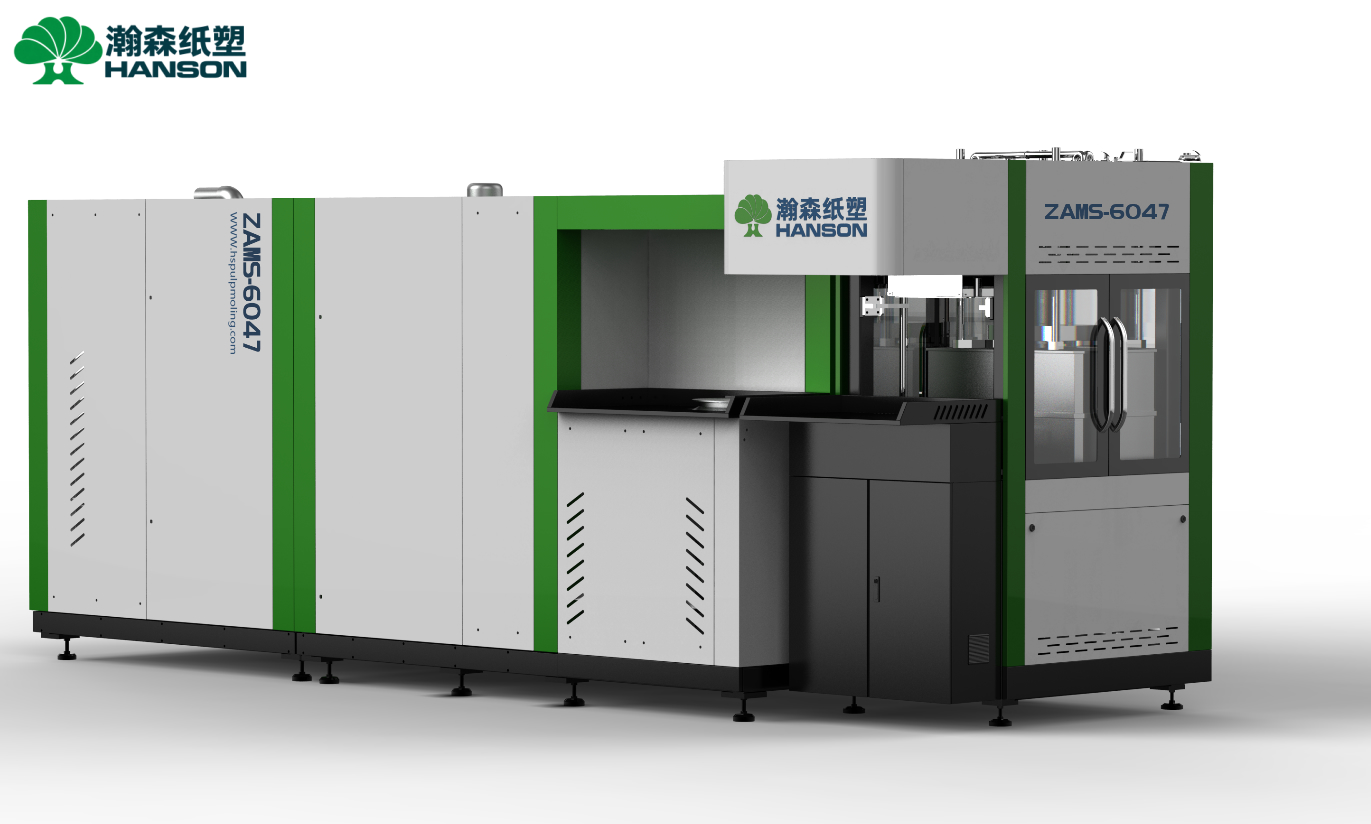
A qualified pulp molding prototyping machine should work with experimental molds to quickly perform forming and demolding tests. HANSON Pulp Molding’s ZAMS-6047 equipment is designed for this purpose. It allows engineers to flexibly change molds and observe forming defects, enabling the product structure to be thoroughly optimized before expensive mass-production molds are manufactured.
Condition 3: Precisely Simulate Vacuum Forming and Hot-Pressing Processes
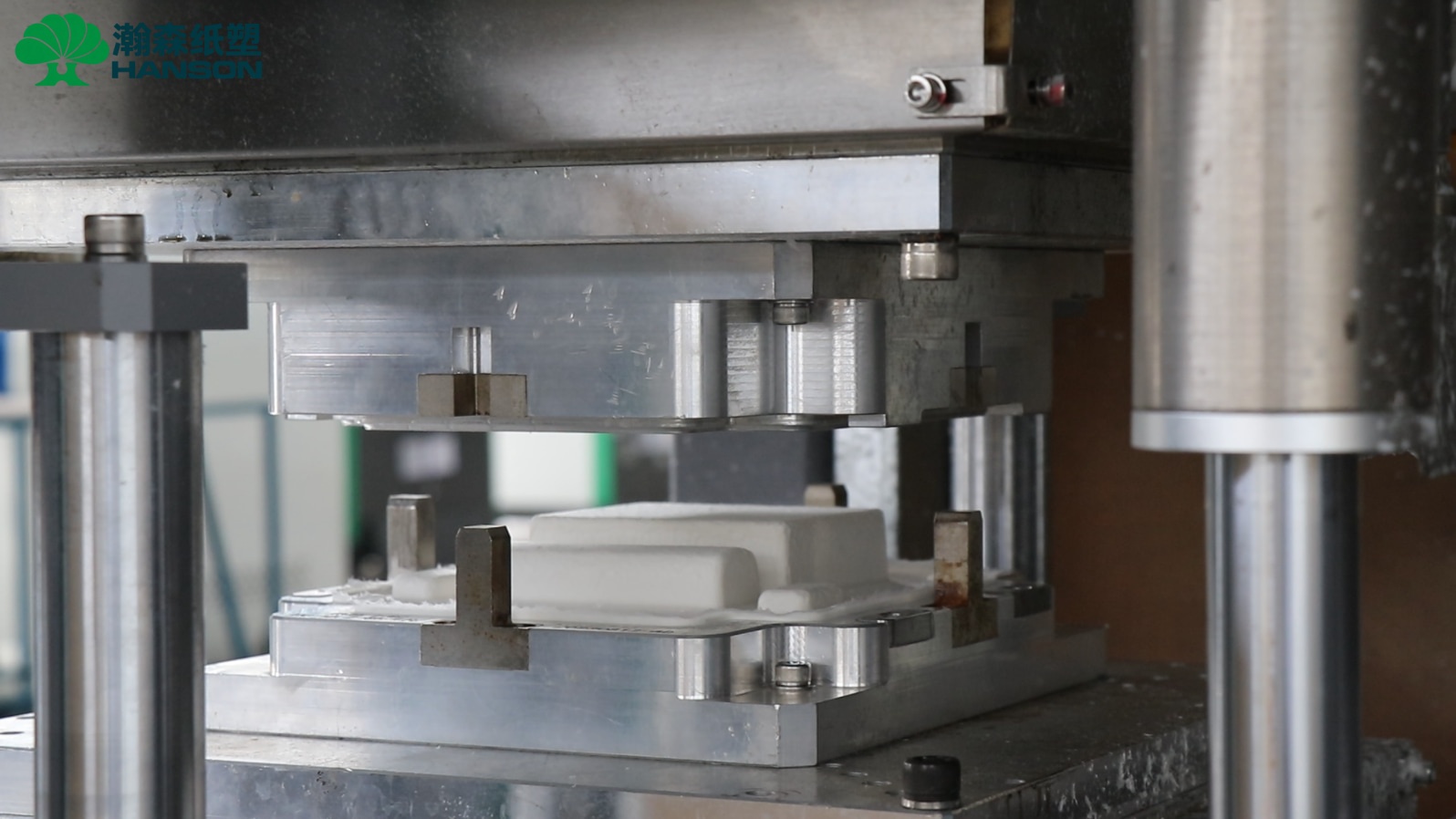
A prototyping machine should not simply produce a visually similar demonstration sample. It must be capable of reproducing the forming principles used by mass-production equipment as closely as possible.
Whether it involves controlling the vacuum-forming time or managing temperature gradients and pressure distribution during hot pressing, the actual process data collected during prototyping can serve as a reference for configuring large-scale forming equipment later.
During its process R&D cooperation with Jinsheng Environmental Protection, HANSON Pulp Molding not only provided customized prototyping and R&D equipment but also offered on-site technical support to help the customer optimize process parameters and achieve precise consolidation for different plant fibers.
Condition 4: Provide a Basis for Small-Batch Trial Production and Mass-Production Feasibility
High-quality pulp molding prototyping equipment should also support small-scale demonstration production.
At this stage, customers can systematically evaluate individual product demolding yield, overall thickness uniformity, and surface smoothness. This provides reliable data support and technical evidence when making large-scale production equipment investments and planning the overall factory layout.
Condition 5: Supplier Capability to Connect Product Development with Mass Production
As a turnkey pulp molding solution provider, HANSON Pulp Molding’s technical capabilities go beyond simply supplying a ZAMS-6047 prototyping machine.
Within HANSON Pulp Molding’s 6+1 service system, front-end product development is closely connected with back-end factory planning and mass production.
This means that once the optimal parameters have been successfully validated on the prototyping line, HANSON Pulp Molding can transfer them into subsequent intelligent pulping systems, mass-production forming machines, and automated post-processing production lines.
FAQ
1. Can my new material project go directly to large-scale production equipment?
It is strongly recommended to conduct prototyping first. New fiber materials often involve many unknown variables, including drainage characteristics, drying shrinkage, and hot-pressing compatibility. If mass-production equipment is used without sufficient prototyping and validation, production stability may be significantly affected, resulting in excessive scrap and high trial-and-error costs.
2. What is a pulp molding prototyping machine mainly used for?
Taking the HANSON Pulp Molding ZAMS-6047 as an example, it is mainly used for new product structure development and testing, compatibility testing of different plant fibers, new formulation validation, mold design adjustment and optimization, determination of key process parameters, and small-batch trial production before mass production.
3. How can successful prototyping results be transferred to commercial mass production?
This is where a supplier with extensive turnkey project experience can provide value. During the prototyping stage, we can record the most stable process parameters and then, based on your target production capacity, accurately select the most suitable large-scale production equipment, pulping control system, and mold configuration for the product.
Conclusion
Any new product or new material entering the broader consumer market must follow rigorous industrial manufacturing principles.
Using high-quality pulp molding prototyping equipment for preliminary material validation, structural testing, and process evaluation is an effective way to reduce the risks associated with large-scale factory investment.
Only after these critical prototyping and validation steps have been completed can subsequent pulp molding production equipment achieve its intended efficiency and production capacity in the shortest possible time.
CTA
If your product project is still at the conceptual design stage, has just completed its 3D drawings, or is currently undergoing new material validation, we recommend starting with prototyping and verification rather than investing heavily in an unverified mass-production line.
Please send us your product drawings, initial samples, or specific material and process testing requirements. The HANSON Pulp Molding engineering team will conduct a detailed preliminary project evaluation for you.
WhatsApp: +86 15920604830