
As the global shift toward sustainable packaging accelerates, many investors and packaging manufacturers are preparing to purchase a pulp molding machine. Once you have shortlisted potential suppliers, an on-site factory inspection is a critical step in the procurement process.
However, many buyers fall into the trap of only evaluating the machine’s external size, its “empty running” speed, or negotiating the lowest single-machine price. A pulp molding machine is not a standalone tool; it is the core of a continuous manufacturing system. Before selecting equipment, you must first determine the product, precision, capacity, and automation requirements, and then match these with the appropriate wet-press or dry-press/semi-dry-press process.
During your on-site inspection of a pulp molding equipment manufacturer, it is highly recommended to focus on verifying the following five key areas.
1. Verify Actual Capacity, Not “Dry Cycle” Speed
During showroom demonstrations, forming machines are often run without pulp or molds to showcase extremely short cycle times. However, theoretical cycle time does not equate to the actual daily production capacity.
The actual output of a molded fiber production line is significantly influenced by the individual product weight, the number of mold cavities, forming time, hot-pressing duration, and overall equipment yield and uptime. Therefore, you must evaluate capacity using a specific product.
-
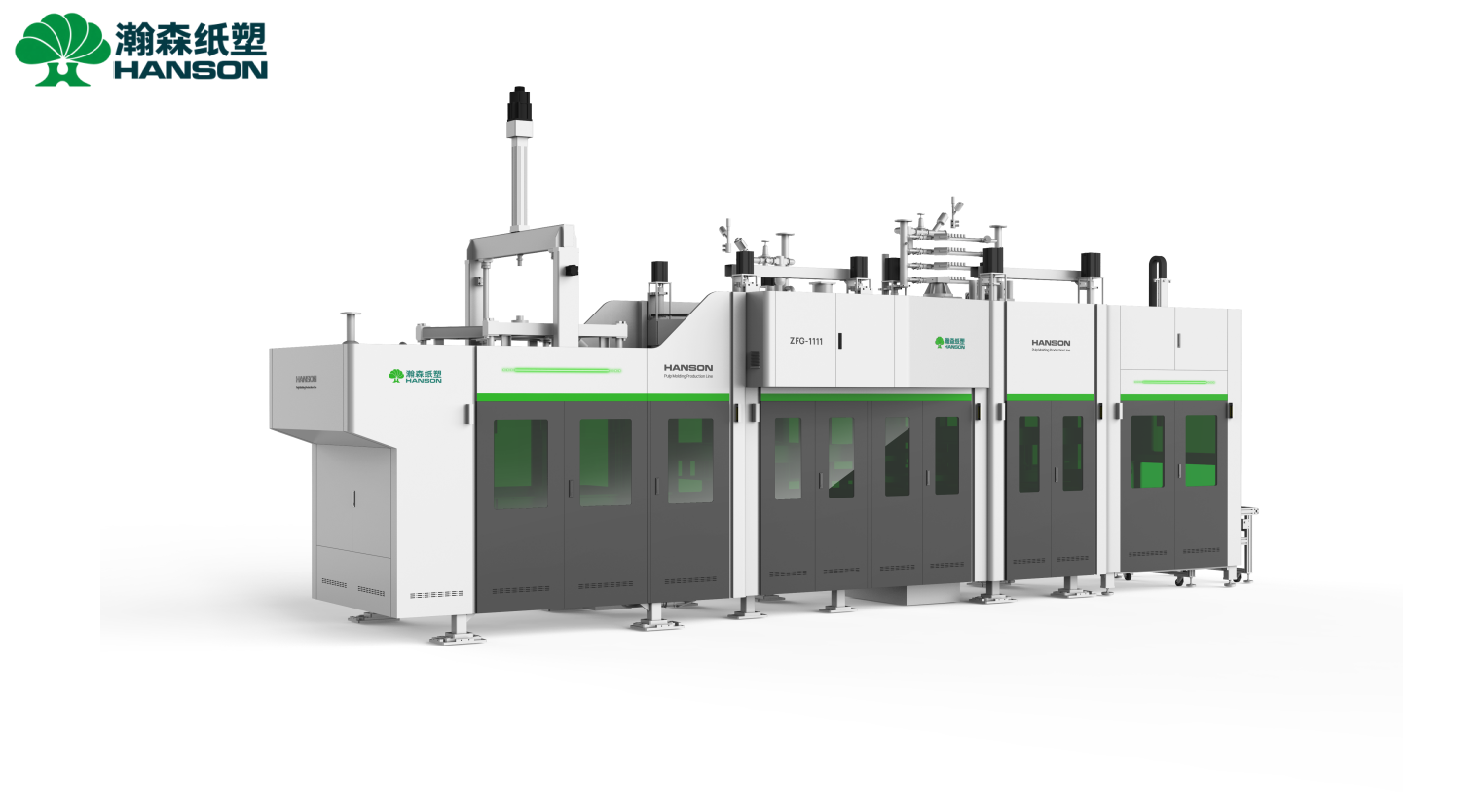
For High-Volume Tableware: When evaluating a wet-press machine like the Hanson Pulp Molding ZFG-1111, the actual daily capacity can reach over 1.8 tons under appropriate production conditions and specific product configurations.
-
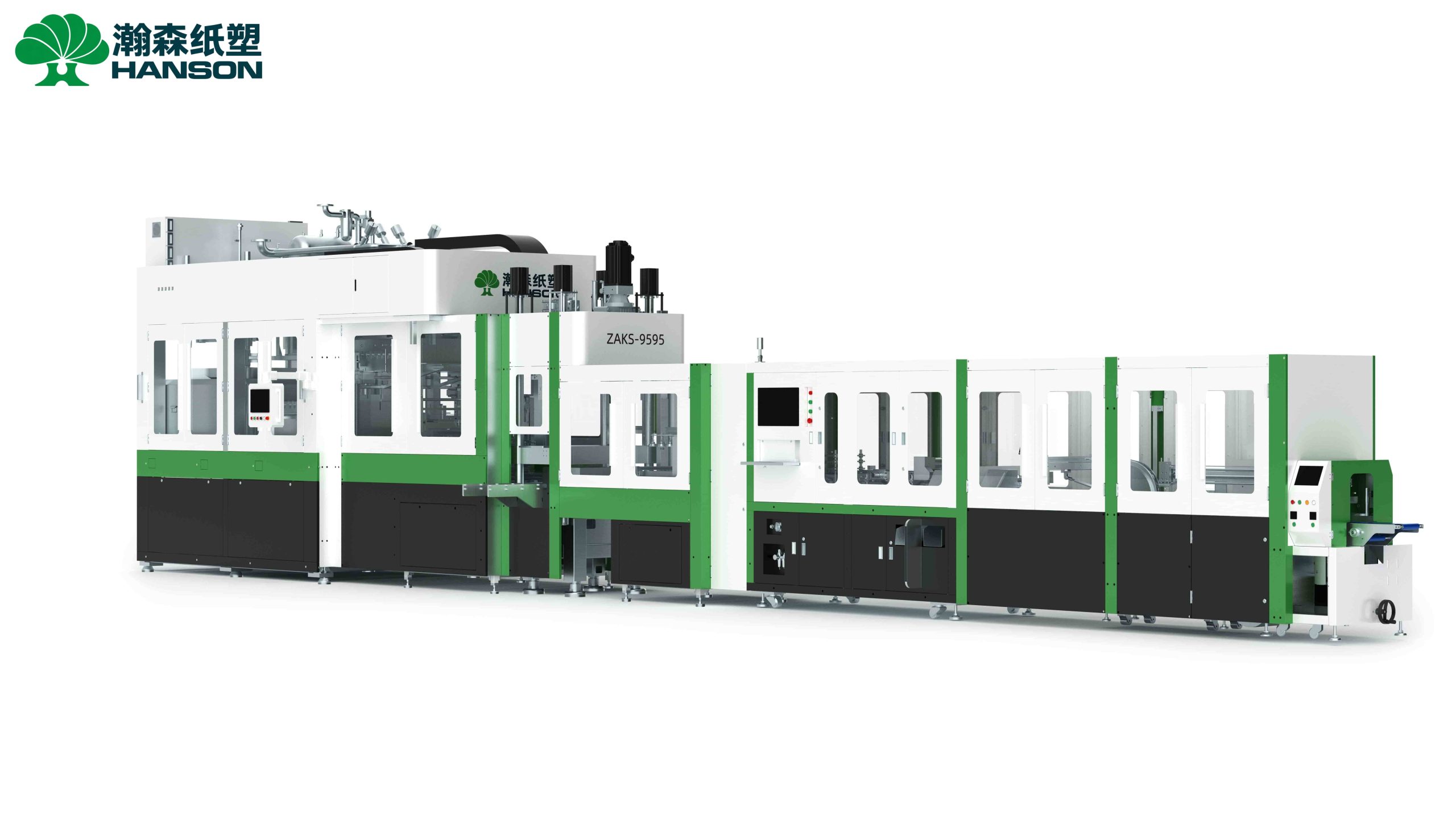
For High-Quantity Small Items: For products like cup lids, the Hanson Pulp Molding ZAKS-9595 machine can achieve a stable output of up to 100,000–120,000 cup lids per 24 hours under appropriate conditions. Relying solely on empty cycle speeds without calculating the actual weight or pieces of qualified products per day will likely lead to severe capacity shortages after your plant is built.
2. Inspect Dewatering and Process Synergy
Efficiently and cost-effectively removing water from plant fibers is one of the core challenges of the pulp molding process. Dewatering efficiency directly impacts the line’s energy consumption, production rhythm, and the dimensional stability of the final product.
-
Wet-Press Process Evaluation: Observe the moisture content of the wet preform before it enters the hot-press mold. Advanced forming systems can control this moisture content effectively (e.g., <60% in certain conditions). The more water removed mechanically, the less thermal energy is required for in-mold drying, thereby reducing electricity consumption per ton.
-
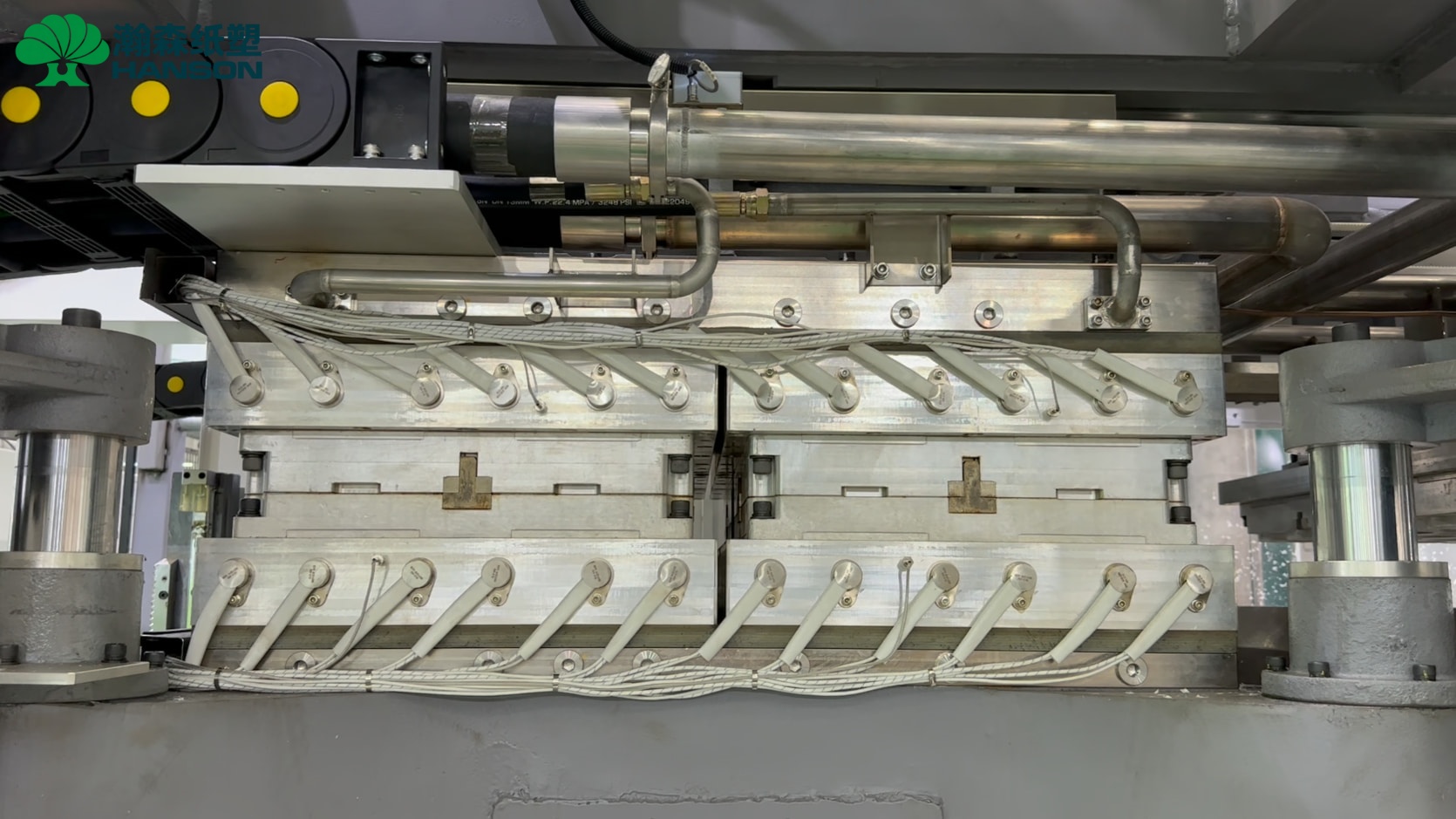
Dry-Press/Semi-Dry-Press Evaluation: For products like cup carriers and egg cartons, the tunnel dryer consumes significant energy. When inspecting an automatic dry-press pulp molding production line from Hanson Pulp Molding, pay attention to the integrated cold pressing (pre-dewatering) station. This station mechanically lowers the moisture content before the wet preform enters the dryer and physically constrains the product, drastically minimizing warpage during high-temperature drying and ensuring structural accuracy.
3. Assess In-House Tooling (Mold) Capabilities
Even the most expensive forming machine will fail to produce high-quality packaging if paired with poorly designed molds. Molded fiber tooling dictates not only the product’s shape but also drainage efficiency, vacuum suction, wet preform transfer, and final surface finish during hot pressing.
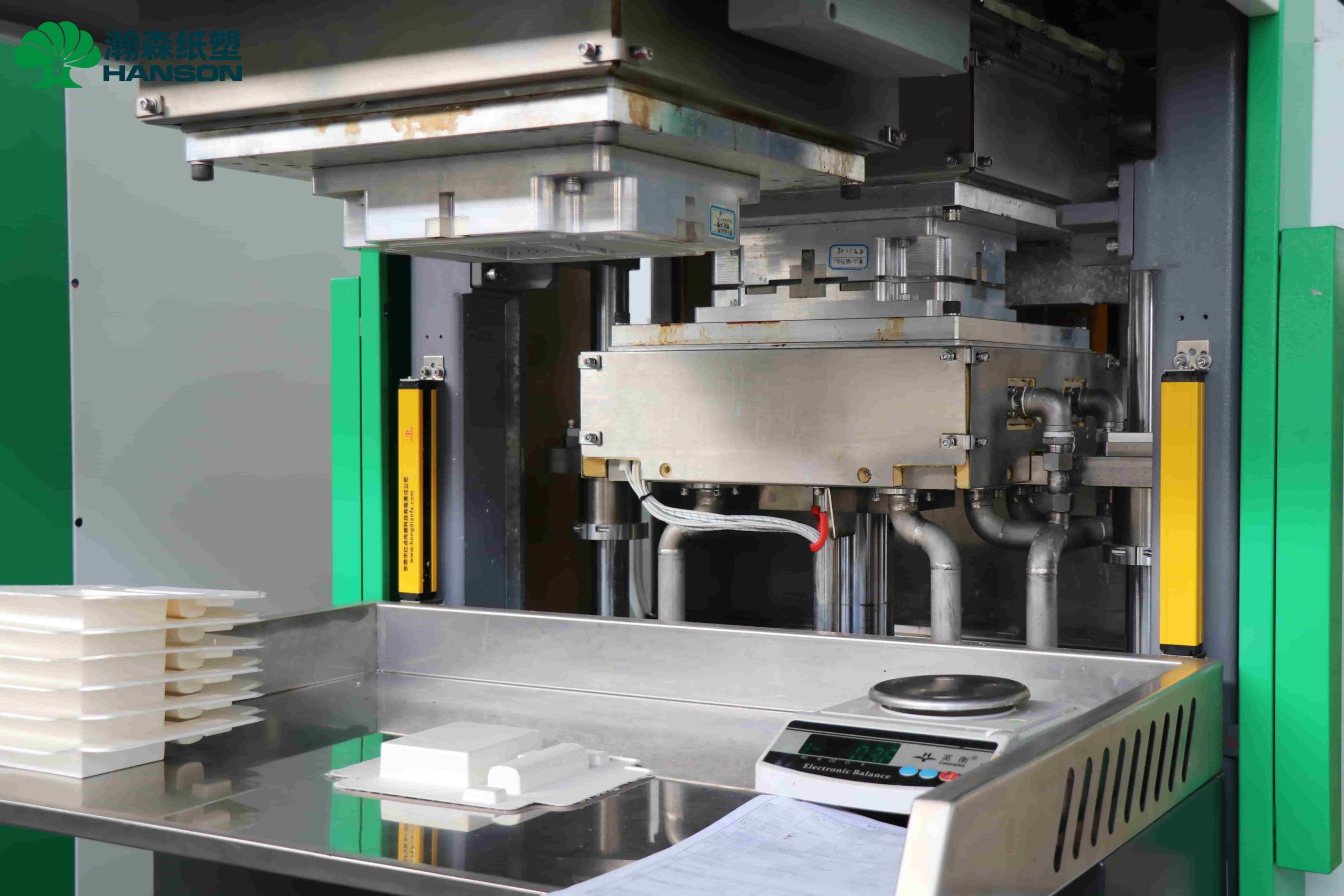
This is especially critical for premium industrial molded fiber packaging (such as smartphone inserts), where brands demand flawless surface quality and exact dimensional tolerances. Verify if the supplier has in-house mold design and manufacturing capabilities. Hanson Pulp Molding develops premium industrial packaging machines (like the ZAP-9585 and ZAD series) synergistically with their tooling. By combining high-precision hot-press molds with technologies like dynamic pulp replenishment, the equipment ensures uniform fiber distribution and consistent dimensions for complex structures.
4. Evaluate Post-Processing Automation Integration
Many factories achieve fast forming speeds but encounter massive bottlenecks because trimming, inspection, and coating are handled manually. When inspecting equipment, evaluate how seamlessly the main forming machine connects with post-processing operations.
-
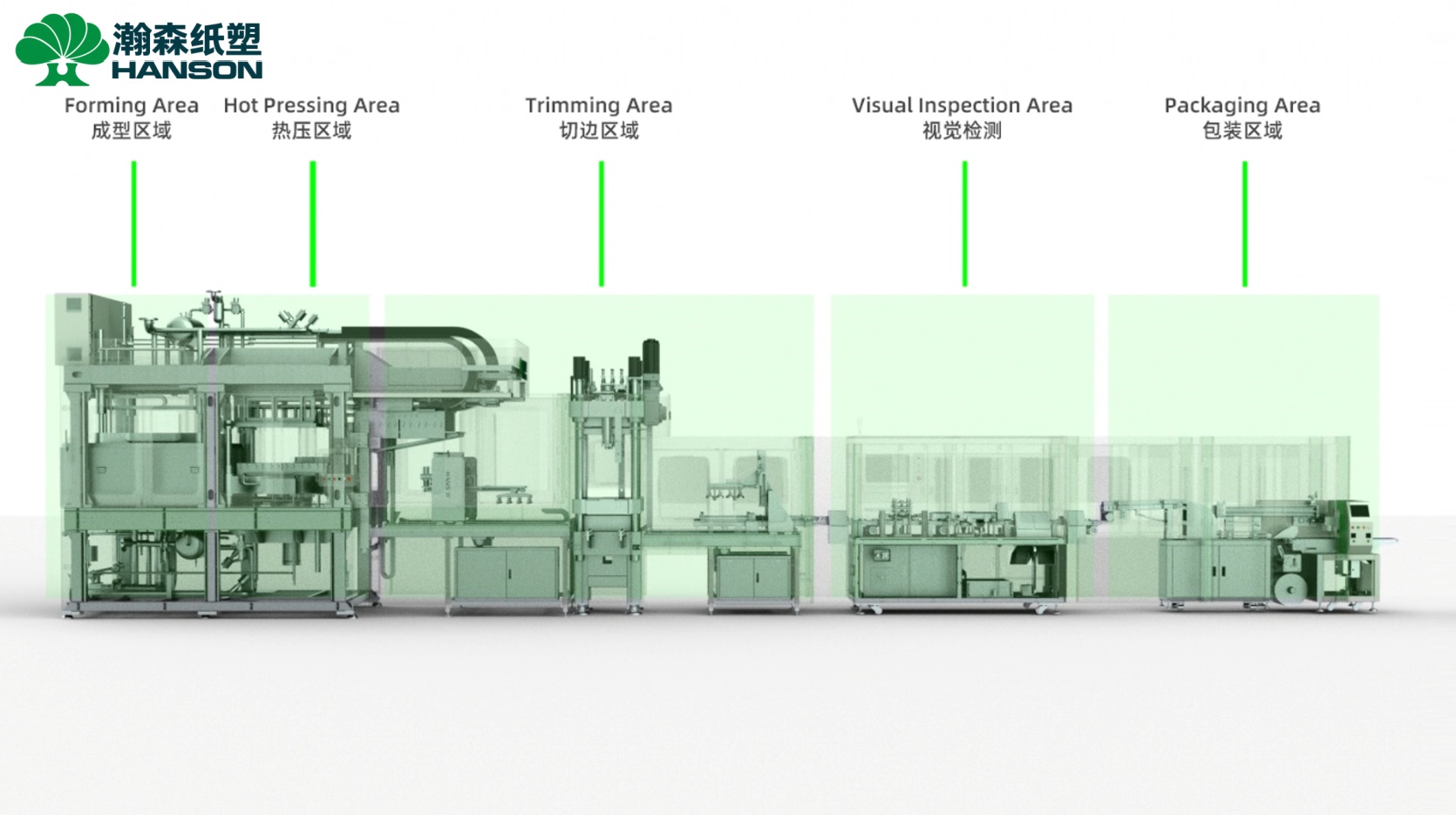
Integrated Processes: Check if the machine integrates multiple steps. The Hanson Pulp Molding ZAKS-9595 molded fiber cup lid machine, for instance, integrates forming, hot pressing, servo-driven punch cutting, machine vision inspection, and automatic packaging to achieve continuous high-speed production.
-
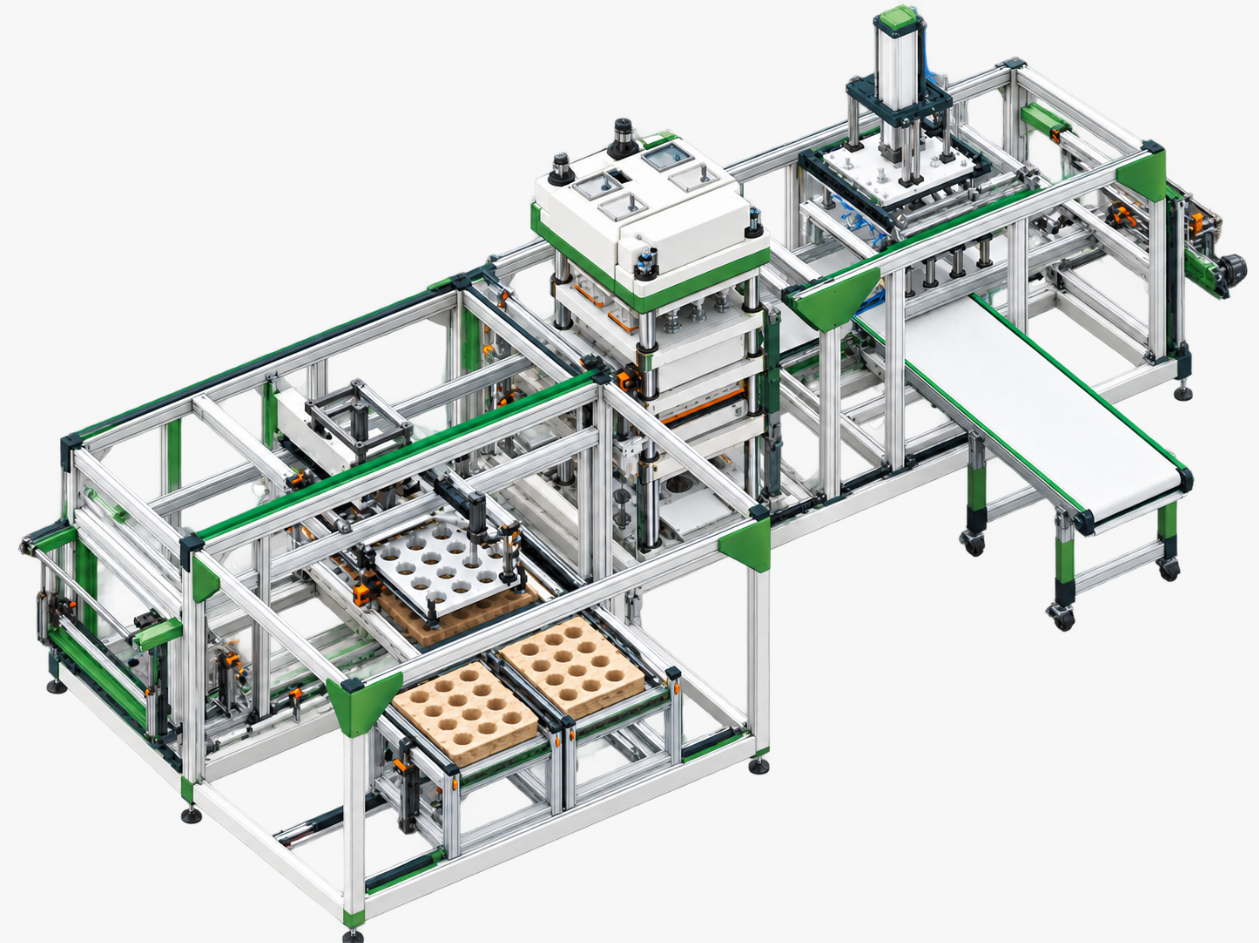
Surface Treatment Extensions: If your products require water or oil resistance, inspect whether the supplier offers automated post-processing solutions. The Hanson Pulp Molding HXT-24 automatic rotary spray coating line handles automatic loading, rotary spray coating, tunnel oven drying, and stacking. Alternatively, the molded fiber lamination line can apply functional films to the product surface via hot-press compounding.
5. Assess Turnkey Plant Planning Capabilities
If you are transitioning from plastic packaging, building a new facility, or expanding overseas, the biggest risk is not buying the wrong forming machine—it is a mismatch between the pulping system, forming equipment, utilities, and post-processing lines.
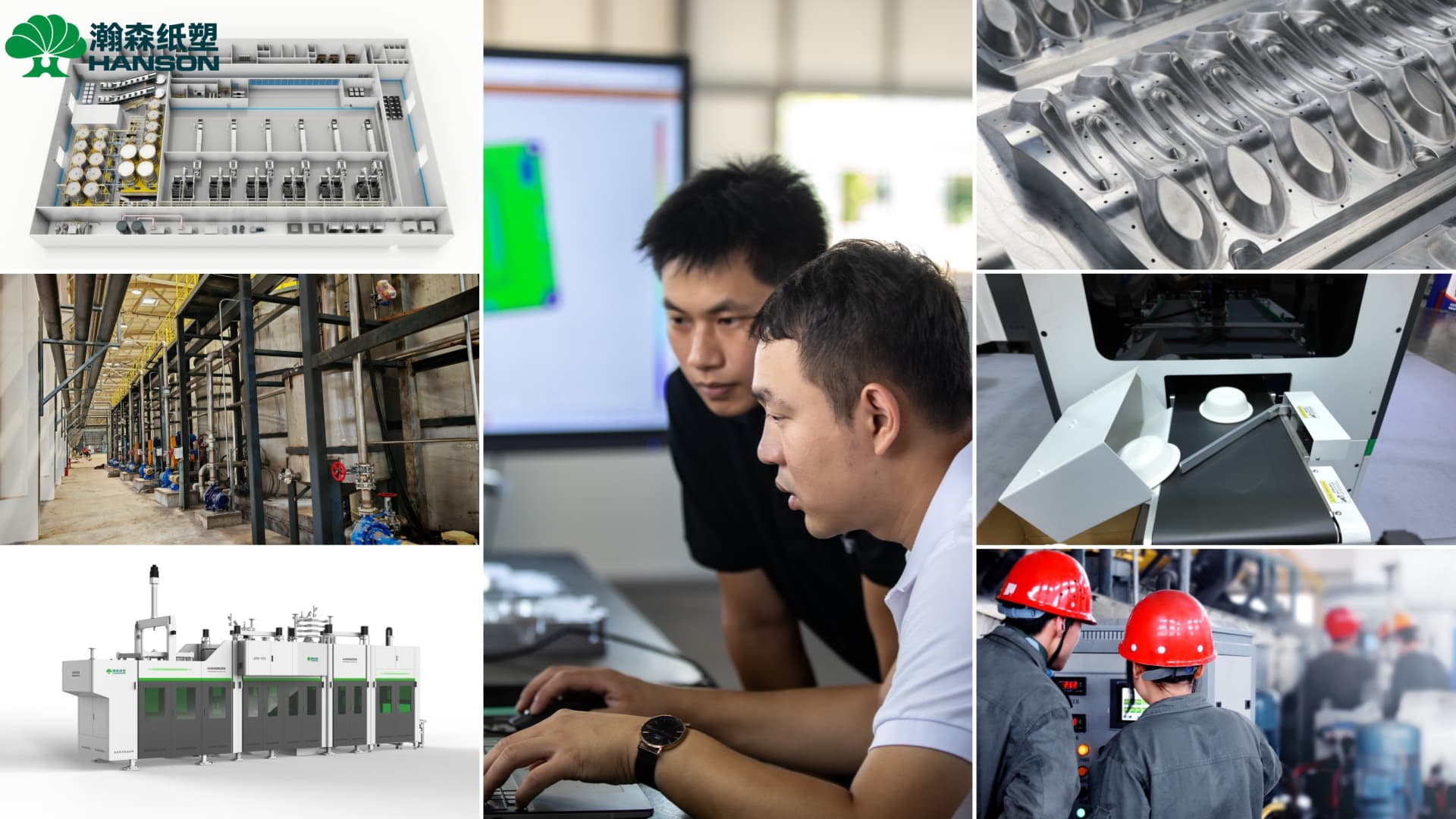
During your visit, look beyond the standalone machine and discuss the supplier’s overall plant engineering capabilities. As a specialist in turnkey pulp molding solutions, Hanson Pulp Molding operates on a “6+1” turnkey service system, which covers product development, plant planning, intelligent pulping systems, forming equipment, mold manufacturing, post-processing automation, and production ramp-up support. Ask the supplier to provide pulping layouts or energy assessments based on your target capacity to verify their ability to take your project from a product concept to stable commercial production.
FAQ
1. Why is there a large gap between theoretical capacity and actual capacity? Theoretical capacity is usually calculated based on the machine’s fastest cycle time while running empty. Actual daily capacity must account for the individual product weight, required dewatering and hot-pressing times, the number of mold cavities, yield rates, and overall equipment uptime. Always request a capacity estimate based on your specific product layout.
2. How do I know if I need a wet-press or dry-press machine? This depends on your product application. The wet-press process (where wet preforms are dried directly inside heated molds) yields a smoother surface and tighter dimensional control, making it ideal for premium electronics packaging and high-end tableware. The dry-press or semi-dry-press process utilizes independent tunnel dryers and is more cost-effective for high-volume protective applications like egg trays, cup carriers, and heavy industrial buffers.
3. What is the hardest part of starting a pulp molding factory for beginners? The most difficult aspect is not purchasing the equipment, but mastering the process logic to achieve stable mass production. New entrants often lack experience in pulp formulation, mold tuning, and synchronizing the production line. Partnering with a turnkey solution provider like Hanson Pulp Molding, who offers product development, plant layout, and on-site production ramp-up support, significantly reduces the risk of initial trial and error.
Conclusion
Purchasing a pulp molding machine is a strategic investment in a comprehensive manufacturing system. By looking past empty cycle speeds and focusing on actual dewatering efficiency, in-house tooling precision, post-processing automation, and complete turnkey plant capabilities, you can accurately assess a supplier’s true value. Selecting a partner who understands how products, processes, and equipment interact is the key to achieving long-term profitability and stable mass production.
CTA
If you are planning a new pulp molding plant or adding a new product line, Hanson Pulp Molding can provide professional equipment selection support. Share your target products, required daily capacity, and plant conditions with us, and we will evaluate your project comprehensively—from plant planning and intelligent pulping to forming equipment, tooling, and post-processing automation.
WhatsApp: +86 15920604830
Email: linchuangcheng@hspulpmolding.com