In the rapidly expanding molded fiber foodservice packaging market, cup lids have become one of the highest-demand products. However, investors entering this segment often encounter a confusing reality: quotes for a molded fiber cup lid machine can vary drastically, sometimes differing by multiples.
What causes this massive price gap? The core reason is that manufacturing a reliable cup lid requires far more than just basic forming. A cup lid is a precision product that demands exact dimensional stability for a tight seal. The price difference lies directly in the automation, trimming technology, and integrated quality control systems. Here is a breakdown of what separates a basic setup from a high-end production line.
Beyond Forming: Why Trimming Technology Dictates the Price
The primary function of a cup lid is to seal the cup securely and prevent leaks. Unlike basic disposable plates, the snap-fit edges of a cup lid have extremely tight tolerances.
-
Basic Configurations: Lower-priced machines often rely on standard mechanical trimming or require separate, semi-automatic punching machines. Over time, in a high-frequency production environment, blade wear and inconsistent alignment can lead to rough edges, loose fits, and high defect rates.
-
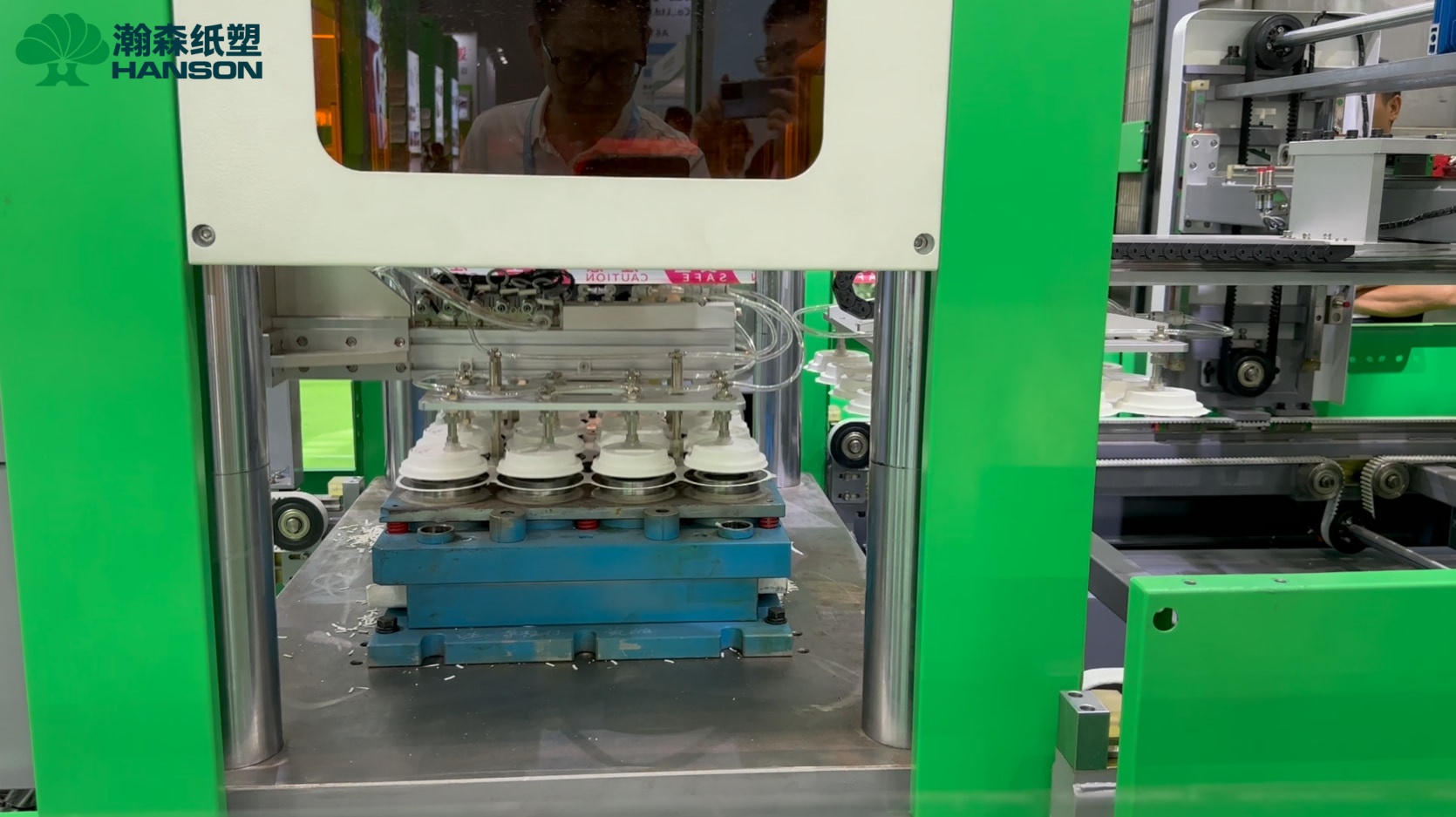
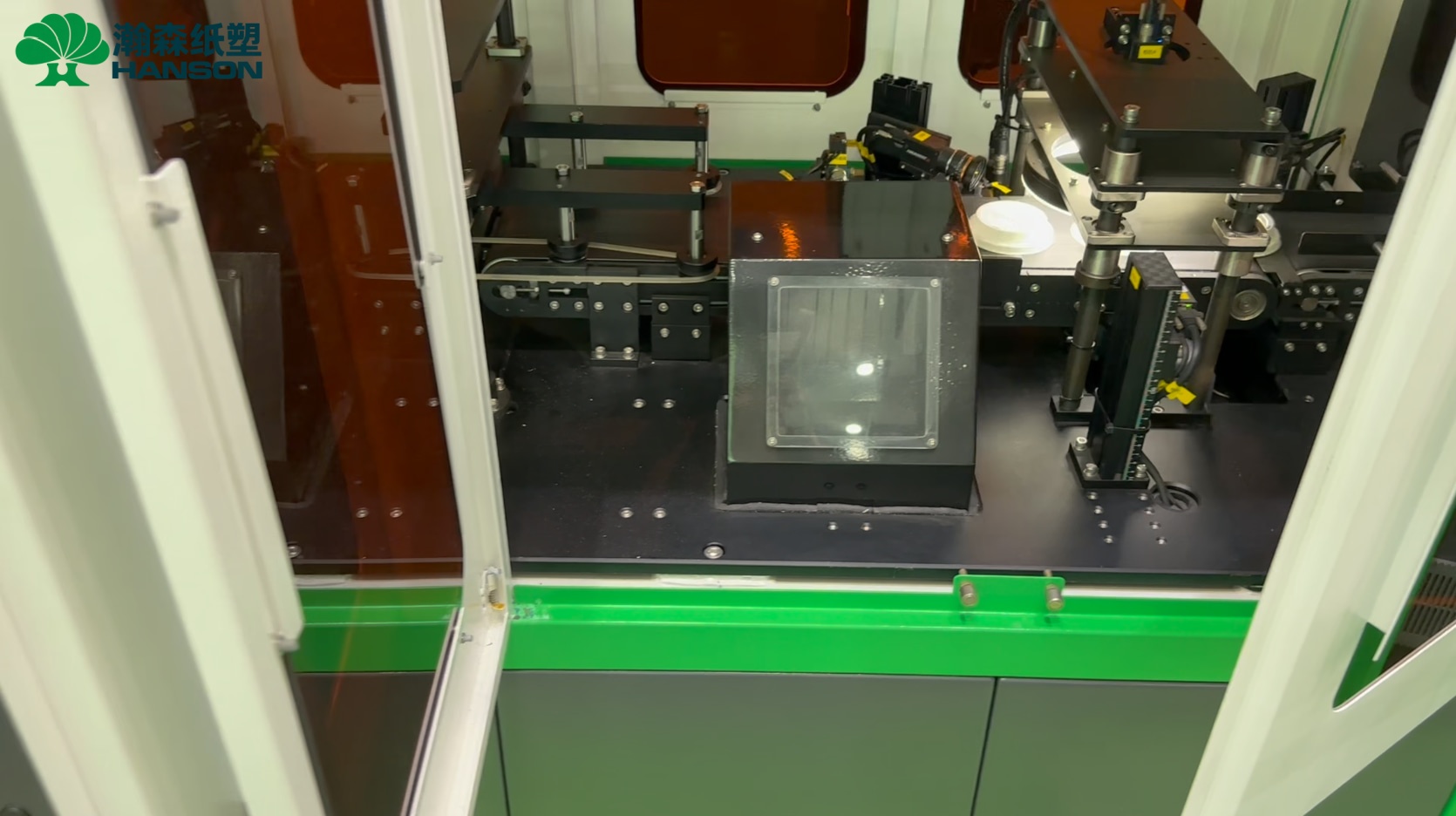
Advanced Configurations: High-end fiber lid production lines feature servo punch cutting (servo-driven trimming). Integrated directly into the automated sequence, servo motors provide precise control over the cutting force and positioning. This ensures a clean, consistent cut on every single lid, maintaining a flawless seal even during 24/7 commercial production. This precision engineering is a primary driver of the equipment’s value.
The Automation Gap: Standalone Machines vs. Integrated Lines
Molded fiber cup lids are produced in massive volumes. If your forming machine is fast, but your post-processing relies on manual labor, your actual factory output will be severely bottlenecked.
-
Labor-Dependent Systems: A basic machine may only handle forming and hot pressing. You are then required to hire a large workforce to manually trim, inspect for spots or tears, count, and package the lids.
-
Fully Automated Integration: A premium paper cup lid making machine integrates Machine Vision Inspection. High-speed cameras automatically scan the lids for visual defects or dimensional inaccuracies, rejecting flaws without human intervention. The system then automatically stacks and packages the finished products. The cost of a machine that integrates the entire workflow—from forming to hot pressing, trimming, inspection, and packaging—will naturally be higher, but it drastically reduces long-term labor costs.
Real Production Capacity vs. Theoretical Speed
When evaluating pulp molded cup lid machine prices, be cautious of quotes that base daily capacity purely on “theoretical cycle time.”
Actual daily output is not just about how fast the forming mold moves. It is heavily influenced by the number of mold cavities, hot-pressing efficiency, trimming speed, and equipment uptime. If the trimming station cannot keep up with the forming station, the theoretical capacity is meaningless. You should evaluate the equipment based on its stable, 24-hour yield of fully packaged, quality-checked products.
Critical Distinction: Cup Lids vs. Cup Carriers
When researching equipment, some newcomers to the molded fiber industry mistakenly assume that a machine making “cup lids” can also produce “cup carriers” by simply changing the molds. This is a critical equipment selection error.
-
Cup Lids (Molded Fiber Cup Lids): Require a highly smooth surface, high dimensional accuracy, and strict edge tolerances. They are typically produced using a specialized process where wet preforms are transferred directly into high-precision hot-press molds, followed by servo trimming.

-
Cup Carriers (Drink Carriers / Cup Holders): Designed primarily for load-bearing and shock absorption. These are typically produced using dry press or semi-dry press production lines, where the products are formed and then passed through an independent tunnel oven for drying.
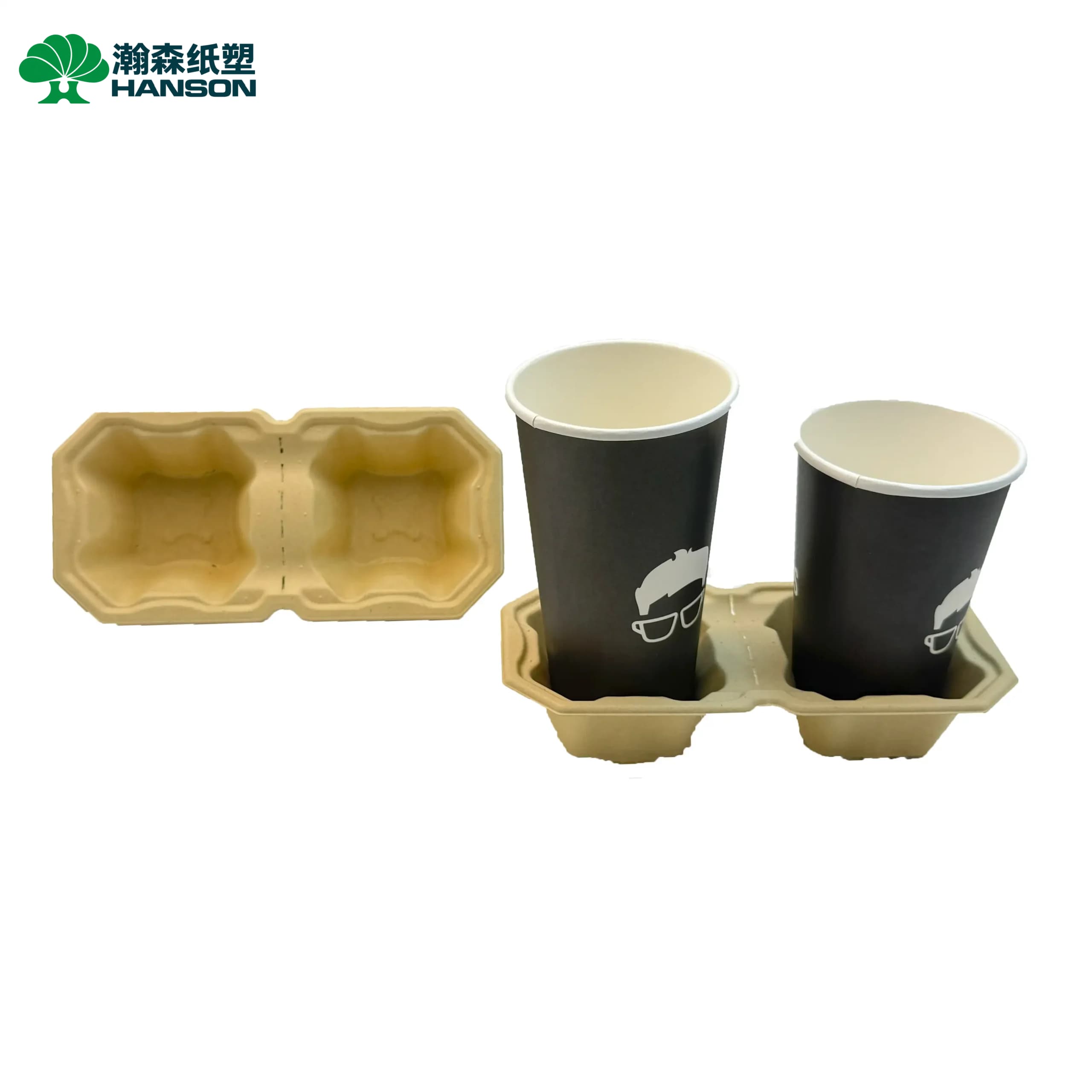
These two products utilize completely different structural equipment, drying logics, and post-processing steps. They cannot be manufactured on the same machine.
Hanson Pulp Molding ZAKS-9595: An Integrated Solution
As a specialist in turnkey pulp molding solutions, Hanson Pulp Molding understands that cup lid manufacturing requires seamless automation.
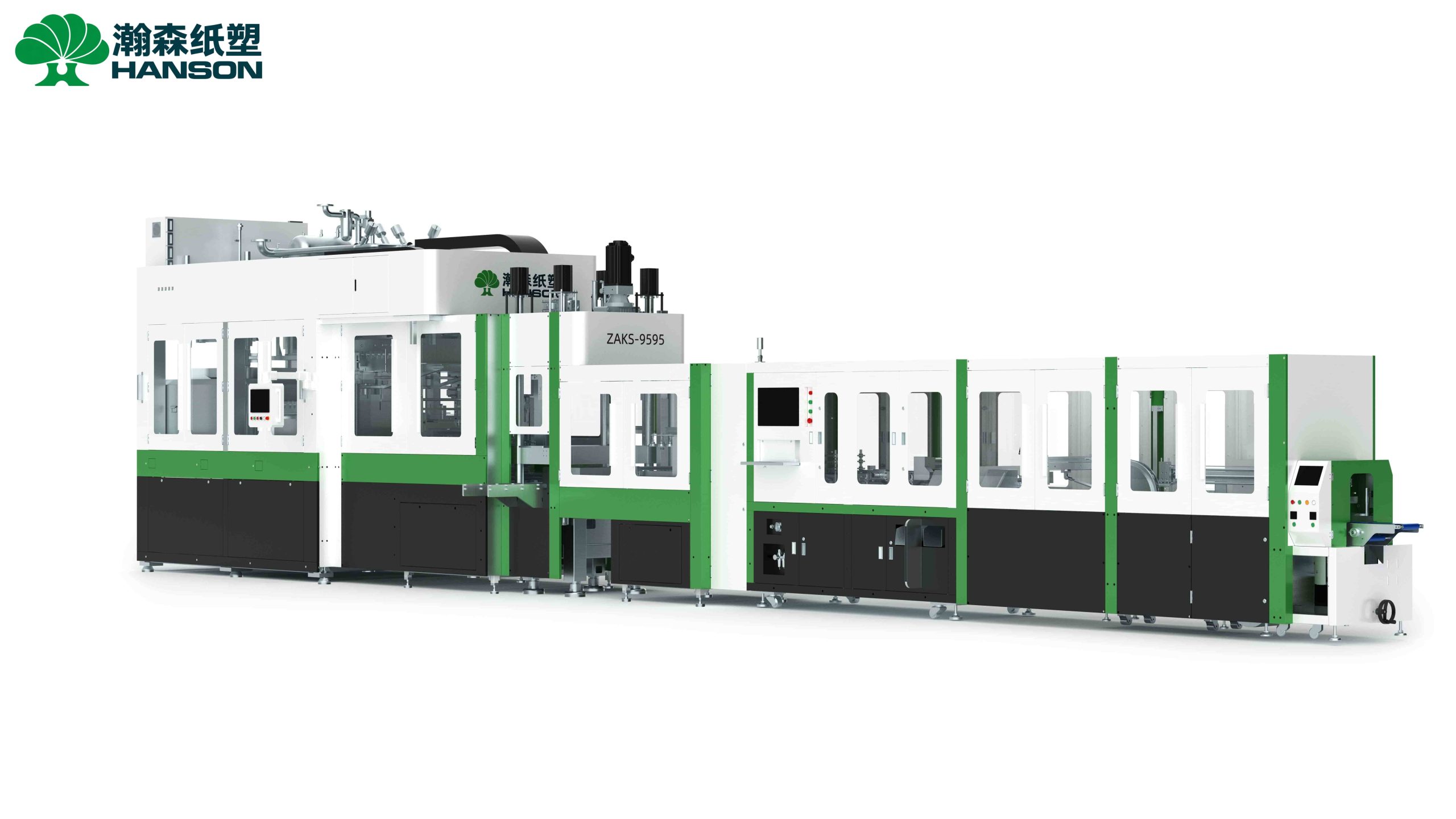
The Hanson Pulp Molding ZAKS-9595 molded fiber cup lid machine is designed to integrate forming, hot pressing, servo punch cutting, machine vision inspection, and packaging into a single continuous automated line. Under appropriate production conditions, the ZAKS-9595 can achieve a daily output of up to approximately 100,000–120,000 cup lids per 24 hours. This level of integration minimizes manual handling, eliminates production bottlenecks, and guarantees the extreme dimensional consistency required by high-end foodservice brands.
FAQ
1. How many cup lids can a molded fiber machine produce per day? Actual production capacity depends on the cup lid dimensions, mold configuration, and integrated automation. For example, under appropriate production conditions, the Hanson Pulp Molding ZAKS-9595 machine can produce up to approximately 100,000–120,000 cup lids in a 24-hour period.
2. Why is Machine Vision Inspection necessary for cup lids? Cup lids are produced in massive quantities, and even minor edge defects or spots can cause the lid to fail its primary function—sealing the cup. Manual inspection is too slow and prone to human error at these volumes. Machine vision inspection ensures that every lid meets strict quality standards before it reaches the packaging stage.
3. Can I use a cup lid machine to manufacture cup carriers? No. Molded fiber cup lids require specialized equipment with high-precision hot pressing and servo trimming to ensure a tight seal. Cup carriers (drink carriers), on the other hand, are thick-wall protective products that are generally produced on dry-press or semi-dry press production lines equipped with independent drying ovens.
Conclusion
The vast price differences in molded fiber cup lid machines are a direct reflection of the technology and automation they incorporate. When investing in a cup lid project, do not evaluate the machine based solely on the upfront cost of the forming unit. Consider the precision of the servo trimming, the labor-saving power of vision inspection, and the efficiency of automated packaging. A fully integrated line ensures stable product consistency and a faster, more reliable return on investment.
If you already have a product sample, 3D drawing, or a target daily capacity for your molded fiber cup lids, Hanson Pulp Molding can evaluate the exact mold configuration, servo trimming needs, and automation setup required for your project.
WhatsApp: +86 15920604830Email: linchuangcheng@hspulpmolding.com