In the protective packaging sector, molded fiber cup carriers (such as 2-cup or 4-cup drink holders) are foundational products with massive and stable market demand. When investing in a molded fiber cup carrier machine, many buyers tend to focus solely on the initial equipment price or theoretical cycle times. However, the primary functions of a cup carrier are load-bearing, stability, and securing the cup body for transport.
Achieving these functions efficiently requires more than just a fast forming machine. The entire production line—from pulping to post-processing—must work in synergy. Before making a final purchasing decision for a molded fiber production line, professional buyers should evaluate the following five critical factors.
1. Confirm Product Specifications and Load-Bearing Needs
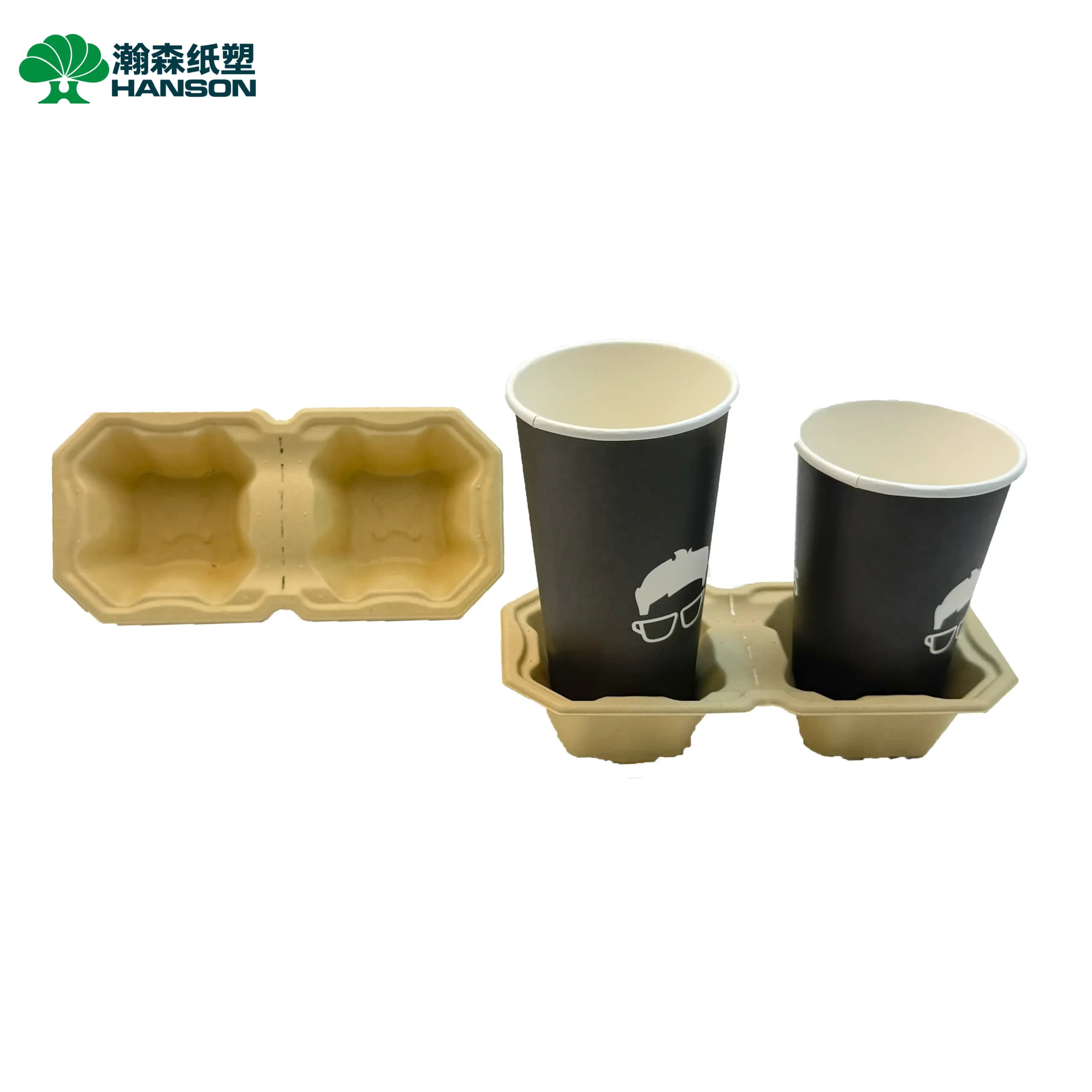
A “cup carrier” is not a uniform product. Variations exist in dimensions, structure, individual piece weight, and mold cavity arrangements. For instance, a 4-cup carrier demands a larger forming area, more fiber per cycle, and a higher dewatering capacity compared to a 2-cup holder. Understanding the exact dimensions and target weight is the first step in assessing the required forming load and tooling configuration.
2. Evaluate Actual Capacity and Tooling Layout
Relying entirely on theoretical cycle times to calculate daily production can be misleading. Actual daily capacity is influenced by the product’s weight, the number of mold cavities, the forming and dewatering time, and the effective running time of the equipment. While more cavities can increase the number of products per cycle, this is limited by the tooling area, vacuum efficiency, drainage design, and the equipment’s load capacity. The tooling design directly impacts drainage efficiency and production consistency, making it a vital factor in achieving stable commercial production.
3. Determine the Process Route: Dry Press vs. Semi-Dry Press
Products like cup carriers emphasize protection, stacking stability, and high-volume cost efficiency, often making the dry press or semi-dry press process the most suitable choice.
-
Traditional Dry Press: The wet preform is formed and then relies heavily on an independent drying process (such as a drying tunnel) to remove moisture. The surface typically retains a more natural fiber texture.
-
Semi-Dry Press: The wet preform sheds a portion of its moisture before entering subsequent pressing or drying stages, striking a balance between product quality, drying efficiency, and energy consumption. The chosen process route will dictate the energy setup, heat source requirements, and overall layout of the turnkey pulp molding plant.
4. Ensure Pulping System Stability
A high-performance forming machine is ineffective if it is constantly waiting for pulp. The pulping system handles raw material processing, dispersion, and consistency control. For large-scale cup carrier production, the pulping system must be precisely calculated to meet the peak demand of the forming equipment. Fluctuations in pulp consistency will directly negatively impact product weight, strength, and overall production consistency.
5. Plan for Post-Processing Automation
The actual output of a production line is often bottlenecked by its slowest process. If the forming speed is high but stacking and packaging are done manually, products will accumulate, limiting overall throughput. For high-volume items like cup carriers, incorporating post-processing automation—such as automatic stacking, transferring, and packaging—can significantly reduce manual labor and improve continuous production flow.
Conclusion
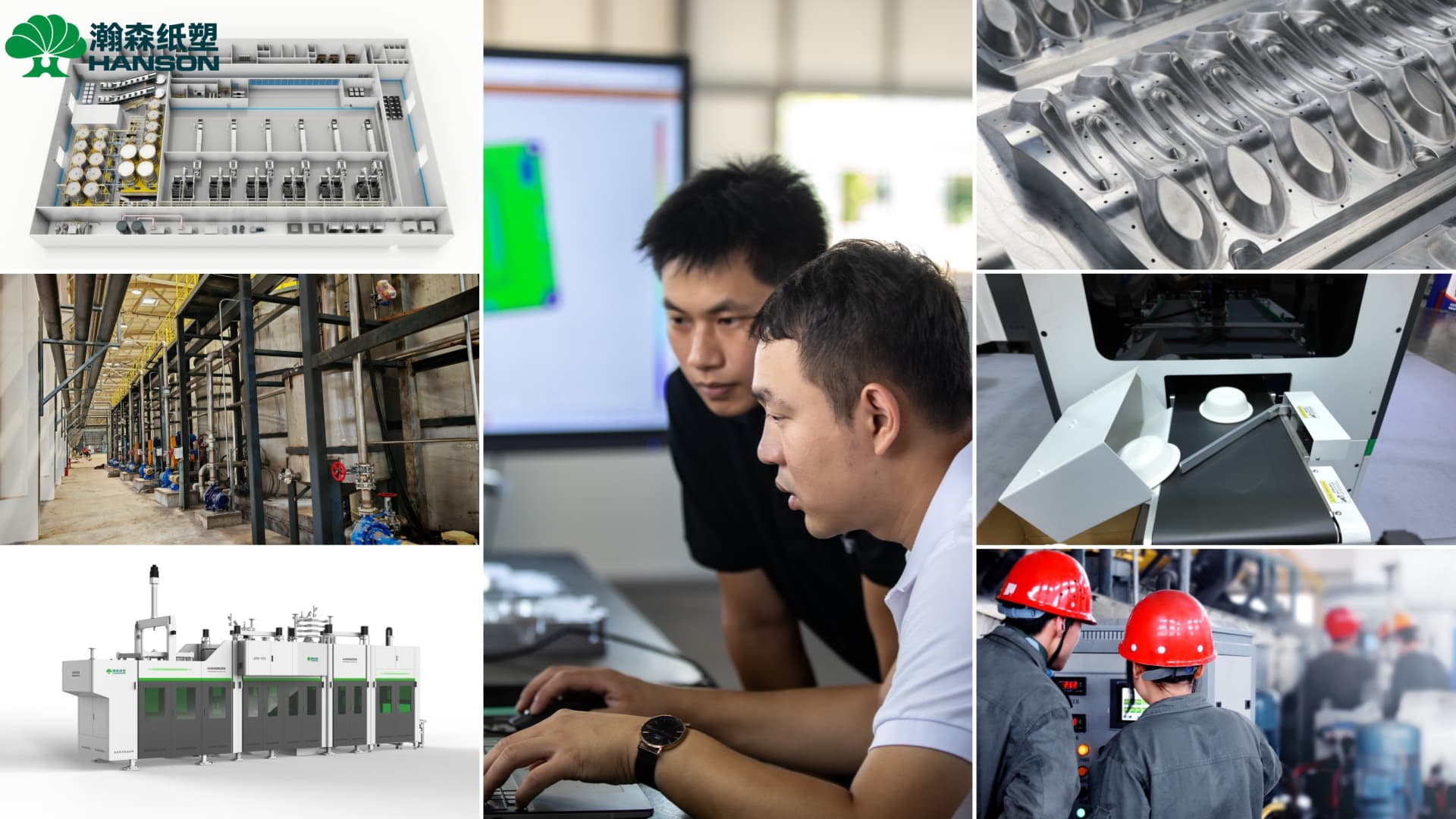
The final production capacity and quality of a molded fiber project are not determined by a single piece of equipment. They are the result of a synergistic system involving pulping, forming, tooling, drying, and post-processing automation. Equipment selection should always be reverse-engineered from the final product’s requirements.
As a specialist in turnkey pulp molding solutions, Hanson Pulp Molding integrates product development, plant planning, pulping, forming equipment, tooling, and production ramp-up into a unified engineering logic. This comprehensive approach reduces interface risks and ensures a smooth transition from project planning to stable mass production.
FAQ
What is the best machine for making cup carriers? There is no single “best” machine based merely on the product name. Cup carriers generally use dry press or semi-dry press processes. The ideal equipment configuration depends on your specific product dimensions, target daily capacity, and desired automation level.
Does more mold cavities mean higher daily output? Not necessarily. While more cavities can yield more pieces per cycle, the total number is constrained by the product size, tooling area, drainage efficiency, and the machine’s load capacity. Tooling must be matched with the specific equipment and product parameters.
Why is post-processing automation important for cup carriers? Cup carriers are typically produced in large volumes. If post-processing tasks like stacking and packaging are manual, they can easily become the bottleneck of the entire facility, preventing the high-speed forming machine from reaching its true capacity.
Call to Action
If you already have a product sample, 3D drawing, product dimensions, or target daily capacity for your cup carriers, Hanson Pulp Molding can help evaluate the molding process, tooling, and equipment configuration for your project.
-
WhatsApp: +86 15920604830
-
Email:linchuangcheng@hspulpmolding.com